
Day van, pop-top or coachbuilt? Campervan conversion types explained

Written by
Felix
Felix covers campervan technology, layouts, and modern conversions, with a focus on design-led thinking and practical performance
The short answer
The single biggest campervan decision is which type of conversion you want, long before you worry about brand or layout, and the good news is that there is a type to suit almost any life and budget. They run from the micro-camper (a small car-derived van, the cheapest genuine entry) and the day van (seats and a fold-out bed, no fixed kitchen or bathroom), through the pop-top (standing room and a second bed up top, still drivable every day) and the high-top panel van (full standing room with a proper kitchen and washroom), up to coachbuilt and A-class motorhomes. There is no best type, only the best for how you travel, how many of you there are, and what you can park outside your house. You do not need a £60,000 coachbuilt to start. Here is each type explained, so you choose the right one.

The word campervan does an enormous amount of work. People use it for a fold-out bed in the back of a small estate car, for a classic VW with a roof that pops up, for a tall panel van kitted out like a tiny flat, and, loosely, for a great coachbuilt motorhome with a fixed double bed and a proper shower. These are wildly different vehicles, with wildly different price tags, driving experiences and ways of living, and the single biggest decision you'll make, long before you worry about which brand or which layout, is which type of conversion you actually want.
It's also the decision people get wrong most often, usually by buying more van than they need, or less than they'll grow into. So this is an honest tour of the main types, what each one genuinely is, who it suits, what it's like to live with, roughly what it costs, and the trade-offs nobody mentions until you've already bought. There's no best type, only the best type for how you actually travel, how many of you there are, and what you can park outside your house. By the end you should know which family of vans your search belongs in, which saves you an enormous amount of wasted time looking at the wrong things.
The day van, or weekender
The simplest form of camper is the day van: a van, often a VW Transporter or similar mid-size panel van, fitted out with comfortable seats, some storage and usually a bed that folds out of the seating, but without a fixed kitchen or bathroom, and frequently without even a pop-top roof. The interior is often removable or modular, so the same vehicle does the school run on Monday and the coast on Saturday.
The appeal is that it's a van you can actually use as a daily vehicle. It drives like a car, fits in a normal parking space and under most height barriers, doesn't shout "steal the leisure battery" to anyone walking past, and costs less to convert than anything with a fixed kitchen and plumbing. For couples or small families who camp occasionally, in good weather, and don't mind cooking on a portable stove outside or at the open tailgate, a day van is often all they ever needed. The honest limitation is that it's cramped for living in when the weather turns; with no standing room and no fixed facilities, a wet weekend in a day van tests a relationship. It's the type for people who treat the van as transport that occasionally becomes a bed, rather than a home on wheels.
The pop-top campervan
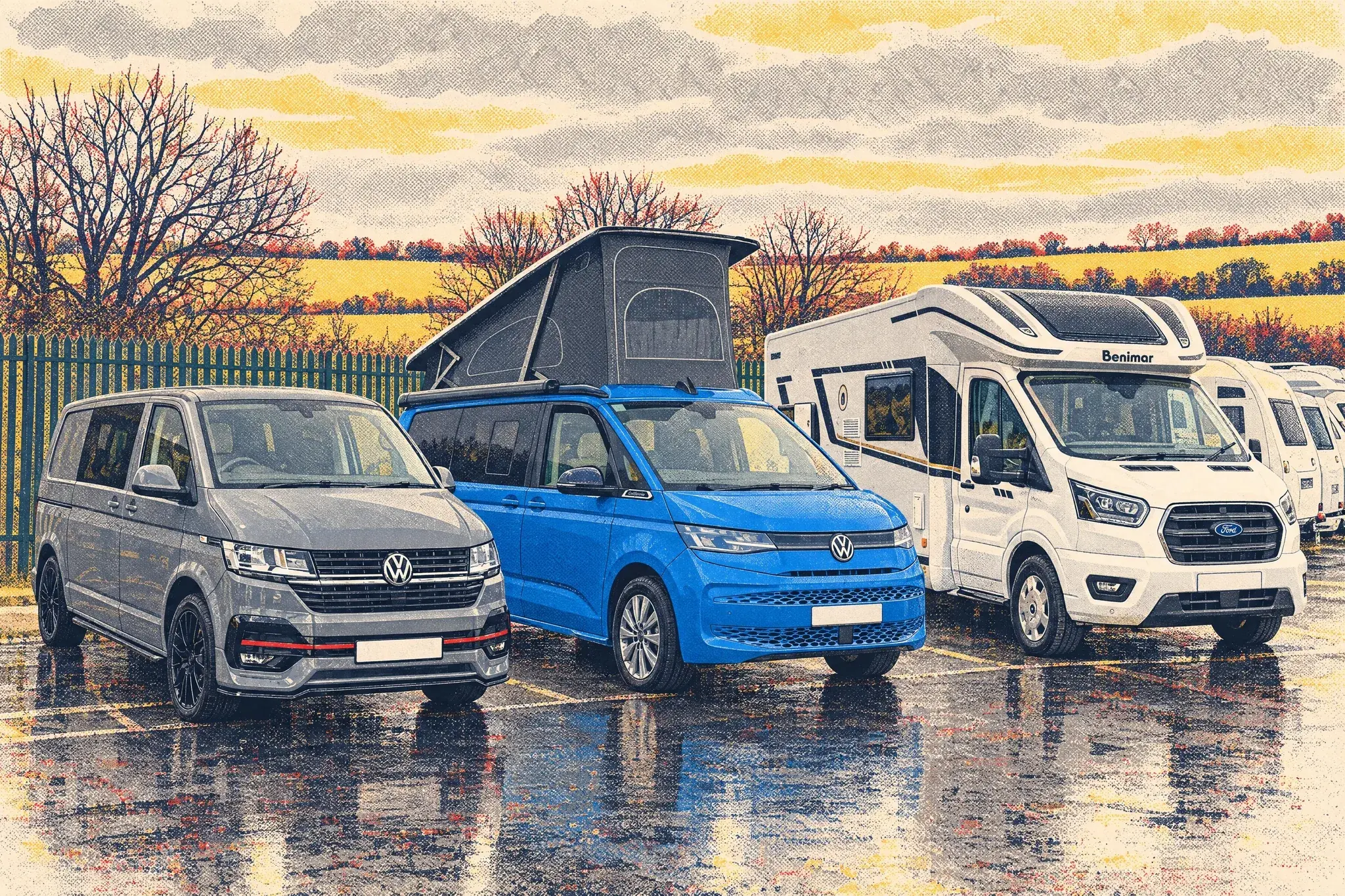
The pop-top is the classic British campervan, the VW California shape that everyone pictures: a mid-size van with an elevating roof that lifts up to give standing room inside and, usually, a second double bed in the roof itself. Down below sits a small kitchen unit, often with a hob, a sink and a compact fridge, and a bed that converts from the rear seat. It's the format that has defined camper life for decades, and for good reason.
The genius of the pop-top is that it gives you two of the things that matter most, standing room and a second bed, without permanently turning the van into something too tall for everyday use. Roof down, it's close to a normal van: it'll fit in many car parks, slip under most height barriers, and drive without the wind-noise and crosswind drama of a tall vehicle. Roof up, it's a proper little camper for a family of four, the parents below and the children in the roof bunk, or a spacious two-berth for a couple. It's the most versatile single answer for a lot of people, which is exactly why the format has endured. We go much deeper into the roofs themselves, the different mechanisms and what they cost, in our guide to pop-top roof conversions, because the roof is the heart of this type and the choice genuinely matters.
The honest downsides are real but manageable. The fabric sides of the raised roof are thin, so the pop-top is the coldest part of the van in winter and the bit where condensation gathers. The roof is an extra thing to maintain, seals, struts and fabric all need care over the years. And the space, while clever, is still modest; this is a small camper, and you live close together. But for the sheer breadth of what it does well, the pop-top remains the type most people picture when they say campervan, and the one that suits the widest range of buyers.
The high-top panel van conversion
If the pop-top is the clever compromise, the high-top is the commitment. Here you take a panel van, often a longer or taller model like a Transit, a Sprinter, a Ducato or a Crafter, and either use its existing high roof or fit a fixed one, then convert the inside into a proper little home: a fixed kitchen, a fixed bed or a convertible one, often a washroom with a loo and a shower, heating, a leisure battery system, the works. This is the format most associated with full-time van life and the ambitious self-build.
The advantages over a pop-top are space and self-sufficiency. You get full standing room all the time, without lifting a roof, so a rainy day is far more bearable. There's room for a real kitchen, a proper bed you don't have to make up every night, and, in the bigger vans, an actual bathroom. You can carry more, insulate it properly for winter, and genuinely live in it for weeks. For couples touring long-term, or anyone who wants one vehicle that's a complete home, the high-top is the sweet spot between a pop-top's compromises and a motorhome's bulk.
The costs are the height and the everyday usability. A fixed high-top is too tall for many car parks and height barriers, catches the wind, and is a more intimidating thing to drive and park than a day van. It's also a less discreet daily vehicle; it looks like what it is. And because the roof is cut and fixed permanently, it's a more involved and irreversible conversion. One genuinely useful trick for the high-top and panel-van world, if your aim is a fixed bed across the van, is to widen the body slightly with flares, which we cover in our piece on van flares and space pods; it's the difference between sleeping crossways and losing half your floor to a lengthways bed. The high-top is the type for people who want a home rather than a vehicle that becomes a bed, and who can live with the height in exchange.
The coachbuilt motorhome
Step up again in size and you reach the coachbuilt motorhome, which is a different animal from a van conversion. Rather than fitting out an existing van body, a coachbuilt takes a chassis cab, the cab and bare chassis of a van like a Ducato, and builds a custom living box onto the back of it, usually in lightweight bonded panels. This is what most people mean by a motorhome: the big white family vehicles with an overcab bed or a sleek low-profile roofline, a fixed double bed, a full kitchen, a separate bathroom, and berths for four, five or six.
The advantages are space and comfort. A coachbuilt gives you room a van conversion simply can't: separate sleeping, dining and washing areas, a fixed bed you leave made up, a proper fridge and oven, masses of storage in the external lockers, and the ability to take a whole family away in genuine comfort. For families, for longer holidays, and for anyone who wants the home comforts to win out over discretion and drivability, the coachbuilt is the obvious answer, and the used market is huge, which keeps prices comparatively sane.
The trade-offs are size and usability. A coachbuilt is a large vehicle, not something you park outside the supermarket or drive for the school run; it's a holiday vehicle that lives on a drive or in storage and comes out for trips. It's thirstier, harder to manoeuvre, and the overcab "Luton" bed shape, while space-efficient, hurts aerodynamics and economy. Build quality varies, and the bonded-panel construction can be prone to damp if not maintained, so the used market needs a careful eye. But for sheer living space per pound, nothing a van can offer competes, which is why the coachbuilt remains the default family motorhome. If you're weighing this against a van, our piece on campervan versus motorhome digs into the real trade-offs.
The A-class motorhome
At the top of the tree sits the A-class, the largest and usually the most expensive type, where the entire vehicle, cab included, is purpose-built as a motorhome rather than retaining the original van cab. From the outside it's the one that looks like a coach, with a huge panoramic windscreen and a sweeping, integrated body. Inside, an A-class typically offers the most space and the highest specification of all, often with a drop-down bed over the cab that disappears into the ceiling by day, vast windows, and a luxurious finish.
The appeal is space, light and quality: an A-class feels less like a converted van and more like a small flat that drives, and for full-timers or well-heeled tourers who spend serious time aboard, the extra room and the panoramic view are genuinely lovely. The downsides are equally clear: A-classes are the biggest, heaviest, thirstiest and most expensive type, the hardest to drive and park, often heavy enough to need attention to weight limits and licences, and a substantial thing to store. This is the type for people for whom the motorhome is a major part of life rather than an occasional holiday tool, and whose budget and storage can accommodate it. For most buyers it's more vehicle than they need, but for the few it suits, nothing else compares.
The micro-camper
At the opposite end entirely is the micro-camper: a small car-derived van or even an MPV, think Caddy, Berlingo, Partner, or a small Japanese import, fitted with a simple bed and minimal kit. These are tiny, cheap, and brilliantly practical for one or two people who want the absolute minimum: a vehicle that's still a normal car most of the time but can become a bed for a night or a weekend.
The charm of a micro-camper is how little it asks of you. It costs little to buy and run, parks anywhere, drives like the car it basically is, and slips under the radar for stealthier overnight stops. For solo adventurers, surfers, festival-goers and weekenders on a budget, it's a wonderful, low-commitment way into van life. The obvious limitation is space: there's no standing room, little storage, and not much room for two unless you're very fond of each other. But as a first toe in the water, or as a deliberate choice for someone who values simplicity and economy over comfort, the micro-camper is massively underrated, and it proves that you don't need to spend £60,000 to sleep in a vehicle by the sea.
The demountable, and the American RV
Two less common types are worth knowing about because they solve specific problems. The demountable, or truck camper, is a self-contained camper unit that sits on the back of a pickup truck and can be lifted off, leaving you with a usable truck and a camper that stays on legs at home or on a pitch. It's a niche but clever answer for people who need a working pickup and a camper without owning two vehicles, popular with the off-grid and rural crowd, though the high centre of gravity and the faff of mounting and demounting put many people off.
At the far end of size and ambition is the American RV, the enormous motorhomes imported from the United States, with slide-out sections that expand the living space when parked, residential-scale interiors and, often, a left-hand drive. They offer more space and luxury than almost anything European, but they're vast, thirsty, awkward on tight British roads and lanes, and a real commitment to own and store. For most UK buyers they're impractical, but for a certain kind of full-timer they're a home in every sense. Both of these are specialist choices rather than mainstream ones, but if your needs are unusual, one of them might be the unexpected answer.
Self-build, professional conversion, or factory-built
Cutting across all of these types is a second question: who builds it? There are broadly three routes, and they suit very different people.
A factory-built or established-converter vehicle, a VW California, a coachbuilt from a major manufacturer, a well-known converter's standard model, is the lowest-hassle route. You get a finished, warrantied, type-approved vehicle built to a consistent standard, with dealer support and a clear resale value. You pay a premium for all of that, and you get less say in the layout, but for most buyers who simply want a camper that works, it's the sensible choice, and the used market for these is deep and well understood.
A bespoke professional conversion sits in the middle: you supply or choose a base van and a converter builds it to your specification. You get personal choice over the layout and finish, and the quality of a professional build, but it costs more than a standard model, takes time, and the resale value depends heavily on the converter's reputation and the choices you made. It's the route for people who know what they want and can't find it off the shelf.
The self-build is the cheapest in cash and the dearest in time and skill. Done well, it produces exactly the van you want for the lowest material cost, and the satisfaction is enormous. Done badly, it produces a damp, unsafe or unsellable vehicle, and the hours involved are staggering. It's a wonderful project for the practically minded who treat the build as part of the hobby, and a false economy for anyone who just wants to get out on the road. Be honest with yourself about which you are, because a half-finished self-build in the driveway is one of the saddest sights in van life.
The second decision: layout within a type
Once you've chosen a type, a second decision waits inside it: the layout. Even within, say, coachbuilt motorhomes, you'll choose between a fixed transverse bed, a fixed island bed, twin singles that convert, or a rear lounge that makes up into a bed, and between a full rear washroom and a compact one. These choices shape daily life more than almost anything else: whether you have to make the bed up every night, whether two of you can pass in the kitchen, whether the loo is a cupboard or a room. It's worth seeing a lot of layouts in person, which is exactly what the shows are for, before you fix on one, because a layout that reads well on paper can feel wrong the moment you're standing in it. The type gets you into the right family of vehicles; the layout decides whether you'll actually enjoy living in the one you choose.
How to choose: a short framework
Faced with all of that, the way to narrow it down is to answer a few honest questions in order. First, how many of you travel, and how often do you all travel together? That sets the minimum number of berths and quickly rules types in or out. Second, is this an occasional-holiday vehicle or something close to a second home? Occasional use points towards the smaller, cheaper, more usable types; near-full-time use justifies the space and self-sufficiency of a high-top or coachbuilt. Third, what can you park and store? If it has to live on a normal driveway and double as everyday transport, you're in day-van or pop-top territory; if you've got storage and a separate daily car, the bigger types open up. Fourth, what's your honest weather tolerance? If you only ever go away in summer, you can live with less; if you want to use it year-round, standing room, insulation and a fixed bathroom stop being luxuries.
Run those four questions and the field narrows dramatically, usually to one or two types. The classic mistakes are buying too big, a coachbuilt that then sits unused because it's a faff to take out, or too small, a day van you outgrow the first wet weekend with the kids. Match the type honestly to the four answers above, not to the most romantic photo, and you'll buy the van you actually use rather than the one you wished you were the sort of person to use.
Common questions
What is the difference between a campervan and a motorhome?
Loosely, a campervan keeps the shape and footprint of a van (a day van, pop-top or high-top panel-van conversion), while a motorhome has a larger habitation body built on a chassis cab (a coachbuilt with an overcab or low profile, or an A-class with its own cab). Campervans are more drivable and easier to park; motorhomes give more living space and facilities.
What is the best type of campervan for a family?
Usually a high-top panel van or a coachbuilt motorhome, because they give full standing room, a proper kitchen and washroom, and crucially the belted travel seats a family needs. Many pop-top and day-van layouts carry only two on the road despite sleeping more, so for a family the deciding factor is having enough belted seats, not just enough berths.
Is a pop-top or a high-top better?
It depends how you use it. A pop-top keeps the van usable day to day, fits more car parks and drives better, but gives a smaller, colder upstairs and an extra roof to maintain. A high-top gives full standing room all the time and space for a proper kitchen and bathroom, but is taller, harder to park and a more permanent conversion. Pop-top for versatility, high-top for living space.
What is the cheapest way into van life?
A micro-camper, a small car-derived van like a Caddy or Berlingo with a simple bed, is the cheapest genuine entry point: low to buy, cheap to run and usable as everyday transport. A basic day van is the next step up. You do not need a 60,000-pound coachbuilt to start sleeping in a vehicle by the sea, and plenty of people begin with something tiny and love it.
Should I buy a converted van or do a self-build?
Buy a finished van if you mainly want to get out and use it, as you get a consistent, warrantied vehicle with a clear resale value. Self-build if the project itself appeals and you have the time and skill, because done well it gives you exactly what you want for the lowest material cost, and done badly it is an expensive, time-sapping mistake. Be honest about which sort of person you are.
How do I choose the right type of campervan?
Decide the type before the brand or layout, because it is the decision people get wrong most, usually by buying more van than they need or less than they will grow into. Be honest about how you actually travel, how many of you there are, and what you can park outside your house. Match the type to that reality and you avoid an enormous amount of wasted searching.
The reachable bit
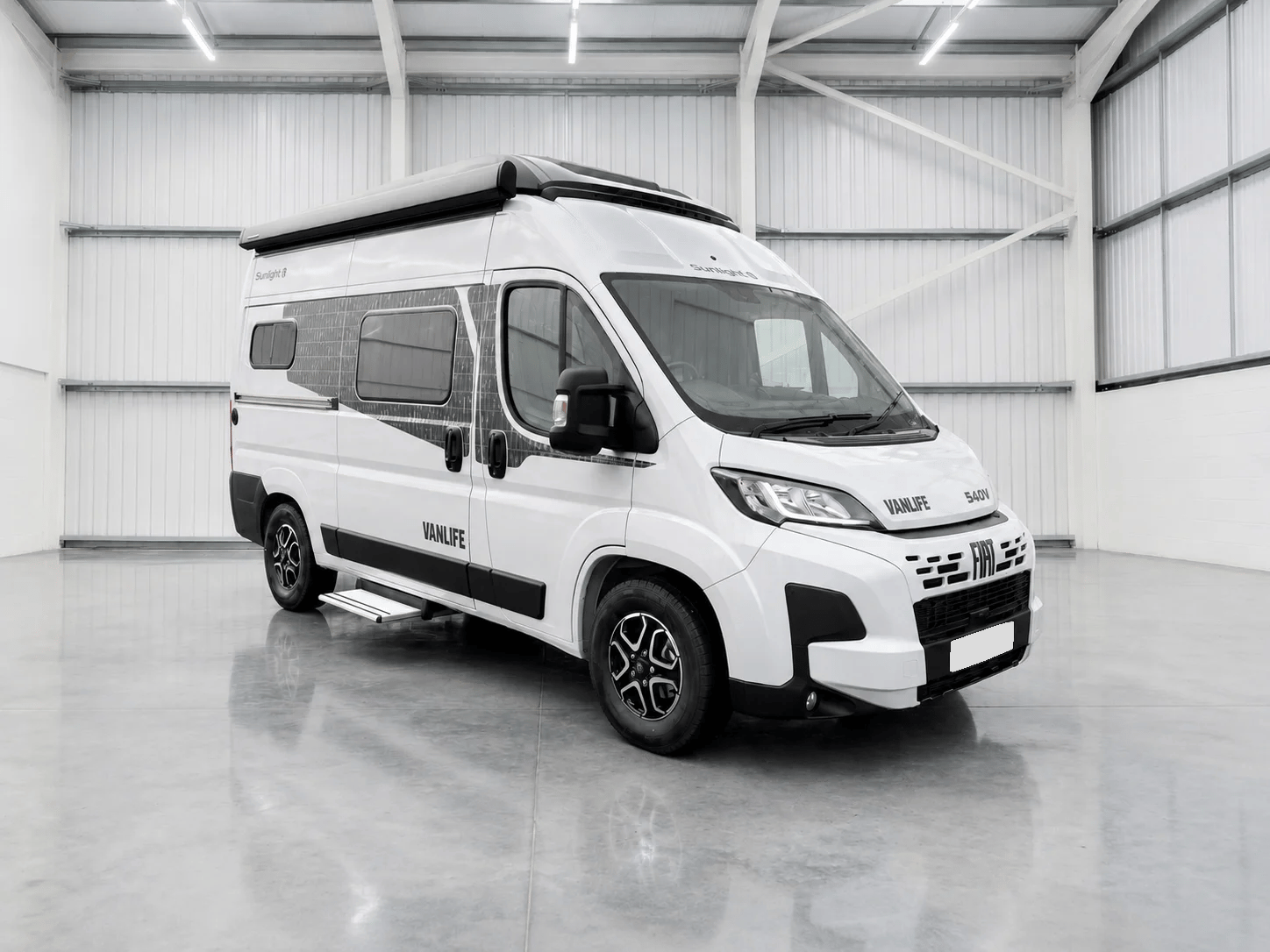
The camper you fall for is rarely the one you can afford. That gap is the whole reason Campervan.win exists. Right now we’re giving away the Sunlight Vanlife, worth around £65,000, and closing that gap is the point: capped entries so the odds stay honest, £10 a ticket, a maximum of five per person, £500 to a UK charity from every full draw, the winner picked by a public randomness beacon anyone can re-check, and one person driving away in the van itself.
Enjoyed this post?
Get more honest campervan guides like this one in your inbox.
You’re in!
Check your inbox. We’ve just sent you a welcome email.

About the author
Felix
Felix covers campervan technology, layouts, and modern conversions, with a focus on design-led thinking and practical performance
Keep Reading
Related Reading
Thoughtful articles that build on what you’ve just read.
Campervan Buying Guides
10 min read
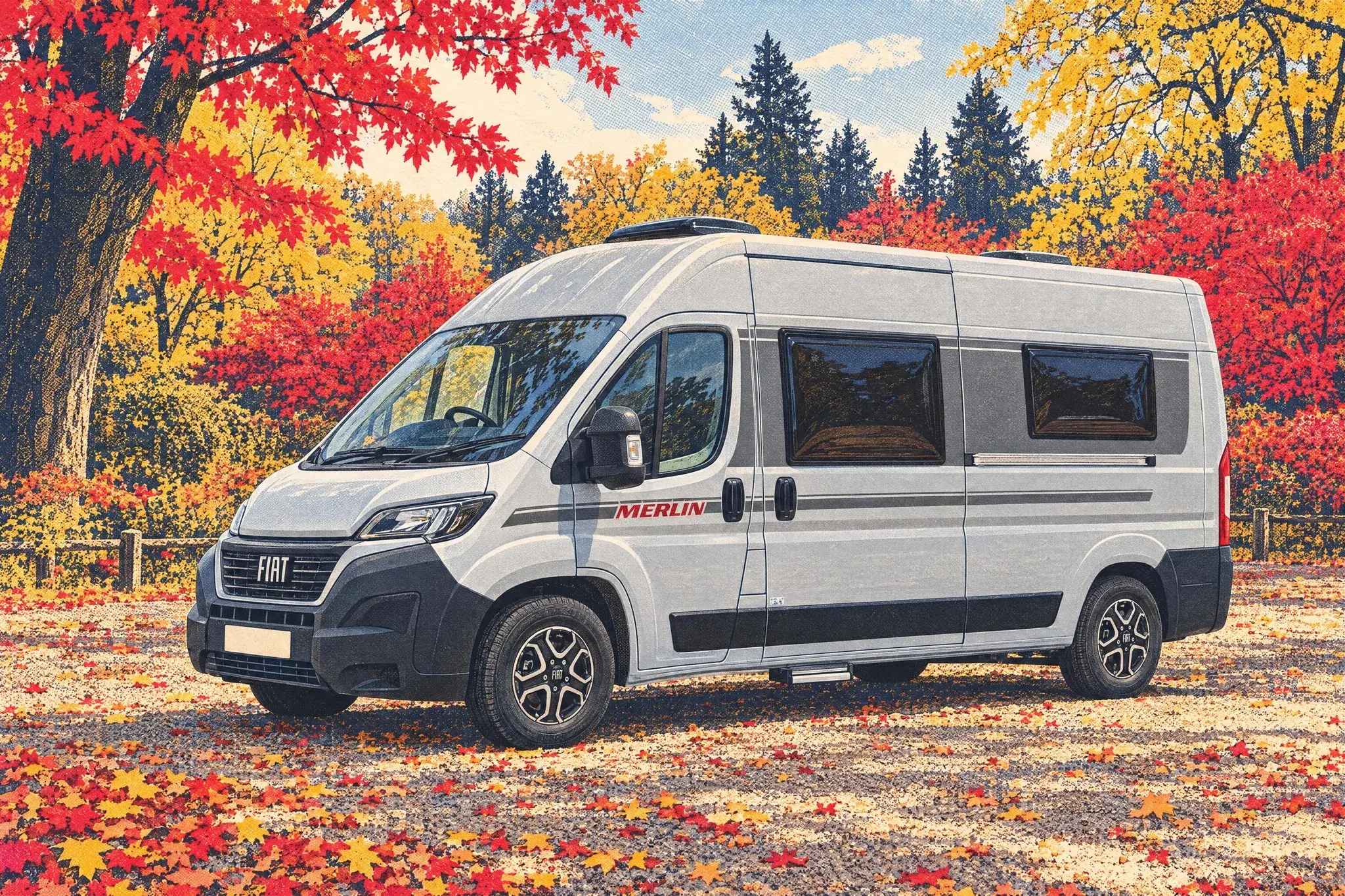
Swift Merlin 2027: nine layouts from £64,190 and how to pick the right one
Swift's all-new Merlin campervan arrives for 2027 with nine layouts on the Fiat Ducato panel van. We sort them into four families, work the payload sum on a four-seat version, and explain what the roof, the automatic and the prices mean for your choice.
Campervan Buying Guides
11 min read
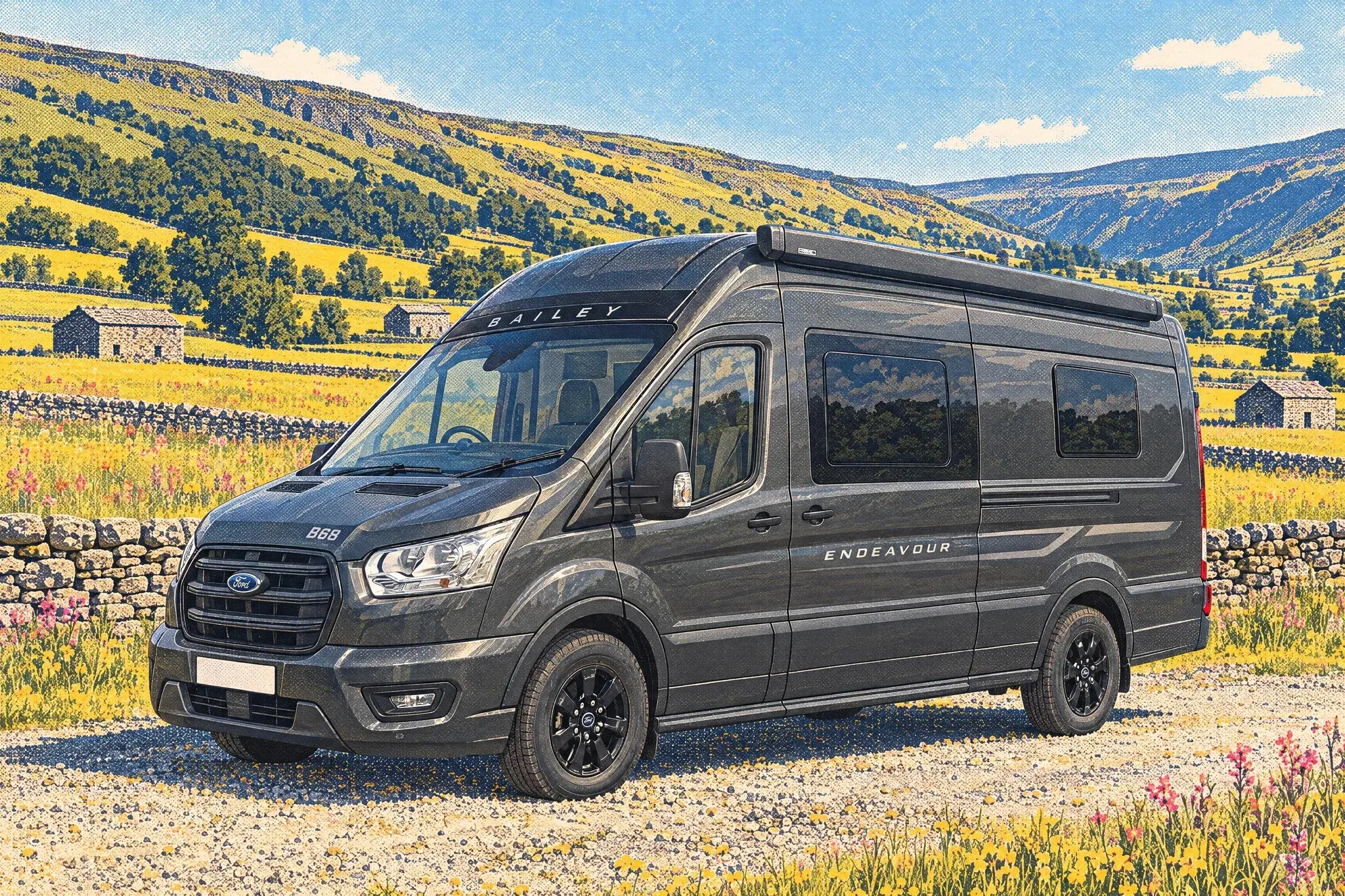
Bailey Endeavour B68: the end-lounge Transit campervan where the pop-top costs 143 kg
Bailey's new Endeavour B68 puts a rear lounge in a 5.98 m Ford Transit campervan. We compare it with the B65 and B62, check the 1.86 m bed, and do the payload sums if you add the £7,500 pop-top.
Campervan Buying Guides
12 min read
New campervans under £60,000 for 2027: what the NEC shows and what the price leaves out
A fair look at the new 2027 campervans listed under £60,000 ahead of the Motorhome and Caravan Show at the NEC, with each price given as its maker words it, and the differences between ex-works, delivered and German-retail-based figures explained so you can compare real on-the-road totals.
Campervan Buying Guides
14 min read
Eura Mobil Vancona 2027: a €57,400 campervan with just 84 to 118 kg left for options
Eura Mobil's new Vancona is a well-equipped Fiat Ducato campervan from €57,400, but its 84 to 118 kg options allowance means you need to order it with the weight sheet open. We explain what the figure means, what the 4.25 t uprate costs you in licence terms, and which options to prioritise.