
The best UK campervan road trips, and how to drive them well

Written by
Iris
Iris writes travel guides, road trips, and park-up features, with a focus on slower UK touring, living space, and how campervans are used day to day.
The short answer
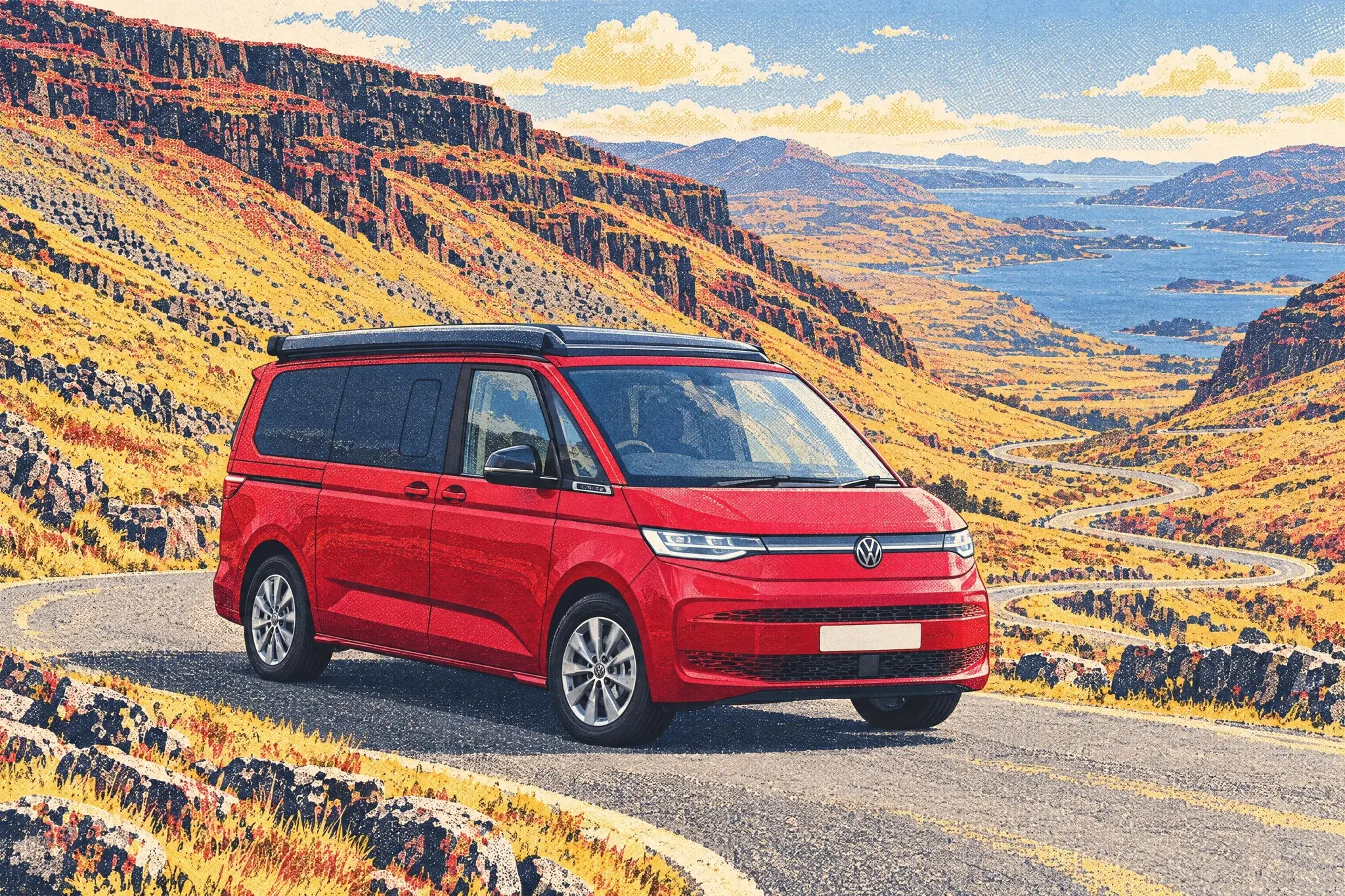
The UK is one of the best places on earth for a campervan road trip, packing Highland sea lochs, Welsh surf beaches and Cotswold villages within a few hours of each other. The famous routes, the North Coast 500 (a 516-mile Highland loop), Wales and the Atlantic Highway, are genuinely spectacular but get crowded in summer, so the real art is knowing when to slip away to their quieter equals, like the South West Coastal 300 or the North East 250. The golden rule that makes all of them better is to drive less than you think, around two to three hours or 60 to 120 miles a day, and stay longer in fewer places. Treat the driving as part of the pleasure, not a distance to be got through. Here are the best routes, and how to drive them well.

There's a strong argument that the UK is one of the best places on earth for a campervan road trip, precisely because it's so small and so varied. In a single week you can go from a Highland sea loch to a Welsh surf beach to a honey-stone Cotswold village, and never drive more than a few hours between them. A campervan turns this crowded little island into a thousand weekends: the freedom to wake up by the sea, have breakfast looking at a mountain, and decide over a second coffee where you'll sleep tonight. No other way of travelling gives you quite that combination of spontaneity and comfort, and the country is laced with roads that seem designed for it.
So this is a guide to the best of them, with one honest caveat running throughout: the most famous routes are famous for a reason, and also crowded for a reason, and the real art of the UK road trip is knowing when to follow the crowd and when to slip away from it. We'll cover the headline routes and the quieter alternatives, region by region, and then the practical wisdom that actually makes or breaks a trip, including the single most misunderstood thing in British van life, the real rules about where you can and can't sleep. Get the driving right and the country opens up. Get it wrong and you spend your holiday stuck behind a caravan on a road too narrow to pass.
A word before you go: how to road-trip well
Before the routes, the most useful advice in this whole guide, because it applies everywhere. First, drive less than you think. The commonest mistake is cramming too many miles into too few days, turning a holiday into a slog and missing the whole point, which is to slow down. Pick fewer places, stay longer, and leave room to change your mind. A good campervan trip is measured in moments, not miles.
Second, go off-peak if you possibly can. The honeypot routes in July and August are a different, busier, more stressful experience than the same roads in May or September, when the light is still good, the sites have space, and you're not nose-to-tail with every other van in Britain. Third, learn single-track road etiquette before you need it, because much of the best scenery is reached on single-track roads with passing places, and they only work if everyone plays the game: pull into a passing place on your left to let oncoming traffic through or faster traffic past, never park in a passing place, and give a wave of thanks. Nothing marks out a thoughtless visitor faster than holding up a queue of locals on a single-track road.
And fourth, the big one: understand the wild-camping rules, because almost everyone gets them wrong. The popular belief that you can park a campervan anywhere wild and sleep there, especially in Scotland, is largely a myth. Scotland's celebrated right to roam covers walking and wild camping in a tent; it does not extend to sleeping in a motor vehicle at the roadside, and some areas have specific byelaws restricting overnight parking. In England and Wales, wild camping almost always needs the landowner's permission. So for a campervan, the honest position is this: don't assume you can wild camp. Use campsites, use the growing network of aires and pub and farm stopovers that welcome vans, or get explicit permission, and always leave a place better than you found it. Park responsibly, take everything away with you, and don't be the van that gets the next one moved on. The freedom of van life is real, but it's a freedom that depends on everyone behaving well, and the places that allow it stay open only as long as visitors respect them.
The North Coast 500 and the Scottish Highlands
The famous one, and rightly so. The North Coast 500 is a roughly 516-mile loop around the far north of Scotland from Inverness, taking in some of the most spectacular coastal and mountain scenery in Europe: empty white beaches, sea lochs, towering peaks, single-track roads clinging to the coast. At its best it's transcendent, the kind of driving that stays with you for years, and it deserves its reputation as one of the world's great road trips.
It also deserves honesty. The NC500's fame has made it very busy in peak season, and a route that was a quiet local secret a decade ago can now feel crowded, with pressure on the small communities, the single-track roads and the limited facilities along the way. Some of its roads, the Bealach na Bà pass to Applecross above all, are steep, narrow and genuinely unsuitable for larger motorhomes, with hairpins and gradients that punish the wrong vehicle. So drive it, but drive it well and considerately: go outside July and August if you can, take your time over a week or more rather than racing it, use the campsites and stopovers rather than parking wild, respect the passing places, and pick your vehicle and your passes with care. Done thoughtfully, it's the trip of a lifetime. Done as a high-speed tick-list in peak August, it's a traffic jam with a view, and a burden on the places it passes through.
Scotland beyond the NC500
Here's the insider secret: Scotland is full of road trips as beautiful as the NC500 and a fraction as busy, and the savvy van-tripper often skips the famous loop entirely. The South West Coastal 300 explores Dumfries and Galloway and the Ayrshire coast, a gentler, quieter, deeply underrated corner of the country with dark skies, fishing villages and rolling hills. The North East 250 loops through Aberdeenshire, Speyside and the Cairngorms, combining coast, castles, whisky country and mountains with far fewer vans. The Argyll coast and the Kintyre peninsula offer sea lochs and ferry-hops without the NC500 crowds, and the run through Glencoe on the A82 delivers some of the most jaw-dropping mountain scenery in Britain on a road any van can drive.
And then there are the islands, which for many people are the real magic of Scotland. Skye is justly famous and busy; Mull, the Outer Hebrides, Islay and the smaller isles reward the effort of a ferry with white-sand beaches, single-track tranquillity and a slower pace that the mainland honeypots have lost. Island trips need a little more planning, ferries should be booked ahead in summer, and facilities are sparse, but the payoff is a kind of peace that's getting harder to find. If the NC500 is the headline, the quieter Highlands and the islands are where a lot of seasoned van-trippers actually spend their time, and they'd tell you not to overlook them.
Wales: Snowdonia, the coast and the Beacons
Wales packs an extraordinary amount of beauty into a small space, and it's brilliant campervan country. The north is dominated by Eryri, Snowdonia, with its mountains, lakes and the dramatic passes that thread between them, ringed by a coast that runs from the Victorian resorts of the north down through the Llŷn Peninsula. The middle of the country, the Cambrian Mountains and the long sweep of Cardigan Bay, is gloriously empty, all green hills and quiet coast roads, the kind of place you can still find a beach to yourself. And the south gives you the Brecon Beacons, Bannau Brycheiniog, for mountains and dark skies, and the Pembrokeshire Coast, one of the finest stretches of coastline in Britain, with surf beaches, cliff paths and harbour villages.
The honest practical note for Wales is the roads. Much of the best of it is reached on narrow, high-hedged lanes that can be tight and blind in a larger van, and the popular spots, Snowdonia and Pembrokeshire especially, get very busy in summer with real pressure on parking. As ever, the answer is to go off-peak, keep to the quieter middle of the country where you can, and choose your vehicle honestly, which is part of the wider campervan versus motorhome question, because a smaller van is a far happier thing on a Welsh lane than a big coachbuilt. Wales rewards the unhurried and punishes the impatient, which is true of the whole country but never more so than here.
The South West: Cornwall, Devon and the Atlantic Highway
Cornwall and Devon are the spiritual home of the British campervan holiday, the surfboard-on-the-roof, kettle-on-the-beach ideal made real. The Atlantic Highway, the A39 running down the north coast through Devon into Cornwall, is the classic route, linking surf beaches, fishing harbours and dramatic cliffs, with Exmoor on one side and the sea on the other. Continue around to the south coast and you find a softer landscape of wooded estuaries and sheltered coves. It is, in good weather, exactly the holiday the brochures promise.
It comes with the loudest health warning in this guide, though: the South West in peak summer is extraordinarily busy, the narrow lanes clog, the car parks fill by mid-morning, and a region of tiny roads meets the full force of the school holidays. A big van on a Cornish lane in August is nobody's idea of fun. The South West is at its absolute best in late spring and early autumn, when the weather can still be kind, the sea is warm enough to enjoy, and the roads and beaches are navigable rather than gridlocked. Go then, with a smaller van, booking your sites ahead, and it's heaven. Go in the first week of August in a coachbuilt and you may spend the holiday reversing.
The Lake District and the North
The Lake District is the jewel of northern England, and for good reason: a compact, intensely beautiful landscape of mountains and water that has inspired people for centuries. It's wonderful campervan country in the right conditions, but it shares the South West's problems in concentrated form: it's small, hugely popular, and laced with narrow roads and famously fearsome passes. Hardknott and Wrynose are among the steepest roads in the country, thrilling in a small, capable vehicle and frankly dangerous in a large or underpowered one, so know your van's limits and don't follow a satnav blindly into trouble. Go off-peak, base yourself thoughtfully, and the Lakes are magical; go in peak season expecting to drive and park freely and you'll be frustrated.
The genius move in the north is to look just beyond the honeypots. The Yorkshire Dales and the North York Moors offer comparable beauty with more room to breathe, rolling into a glorious coast around Whitby and Robin Hood's Bay. Northumberland is one of the most underrated counties in England, with an empty, castle-studded coast, huge skies and the dark-sky country around Kielder, and it's blissfully quiet compared to the Lakes. The Scottish Borders and Galloway, just over the line, are quieter still. The pattern across the whole country holds here too: the famous places are famous for good reason, but the quieter neighbours next door often give you the same beauty and a far better trip.
The gentler trips
Not every road trip needs mountains and single-track drama, and some of the loveliest van weekends are gentle ones. The Cotswolds offer honey-stone villages, easy driving and a soft, pretty landscape that's perfect for a relaxed potter, ideal for a first trip or a slower pace. The Jurassic Coast of Dorset combines fossil-hunting beaches, dramatic cliffs and a string of welcoming seaside towns along a manageable stretch of coast. The Peak District, between Manchester and Sheffield, packs gritstone edges, show caves and pretty dales into an accessible area, though the Snake Pass and the busier honeypots warrant the usual care. And East Anglia, Norfolk and Suffolk, offers big skies, quiet lanes, the Broads and a gentle coast that rewards a slow, flat, undramatic kind of trip that's exactly right for some moods.
These gentler routes are easy to overlook in favour of the headline drama of Scotland and Wales, but they're often the more relaxing holiday, with easier driving, fuller facilities, and less of the peak-season pressure that afflicts the wilder honeypots. For a first campervan trip, for a family with young children, or for anyone who finds a single-track Highland pass more stressful than scenic, a gentle route is not a consolation prize; it's frequently the better choice, and a lovely way to fall in love with van travel before tackling the wilder stuff.
Northern Ireland: the Causeway Coast
Too often left off the list, Northern Ireland is superb campervan country and far quieter than the big-name British routes. The Causeway Coastal Route, running roughly from Belfast up to Derry-Londonderry, is one of the finest coast drives in these islands, taking in the dramatic Glens of Antrim, the rope bridge at Carrick-a-Rede, the extraordinary basalt columns of the Giant's Causeway, and a string of beaches, harbours and ruined castles perched above the sea. The roads are good, the scenery is world-class, and it sees a fraction of the traffic of the NC500.
Inland and to the south, the Mourne Mountains sweep down to the sea exactly as the song says, offering walking and wild beauty within easy reach of the coast, and the whole country is small enough to explore at a gentle pace over a week. Getting there means a ferry from Scotland or England, which needs booking and adds a little cost, but it's part of the adventure, and many people pair Northern Ireland with a trip through south-west Scotland on the way. For anyone who's done the famous British routes and wants somewhere just as beautiful but blissfully less busy, Northern Ireland is one of the best-kept secrets in UK van travel.
Stringing it together: a sample two weeks
To make it concrete, here's how a relaxed fortnight might flow, as an example rather than a prescription. You might start gently in the Yorkshire Dales for a couple of nights to find your rhythm, then drift north to the Northumberland coast for its castles and empty beaches. Cross into Scotland for the quiet Galloway hills, or push on to Glencoe and the western Highlands, spending three or four unhurried days among the mountains and lochs rather than racing a full loop. From there you could hop a ferry to Mull or Skye for the island magic, before turning south again through Argyll, with a final couple of nights somewhere easy to break the journey home.
Notice what that itinerary does: it covers a lot of beauty but never more than two or three hours of driving in a day, it mixes the dramatic with the gentle, and it leaves slack to linger somewhere you love or to shelter somewhere from the rain. That's the template for a good trip anywhere in the country: a rough thread to follow, short hops between stops, and the freedom to tear the plan up the moment something better presents itself. The specific places matter far less than the pace you travel them at.
Practicalities that make or break a trip
A few final practicalities that separate a great trip from a fraught one. On where to stay: build your trip around a mix of proper campsites with hook-up, which take the worry out of power and waste, and the network of aires, pub stops and farm stays that increasingly welcome vans for a night, which add flexibility and character. Book the campsites ahead in peak season, because turning up on spec in August is a recipe for stress. On the van itself: know your height and width and respect the warning signs, because a wedged van on a narrow lane or under a low bridge ruins a holiday and a roof, and choose the right vehicle for the trip, a point worth settling before you even set off, especially if you're hiring rather than owning, which our campervan hire guide covers.
On the daily rhythm: have a rough plan but hold it loosely, keep the tank and the water topped up rather than running them low, and learn the waste and toilet routine early so it's second nature. On money: campsites, fuel and the odd pub meal add up, so a touring holiday isn't free, but it's flexible, and you can dial the cost up or down by your choice of sites and how you eat. And on the spirit of the thing: go slowly, leave no trace, be generous on the single-track roads, and remember that the best moments of a campervan trip are almost never the ones you planned. The whole point is to have somewhere to sleep and nowhere you have to be, which is the rarest luxury there is.
Common questions
What is the best campervan road trip in the UK?
The North Coast 500 in the Scottish Highlands is the most famous, a 516-mile loop of spectacular coast and mountains that at its best is one of the world's great drives. But it is very busy in summer, and many seasoned van-trippers prefer quieter routes of comparable beauty, like the South West Coastal 300, the North East 250, the Welsh coast, or Northumberland.
Can I wild camp in a campervan in the UK?
It depends where. In most of England and Wales, wild camping in a vehicle generally needs the landowner's permission, so you use campsites, aires and stopover schemes. Scotland is more permissive for responsible camping, but parking a campervan overnight still has rules and local restrictions, especially on popular routes like the NC500. Always check local signage and rules rather than assuming.
When is the best time for a UK campervan road trip?
The shoulder seasons, spring and autumn, are the sweet spot: quieter roads and sites, prettier light, and far more freedom to be spontaneous than in the August crush. Summer brings the best weather but the biggest crowds on famous routes. Whenever you go, the quieter alternative routes stay enjoyable when the headline ones are packed.
Are big motorhomes suitable for UK road trips?
They can be, but with care, because many of the most scenic routes involve narrow lanes and steep, tight passes that punish a large vehicle. Roads like Bealach na Ba on the NC500, or Hardknott and Wrynose in the Lakes, are genuinely unsuitable for big motorhomes. A smaller campervan is far happier on British back roads, so choose routes and passes to match your vehicle's size.
Do I need to book campsites in advance for a UK road trip?
In peak season, yes, especially in popular areas like Cornwall, the Lakes and the Scottish Highlands, where sites fill up and turning up on spec can leave you stuck. Off-peak you have far more freedom to be spontaneous. A good approach is to book the nights you most care about and leave flexibility in between, using aires and stopovers to fill the gaps.
How many miles a day should I drive on a campervan road trip?
Less than you would think. A relaxed touring day is often just two to three hours of driving, perhaps 60 to 120 miles, leaving the rest of the day to enjoy where you are. The commonest mistake is planning big daily mileages that turn the holiday into a slog. Pick fewer places, stay longer, and treat the driving itself as part of the pleasure.
The reachable bit
The camper you fall for is rarely the one you can afford. That gap is the whole reason Campervan.win exists. Right now we’re giving away the Sunlight Vanlife, worth around £65,000, and closing that gap is the point: capped entries so the odds stay honest, £10 a ticket, a maximum of five per person, £500 to a UK charity from every full draw, the winner picked by a public randomness beacon anyone can re-check, and one person driving away in the van itself.
Enjoyed this post?
Get more honest campervan guides like this one in your inbox.
You’re in!
Check your inbox. We’ve just sent you a welcome email.

About the author
Iris
Iris writes travel guides, road trips, and park-up features, with a focus on slower UK touring, living space, and how campervans are used day to day.
Keep Reading
Related Reading
Thoughtful articles that build on what you’ve just read.
UK Road Trips & Travel Guides
25 min read
A history of British surfing: where did it actually start?
Surfing was born in warm Hawaiian water, so how did Britain end up with a deep, hardy, cold-water surf culture of its own? The surprising story runs from Bridlington to Newquay to Thurso.
New & Noteworthy
12 min read
Knaus Boxtime 600 ME (2027): twin singles in 6 m, and the payload figure to question
Knaus's new Boxtime 600 ME squeezes two lengthways single beds into a 5.99 m van from £81,725. We lay out what that layout gives a couple, run the weight sums with Knaus's own figures, and explain why the 211 kg 'maximum payload' line needs a question before you sign.
New & Noteworthy
10 min read
Swift Carrera goes gas-free for 2027: 340Ah lithium, diesel heat and induction cooking
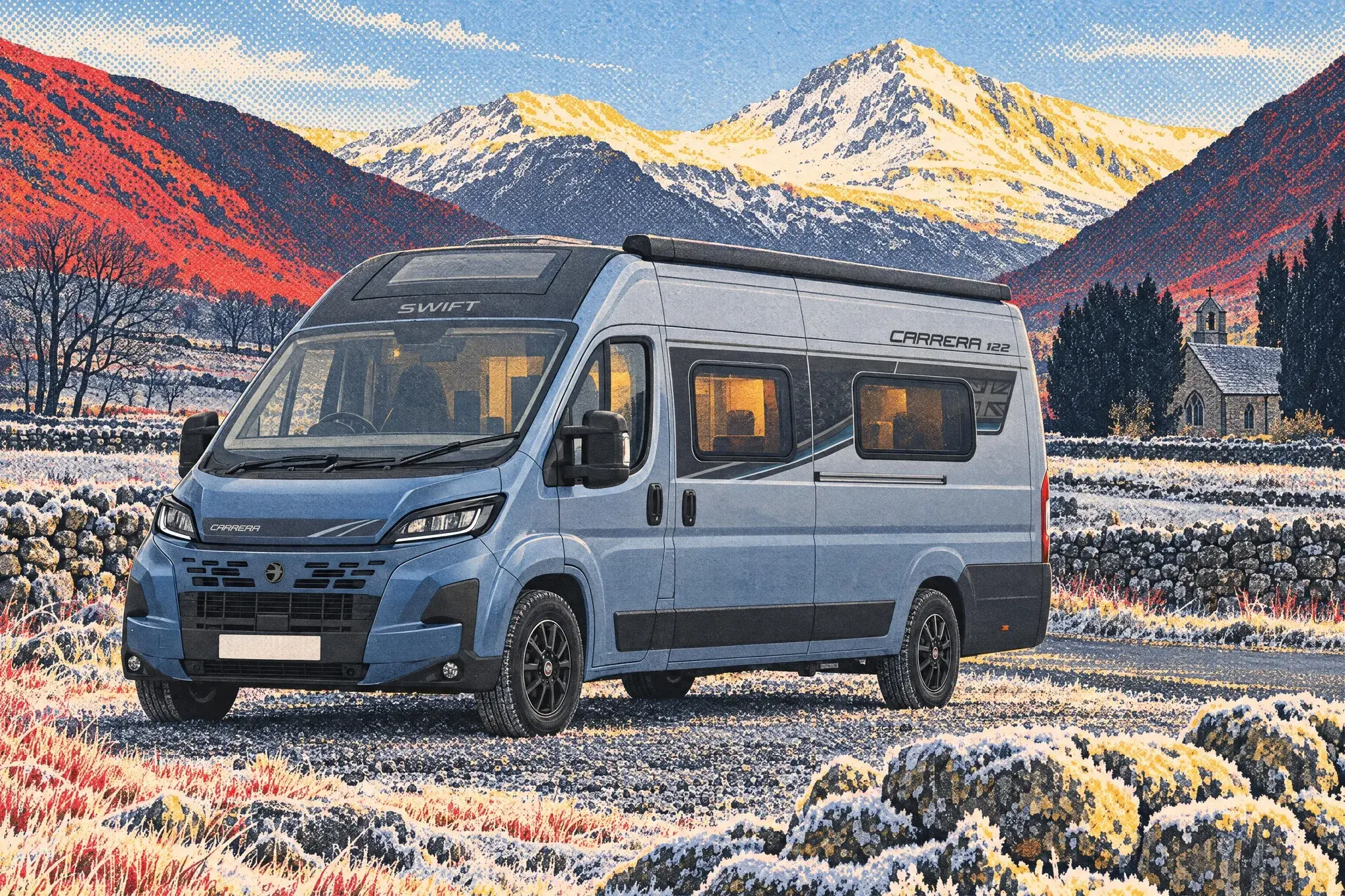
Swift has taken the gas out of its Carrera campervan for 2027, swapping bottles for a 340Ah lithium battery, diesel heating and an induction hob. Here is what that means across a real UK year, how it compares with the cheaper Merlin, and the one question to ask at the NEC.
New & Noteworthy
10 min read
British campervan converters at the NEC 2026: who builds on what, and for how much
A stand-by-stand map of the British campervan converters at the Motorhome and Caravan Show 2026: the vans they build on, their from-prices, seats, roofs and lead times, plus the four questions to put to every one of them.