
Are electric campervans ready yet? The honest 2026 picture

Written by
Leo
Leo covers campervan technology, maintenance, kit, and ownership advice, with a clear, practical focus on how things work in real life.
The short answer
In 2026 the electric campervan is real but still narrow: there is no production electric coachbuilt motorhome and no electric VW California yet, so an electric camper today means a converted electric panel van, and that is fine once you know it. The standout is the Kia PV5 (around 258 official miles, 150 to 200 real-world once loaded), with the ID Buzz, Fiat E-Ducato, Ford E-Transit and Mercedes eSprinter the other options, all losing range when loaded and in winter. The battery eats payload, but here is the silver lining: since June 2025 a normal category B licence covers electric vans up to 4.25 tonnes. Buy now for short trips with home charging; wait if you need one main van for long, spontaneous, all-season tours. Here is the honest 2026 picture, van by van.

The pitch is genuinely lovely. A campervan you charge at home for pennies, that pulls away in silence, that never visits a fuel station, that you can drive into any clean-air zone without a second thought, and that, on a quiet pitch by the sea, runs your kettle and lights off its own battery while the rest of the campsite listens to a generator. It is the most appealing version of the campervan future, and a fair bit of the marketing talks as if it has already arrived.
It hasn't, quite. In 2026 the electric campervan is real, but it's narrow, and the gap between the brochure and a fortnight in the Highlands is wider than anyone selling you one will volunteer. This is an honest look at where things actually stand: the vans you can genuinely turn into an electric camper today, the truth about range once you've built a kitchen into the thing, the charging realities nobody mentions, the weight the battery quietly steals from your kit allowance, and the single most important myth to get out of your head before you spend £60,000. Some of this is very encouraging. Some of it is a reason to wait a couple of years. Both are worth knowing.
First, the honest headline: there is no electric California yet
Let's clear up the biggest misconception immediately, because it shapes everything. As of 2026, there is no production electric coachbuilt motorhome from a major manufacturer, and there is no electric Volkswagen California. The thing many people picture, a purpose-built, factory electric camper with a pop-top and a proper kitchen, that you walk into a dealer and buy, does not exist on sale yet.
What exists instead is two things. The first is a small but growing set of electric panel vans, the same vans tradespeople buy, that specialist UK converters are turning into campers one at a time. The second is a string of concepts and announcements that are genuinely coming but aren't here. Volkswagen has confirmed an electric ID. California, built on the long-wheelbase ID. Buzz, but it's slated for the second half of the decade, realistically 2027 or 2028 at the earliest, partly because a fully electric California would tip past three tonnes once it's loaded. The "California" you can buy today is a plug-in hybrid on the T7 platform with around 50 miles of electric-only range, which is a fine thing but is not an electric camper.
So when we talk about an electric campervan in 2026, we are almost always talking about a converted electric panel van. That's not a criticism, some of these conversions are excellent, but it sets the right expectation. You're an early adopter buying a clever conversion of a working van, not a customer buying a finished electric motorhome off the forecourt. The latter is a few years away yet.
The vans you can actually turn into an electric camper
Here's the honest state of the bases worth knowing about, from the most convincing on sale today to the ones that are still concepts.
Kia PV5: the first one that genuinely works
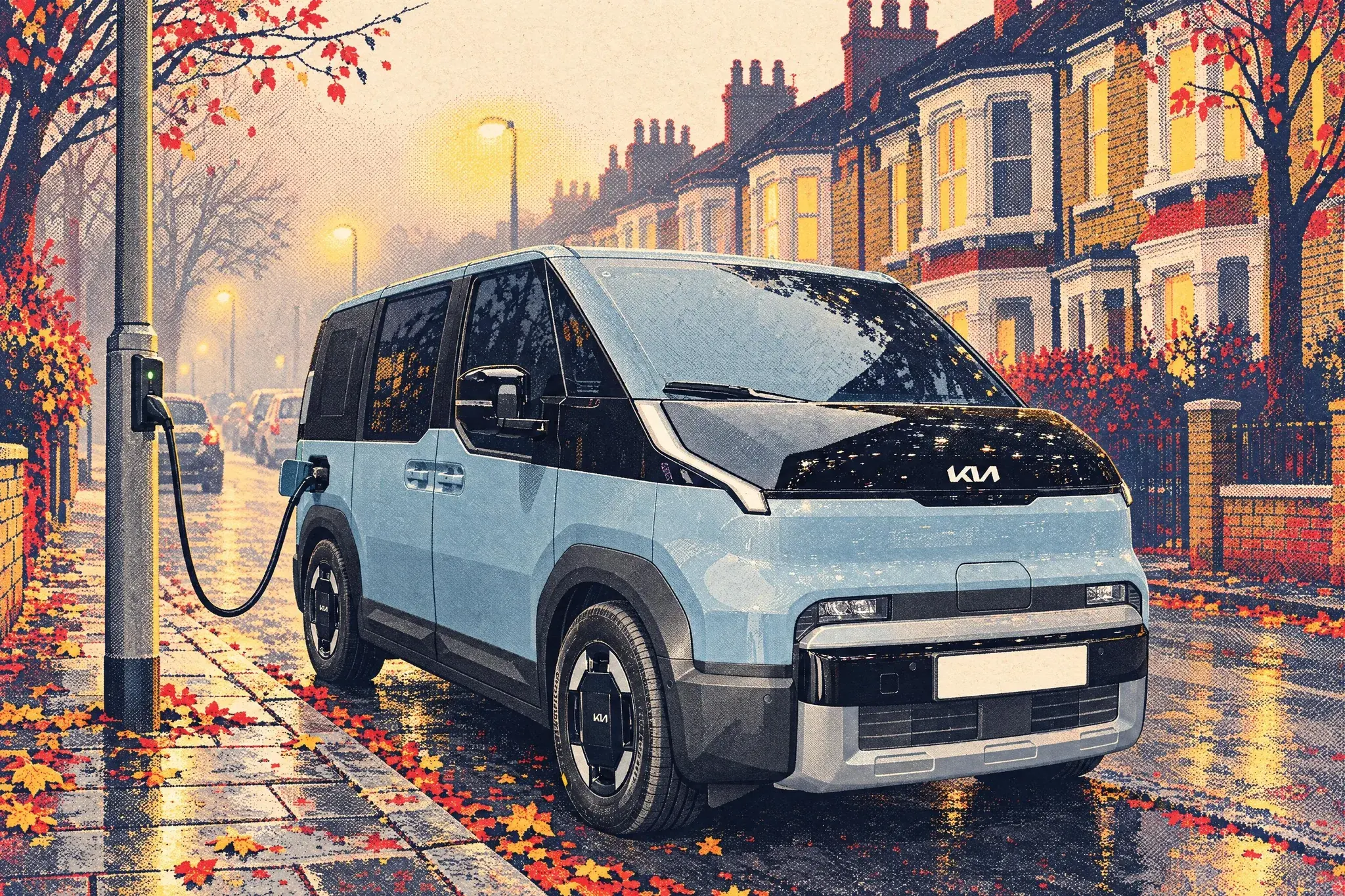
If one vehicle has moved the electric camper from "interesting idea" to "actually usable", it's the Kia PV5, which reached UK buyers in 2026 and which the conversion trade has taken to quickly. It comes with a 51.5kWh or 71.2kWh battery, an official range of around 258 miles for the long-range version, and, crucially, vehicle-to-load power of up to 3.68kW, which we'll come back to because it changes what an electric camper can do on a pitch. Kia's warranty, seven years on the vehicle and eight on the battery, is the longest of any van in this class, which matters when the technology is this new.
Real-world, converted and loaded, expect more like 150 to 200 miles, and less in winter. Prices are still settling, but the cargo version starts in the mid-£30,000s before VAT after the current van grant, conversions from established firms add from around £20,000, and a turnkey camper from a name like Sussex Campervans lands around £69,000 on the road. The honest limitation, which the better converters say out loud, is that the loaded range really does collapse to around 150 to 180 miles, so the PV5 is a brilliant weekender and short-hop tourer, not a van for spontaneous 300-mile days. Within those limits, it's the most convincing electric camper base you can buy right now.
Volkswagen ID. Buzz: characterful, thirsty, can't take gas
The ID. Buzz is the electric van everyone recognises, and converters are building campers on it, but it asks for clear eyes. The battery is 79kWh or 86kWh, the official range 248 to 293 miles depending on spec, and it rapid-charges quickly, 20 to 80% in around 20 to 30 minutes. The trouble is efficiency: independent testing has found the Buzz returns only around 130 to 160 miles on a wintry motorway, climbing past 200 only in warm weather at gentle speeds. Converters quote a more flattering 180 to 230 miles, but plan for the lower end if you tour in winter.
There's one quirk that matters enormously for a camper and rarely gets mentioned: the ID. Buzz cannot have a conventional gas off-grid heater fitted, because of how its floor and chassis are built. For a van you intend to sleep in through a British autumn, that's a significant constraint, and it pushes you towards all-electric heating, which, as we'll see, is its own headache. The Buzz is lovely to drive and full of character, and it costs from around £60,000 to £69,000 before you've converted it, but it's a heart purchase that needs a level head.
The big Stellantis vans: Fiat E-Ducato and its siblings
For anyone wanting a larger, walk-in conversion, the most significant development is the latest generation of the big Stellantis vans, sold as the Fiat E-Ducato, Citroën ë-Relay, Peugeot e-Boxer and Vauxhall Movano Electric. They now carry a 110kWh battery, an official range of up to around 261 miles, and DC charging up to 150kW, a real leap over the previous generation. The Fiat E-Ducato in particular is being sold to converters as a camper base, the first of these big electric vans genuinely adapted for it.
Two honest caveats. The official range is a best-case laboratory figure, and reviewers are blunt that you'll do well to get near it in the real world. And the battery is heavy: payload on the E-Ducato runs from around 635kg to 1,695kg depending on spec, against up to 2,315kg for the diesel, so the battery quietly eats something like 600kg of carrying capacity before you've added a single cupboard. For a big camper, where weight is already tight, that's the number that keeps converters up at night.
Ford E-Transit and Mercedes eSprinter: capable vans, cautious campers
Both the Ford E-Transit and the Mercedes eSprinter are excellent working vans, but they sit a little behind as camper bases. The E-Transit's official range is a modest 166 to 196 miles, and loaded real-world testing has seen it drop to around 80 to 130 miles, with one December motorway run averaging 125. Tellingly, the well-known converter Wellhouse builds its electrified camper on the plug-in hybrid Transit Custom rather than the full-electric E-Transit, which tells you something about where the range maths currently lands. The eSprinter offers more battery and up to 272 official miles in its longest-range form, but reviewers note a built-out electric Sprinter really wants 300-plus miles to make sense as a tourer, and it isn't quite there.
The concepts, and why a coachbuilt electric camper is hard
Beyond the vans on sale sit a row of concepts: an electric Bürstner on the E-Transit, a Dethleffs e.home with around 150 miles of range, a Knaus that uses a small engine purely to recharge the battery. They're encouraging, but they're concepts. The deeper reason a proper coachbuilt electric motorhome is taking so long is structural, and the converter Bailey has explained it well: the traction battery sits in the floor, which raises the floor and stops converters drilling through it to run the plumbing and services a coachbuilt body needs. The electric camper isn't just a diesel camper with a different engine; the architecture fights the conversion. That's why the panel-van route arrived first, and why the factory-built electric motorhome is still a few years out.
The range problem, told honestly
Here's the rule that will save you the most disappointment: take the brochure range and roughly halve it for honest trip planning. The gap between the official WLTP figure and reality is the single biggest honesty problem in this whole category, and it's worth understanding why, because it isn't one factor, it's four stacked on top of each other.
Speed dominates. Instrumented testing of one electric camper showed range falling from around 197 miles at 30mph to 159 at 60, 137 at 70, and just 115 at 80. A boxy camper pushing through the air at motorway speed is working hard, and the battery pays for it. Then add the conversion weight, which costs perhaps another 5%. Then add cold, which knocks off around 10% on its own, and more once the heater is running. And then, if you tow, brace yourself: a caravan or boxy trailer typically costs an electric vehicle 40 to 60% of its range, so a van that might manage 200 miles solo could struggle past 100 towing. None of these are faults, exactly; they're physics. But they mean the honest planning range for most electric campers in real British touring conditions is somewhere around 150 miles, not the 250 on the sticker, and less in winter or at speed.
The myth that needs killing: you can't run everything off the battery
This is the most important section in this guide, because it's the belief that leads people most badly astray. The idea goes: it's got a massive battery, so surely I can run the heating, the aircon, the fridge and everything else off it all night, for free, forever. It's the dream of limitless off-grid power. And it is, mostly, a myth. Here's the real picture, because once you understand it, a lot of the marketing falls away.
An electric campervan has two completely separate electrical systems, and they do not mix. There's the traction battery, the big high-voltage pack that moves the van, and there's the habitation system, a separate leisure battery, usually 12 volts with an inverter, that runs your lights, fridge, water pump and sockets, exactly as it would in a diesel camper. Tapping the traction battery to run your kettle is not something you can safely rig up yourself; it's high-voltage, hazardous, and it voids the warranty. So in the ordinary run of things, the giant drive battery is not your house battery. It moves the van. The camp electrics come from the same kind of leisure setup every camper has.
Heating is where the dream really breaks down. Running the van's own climate system overnight off the drive battery is not how these are designed to work, and it quietly drains your driving range. And heating a van with electricity off-grid is a genuine physics problem: a resistive electric heater would flatten even a large leisure battery bank in a few hours, and your solar panels cannot come close to replenishing that overnight. To do it properly all-electric, you'd need a battery bank so big it would fill your cupboards, weigh hundreds of kilos and cost more than the rest of the conversion. The honest industry answer, on the vans that allow it, is still a gas heater, the same Propex-style unit a diesel camper uses, which is exactly why the ID. Buzz's inability to take gas heating is such a real drawback. And to be clear on solar: it tops up your leisure battery, slowly. There is no way to meaningfully top up your driving range from a roof panel.
Now, the genuine exception, because honesty cuts both ways. Vehicle-to-load, or V2L, is real and useful. A van like the Kia PV5, with up to 3.68kW of V2L, can feed mains appliances directly from the traction battery, enough to run an induction hob, a kettle, or a fan heater for a while, roughly one campsite hook-up's worth of power. That's a genuine advantage over a diesel camper, and it's the kernel of truth the "run everything off the battery" idea is built on. But hold onto the caveats. Every kilowatt-hour you draw is range you won't drive on; the PV5's battery is also its fuel tank. The better converters still fit a separate leisure battery for the everyday low-draw essentials and treat V2L as a bonus for the occasional high-draw job, not as the primary system. And V2L isn't universal, plenty of electric vans don't have it at all. So the accurate version is this: an electric camper gives you a useful slug of extra power on tap, but not limitless power, and never free of the range trade-off. The basic architecture of camper electrics, leisure battery for the lights, gas for the heat, doesn't change just because the van is electric.
Charging a big van in the real world
Charging is where the electric camper meets the kerb, and the problem is rarely the one people expect. The cost is genuinely good news: charged at home, especially on an off-peak overnight tariff, an electric camper can cost something like 7p a mile, and as little as 1.5 to 2.5p on a cheap EV tariff, against perhaps 15 to 18p a mile for diesel. Over 10,000 miles a year, that can be the difference between roughly £500 and £1,500. If you have a driveway and a wallbox, the running-cost case is real.
The friction is physical and logistical. These vans take a big battery, so even an 11kW home charger takes several hours to fill a 110kWh pack, and many homes only have a 7kW single-phase supply, so a full charge is an overnight job, not a quick top-up. Rapid charging works well on the modern vans, but the real problem is fitting a long, tall van into a public charging bay at all: most bays are sized for cars, many sit in car parks behind height barriers that exclude a camper, and on rural touring routes the appropriate bays thin out fast. And campsites, where you'd most want to charge, are the slowest option of all. The major clubs do permit it, but with sensible limits: the Caravan and Motorhome Club, for instance, allows charging only through a socket inside your own outfit using the right cable, not straight from the bollard, capped at around 2.3kW, for about £7 a day. That's a useful trickle, perhaps 20 to 30 miles of range in a few hours, a top-up rather than a fill. None of this is a deal-breaker if you plan around it. All of it is a deal-breaker if you assumed touring an electric camper would be as carefree as a diesel.
Payload: the battery eats your kit allowance
We touched on this with the big vans, but it deserves its own flag because it catches people out. The traction battery is heavy, and its weight comes straight off your payload, the allowance for everything you add: the bed, the kitchen, the water, the leisure battery, passengers, bikes, luggage. The Fiat E-Ducato's payload of 635 to 1,695kg against the diesel's 2,315kg tells the story: roughly 600kg gone before you start. This is precisely why Volkswagen says an electric California would breach three tonnes, and it's why weight discipline matters even more in an electric conversion than a diesel one. Before you load up, know your plated weight and what you've really got spare, the same hard payload sums that matter with any heavy addition, as we cover in our guide to hydraulic self-levelling. With an electric camper, the battery has already spent a big chunk of your budget for you.
The 4.25-tonne licence: a genuine silver lining
There's a real piece of good news on the weight front. Since June 2025, a normal category B car licence in the UK covers zero-emission vans up to 4.25 tonnes, up from the usual 3.5, with the previously required five hours of training scrapped. That extra 0.75 tonnes is, in effect, an allowance for the battery weight, and it means an electric camper that would otherwise breach the licence limit can still be driven on an ordinary licence. The conditions are worth confirming for your situation, you need to have held your licence for a while, and it applies to fully electric vehicles only, not plug-in hybrids, which stay at 3.5 tonnes, but it's a sensible, deliberate bit of policy that takes some of the sting out of the battery weight. For a heavy electric camper, it can be the difference between everyone in the family being able to drive it and not.
What an electric camper costs
There's no getting around it: electric campers are dear. A finished one realistically lands somewhere between £55,000 and £70,000 and up, materially above an equivalent diesel, and the choice of base vehicles is narrow. A Kia PV5 conversion is the most accessible genuine route, with the base van in the mid-£30,000s before conversion; an ID. Buzz starts higher before you've built anything into it; the big Stellantis vans sit in between. Grants on the van side help and shift over time, so treat any price as a starting point and get a current quote. The honest summary is that you are paying a clear premium today for the privilege of being early, on top of a van that will tour a shorter distance between charges than the diesel it replaces.
Who it's for, and who should wait
Strip away the hype and the picture is actually quite clear. An electric campervan is a genuinely strong choice today if your use fits its shape: short trips and weekends rather than epic tours, a home base with a driveway and off-peak charging, a lot of urban and clean-air-zone driving, or a second vehicle that does double duty. For that owner, the quiet, the smoothness, the instant torque, the cheap home miles and the clean-air freedom are real, present-day pleasures, and the Kia PV5 in particular makes the whole thing work.
It's a "wait a couple of years" purchase if your touring looks like the thing most people buy a camper for: spontaneous long-distance trips, the Highlands for a fortnight, towing a trailer or a small caravan, or relying on guaranteed off-grid heat for days at a time in winter. The range once loaded, the charging infrastructure for a big van, and the narrow model choice all still say early days. The direction of travel is unmistakable, and the arrival of the PV5 shows how fast the bases are improving, but in 2026 the electric camper is a brilliant tool for a specific job rather than a like-for-like replacement for the diesel all-rounder. If the Kia in particular has caught your eye, we go deeper on it and the UK firms converting it in our piece on the Kia PV5 and the converters building campers on it.
Common questions
Can you buy a proper electric motorhome in 2026?
Not a purpose-built one. As of 2026 there is no production electric coachbuilt motorhome from a major manufacturer and no electric VW California; the factory electric camper with a pop-top and kitchen does not exist on sale yet. So an electric campervan in 2026 almost always means a converted electric panel van, like the Kia PV5 or a Stellantis, Ford or Mercedes electric van.
What is the real range of an electric campervan?
Less than the brochure, and it collapses once the van is converted, loaded and cold. The Kia PV5 quotes around 258 official miles but does more like 150 to 200 loaded; the ID Buzz quotes up to 293 but can drop to 130 to 160 on a wintry motorway; the E-Transit is officially 166 to 196 but has dropped to 80 to 130 loaded. Range also falls sharply with speed, so plan for the lower figures in winter.
Can I run my heating and appliances off the main battery all night?
This is the myth to drop: you cannot simply run everything off the traction battery indefinitely. Most electric campers still use a separate leisure system and gas or diesel for heat, though vehicle-to-load features like the Kia PV5's 3.68kW output let the main battery power appliances on a pitch, which genuinely expands what an electric camper can do. Running cabin heating off the drive battery all night would badly hit your range.
Is an electric campervan cheaper to run than diesel?
On fuel, yes, if you charge at home: home and off-peak charging can cost around 7p a mile or less against roughly 15 to 18p for diesel, saving around 1,000 pounds over 10,000 miles. But public rapid charging erodes much of that, the purchase price is higher and depreciation is uncertain, so the lifetime sums are closer than the per-mile figure suggests.
Do I need a special licence for an electric campervan?
Often not, thanks to a helpful rule change. Since June 2025 a normal category B licence covers fully electric vans up to 4.25 tonnes, with no extra training, which is designed to offset the heavy battery. It applies to zero-emission vehicles only (plug-in hybrids stay at 3.5 tonnes), with conditions on how long you have held your licence, so check your own case, but for most people a heavy electric camper is still drivable on a standard licence.
Should I buy an electric campervan now or wait?
Buy now if your use fits: short trips, a home base with off-peak charging, urban and clean-air-zone driving, or as a second vehicle. Wait if you want one main camper for long, spontaneous tours, towing, or guaranteed winter off-grid heat, because the loaded range and the charging network for big vans are not there yet. The Kia PV5 shows the category maturing fast, but 2026 is still early-adopter territory.
The reachable bit
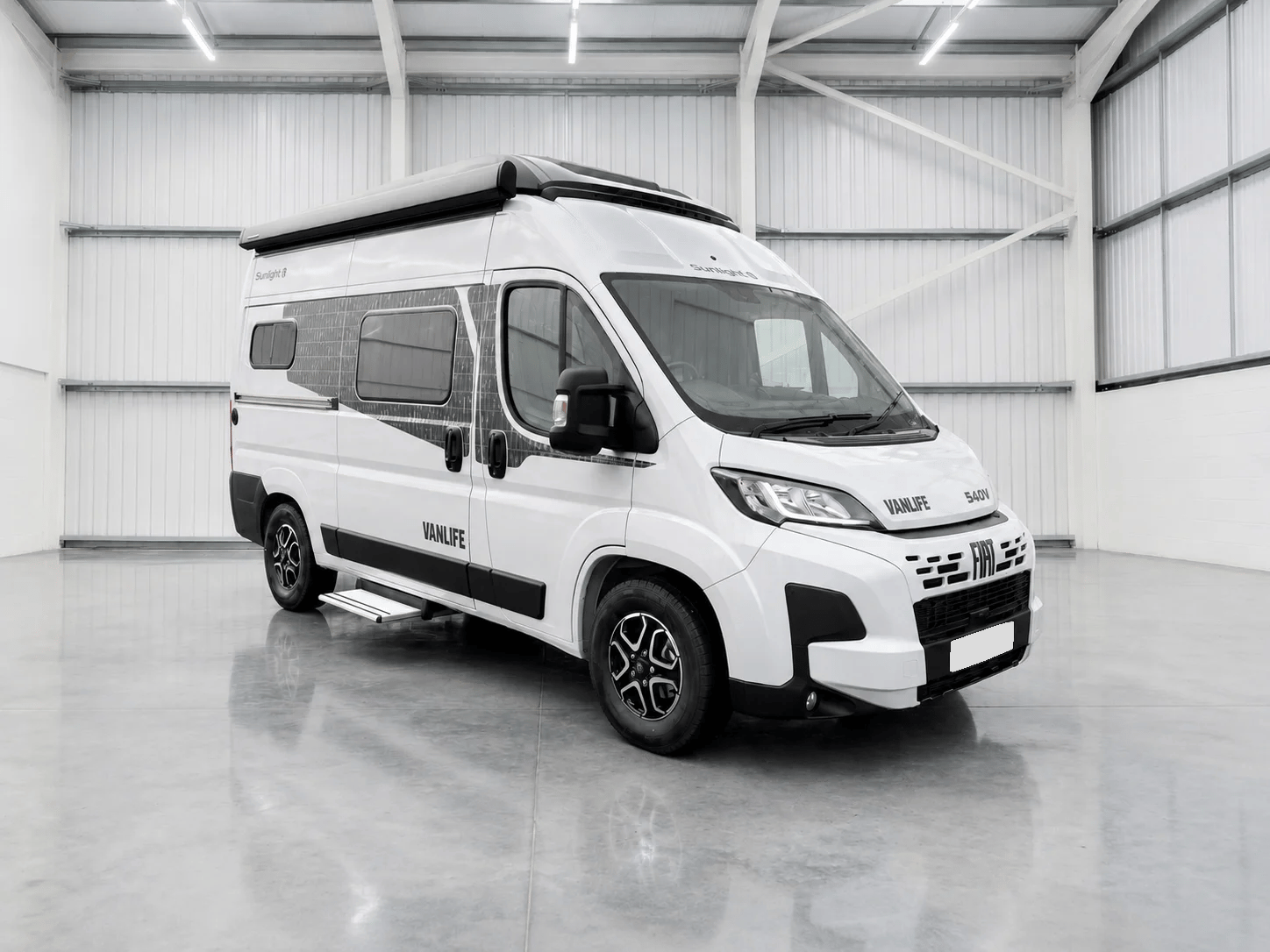
The camper you fall for is rarely the one you can afford. That gap is the whole reason Campervan.win exists. Right now we’re giving away the Sunlight Vanlife, worth around £65,000, and closing that gap is the point: capped entries so the odds stay honest, £10 a ticket, a maximum of five per person, £500 to a UK charity from every full draw, the winner picked by a public randomness beacon anyone can re-check, and one person driving away in the van itself.
Enjoyed this post?
Get more honest campervan guides like this one in your inbox.
You’re in!
Check your inbox. We’ve just sent you a welcome email.

About the author
Leo
Leo covers campervan technology, maintenance, kit, and ownership advice, with a clear, practical focus on how things work in real life.
Keep Reading
Related Reading
Thoughtful articles that build on what you’ve just read.
Campervan Tech & Electrics
10 min read
Campervan electric systems: how to judge a good one
A plain-English guide to reading and reviewing a campervan's electrical setup, from leisure batteries and solar to DC-DC chargers and inverters, so you can tell a genuinely good system from a flashy spec sheet.
Campervan Tech & Electrics
10 min read
The best campervan electrical systems, explained honestly
A plain-English guide to what makes a campervan electrical system genuinely good, from leisure batteries and charging to inverters and safety, with honest setups for different ways of travelling.
Campervan Tech & Electrics
11 min read
Campervan air conditioning: the honest UK guide for motorhomes and vans
A practical look at whether air conditioning is worth fitting to your van, the real pros and cons, the main types, what it takes to run off-grid, and which system suits which budget.
Campervan Tech & Electrics
26 min read
Off-grid for real: what 100Ah lithium and Alde heating get you in a 4x4 van
An honest, detailed look at what a single 100Ah lithium battery and an Alde wet heating system actually deliver in a 4x4 campervan, with real UK figures, day counts, and the mistakes that catch people out.