
The VW Grand California Dune: now on sale in Britain, and how it got here

Written by
Rowan
Rowan writes editorial features, comparisons, and industry context pieces that help readers understand the campervan and motorhome landscape.
The short answer
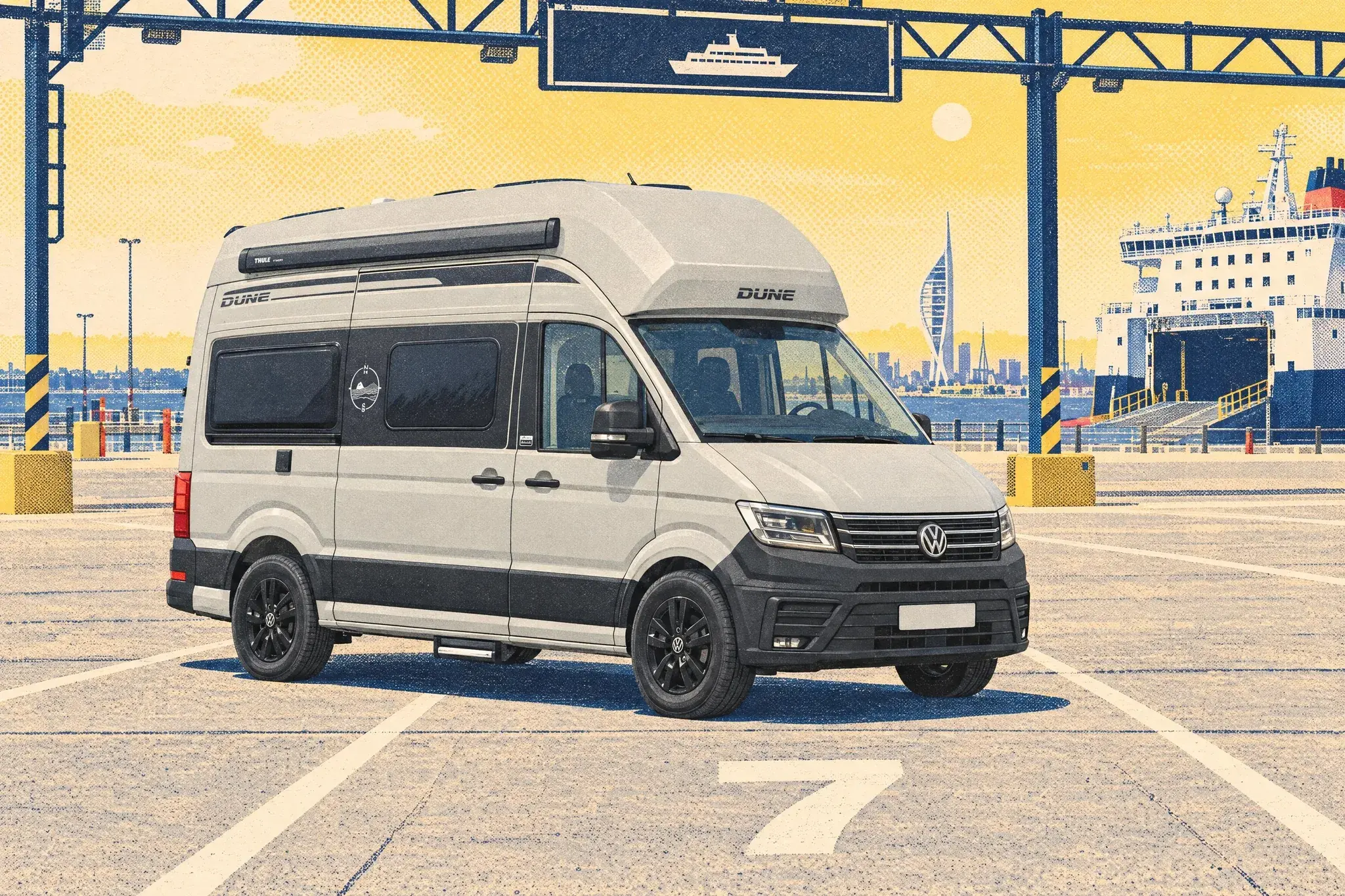
The VW Grand California Dune is an adventure-styled 2026 special edition of VW's big Crafter-based camper, with chalk-grey Ascot Grey paint, black wheels and rugged dark cladding, and it is a lovely, desirable thing. Be clear, though, that it is style with modest substance: a 2.0 TDI 163 PS diesel, with optional Haldex-type 4MOTION (on the 680 only in the UK) and a diff lock that handle wet grass and muddy tracks rather than real off-roading. Britain couldn't buy it at first, but Volkswagen UK has now put it on sale: its price list of 30 September 2026 has the Dune from £85,408 for the 600 to £96,250 for the 680 4MOTION, £1,200 more than the matching standard Grand California. Here is what the Dune is, what it costs, and how it got here.

Updated 6 October 2026: Volkswagen UK has now published Grand California Dune prices and opened orders, so we have corrected the availability, prices and specification details below and kept the story of how it got here.
There's a version of the VW Grand California that's painted the colour of a winter beach, wears black wheels and chunky grey cladding, has "DUNE" written above the windscreen and a little compass etched into the side window, and comes with the camping chairs already in the boot. It's called the Dune, it looks terrific, and you can walk into a dealer in Germany or Austria and order one today.
When we first wrote this piece in June 2026, you couldn't buy one in Britain, and when a UK motoring title asked Volkswagen directly whether that might change, the answer wasn't a flat no, it was a shrug and a maybe. That has now changed. Volkswagen UK published Grand California Dune prices in its price list of 30 September 2026, and the Dune is open for order here in both lengths, from £85,408. We've kept the story of how it got here, because it still explains what the Dune is and isn't, and we've corrected the facts that have moved. First, though, what exactly is it?
What the Grand California Dune actually is
The Dune is a special edition of VW's Grand California, the big, Crafter-based high-roof camper (the one with a fixed washroom and a permanent bed, not the pop-top Californias). It arrived for the 2026 model year, unveiled at the Caravan Salon in Düsseldorf at the end of August 2025, and it's best described as adventure-styled. Hold that phrase; we'll come back to how much is style and how much is substance, because honesty matters more than hype.
Start with the way it looks, because that's the point of it. The Dune gets an exclusive solid paint colour, "Ascot Grey", a pale, chalky grey that VW says is inspired by "the colours of the dunes on Europe's beaches and Africa's deserts". (Some English coverage called it beige; the German descriptions are clear that it's a light chalk-grey, and that's what it is.) On top of that sit 17-inch "Lismore" alloy wheels in gloss black, "DUNE" lettering on both sides of the roof and above the windscreen, a compass motif worked into the sliding-door window line, and anthracite-grey rugged plastic on the bumpers and side strips in place of body colour. The overall effect is genuinely handsome, understated and outdoorsy rather than shouty, and a world away from the slightly clinical white most big motorhomes wear.
Inside, the Dune leans into the same theme with "Atami Bamboo" wood-effect surfaces on the table and kitchen, durable PVC flooring through the kitchen, living area and load space, blackout blinds, luggage nets in the upper lockers, ambient lighting between the cabinets, and a clever reworked table that detaches and clips onto the outside of the kitchen unit so you can cook and eat in the open. VW's German launch material adds a set of California camping chairs and a table; in the UK, every Grand California carries a table and chairs in its rear doors.
Here's a point of accuracy worth making, because it's the sort of detail that gets garbled: a good chunk of that interior, the bamboo-effect décor, the PVC floor, the detachable table, the new digital cockpit and electronic parking brake, the updated driver-assistance, is actually part of the 2026 update to the whole Grand California range, not unique to the Dune. The genuinely Dune-exclusive bits are the Ascot Grey paint, the black Lismore wheels, the anthracite cladding and the DUNE and compass graphics, and in Germany VW also quoted a package price advantage of up to around €3,623 over speccing the same kit individually. That's not a criticism, it's just what you're actually buying: a very well-judged styling-and-value package on top of an already-updated van.
On safety and equipment, the German Dune comes with VW's "Advanced Assist" package as standard: adaptive cruise control with stop-and-go, Travel Assist active lane-keeping, Emergency Assist and a predictive speed limiter, along with full LED headlights, a rear-view camera, electrically folding mirrors and automatic climate control. In the UK, every Grand California already has adaptive cruise control, Front Assist, Lane Keeping Assist and blind-spot monitoring, and the Dune adds LED headlights, a rear-view camera and Climatronic automatic air conditioning. For a vehicle this size, that's a reassuring amount of standard kit.
The Dune at a glance
| Spec | VW Grand California Dune |
|---|---|
| Base vehicle | VW Crafter (Grand California 600 or 680), built in Poland |
| Engine | 2.0 TDI diesel, 163 PS, 8-speed automatic |
| Drive | Front-wheel drive; 4MOTION all-wheel drive optional (680 only in the UK) |
| Off-road kit | Optional rear diff-lock; no suspension lift, no all-terrain tyres |
| Exclusive paint | Ascot Grey (pale chalk grey) |
| Wheels | 17-inch Lismore alloys, gloss black |
| Styling | DUNE roof and screen graphics, compass motif, anthracite cladding |
| Interior highlights | Bamboo-effect decor, PVC floor, blackout blinds, detachable outdoor table, camping chairs |
| Berths | 600: up to 4 (with over-cab bed); 680: 2 |
| Price (Germany) | 600 EUR 88,964 / 680 EUR 91,886 (FWD); 4MOTION ~EUR 6,000 to 7,000 more |
| Price (UK) | 600 £85,408 (3.5T) / £86,080 (3.88T); 680 £88,186 (FWD) / £96,250 (4MOTION), VW UK price list, 30 September 2026 |
| UK availability | On sale, open for order in both lengths |
Let's be honest: it's adventure-styled, not an expedition truck
Before we argue for bringing the Dune to Britain, we have to be straight about what it is and isn't, because overselling it would do nobody any favours, least of all you.
The Dune is powered by a 2.0-litre TDI diesel with 163 PS and an eight-speed automatic. (Worth noting if you're comparing with older road tests: that's down a little from the 177 PS the pre-update Grand California offered.) Crucially, VW's 4MOTION all-wheel drive is an option, not standard, and in the UK it's offered on the 680 only, with a rear differential lock as a further £756 option. The all-wheel-drive system is a Haldex-type setup that runs as front-drive most of the time and sends torque rearwards, up to a 50:50 split, when it senses slip, adding 117kg in the process, going by VW UK's figures for the Dune 680.
What the Dune does not have is any suspension lift or all-terrain tyres. German magazine promobil, which tested a 4MOTION example in Spanish mud, was clear about this: it's a soft-roader with optional traction, not a lifted expedition vehicle. The genuine capability is real but modest, the optional 4MOTION and diff-lock will get you confidently across a wet grass field, a muddy forest track or a slippery slipway where a front-drive motorhome would scrabble and bog. They will not take you rock-crawling. If you came expecting a Mercedes-Crafter-based 4x4 overland build, this isn't that, and the honest framing, "a beautifully styled, slightly more capable Grand California", is both more accurate and, we'd argue, more appealing to the people who'd actually buy one.
It's worth understanding what the optional all-wheel drive really buys you, because it's the one bit of genuine substance under the styling. The Haldex-type system spends most of its life driving the front wheels, like any front-drive motorhome, and only wakes the rear axle when it detects the fronts starting to slip. That's exactly the right tool for the situations a touring camper actually meets: a wet, rutted field at a festival, a muddy farm pitch, a slimy concrete slipway, a forest track softened by rain. In all of those, a front-drive motorhome can sit there spinning while you go red in the face, and the 4MOTION Dune will simply crawl out. What it won't do is climb a mountainside, because the ground clearance and tyres are still those of a road vehicle. There's a weight cost too: the system adds 117kg, which matters because it eats into payload (the Dune 680's 603kg falls to 486kg) and, since in the UK it comes only on the 3,880kg 680, keeps you firmly in C1-licence territory. For a lot of buyers the front-drive Dune will be all they ever need; for anyone who regularly pitches off hard standing, the 4MOTION option is the box worth ticking, and it's a box VW already lets British buyers tick on the standard van.
That honesty matters for the UK argument, too, because it means the Dune isn't some exotic engineering project that would be hard to bring here. It's mostly paint, trim and an optional driveline VW already sells. Keep that in your back pocket.
Where you can buy it, and where you can't
The Dune is on sale in Germany, confirmed by German dealer stock and the trade press, and in Austria, where Volkswagen's own national site has a dedicated Dune configurator page. It was launched as a Europe-facing model at Europe's biggest motorhome show, and it's been covered as a European release across the continent. It is not sold in the United States (the Grand California isn't a US-market vehicle at all). When we first wrote this, it wasn't offered in the United Kingdom either, which is the reason this piece exists. It is now: Volkswagen UK published Dune prices in its price list of 30 September 2026.
On price, the German figures are €88,964 for the front-wheel-drive 600 and €91,886 for the 680, with 4MOTION adding an estimated €6,000 to €7,000 on top. Resist the urge to convert those straight into a UK expectation, though. At the exchange rate when we first wrote this, €88,964 was roughly £75,000, but German and UK pricing almost never line up directly once you account for VAT differences, exchange rates and how each market positions the vehicle. In June we reckoned a UK Dune would most likely be priced in line with or above the standard Grand California's then price of around £85,000, not the flattering converted German number, and so it proved. Volkswagen UK's price list of 30 September 2026 has the Dune at £85,408 for the 600 at 3.5 tonnes, £86,080 for the 600 at 3.88 tonnes, £88,186 for the front-drive 680 and £96,250 for the 680 4MOTION, on the road. That's £1,200 more than the matching standard van in each case: the same list cut the standard van's prices by £1,200, and the Dune took over the old price points.
The UK question: what VW actually said
Here's the heart of it, and we're going to be careful with the facts because it would be easy, and wrong, to turn this into "VW refuses to sell Britain the good stuff".
When Practical Motorhome asked Volkswagen's UK press office, at the Dune's launch in September 2025, whether it would be offered to UK customers, the answer on the record was that VW "was unable to say if the Dune is going to be offered to UK customers", but that it "was hopeful this would be possible in the future". Until Volkswagen UK's September 2026 price list, that was the only official UK statement we could find, and it was worth reading precisely. It was not a confirmation. It was not a refusal. It was a genuine "we don't know yet, and we'd like to".
In June, the Dune did not appear anywhere on the official Volkswagen Commercial Vehicles UK Grand California pages, which listed only the standard 600 and 680, so you could not order one here. Now you can. We never found a statement that the Dune was left-hand-drive only, or of any hard UK exclusion, and VW UK states no limited-run number. Nobody outside VW could say definitively why it wasn't here, and that included us. What we could do was look at what was plausible, and at one argument that was much stronger than the rest.
The right-hand-drive question (and why it isn't the answer)
The instinctive explanation for any "Europe gets it, Britain doesn't" story is right-hand drive: surely it's just too much faff to engineer the thing for our side of the road. Except that explanation falls apart almost immediately here.
The standard Grand California is already sold in right-hand drive in the United Kingdom. Every UK road test of it is of a right-hand-drive vehicle. VW already homologates, builds and sells this exact van, in RHD, for British buyers. More than that, VW UK already offers 4MOTION on the standard Grand California here. So the Dune's mechanical package, the thing that would actually be hard to re-engineer, is not novel for Britain at all. It's already on the menu.
Which means the Dune, stripped to what makes it a Dune, is a paint colour, a set of wheels, some cladding and a few graphics, sitting on a van VW already sells here in right-hand drive with the optional driveline already available. That is about as low as the engineering barrier gets for a "new" model. The honest conclusion was that the reasons the Dune wasn't here were far more likely to be commercial, low-volume product planning, deciding which of Europe's many special editions are worth the homologation paperwork and marketing effort for the smaller UK market, than anything technical. We'll flag that as our informed reading rather than a quote from VW, but it's a reading the facts support well.
What Britain can buy: the standard Grand California
To be fair to VW, it's not as if the Grand California is some forbidden fruit here. The standard van is very much on sale, and it's worth understanding, both because it's the cheaper way into a Grand California and because it frames what the Dune adds.
It comes in two lengths. The 600 is the higher-roofed one, around six metres, with a transverse rear double bed and the option of a pull-out bed over the cab with space for two children, which makes it a four-berth and the natural family choice. The 680 is the longer, lower-roofed one, with a big lengthways rear bed and more storage but no over-cab bed, so it sleeps two. One important practical wrinkle: the 680 comes only at a 3,880kg weight, which needs a C1 licence to drive, while the 600 sits at 3,500kg (drivable on an ordinary car licence) unless you option it up. A 4MOTION Dune, which in the UK means a 680, sits in that same heavier bracket, so the licence question follows it.
As of Volkswagen UK's price list of 30 September 2026, the standard van costs from £84,208 for the 600 to £86,986 for the front-drive 680, and 4MOTION is offered on the 680 only, at £95,050. It's built on the VW Crafter in Poland, and it remains VW's only factory camper with a proper fixed wet room and permanent bed. In other words, Britain gets the serious version of this van, and now it gets the pretty, outdoorsy, keenly-bundled edition of it too, for £1,200 more.
What British buyers reach for instead
Here's the thing that turned this from a niche grumble into a real argument when we first wrote it: the demand the Dune would satisfy was already being satisfied, just not by Volkswagen, and not without compromise. When the factory won't sell you a good-looking, slightly-rugged, ready-to-go adventure camper, you do one of three things, and British buyers were doing all three in numbers.
The first is to grey-import a left-hand-drive Dune from the continent. It's entirely possible, plenty of European editions reach British driveways this way, but you take on the registration paperwork, the left-hand-drive compromise on our roads, and the question marks around warranty and servicing that come with a vehicle the local network didn't sell. People do it because they want the thing badly enough. That's demand, leaking abroad.
The second is to go bespoke. Britain has a thriving industry of specialists converting Mercedes Sprinters, VW Crafters and MAN TGEs into genuinely capable, adventure-styled, often 4x4 campers, names like APE Adventure Vans, Project Yonder and Voyage Adventure Vans among them. These builds are frequently superb, but they're also expensive, slow to order, and, by definition, not a warrantied factory product. Buyers accept all of that because the factories haven't been offering enough of what they want. That's demand, being met by other people's businesses.
The third is to buy a rival's adventure camper instead. The market is increasingly well served at the rugged end by the likes of the Burstner Habiton 4x4 and others, and would-be buyers of an adventure-flavoured VW are perfectly capable of taking their money to a competitor that will actually sell them one. Every one of those sales is a Grand California Dune that VW didn't sell. When you add the three routes together, the picture was unambiguous: the appetite for exactly this kind of van was large, visible and being directed almost everywhere except a VW showroom. That was never a reason to deny the Dune to Britain. It was the single best reason to bring it.
If you want a version the UK doesn't sell: the import route
Now that VW UK sells the Dune, importing one only makes sense if you want a version Britain doesn't get, such as the 600 with 4MOTION, which Germany and Austria sell. If that's you, importing one is genuinely possible, though it's worth going in with eyes open. You'd buy a left-hand-drive example from a dealer in Germany, Austria or elsewhere on the continent, arrange transport or drive it home, and then register it here, which means an application to the DVLA, paying any VAT and duty due, an individual approval check, and sorting UK-spec plates and lighting. None of that is insurmountable, and specialist import agents will handle most of the paperwork for a fee.
The compromises are real, though. It will be left-hand drive, which on British roads is a daily niggle at overtakes and toll booths even if it's not a dealbreaker. Warranty and recall handling can be more awkward for a vehicle the UK network didn't sell, though VW's warranties usually carry a European dimension worth confirming case by case. And resale down the line means selling a left-hand-drive import back into a right-hand-drive market, which narrows your pool of buyers. For some people, none of that outweighs getting the exact van they want, and they'll happily do it. For most, a UK-supplied Dune, now on sale, is the simpler route.
Where the Dune sits in VW's camper world
It helps to place the Dune in the wider range, partly because it's easy to get VW's many "Californias" tangled.
The Grand California (the Dune's base) is the big Crafter-based high-roof camper. Separately, there's the famous smaller California, now built on the Multivan platform, in Beach, Coast and Ocean trims, which is the pop-top camper most people picture. That smaller California is the one available as a plug-in-hybrid eHybrid; importantly, there is no electrified Grand California, so don't let anyone tell you the Dune has a hybrid option, it doesn't. And looming over all of it is the promised electric camper based on the ID. Buzz, which VW has discussed but not yet put into production.
It's worth a quick tour of the prices, because they frame where the Dune would sit. The smaller Multivan-based California spans roughly £63,000 for an entry Beach, through the Coast at around £69,000, to the top Ocean at around £76,000 to £79,000, with the plug-in-hybrid eHybrid 4Motion version, the one with electric all-wheel drive and around 50 miles of electric range, from about £78,000. The big Grand California, the Dune's base, starts higher again at £84,208 for the 600, or £85,408 as a Dune, on Volkswagen UK's 30 September 2026 price list. The fully electric ID. California, when it eventually arrives, is expected in the second half of the decade, realistically 2027 or later, and remains an unconfirmed quantity on price and range. So the Dune slots in as a styling-and-equipment edition of VW's most expensive, most serious factory camper, at the premium, aspirational end of an already premium range. That positioning, top of the range, image-leading, photogenic, is exactly the kind of product that usually earns its place in a line-up, which made leaving it out of the UK at first all the more curious.
Seen in that context, the diesel, optionally-all-wheel-drive, adventure-styled Grand California Dune is arguably the most expedition-flavoured factory camper VW currently makes. As the rest of the range tilts towards hybrid and electric and town-friendly, the Dune is the one that leans the other way, towards getting away from it all. Which made its absence from a Britain that's mad for exactly that kind of van all the more conspicuous, until Volkswagen UK put it on sale.
What it's like to drive and live with
We haven't driven a Dune ourselves, so take this as a picture assembled from the spec and from the European road tests rather than our own verdict. The 163 PS diesel and eight-speed automatic are a known, well-liked combination in the Crafter, smooth and relaxed rather than quick, and entirely happy to cover big distances; Volkswagen hasn't yet published official economy for the current engine, but UK testers report roughly 26 to 32 mpg (Parkers), reasonable for a vehicle of this size and weight. The Crafter cab is one of the better big-van environments, car-like and well-equipped, and the standard driver-assistance suite takes the strain out of motorway miles.
On the rough stuff, promobil's test of a 4MOTION example in Spanish mud is the most useful real-world reference, and its takeaway was consistent with everything else here: with the all-wheel drive and diff-lock working, the Dune pulled through terrain that would have stranded a front-drive motorhome, while never pretending to be a rock-crawler. As a thing to live in, it's a Grand California, which is to say a properly sorted camper with a fixed rear bed, a real wet-room, a proper kitchen and the build quality you'd expect from a factory product rather than a conversion. The Dune's own contribution to daily life is mostly in the details that make outdoor living nicer: the detachable table you can set up outside, the blackout blinds, the camping chairs ready to go, the durable wipe-clean floor for sandy feet and muddy boots. None of it is revolutionary. All of it is the sort of thoughtful, lived-with touch that quietly makes you want one. When we first wrote this, that brought us back to the problem: wanting one, in Britain, was as far as you could get. Now you can order one.
VW has always had an adventure itch
None of this is out of character for Volkswagen. The California name has been on camping VWs since the late 1980s, and the brand's whole modern identity is bound up with the idea of the van as a passport to the outdoors. More to the point, VW has repeatedly built genuinely adventurous editions when it's wanted to. The previous-generation California offered factory 4Motion all-wheel drive and, in "Beach Tour" guise, paired it with a differential lock and a camping bundle aimed squarely at people heading off the beaten track; some owners have built those into serious expedition vehicles. Go further back and there are concepts like the Crafter-based Atacama 4WD, and the PanAmericana rugged styling VW now applies across the Multivan, Caddy, Amarok and the latest Transporter.
In other words, the appetite, the engineering and the design language for an adventure-flavoured camper have been part of VW's make-up for decades. The Dune isn't a wild departure; it's VW doing something it has always done well, dressing a camper for the wild and selling the daydream. Which made withholding it from one of its most camper-obsessed markets feel less like deliberate strategy and more like an oversight waiting to be corrected, and in September 2026 Volkswagen UK corrected it.
The bigger picture: the editions Europe gets and Britain doesn't
The Dune isn't an isolated case so much as the latest, most photogenic example of a familiar pattern: a special edition or model variant that's freely available across mainland Europe takes its time reaching Britain, or never arrives at all. Sometimes there's a genuine engineering reason, a left-hand-drive-only build, or a feature that can't be homologated here. Often, though, it comes down to cold arithmetic: Britain is a smaller, right-hand-drive island market, and putting a low-volume edition through UK type approval, pricing, marketing and dealer training costs money that only pays back if enough people buy it. Faced with that sum, the importer's safest move is to bring the core range and skip the specials.
You could understand the logic and still think it was the wrong call here, for one simple reason we kept coming back to: the usual barriers didn't really apply to the Dune. It isn't left-hand-drive only. It doesn't need a feature Britain can't have. The base van and even its signature 4MOTION option are already sold here in right-hand drive. So the Dune fell into the most frustrating category of all, the edition Britain missed not because it couldn't be done, but because someone decided it wasn't worth the paperwork. That was a decision, not a law of physics, and decisions can be revisited, as this one now has been.
There's a slightly bigger principle hiding in here, too. Britain didn't just adopt the campervan; for decades it half-defined the culture around it. To be the market that's quietly told "not this one" while the continent gets the keys is a strange place for a nation of camper enthusiasts to end up. It's the kind of gap that's easy for a manufacturer to overlook precisely because the people it affects tend to grumble privately and then buy something else, rather than asking out loud.
The case we made for bringing the Dune to Britain
Here's the argument we made in June, as fairly as we could, for VW turning that "hopeful" into a "yes". VW UK has since done exactly that, so read what follows as the case as it stood then.
First, and most powerfully, the barrier is tiny. As we've established, VW already sells the Grand California in right-hand drive here, already offers its 4MOTION here, and the Dune is overwhelmingly a styling-and-equipment package on top of that. This isn't a clean-sheet engineering ask; it's a trim-level decision. The hard part is already done.
Second, the demand is plainly there. Britain's appetite for adventure-styled and 4x4 campervans has been growing for years, and a whole industry of UK specialists has sprung up to feed it, converting Sprinters, Crafters and MAN TGEs into rugged off-grid tourers because the factories haven't been offering enough of them. A factory-built, fully-warrantied, adventure-look Grand California, with the option of real all-wheel drive, answers that demand without the risk and the long waits of a bespoke conversion.
Third, it plugs a gap VW is currently leaving to others. Right now, a British buyer who wants that look and that capability in a big camper has to go to an independent converter, or grey-import a left-hand-drive Dune from the continent. Every one of those is a sale VW's own showrooms don't make, and a customer VW hands to someone else. For a brand that has spent decades building the campervan dream as part of its identity, ceding the most evocative corner of it seems a strange choice.
Fourth, the business case isn't as marginal as "it's only the UK" makes it sound. Right-hand-drive Grand Californias already sell here, so there's a proven, if modest, audience, and the Dune is a margin-friendly package, premium paint and wheels carry good margins, on a line VW already runs. It's the kind of low-risk, high-desirability edition that tends to do well precisely because it photographs beautifully and sells itself.
Fifth, there's the halo. As VW electrifies the smaller California and teases the ID. Buzz camper, the Dune is the brand's most romantic, most aspirational adventure statement. Offering it here would keep VW's camper halo bright against the converters and imports, at a moment when that halo is doing a lot of work for the brand.
Put those five together and the cumulative case is unusually strong. This isn't a plea to engineer something new, to gamble on an untested concept, or to drag a left-hand-drive-only oddity across the Channel. It's a request to add a paint colour, a set of wheels and a badge pack to a van VW already builds in right-hand drive, for a market visibly hungry for exactly that van, much of which is currently buying it from someone else or importing it grey. The downside risk is small; the upside is a desirable, margin-friendly, halo-burnishing edition and a clutch of sales VW is otherwise waving goodbye to. For a product this cheap to enable and this easy to sell, "not yet" starts to look like a surprisingly expensive answer.
The fair counterpoint
We promised honesty, so here's the other side as we put it in June, because a one-eyed rant convinces no one.
The Dune is, as we've said, a cosmetic special rather than a true expedition vehicle. Nobody should pretend Britain is being denied a hardcore overlander; it's being denied a very nicely dressed version of a van it can already buy. Homologating and marketing a low-volume edition genuinely does cost money, and VW UK has to choose which of Europe's many specials are worth that effort for a smaller market, that's a real commercial judgement, not obvious obstinacy. And, the crucial bit, VW UK didn't say no. It said it was hopeful. So the honest ask here isn't "stop blocking Britain", because there's no evidence VW is. It's "you've already done the hard part, the demand is here, please confirm it and bring it sooner rather than later". That's a reasonable thing to want, and a reasonable thing to ask for out loud.
We asked VW. Here's what happened next
Because we'd rather report VW's actual position than speculate about it, we contacted Volkswagen Commercial Vehicles UK's press office when we first wrote this to ask, plainly, whether the Grand California Dune would be offered to UK customers, and if not, why not. The clearest answer has since come from VW UK itself: the Dune is in its price list of 30 September 2026 and open for order.
If you've looked longingly at the continental press shots and wished you could order one here, you now can. VW says customer orders "may take a number of weeks", and it hasn't stated a limited-run number.
Frequently asked questions
Is the VW Grand California Dune available in the UK?
Yes, now. Volkswagen UK published Dune prices in its price list of 30 September 2026, and the Dune is open for order in both lengths, from £85,408 for the 600 to £96,250 for the 680 4MOTION. VW says customer orders "may take a number of weeks". Before that, VW UK had only said it was "hopeful this would be possible in the future".
Can I import a Grand California Dune to the UK?
Yes, in principle, by buying a left-hand-drive example from a European dealer and importing it, which is how a fair few continental editions reach British driveways. The catches are the obvious ones: it would be left-hand drive on our roads, you'd handle the import and registration yourself, and you'd want to think carefully about warranty and servicing for a vehicle the UK network didn't sell. Plenty of determined buyers do it anyway.
Is the Dune a proper off-roader?
No, and it's important to be honest about that. It's adventure-styled rather than expedition-built. There's no suspension lift and no all-terrain tyres. The optional 4MOTION all-wheel drive and rear diff-lock give it genuine but modest extra capability, enough for muddy pitches, wet grass and slipways, not for serious off-road terrain.
How much does the Dune cost in the UK?
As of Volkswagen UK's price list of 30 September 2026, the Dune costs £85,408 for the 600 at 3.5 tonnes, £86,080 for the 600 at 3.88 tonnes, £88,186 for the front-drive 680 and £96,250 for the 680 4MOTION, on the road. That's £1,200 more than the matching standard Grand California. In Germany it's around €88,964 for the 600 and €91,886 for the 680 in front-drive form.
What's the difference between the Dune and a standard Grand California?
Less than you might think, mechanically, and that's rather the point. The Dune adds exclusive Ascot Grey paint, black 17-inch Lismore wheels, anthracite cladding and DUNE and compass graphics, and in Germany VW quoted a useful package discount. Much of the smart interior, the bamboo-effect decor, PVC floor, detachable table, digital cockpit, came in as part of the 2026 update to the whole Grand California range, not just the Dune. In the UK the Dune costs £1,200 more than the matching standard van, and for that it also adds LED headlights, automatic headlights, Climatronic automatic air conditioning in place of manual Climatic, a rear-view camera and ambient lighting.
Is there an electric or hybrid Grand California Dune?
No. The Grand California is diesel only. The plug-in-hybrid eHybrid you may have read about is the smaller, Multivan-based California, an entirely different vehicle. There is currently no electrified Grand California of any kind.
Grand California 600 or 680, which is better?
The 600 is the higher-roofed, roughly six-metre version, with a transverse rear bed and the option of a pull-out bed over the cab for two children, making it up to a four-berth and the natural family pick. The 680 is longer and lower-roofed, with a big lengthways bed and more storage, but it sleeps two. The 680 also comes only at 3,880kg, which needs a C1 licence; the 600 is 3,500kg and drivable on an ordinary car licence unless you option it up.
Do I need a C1 licence to drive one?
For the 600 at 3,500kg, no, a standard car licence covers it, though its payload is tight (397kg for the Dune, by VW's figures). The 600 is also sold at 3,880kg, and every 680 is 3,880kg, front-drive or 4MOTION; those need C1 if you passed your car test on or after 1 January 1997. 4MOTION is only offered on the 680 in the UK, so it always comes with that C1 requirement. Check the plated weight of the exact van you're considering against your licence.
Where is the Grand California built?
It's built on the VW Crafter at Volkswagen's plant in Poland, and it's VW's only factory camper with a proper fixed wet room and a permanent bed, as opposed to the pop-top Californias.
Will VW actually bring the Dune to the UK?
It already has. VW UK said in September 2025 that it was "hopeful", and on 30 September 2026 it published UK Dune prices. The Dune is now open for order in both lengths.
What can I buy in the UK instead, right now?
Now you can buy the Dune itself. If it isn't quite right for you, there's the standard Grand California, £1,200 cheaper (with 4MOTION on the 680 only), a bespoke 4x4 conversion from a UK specialist, or rival 4x4 campers sold here, such as the Sunlight IBEX 604D or the Bürstner Habiton 4x4.
The verdict, for now
The Grand California Dune is a lovely, sensible, desirable thing: a factory camper that looks ready for an adventure, on a van Britain already buys, with capability Britain can already option. For a while it was denied to us for reasons that looked commercial rather than insurmountable, and VW left the door ajar with a "maybe". Our view was simple: the hard engineering was done, the demand was real, and the honest, low-risk move was to bring it here. VW's "hopeful" has now become a yes, and we're happy to report it: the Dune is on Volkswagen UK's price list from £85,408. (If a rugged factory camper is your thing, it's worth reading our take on the standard VW Grand California you can buy today, and on the wider question of why some of the best adventure campers never reach the UK.)
Common questions
Is the VW Grand California Dune available in the UK?
Yes, now. Volkswagen UK published Dune prices in its price list of 30 September 2026, and the Dune is open for order in both lengths, from £85,408 for the 600 to £96,250 for the 680 4MOTION. VW says customer orders may take a number of weeks. Before that it was sold in Germany and Austria but not here, and at the September 2025 launch VW UK would only say it was hopeful the Dune could come to Britain in future.
Is the Grand California Dune a proper off-roader?
No, it is adventure-styled rather than an expedition truck. With the optional Haldex-type 4MOTION (front-drive most of the time, sending torque rearwards on slip) and a rear diff lock, it will confidently cross wet grass, a muddy forest track or a slippery slipway where a front-drive motorhome would bog. But it is a soft-roader with optional traction, not a lifted, Crafter-based 4x4 overland build.
How much does the Grand California Dune cost in the UK?
As of Volkswagen UK's price list of 30 September 2026, the Dune costs £85,408 for the 600 at 3.5 tonnes, £86,080 for the 600 at 3.88 tonnes, £88,186 for the front-drive 680 and £96,250 for the 680 4MOTION, on the road including VAT. That is £1,200 more than the matching standard Grand California in each case. German prices are about €88,964 for the front-drive 600 and €91,886 for the 680.
What is the difference between the Dune and a standard Grand California?
Less than it looks. Much of the 2026 interior (bamboo-effect decor, digital cockpit, updated driver assistance) is part of the whole Grand California range's update, not Dune-exclusive. The genuinely Dune-only bits are the Ascot Grey paint, black Lismore wheels, anthracite cladding and the DUNE and compass graphics; in Germany VW quoted a package saving of up to around €3,623 over speccing the kit individually. In the UK it costs £1,200 more than the matching standard van, and for that it also adds LED headlights, automatic headlights, Climatronic automatic air conditioning, a rear-view camera and ambient lighting.
Can I import a Grand California Dune to the UK?
You can, but there is now little reason to, because Volkswagen UK sells the Dune itself. A private import from Germany or Austria only makes sense if you want a version Britain does not offer, such as the 600 with 4MOTION. It brings the usual considerations: left-hand drive, registration, compliance, insurance, servicing and resale.
Do I need a C1 licence for a Grand California Dune?
It depends on the version. Only the 600 at 3,500kg can be driven on a standard car licence. The 600 at 3,880kg and every 680, front-drive or 4MOTION, need C1 if you passed your car test on or after 1 January 1997. In the UK, 4MOTION is only offered on the 680, where it adds 117kg. Check the plated weight of the exact van against your licence.
The reachable bit
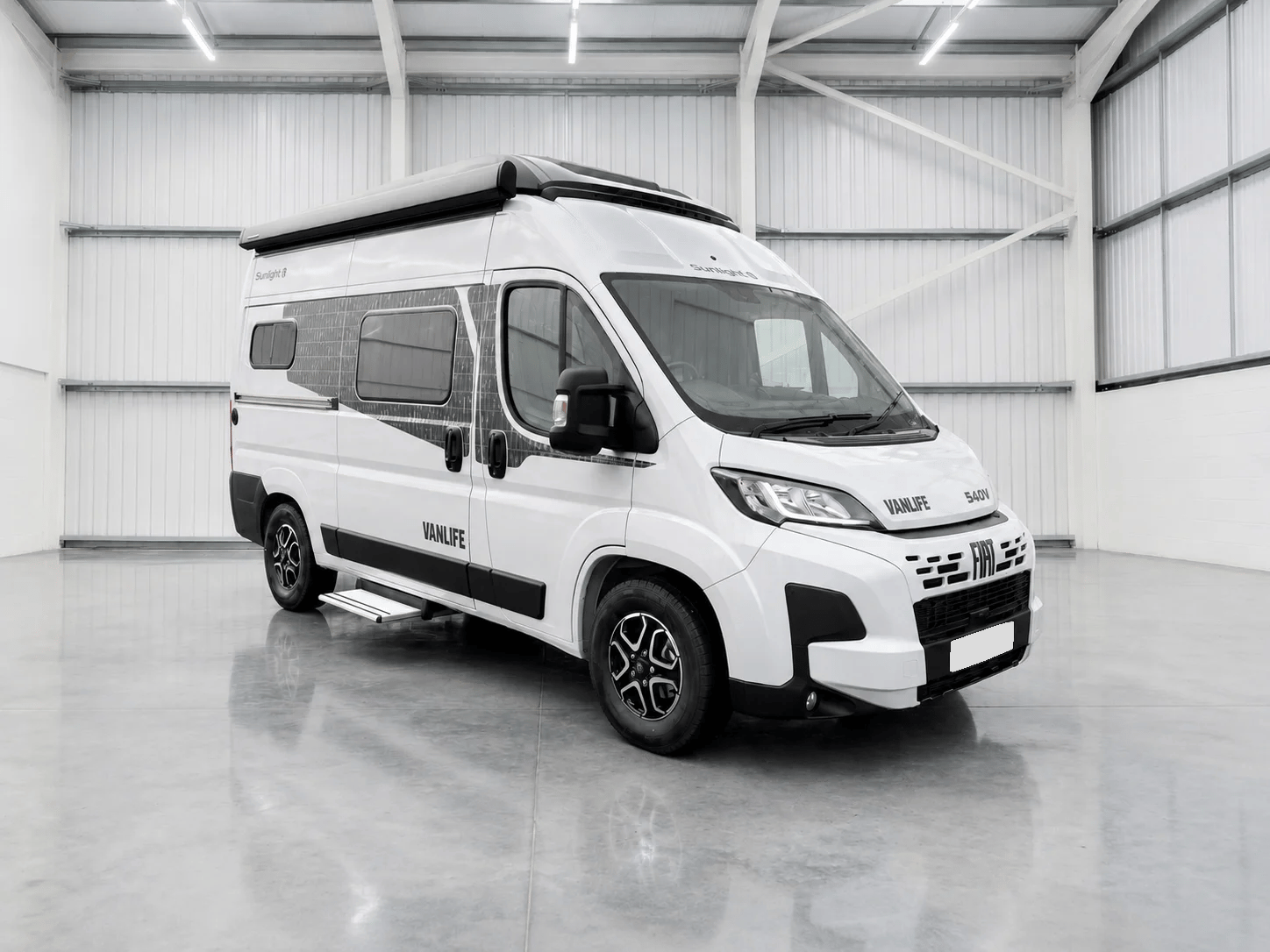
The camper you fall for is rarely the one you can afford. That gap is the whole reason Campervan.win exists. Right now we’re giving away the Sunlight Vanlife, worth around £65,000, and closing that gap is the point: capped entries so the odds stay honest, £10 a ticket, a maximum of five per person, £500 to a UK charity from every full draw, the winner picked by a public randomness beacon anyone can re-check, and one person driving away in the van itself.
Enjoyed this post?
Get more honest campervan guides like this one in your inbox.
You’re in!
Check your inbox. We’ve just sent you a welcome email.

About the author
Rowan
Rowan writes editorial features, comparisons, and industry context pieces that help readers understand the campervan and motorhome landscape.
Keep Reading
Related Reading
Thoughtful articles that build on what you’ve just read.
New & Noteworthy
12 min read
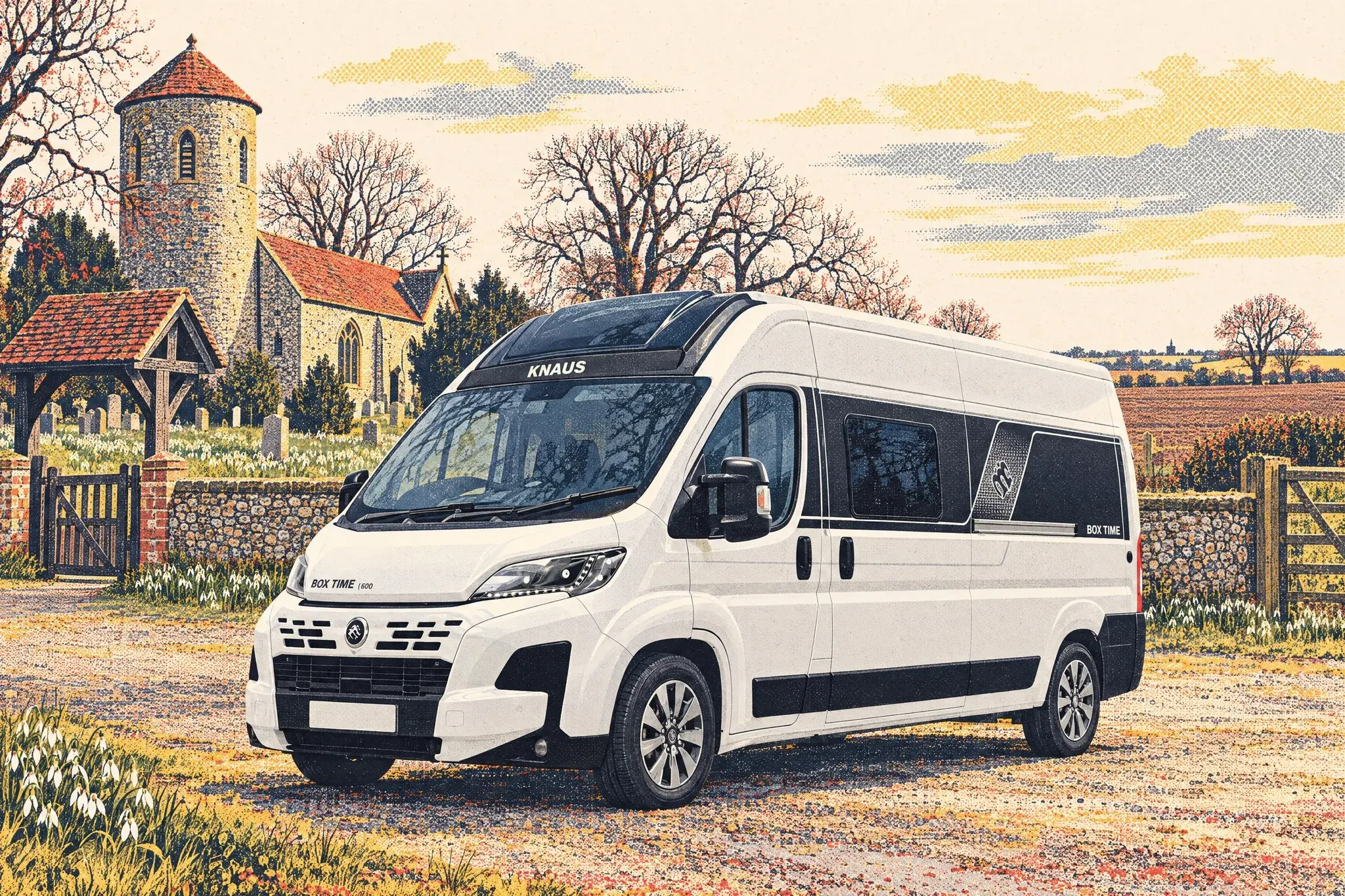
Knaus Boxtime 600 ME (2027): twin singles in 6 m, and the payload figure to question
Knaus's new Boxtime 600 ME squeezes two lengthways single beds into a 5.99 m van from £81,725. We lay out what that layout gives a couple, run the weight sums with Knaus's own figures, and explain why the 211 kg 'maximum payload' line needs a question before you sign.
New & Noteworthy
10 min read
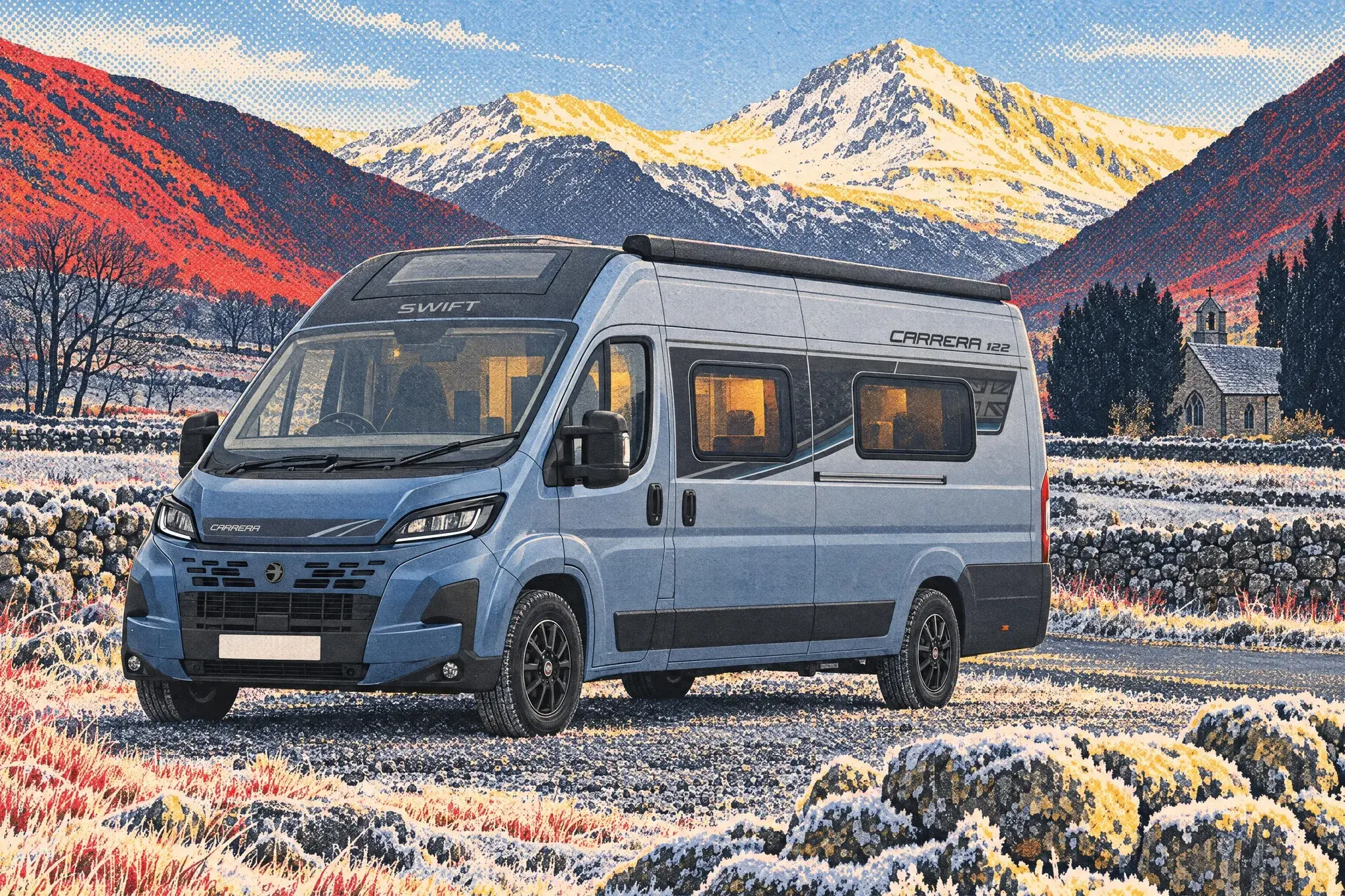
Swift Carrera goes gas-free for 2027: 340Ah lithium, diesel heat and induction cooking
Swift has taken the gas out of its Carrera campervan for 2027, swapping bottles for a 340Ah lithium battery, diesel heating and an induction hob. Here is what that means across a real UK year, how it compares with the cheaper Merlin, and the one question to ask at the NEC.
New & Noteworthy
10 min read
British campervan converters at the NEC 2026: who builds on what, and for how much
A stand-by-stand map of the British campervan converters at the Motorhome and Caravan Show 2026: the vans they build on, their from-prices, seats, roofs and lead times, plus the four questions to put to every one of them.
New & Noteworthy
9 min read
Plug-in hybrid campervans at the NEC: what a PHEV gives you and why full EVs are rare
Four UK converters have hybrid campers at or around the Motorhome and Caravan Show this October, while fully electric campers remain scarce. Here is what a plug-in hybrid camper does well, what the sellers rarely tell you, and the questions to ask on the stand.