
Sunlight Vanlife 540 V vs Carado CV 541 Pro: the same campervan, two badges

Written by
Arthur
Arthur writes buying guides, comparisons, and in-depth explainers to help readers choose the right campervan or motorhome with confidence.
The short answer
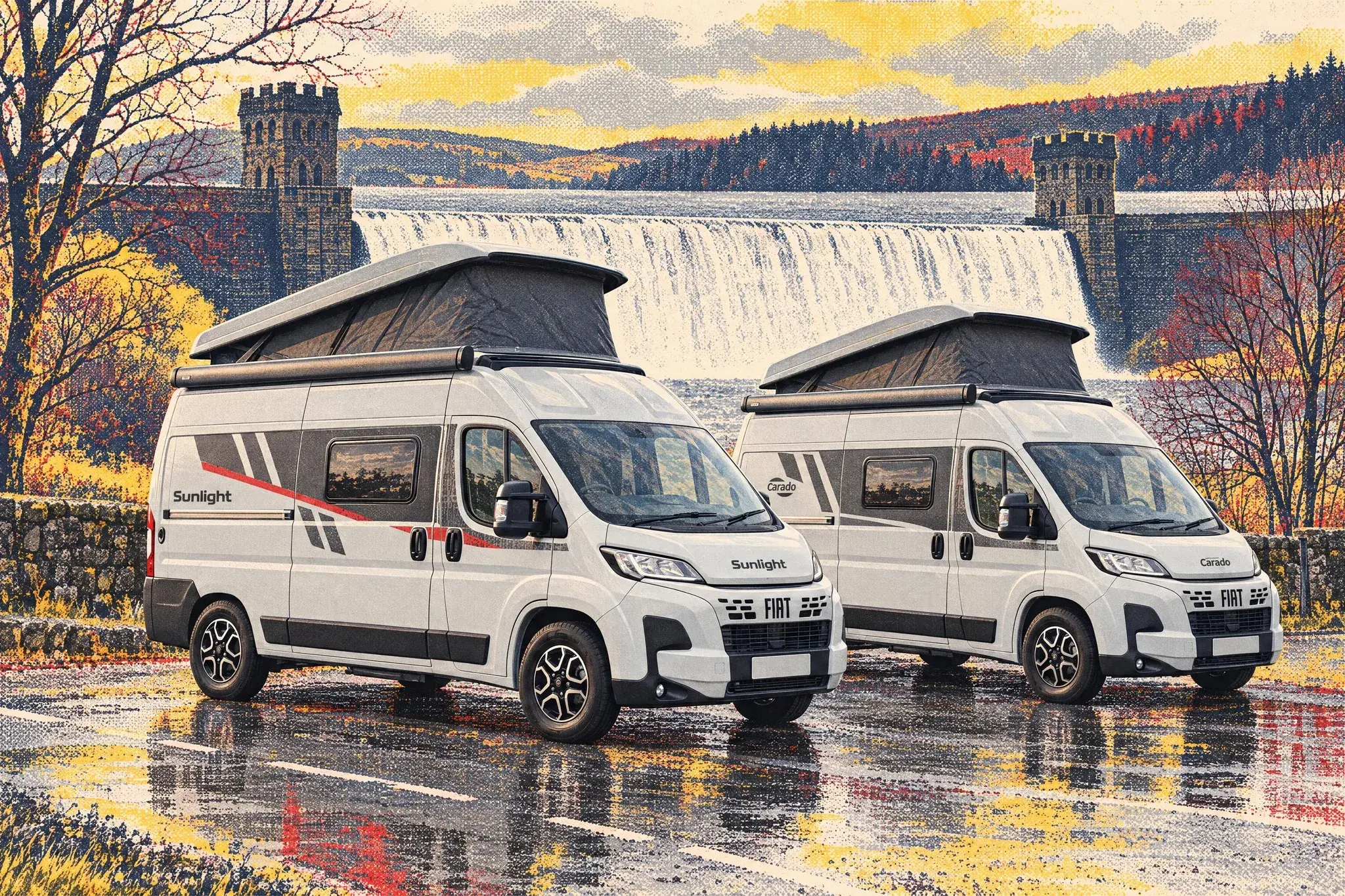
The Sunlight Vanlife 540 V and Carado CV 541 Pro are the same campervan wearing different badges, built on the same Erwin Hymer Group line to the same design, with the same staircase layout, Fiat Ducato base, 140hp diesel, dimensions, beds, tanks, fridge and battery. The usual twin logic says the Carado should undercut the Sunlight, but here is the genuine surprise: on this pair they are priced almost level (around £61,690 versus £61,490), so that saving largely is not there. The Sunlight has a marginally better payload. The upshot is refreshingly simple, buy whichever is cheaper near you, or whichever badge and dealer you prefer. Here is exactly what is identical, what differs, and how to choose.

There's a quietly remarkable thing about the Sunlight Vanlife 540 V, the kind of thing the brochures never mention: you can buy almost exactly the same campervan with a different badge on the front. Its near-identical twin is the Carado CV 541 Pro, and the two aren't merely similar in the loose way that all Fiat Ducato campers are similar. Underneath the upholstery, the wood trim and the graphics, they are the same vehicle, built on the same production line, to the same design, with the same unusual staircase layout. If you're seriously looking at one, you owe it to yourself to understand the other.
This isn't a conspiracy or a cynical trick. It's simply how the Erwin Hymer Group builds vans, and once you understand the relationship it becomes a genuinely useful piece of buying knowledge. It usually means there's a cheaper way to get the van you want. The twist with this particular pair, as we'll see, is that the usual money-saving logic doesn't quite hold, which makes the choice more interesting rather than less. So this is a thorough, honest look at the two: why they're the same, what actually differs, what each really costs, how the warranty and resale stack up, and, when it comes down to it, which badge you should buy. If you want the full rundown of the van itself rather than the comparison, our Sunlight Vanlife 540 V review covers it in depth; this piece is about the twin, and the decision between them.
Two badges, one factory
To understand why these two vans are the same, you have to understand who builds them, and the answer is reassuring. Sunlight and Carado are both brands of the Erwin Hymer Group, the German motorhome giant that also owns Hymer, Bürstner, Dethleffs, Laika, Etrusco and more, and which has itself been part of the American Thor Industries, the largest recreational-vehicle manufacturer in the world, since the deal closed on the first of February 2019 for an enterprise value of around two billion euros. Within that group, Sunlight and Carado occupy the value end of the range, and crucially they are built in the same place by the same people.
That place is a factory called Capron, in Neustadt in Sachsen, in the east of Germany. Capron was founded in July 2005 as a joint venture between Hymer and Dethleffs, the name a contraction of Caravan Produktion Neustadt, and it began building vehicles in November 2006. It exists specifically to build the group's volume, value-focused campervans and motorhomes, and it does so on shared production lines: a Sunlight and its Carado equivalent roll down the same line, in the same building, assembled by the same workforce to the same standards. The plant has grown steadily over the years, adding production and press lines, and turned out its hundred-thousandth vehicle in June 2022. So when you compare a Sunlight Vanlife to a Carado CV, you are not comparing two rival vans built by two different companies. You are comparing two trims of the same vehicle, from one factory. We go deeper into the group, the factory and the brand in our piece on who actually makes Sunlight campervans, but that's the essential point, and it's the foundation for everything that follows.
A quick word on getting the right pairing, because it's easy to muddle and the near-identical names make it worse. The Sunlight van range splits into the conventional Cliff line and the newer Vanlife concept, and each has a Carado counterpart. The rear-fixed-bed Cliff 540 broadly corresponds to the Carado CV 540. The Vanlife 540 V, with its walled-off cab and staircase, is the twin of the Carado CV 541 Pro. It's the CV 541 Pro, not the CV 540, that matches the Vanlife, and confusing the two would have you comparing quite different vans. Throughout this article, when we say "the twin," we mean the CV 541 Pro.
Why two brands build the same van
It's worth pausing on the badge-engineering idea itself, because understanding it removes the suspicion that often clings to it. The instinct, when you discover that two differently-priced products are the same underneath, is to assume someone is being short-changed. In this case, nobody is, and the practice is completely normal across the vehicle world.
Designing and engineering a campervan is enormously expensive. You have to develop the conversion, tool up the factory, crash-test and type-approve the result, and set up the supply chain, and all of that costs the same whether you go on to sell the van under one badge or two. Spreading that cost across two brands, each aimed at a slightly different customer, simply makes the economics work better, and it lets a maker reach buyers who'd never walk into the other brand's showroom. Car groups do exactly the same thing, selling near-identical models under different marques pitched at different tastes and budgets. In the camper world, the Erwin Hymer Group does it with Sunlight and Carado, deliberately giving the two brands distinct personalities, Sunlight the brighter, younger, more design-led one, Carado the quieter, more sober, value-focused one, while sharing the vehicles underneath. For the buyer who knows this, it's not a catch; it's an opportunity, because it means the same van is often available at more than one price, and you get to choose which package suits you.
What's genuinely identical
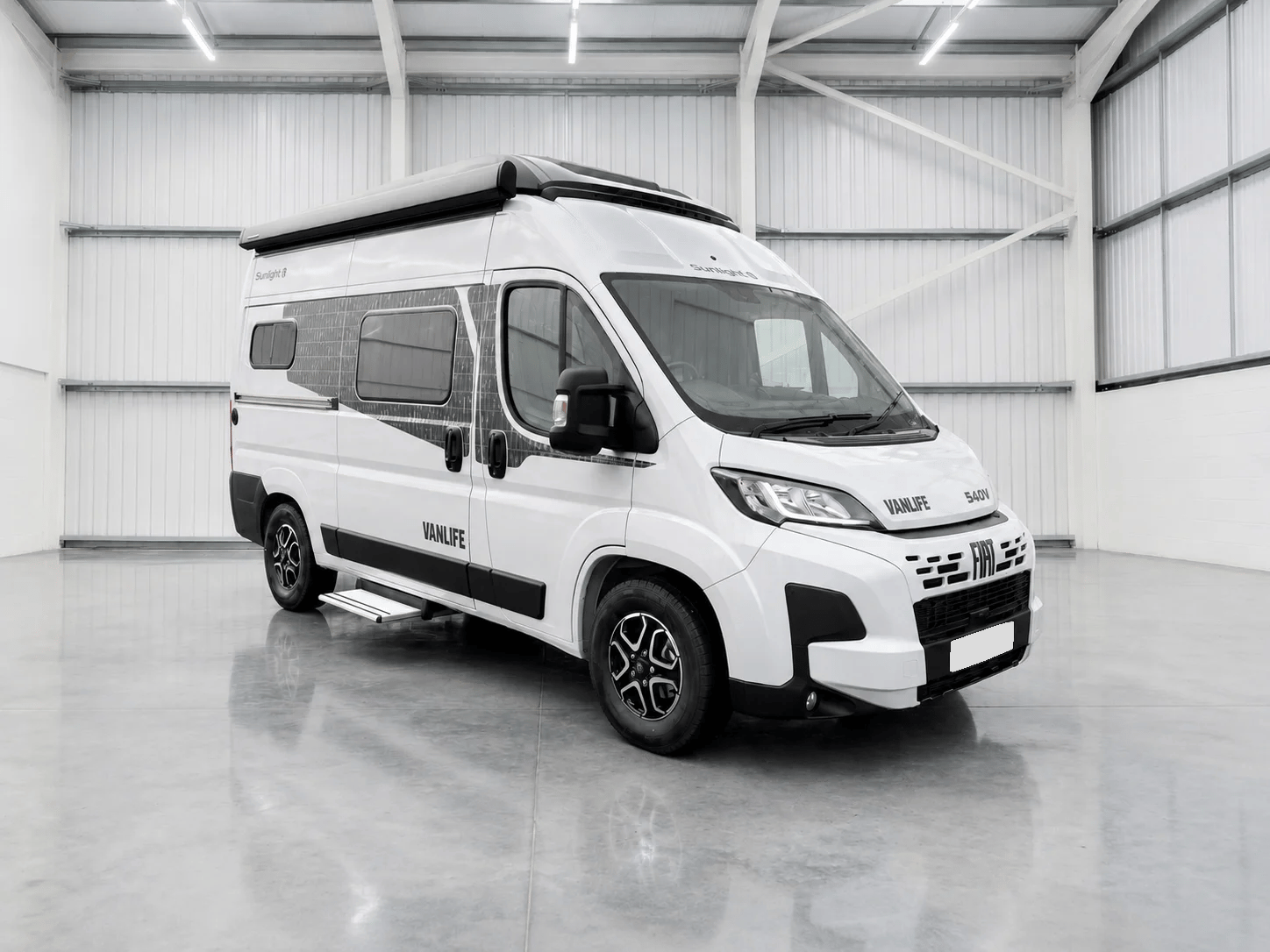
Start with the thing that makes both of these vans interesting in the first place: the layout. Both the Vanlife 540 V and the CV 541 Pro share an unusual, genuinely clever floorplan that you won't find on many rivals, if any. The driver's cab is walled off from the living area by an insulating partition, turning the back of the van into a proper room rather than an extension of the front seats. A permanent, fixed staircase, not a flimsy ladder, leads up to a generous pop-top roof bed. And because the bed lives up top, the rear of the van is freed for a sociable lounge that converts to a second bed. It's a layout that makes a 5.41-metre van feel more like a small flat than the back of a Transit, and both badges have it, identically. We unpack why it works so well in our look at the Vanlife's staircase layout; for now, the point is that the single most distinctive thing about this van is shared exactly between the two brands.
Everything structural and mechanical is shared too. Both ride on the Fiat Ducato, with the same 2.2-litre 140 horsepower diesel and the same eight-speed automatic gearbox as standard. Both measure 5.41 metres long, 2.05 wide and 2.81 tall, with the same 3.45-metre wheelbase and the same 1.90-metre interior standing height. The roof bed is the same size on both, 206 by 143 centimetres, and the rear lounge bed the same 180 by 100. The kitchen-opposite-washroom arrangement in the middle of the van is the same. The diesel Truma Combi heating, the 95 amp-hour leisure battery, the 100-litre fresh and 90-litre waste water tanks, the 64-litre compressor fridge: the same. The insulation, the cabinetry, the windows, the core engineering: the same. Drive one and then the other and you would not feel a difference, because mechanically and structurally there isn't one. Everything we say about the full specs, weights and payload of the Sunlight applies, almost to the kilogram, to the Carado.
It's worth dwelling for a moment on what that sameness means for the experience, because it's easy to read "identical spec" and not feel it. On the road, both vans drive exactly alike: the same relaxed 140 horsepower automatic Ducato, the same 5.41-metre footprint that parks and threads through traffic without drama, the same tall pop-top profile that catches a crosswind on an exposed motorway. Inside, both give the same sense of space, the same staircase up to the same bed, the same lounge to sit in of an evening, the same kitchen and washroom in the same places. The doors shut with the same weight, the furniture is built the same way, the insulation keeps you warm the same. When two vans are this thoroughly the same, the differences that remain, a wood tone, a fabric, a badge, really are all there is to choose between, which is liberating once you accept it: you cannot make a worse choice on the vehicle here, only a different one on the styling.
Here's the relationship at a glance:
| Identical on both | Differs between them |
|---|---|
| The layout: walled cab, fixed staircase, rear lounge | Exterior graphics and colour choices |
| Fiat Ducato base, 2.2-litre 140hp, 8-speed auto | Interior wood tone (Sunlight lighter, Carado mid-tone) |
| Dimensions: 5.41 x 2.05 x 2.81m, 1.90m headroom | Upholstery fabrics and styling details |
| Roof bed 206 x 143cm, rear bed 180 x 100cm | Badging and brand identity |
| Diesel Truma Combi heating, 95Ah battery, 100/90L water, 64L fridge | Standard-kit bundling (minor) |
| Insulation, cabinetry, core engineering | Kerb weight by a couple of dozen kilos |
A note on the walled-off cab
One feature of the shared layout deserves singling out, because it's unusual and it cuts both ways, and it's identical on both twins. Unlike almost every other campervan, where the swivelling cab seats fold round to become part of the living space, the Vanlife and the CV 541 Pro wall the cab off from the back with an insulating partition. There's no walking through from the living area to the driver's seat without stepping outside.
The upside is real: the partition keeps the living space warmer and quieter, makes the back feel like a proper room rather than a van interior, and gives the staircase and its storage somewhere to live. The downside is equally real, and worth feeling before you buy: you lose the through-access most campervans have, so nipping from the bed to the cab, or shuffling forward out of the rain, means going outside and round. For most owners the cosy, room-like back is well worth the trade; for some, the lack of a walk-through is a genuine irritation. Either way, it's the same on both badges, so it isn't a point of difference between them, just a characteristic of the design to go in clear-eyed about.
What actually differs
So what are you choosing between? Real things, but cosmetic and marginal ones rather than fundamental ones. The differences fall into a few buckets.
First, styling and graphics. The exterior decals and the available colours differ, and the two brands have distinct visual identities, Sunlight a touch more modern and playful, Carado more restrained and traditional. Second, the interior look, which is the one you'll live with every day. Sunlight tends to use a lighter, brighter wood tone with younger, more design-led upholstery, while Carado leans to a mid-tone wood and more sober fabrics. Neither is better; it's genuinely a matter of taste, and it's worth sitting in both to see which interior you actually want to wake up in for the next decade.
Third, the small spec differences. They are small: the Carado's kerb weight is quoted a fraction higher than the Sunlight's, around 2,912 kilograms against 2,889, which means the Sunlight has a marginally more generous payload, a couple of dozen kilograms, neither here nor there in practice but a real difference if you're counting. The two brands also bundle their standard kit and option packs slightly differently, so a like-for-like comparison means matching the spec rather than the sticker. Fourth, badging, the script on the nose and the tail. And that, genuinely, is about the extent of it. The driving experience, the space, the layout, the build quality, the systems: identical. You are choosing a look and a badge, not a better or worse van.
The shared specification, in numbers
For the record, here is the specification both vans share, the same figures whichever badge you choose:
| Specification | Both vans |
|---|---|
| Base vehicle | Fiat Ducato 2.2, 140hp, 8-speed automatic |
| Length / width / height | 5.41 / 2.05 / 2.81 m |
| Interior standing height | 1.90 m |
| Berths / travel seats | 4 / 2 |
| Roof bed / rear bed | 206 x 143 cm / 180 x 100 cm |
| Heating | Diesel Truma Combi (plus a small gas bottle for the hob) |
| Leisure battery | 95 Ah AGM |
| Fresh / waste water | 100 L / 90 L |
| Fridge | 64 L compressor |
| MTPLM | 3,500 kg |
The only figures that differ at all are the kerb weight, and so the payload, by a couple of dozen kilograms in the Sunlight's favour, and, of course, the price, which is where the surprise lies.
The price story, and a genuine surprise
Here's where this particular pair defies the usual logic, and it's the most important thing in this article, so we'll take our time over it. As a rule, Carado is positioned a notch below Sunlight in the group's hierarchy and costs less for the equivalent vehicle. You can see that pattern clearly in the other twin pairing, the rear-bed Sunlight Cliff 540 and its Carado CV 540 counterpart, where the Carado typically undercuts the Sunlight by something in the region of five to eight thousand pounds for what is essentially the same van. That's the normal Sunlight-versus-Carado story, and it's why "check the Carado twin, it's usually cheaper" is good general advice.
But for the staircase pair, the numbers tell a different and surprising tale. The Sunlight Vanlife 540 V starts from around £61,690 on the road in the UK, with an awning included. The Carado CV 541 Pro starts from around £61,490. That's a difference of about two hundred pounds, which is to say no meaningful difference at all. For once, the Carado badge does not undercut the Sunlight; the group has chosen to price these two twins almost identically. A real-world optioned example of the CV 541 Pro has been listed at around £69,190, which simply shows how the price climbs with extras, exactly as the Sunlight's would. So the headline you might have expected, "buy the Carado and save thousands," does not apply here. On this pair, you are not choosing between a dearer van and a cheaper identical one; you're choosing between two essentially equally-priced vans that differ only in trim and badge.
That changes the nature of the decision in a good way. When one twin is thousands cheaper, the temptation is to ignore taste and chase the saving. When they cost the same, you're free to choose purely on which you prefer to own, the styling, the interior, the dealer, without leaving money on the table either way. It also means the usual advice needs a caveat: the Carado is the value play across much of the range, but not on this specific model, where it's priced level with its Sunlight twin. Always check the live prices of both before you decide, because, as this pair proves, the pattern doesn't hold everywhere. Spec each van identically, get a real on-the-road quote for each including delivery, and compare those totals rather than the headline "from" figures, which is the only way to know what you're actually paying.
It's also worth understanding what makes the price climb, because the from-figure is only a starting point. That optioned CV 541 Pro listed near £69,190 will have added the kind of extras most buyers want: upgraded upholstery or cab technology, a bike rack, a towbar, a winter pack, perhaps solar, though note that on this platform solar can't be combined with the pop-top roof, an unusual constraint worth knowing before you set your heart on both. The same options push the Sunlight up by much the same amount. So whichever twin you choose, budget beyond the from-price for the kit you actually want, and compare the two with matching options rather than bare. Specced identically, they finish within a few hundred pounds of each other, which is exactly the point: on this pair, price is not the thing that should decide it.
Is the twin a compromise?
It's natural to wonder, when two vans share so much, whether the cheaper or value-positioned one is quietly cutting a corner. With this pair the question is almost moot, since they cost the same, but it's worth answering plainly because the instinct is so common. The Carado is not a lesser van. It is the same vehicle, from the same line, to the same standard, as we've established. Where Carado sits below Sunlight in the group's range, that positioning is about brand image and, on other models, price, not about the soundness of the vehicle. The body, the build, the insulation, the Ducato base, the staircase, the cabinetry are identical.
So there's no hidden penalty in choosing the Carado, just as there's none in choosing the Sunlight. The only senses in which either is "less" than the other are cosmetic: a different wood tone, different fabrics, a different badge, a couple of dozen kilograms of kerb weight. Buy whichever you prefer the look of, and you've bought exactly the same quality of van. The catch people instinctively look for, here, genuinely isn't there.
Warranty, and what's behind the badge
One area worth checking on both, and it's the same answer for each, is the warranty, because on any campervan the cover that matters most over the years is protection against water ingress. As sold in the UK through the group's dealer network, both Sunlight and Carado typically carry a two-year manufacturer's warranty plus a longer water-ingress, or watertightness, warranty in the region of five to six years, conditional on the van having its annual habitation and damp check at an approved dealer. Miss the annual check and you can lose the cover, so it's not a set-and-forget thing; it's a yearly habit that protects you. Confirm the exact term and conditions in writing for the specific van you're buying, because the figure can vary by model year, but the shape of it, a couple of years of full warranty and several more of damp protection tied to servicing, is the same across both badges. It's the kind of cover that comes from buying within a serious, established group rather than from a small converter, and it applies equally whichever twin you choose.
Resale and reputation
A fair question follows from all this: if the vans are identical, do they hold their value the same, and does the badge matter when you come to sell? Broadly, both are Erwin Hymer Group products built to the same German standard, so both carry the reassurance of a major, established maker rather than a one-off conversion, and that underpins resale either way. The group's value vans have a track record of holding their value well, helped by that pedigree and by buyers recognising the shared engineering. Sunlight is the better-known and arguably more aspirational of the two badges to UK buyers, which may help a fraction when you sell; Carado is the quieter brand, which on other models is part of why it's cheaper to buy.
In practice, condition, mileage, service history and how well the van has been looked after will swamp the badge difference at resale, exactly as they do with any camper. The annual damp check that keeps the warranty alive also keeps the van saleable, because a documented history of habitation servicing is exactly what a careful used buyer wants to see. So the sensible way to think about it is that you're unlikely to lose out meaningfully either way; both are the same well-built van from a serious manufacturer, and how you maintain it will matter far more than which badge is on the nose.
What owners actually say
Because the two are mechanically the same, owner experience of one is a fair guide to the other, and the picture from long-term owners of the group's value vans is reassuring, with a few sensible watch-points. Satisfaction runs high: in one substantial used-vehicle survey of Sunlight and Carado owners, the large majority said they would buy the same again, and most rated the build quality as good or excellent, with the vans holding their value notably well over many years. That kind of verdict matters more than any first-drive review, because it comes from people who've lived with the van through real ownership, in real weather, for real mileage.
The honest watch-points, the things owners report checking and occasionally fixing, are the small stuff common to almost all campervans rather than anything structural: the odd leaky tap or tired submersible water pump, occasional cracking around a plastic washbasin, the rare bit of damp at the roof or the cab-to-living transition on poorly-maintained examples, a warped fridge door here and there. None of these are widespread or serious, and the annual habitation and damp check that keeps the warranty alive is precisely what catches the water-related ones early, before they become expensive. The takeaway for either twin is the same: a well-cared-for example, with its servicing up to date, is a sound, satisfying van to own, and the maintenance that keeps it that way is identical whichever badge it wears.
How to compare and choose, in practice
Because the choice between these two is genuinely close, and on this pair not even a money decision, a simple process saves you both expense and second-guessing. First, build both vans up to the same specification, on each brand's configurator or with each dealer, matching the awning, the wheels, the packs, the heating and everything else, so you're comparing identical vehicles rather than different starting points. Second, get a real on-the-road quote for each, including delivery and any dealer charges, and compare those totals. On this particular pair they should land within a whisker of each other, but it's still worth confirming rather than assuming.
Third, go and sit in both interiors if you possibly can, because the wood tone and the fabrics are the main genuine difference and you'll live with them for years; a showroom afternoon tells you more than any brochure. Fourth, weigh the dealers themselves, how close they are, how they treat you, what owners say about their after-sales, and crucially whether they'll do that all-important annual damp check conveniently, because a good local dealer relationship is worth more over the life of the van than any small price difference. And fifth, confirm the warranty terms for each in writing, particularly the water-ingress cover and what's needed to keep it valid. Do those five things and the right choice for you usually becomes obvious, and you'll have bought with confidence rather than on a hunch.
The caveat that applies to both
One thing is true of both twins, and it's the single most important practical point about this layout, so we'll say it plainly: the staircase-and-lounge floorplan that makes these vans so clever comes at a cost, and that cost is travel seats. Both the Vanlife 540 V and the CV 541 Pro sleep four, two in the roof bed and two on the converted lounge, but they legally carry only two, because they have just two travel seatbelts. The lounge layout simply leaves no room for a belted rear travel bench. For a couple, that's no problem at all, and the van is close to ideal. For a family of four who need to travel together, it's the wrong van, and you'd want the rear-bed Cliff 540 or Carado CV 540 instead, which carry four. It catches people out so often that we've given it its own piece, and it's the first thing to settle before the badge question even arises.
The other shared caveat is payload. As on any 3,500-kilogram van, the usable allowance for water, kit and people is tighter than the headline suggests once you've loaded up, so it rewards a bit of discipline, a point we cover fully in the specs and payload guide. To the van's credit, its payload is actually competitive for the class, better than some well-known rivals, but it still wants watching. Neither of these caveats favours one twin over the other; they apply equally to both, because they're features of the shared design.
Badge twins across the wider camper market
It's worth zooming out, because the Sunlight-and-Carado relationship is one instance of something that runs right through the motorhome industry, and knowing the pattern makes you a sharper buyer of any camper. The big groups all do it. Within the Erwin Hymer Group alone, beyond Sunlight and Carado you'll find Hymer and Bürstner as the more premium siblings, Dethleffs and Laika and Etrusco elsewhere in the range, several of them sharing platforms and components even where the vans aren't direct twins. Other groups have their own families: the Knaus Tabbert group with Knaus and Weinsberg, the Trigano and Rapido empires with their many marques. Time and again, a van that looks like a standalone product turns out to be one of a pair or a set, differing in trim, badge and price more than in substance.
The practical lesson is simple: whenever you fall for a particular camper, it's worth a few minutes finding out whether it has a badge-engineered sibling, because there often is one, and it's often cheaper. The Sunlight Vanlife and Carado CV 541 Pro happen to be priced level, which is the exception rather than the rule, but the Cliff and CV 540 pair shows the more usual saving, and across the wider market the savings can be real. To make the pattern concrete: the Knaus Tabbert group sells closely-related vans under Knaus and its value brand Weinsberg; the giant Trigano and Rapido groups span numerous marques that share floors and fittings; and within the Erwin Hymer Group, the relationships run from these Sunlight-and-Carado twins up through Bürstner and Hymer. The vans aren't always identical twins, sometimes they share a platform rather than the whole vehicle, but the principle holds: in this industry, the badge on the nose often tells you less about the vehicle than about which showroom and which price bracket it was aimed at. Treat every camper you fall for as potentially one of a family, and you'll never overpay for a badge by accident. None of this means the value badge is a compromise, as we've seen, it usually isn't, so the buyer who understands the relationship gets the same van they wanted for less, or at worst, as here, gets a free choice of trim at the same price. That's knowledge worth having on any campervan purchase, not just this one.
So which should you buy?
Pull it all together and the decision is refreshingly free of anxiety, precisely because the van is the same and, for this pair, so is the price. It comes down to a handful of things, none of them about whether one is "better built" than the other, because they aren't.
Choose on the interior you prefer to live with. You'll see the wood tone and the fabrics every morning for years, so if you genuinely like the Sunlight's lighter, brighter cabin more than the Carado's mid-toned one, that's reason enough, and the reverse holds just as well. Choose on the dealer, because a close, trusted dealer who'll handle your annual damp check and look after you is worth more than the badge. Choose on the small things if they matter to you, the Sunlight's marginally greater payload, the styling you prefer, the colour you want. And confirm, rather than assume, the like-for-like price and the warranty on each, because while this pair is priced level today, prices move and it pays to check.
The honest summary: there is no wrong answer here, because it's the same van at the same money. There's only the version you'd rather own. If you love the Sunlight's look and your nearest good dealer sells Sunlight, buy it and enjoy it. If the Carado's styling appeals and its dealer suits you better, buy that, with the identical van and the identical peace of mind. What you should not do is buy either in ignorance of the other, paying a premium you didn't know you could avoid or missing a trim you'd have preferred, which is precisely the mistake this article exists to prevent.
Common questions
Are the Sunlight Vanlife 540 V and Carado CV 541 Pro really the same campervan?
Yes. They are not just similar in the way all Ducato campers are; underneath the upholstery, trim and graphics they are the same vehicle, built on the same Erwin Hymer Group production line to the same design, with the same unusual staircase-and-lounge layout. Note it is the CV 541 Pro, not the CV 540, that matches the Vanlife; the CV 540 is the twin of the rear-bed Cliff 540.
Which is cheaper, the Sunlight Vanlife or the Carado CV 541 Pro?
They are priced almost level, which is unusual. The Sunlight Vanlife 540 V starts from around 61,690 pounds and the Carado CV 541 Pro from around 61,490, within a couple of hundred pounds. On most EHG twins the Carado undercuts the Sunlight by several thousand (as with the Cliff 540 and CV 540), but on this particular pair that saving largely is not there.
What is actually different between the Vanlife and the Carado CV 541 Pro?
Very little beyond the badge, upholstery, wood trim and graphics. Mechanically and in layout they are identical: same Fiat Ducato base, 2.2-litre 140hp diesel and eight-speed automatic, same dimensions, beds, tanks, fridge and heating. The Carado's kerb weight is quoted a fraction higher (around 2,912kg versus 2,889kg), so the Sunlight has a marginally more generous payload, a couple of dozen kilograms.
Who makes Sunlight and Carado campervans?
Both are value-end brands of the Erwin Hymer Group, the German motorhome giant that also owns Hymer, Burstner, Dethleffs, Laika and Etrusco, and which has been part of America's Thor Industries since February 2019. Sunlight and Carado are built in the same place by the same people, at the Capron factory, which is why the two are genuinely the same van.
Is the Carado a lower-quality version of the Sunlight?
No. They come off the same production line to the same standard, so neither is a cheaper-built version of the other; the difference is badge, trim and graphics, not quality. Owner sentiment for the group's value vans is generally positive, with most owners saying they would buy again, and a well-maintained example of either twin is a sound buy.
Can you get solar and the pop-top roof together on the Vanlife or Carado?
No, not on this platform. Solar is an option rather than standard, and on the Vanlife and its Carado twin it cannot be combined with the pop-top roof, presumably because the elevating roof takes the space the panel would need. If off-grid solar is a priority, that constraint is worth weighing against the staircase-and-pop-top layout, and it applies equally to both badges.
The reachable bit
The camper you fall for is rarely the one you can afford. That gap is the whole reason Campervan.win exists. Right now we’re giving away the Sunlight Vanlife, worth around £65,000, and closing that gap is the point: capped entries so the odds stay honest, £10 a ticket, a maximum of five per person, £500 to a UK charity from every full draw, the winner picked by a public randomness beacon anyone can re-check, and one person driving away in the van itself.
Enjoyed this post?
Get more honest campervan guides like this one in your inbox.
You’re in!
Check your inbox. We’ve just sent you a welcome email.

About the author
Arthur
Arthur writes buying guides, comparisons, and in-depth explainers to help readers choose the right campervan or motorhome with confidence.
Keep Reading
Related Reading
Thoughtful articles that build on what you’ve just read.
Campervan Reviews
10 min read
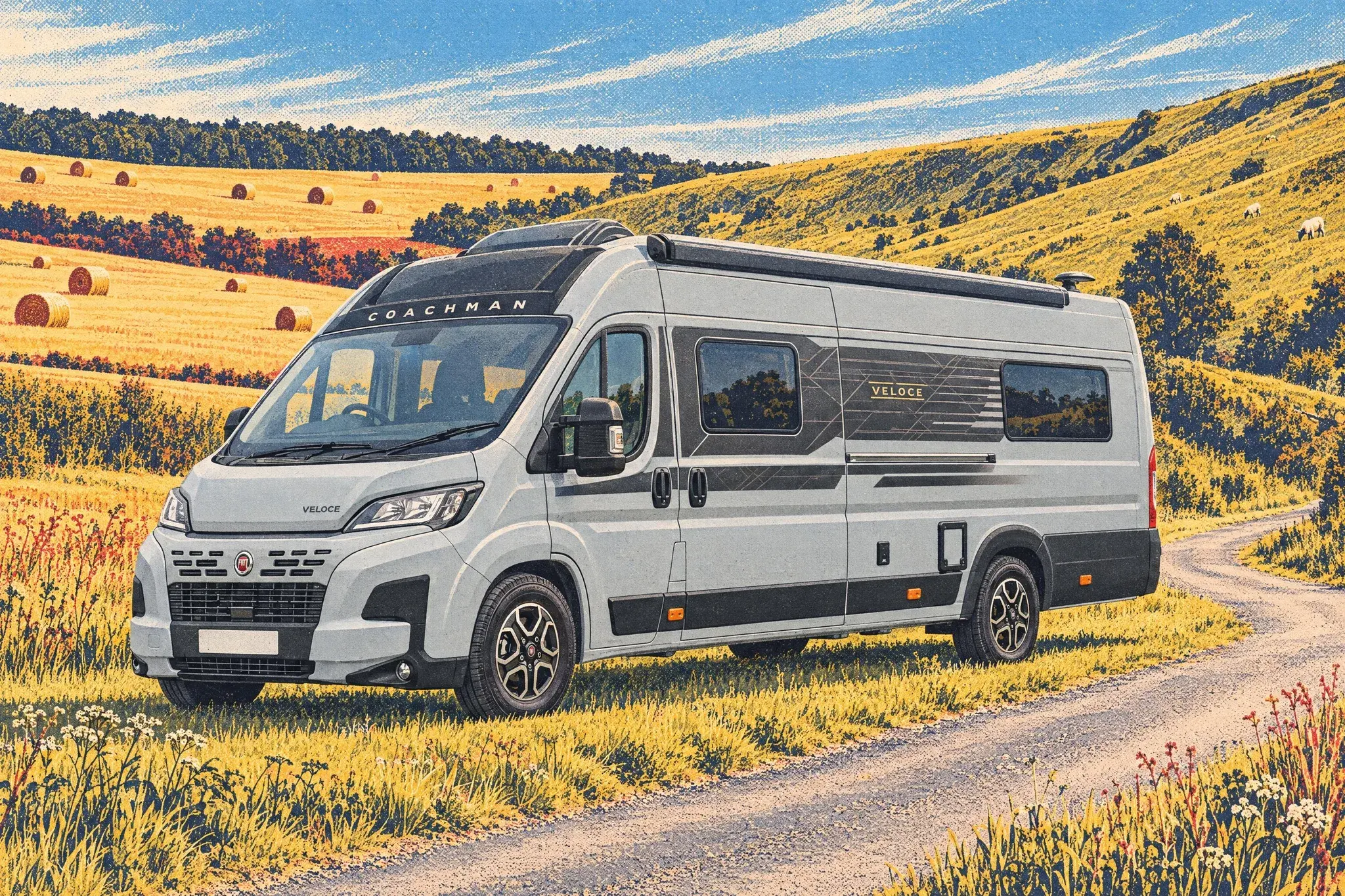
Coachman Veloce (2027): a UK-built Fiat Ducato campervan at £86,500, and who it is for
Coachman has built its first Fiat Ducato campervans in the UK, the Veloce VL65 and VR65, at £86,500 each. We go through what that price includes, the payload sums for four seats, the heating and power kit, and who a premium British panel van like this suits.
Campervan Reviews
27 min read
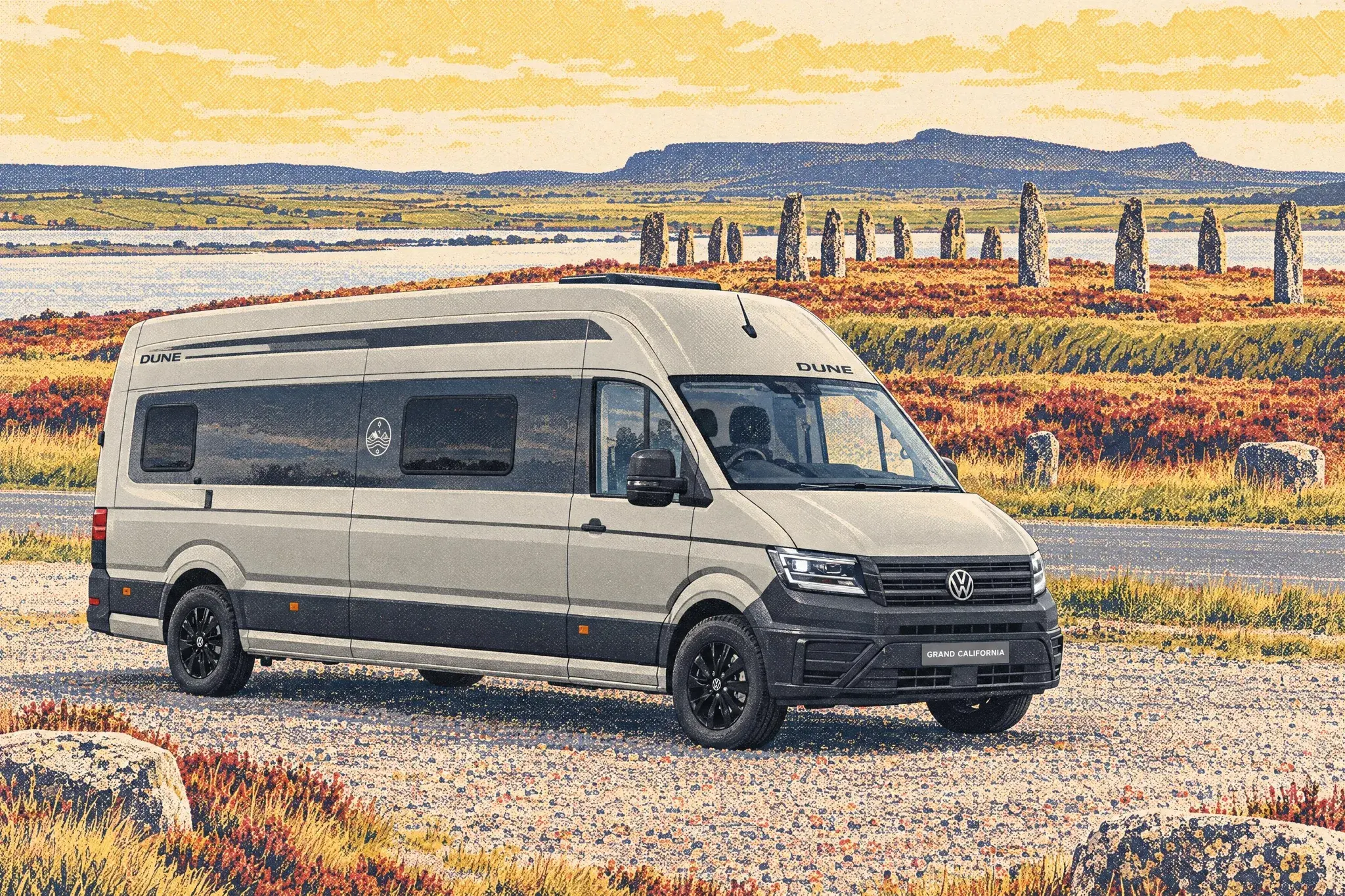
VW Grand California 680 Dune deep dive: the long two-berth tourer, the C1 licence, and FWD or 4MOTION
A full look at the Volkswagen Grand California 680 Dune as a two-person long-distance tourer: dated UK prices, why the 3,880 kg weight means a C1 licence for many drivers, the real payload sums for front-wheel drive against 4MOTION, the lengthways bed, four-season kit and a viewing checklist.
Campervan Reviews
35 min read
Carado CV595 X-Edition explained: the £87,890 4x4 VW Crafter campervan, for UK buyers
A long, honest look at Carado's first VW Crafter campervan: what 4MOTION and the off-road pack really do, how the 3,500 kg payload works out, what the 200 cm transverse bed and no-solar spec mean for British touring, and what to confirm before you order one at £87,890.
Campervan Reviews
13 min read
Coachman Affinity One explained: who the Polish-built 6.36 m Fiat Ducato campervan really suits
The Coachman Affinity One is a long, tall Fiat Ducato campervan built in Poland and sold in the UK under the Coachman name. Here is what the fixed French bed, front bunk, washroom, 3,500 kg weight and 6.36 m length really mean for the people who might buy one.