
Will ARB make a campervan? Why it builds trailers, not vans

Written by
Oliver
Oliver is the founder of Campervan.win and writes about campervans, travel, and the life-changing freedom that comes with getting out on the road.
The short answer
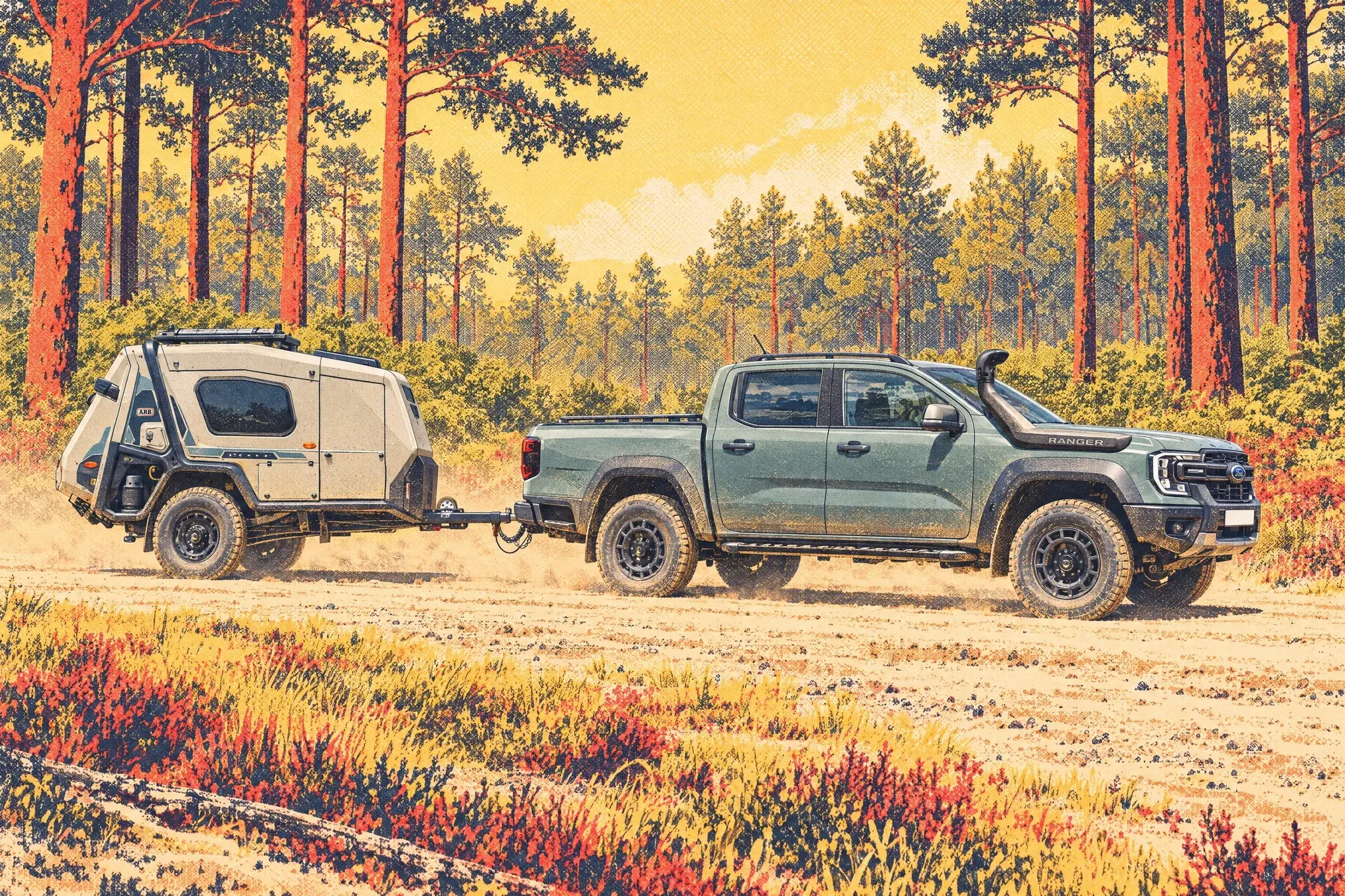
ARB has not made a campervan, has not announced one, and on the evidence of how it operates probably will not make a motorised one you drive, which is worth knowing before you go looking. What it does make, since 2023, is the Earth Camper: a rugged teardrop-style off-road trailer you tow behind a 4x4, with dual water tanks, a 100Ah lithium battery, solar, a big fridge-freezer, a slide-out kitchen and a raised bed. A trailer is not a campervan, it has no engine and is towed, so it sits closer to a hybrid off-road caravan. If ARB ever does badge a van, a collaboration with an established converter is the likeliest route. Here is why it builds trailers not vans, and what an ARB camper might one day look like.

Here's a question that comes up again and again among people who build adventure vehicles: ARB makes the suspension, the lockers, the fridge, the drawers, the awning, the rooftop tent and the roof rack, so when is it going to make the whole vehicle? When will ARB build its own campervan? It's a reasonable thing to wonder. Few brands own as much of an adventure build as ARB does, and in 2023 the company took its first real step into making a complete product rather than parts for someone else's. So surely a van is next?
The honest answer is more interesting, and more specific, than a simple yes or no. ARB has not made a campervan, has not announced one, and, on the evidence of how the company actually operates, probably won't, at least not a motorised one you drive. But it has built something closely related that's worth understanding properly, the Earth Camper, and the gap between what that is and what a "campervan" is tells you a lot about where ARB is heading. So let's answer the question honestly: what ARB makes for camping today, what the Earth Camper really is, why a trailer is not a van, and whether a drivable ARB campervan is ever likely. As always on this site, where the answer is "no" or "it's complicated", we'll say so plainly.
The short answer
ARB does not make a campervan, and none has been announced. What it makes for sleeping and camping is rooftop tents, canopies for pickups, and, since 2023, a towable off-road camper trailer called the Earth Camper. That trailer is ARB's "first entry into the RV world" in the company's own words, but it is a trailer you tow, not a motorised campervan you drive.
So if you're waiting for an ARB campervan, the honest steer is: don't hold your breath. Everything about how ARB operates, as a maker of accessories, canopies and now a trailer, rather than a builder of drivable vehicles, points away from it building a motorised van. There's no announcement, no concept, no teaser, and no stated intent. The one fair caveat is that ARB has never said "never" either, and a company that already makes every component of an adventure vehicle and has just built its first complete towable one is at least worth watching. But "worth watching" is a long way from "coming soon", and we won't pretend otherwise. The realistic picture is trailers and tents, not a van.
The rise of the off-road camper trailer
To understand the Earth Camper, and why ARB built it, it helps to know the category it joins, because off-road camper trailers are a big deal in Australia and a growing one elsewhere. Down under, towing a rugged trailer behind a 4x4 is one of the most popular ways to explore the outback: you get a tough, self-contained basecamp with a proper bed, a kitchen, water and power, but you can unhitch it at a campsite and take the nimble tow vehicle off exploring for the day, unburdened. It's a format that suits vast distances, remote camps and the kind of terrain where you want a capable 4x4 unencumbered when the going gets technical.
That idea has travelled. Hybrid off-road caravans and camper trailers, halfway between a tent trailer and a full caravan, have boomed, and a whole industry of premium, go-anywhere trailers has grown up around the overlanding movement. They appeal to people who already own a capable tow vehicle and want to add serious off-grid comfort without buying a second, dedicated motorhome. For ARB, a company whose entire customer base already drives capable 4x4s and pickups, a high-end off-road camper trailer is an almost perfect fit: it sells a complete product to exactly the people who already buy its parts, and it leans on the suspension, chassis and off-grid expertise the company has spent decades building. Seen that way, the Earth Camper isn't a surprise at all, it's ARB selling its existing customers the logical next thing. A campervan, by contrast, would mean selling a different kind of product to a different kind of buyer, which is part of why it's a less natural step.
What ARB already makes for camping
To understand why a campervan would be a leap, it helps to see what ARB already offers the person who wants somewhere to sleep, because it's substantial, just not a van.
The first answer is rooftop tents. ARB makes a full range, from the lightweight hard-shell Esperance, through the lower-profile, fast-deploying Flinders, to the automated Altitude that raises itself at the touch of a button, plus soft-shell options. These mount on a roof rack or platform on a 4x4 or a pickup, fold or pop up into a comfortable raised bed, and pack away for travel. They're sold in the UK, they're well regarded, and for a great many ARB customers they are the "campervan", a tent on the roof of a capable vehicle that gets you off the ground and away quickly. It's a different philosophy from a van: you sleep up top and live around the vehicle, rather than inside it, but for the overlanding crowd it's often the preferred one.
The second answer is canopies. ARB has moved firmly into aluminium canopies for pickup trucks, the hard tops that turn a double-cab's open bed into secure, weatherproof storage or a camping space, a push reinforced by its acquisition of a canopy manufacturer. Fit a canopy, drawers and a fridge, add a rooftop tent on top, and you have a genuine self-sufficient camping rig, built almost entirely from ARB parts, on a truck you already own. Again, it's not a van, but it scratches much the same itch. These two products, tents and canopies, are how ARB has historically answered the "where do I sleep" question, and they're worth knowing about because they're the context for the bigger step the company took in 2023.
The Earth Camper: ARB's "entry into the RV world"
In 2023, ARB did something genuinely new: it launched its first complete recreational vehicle, the Earth Camper. This is the product that fuels the "is a campervan next?" question, so it's worth being precise about what it is, because the precise answer is the whole point.
The Earth Camper is a towable off-road camper trailer. It's a rugged, teardrop-style trailer built around a welded steel exoskeleton, designed to be towed behind a capable 4x4 into genuinely remote places and to keep two people comfortable and self-sufficient when they get there. ARB describes it as combining fifty years of 4x4 expertise into one compact, capable off-road camper trailer, and it calls it the company's bold entry into the RV world. Note the words it uses, and the words it doesn't: "trailer", "off-road trailer", "travel trailer", never "campervan" or "motorhome". That's not an accident; it's an accurate description of what the thing is.
The specification is serious, and it shows how much ARB poured into it. There's an ARB-developed independent suspension with Old Man Emu shocks and long trailing arms, around fifteen and a half inches of ground clearance, and proper underbody protection, this is a trailer built to go where the tow vehicle goes. Inside and out, it's a self-contained off-grid setup: dual water tanks of around 140 litres, a 100 amp-hour lithium battery (expandable) paired with solar and a Redarc battery management system, a big ARB ZERO dual-zone fridge-freezer, a slide-out kitchen with burners and a sink, and a queen-size bed under an electrically-raised rear clamshell. It was designed in Australia and is built at ARB's facility in Thailand. The development took years, and it shows: as off-road camper trailers go, it's a genuinely impressive piece of kit.
On price and availability, the honest details matter. The Earth Camper launched in Australia in 2023, from around A$74,500, and reached North America for 2026, priced from roughly US$59,900 to US$69,950 depending on trim. Crucially for a UK reader: it is not sold in the UK or Europe. The coverage and the launches have been Australia and North America only, and ARB's UK product range shows no camper trailer at all. So even the closest thing ARB makes to a "camper" isn't something a British buyer can walk in and order. Treat its UK status as "not offered", and watch this space rather than assuming it's coming.
As for whether it's any good, the early verdict is positive. The Earth Camper drew strong coverage from the off-road and overlanding press when it launched, praised for the seriousness of its engineering, the off-grid spec and the obvious depth of ARB's experience baked into it, the result of a development programme reported to have run for several years. It's a premium product at a premium price, and it's not for everyone, plenty of buyers will still prefer a simpler trailer or a rooftop tent, but as a statement of intent it's a confident one: ARB didn't dip a toe into the RV world with a token product, it built a genuinely capable, fully-developed trailer. That seriousness is exactly why it reignited the campervan question. A company that builds its first complete vehicle this thoroughly clearly could turn its hand to more, which is what makes the "what next" so tempting to speculate about, even as the evidence says the next thing is more trailers and canopies, not a van.
Why a trailer is not a van
This is the crux of the whole question, so let's be clear about it, because the difference is not pedantry, it's the entire reason a campervan would be a different undertaking for ARB.
A camper trailer like the Earth Camper has no engine, no cab, no driver's seat and no steering wheel. You tow it behind a separate vehicle, your 4x4, your pickup, and unhitch it at camp. A campervan, by contrast, is a single motorised vehicle: you drive it, sleep in it, and there's nothing to tow or unhitch. Those are fundamentally different products to design, build, certify and sell. A trailer is, in engineering and regulatory terms, far simpler: no engine, no emissions compliance, no crash-safety regime for occupants travelling in it, no driveline, no type approval as a motor vehicle. ARB could build the Earth Camper using exactly the skills it already has, suspension, chassis, off-grid systems, fit-out, because a trailer is essentially a very capable box on a clever set of wheels.
A campervan would demand a whole set of capabilities ARB doesn't have and has never shown interest in acquiring. You need a base vehicle, which means either buying vans from a manufacturer and converting them (a different business entirely) or, unthinkably, building your own. You need type approval as a motor vehicle, emissions and crash compliance, a driveline, and a dealer-and-service network geared to selling and maintaining drivable vehicles. That's not a bigger version of what ARB does; it's a different industry. So when people see the Earth Camper and assume a van is the logical next step, they're missing that the trailer sits comfortably within ARB's existing world, and a campervan would sit well outside it. The trailer is the natural extension of an accessories company; the van would be a reinvention of one.
Trailer or campervan: which would you actually want?
Set aside whether ARB will build a van, and there's a genuinely useful question underneath: for adventure travel, would you even want a camper trailer like the Earth Camper, or a campervan? They suit different people, and it's worth knowing which camp you're in.
The trailer's great advantage is the unhitch. You tow your basecamp to a remote spot, drop it, and your tow vehicle becomes a light, capable 4x4 again, free to tackle the hard trail, nip to the shops or explore for the day without packing everything away. You also get to keep and use your existing vehicle, adding camping capability without buying a whole second one, and a trailer can often carry more, and go more places when unhitched, than a heavily-laden van. The downsides are real too: towing a trailer off-road is a skill, reversing one is a curse, it's a second thing to store, insure and maintain, and moving camp means hitching and unhitching every time.
The campervan's advantage is that it's all one thing. You drive it, you sleep in it, you stop where you like and you're home, no towing, no reversing a trailer, no unhitching in the rain. For touring that involves moving on often, a van is simply more convenient, and there's nothing to leave behind or worry about at a campsite. The trade-offs are that the whole vehicle goes everywhere with you, so you can't drop the heavy bit and explore light, and that a capable van is an expensive, dedicated second vehicle. Broadly: if you do long stays in remote spots and value a nimble tow vehicle, a trailer like the Earth Camper makes real sense; if you move on frequently and want simplicity, a campervan wins. Knowing which you are matters more than which badge is on it.
Three ways to sleep: tent, trailer or van
It's worth zooming out, because ARB's world actually offers three different answers to "where do I sleep on an adventure", and the campervan is the one ARB doesn't make. The lightest is the rooftop tent: quick, relatively cheap, keeps your vehicle nimble, and gets you off the ground and away in minutes, but you're sleeping in a tent, climbing a ladder, and more exposed to the weather than in a hard-sided space. The middle option is the camper trailer, the Earth Camper, with more comfort, a proper bed, a kitchen and off-grid systems, plus the unhitch-and-explore flexibility, at the cost of towing and a second vehicle to manage. The heaviest, most all-in-one option is the campervan: hard-sided, drive-and-sleep, the most convenient for moving around, and the one you can't buy from ARB.
For a lot of people the honest answer is mix-and-match: a rooftop tent on a capable 4x4 is the entry point, a camper trailer is the upgrade for those who want more comfort without giving up their tow vehicle, and a campervan is the choice for those who prioritise convenience and living inside. ARB serves the first two directly and the third only through accessories you fit to someone else's van. If you've been waiting for ARB to make the third, the useful reframe is to decide which of the three actually suits how you travel, because if it's the tent or the trailer, ARB already has you covered, and if it's the van, the answer is a different maker's vehicle with ARB's kit on it.
ARB's path to building complete products
ARB's move into making complete things, rather than parts for other people's things, has been gradual and deliberate, and the trajectory is worth tracing because it tells you where the company is going. For most of its fifty years, ARB was an accessories business: it made the bull bar, the locker, the suspension, the fridge, the drawers, and you bolted them to a vehicle someone else built. Then it began moving up the value chain. The acquisition of a canopy manufacturer pushed it into making the aluminium canopies that turn a pickup into a camping platform, a bigger, more complete product than a bolt-on accessory. The Earth Camper took it further still, into a complete, standalone recreational vehicle, the first time ARB has sold something you don't fit to another vehicle at all. And on the retail side, the company has been expanding, buying up 4x4 accessory retail to control more of how its products reach customers.
Put that trajectory together and you can see the logic: ARB is becoming more vertically integrated and more ambitious about complete products, which is exactly why people assume a campervan is coming. But look closely at the direction and it points at trailers, canopies and retail, not at drivable vehicles. Each step has stayed within, or close to, the company's core competence of building tough things for 4x4s and selling them well. A motorised van would break that pattern, requiring skills, vehicle manufacturing or large-scale conversion, type approval, automotive dealer networks, that none of these moves has built. So the trajectory explains both why the question gets asked and why the answer is probably still no: ARB is climbing the ladder of complete products, but the next rung up from a trailer isn't necessarily a van, and nothing suggests it's reaching for one.
So will ARB make a motorised campervan?
Here's the honest analysis, weighing what we know against what people hope.
The case for "maybe one day" is real enough to acknowledge. ARB already makes almost every component you'd put in a campervan, the suspension, the fridge, the drawers, the lighting, the tents, the awnings, the power systems, so it has more of the parts bin than almost anyone. It has just proven, with the Earth Camper, that it can design, develop and manufacture a complete, complex recreational product to a high standard. And the adventure-vehicle market is hot, with go-anywhere campers selling well. A company with the parts, the brand and a fresh taste for building complete products is, on paper, well placed to go further.
But the case against is stronger, and it's grounded in how ARB actually behaves rather than what fans wish for. First, there's no signal: no concept, no teaser, no patent splash, no executive quote, nothing pointing at a motorised van. Second, ARB's stated and demonstrated strategy points elsewhere entirely, towards accessories, canopies (it bought a canopy maker), camper trailers, and retail expansion (it has been buying up 4x4 retail). Every recent move says "sell more parts, canopies and trailers to more people", not "become a vehicle manufacturer". Third, and most fundamentally, building a drivable vehicle is the leap we just described: a different industry, with costs, regulations and risks that have little to do with ARB's core competence. Companies rarely make that leap without a very loud reason, and ARB has given none.
So the honest verdict is this: a motorised ARB campervan is unlikely, and certainly isn't on any visible horizon. The realistic ceiling for ARB's "complete product" ambitions, on current evidence, is more trailers and canopies, done superbly, rather than a van you drive. The Earth Camper is probably as close to an "ARB camper" as we'll get for the foreseeable future, and it's a trailer. We'd love to be surprised, never say never with a company this capable, but we won't tell you it's coming, because nothing suggests it is.
What an ARB campervan might look like
Indulge the fantasy for a moment, because it's instructive. If ARB ever did build a campervan, what would it look like? Almost certainly it would start with a capable base, a 4x4 van or a body-on-frame platform, because ARB's whole identity is genuine off-road ability, not tarmac touring. It would be stuffed with the company's own gear: Old Man Emu suspension, a fridge, a clever power system, drawers, an awning, probably a pop-top or a rooftop element. It would be rugged, expedition-focused, and priced at the premium end, an overlander's van rather than a weekend tourer.
The very fact that it's easy to imagine, and that ARB makes every part of it, is what keeps the question alive. But imagining it also reveals the catch: every component is ARB's, yet the one thing at the centre, the certified, drivable base vehicle, is precisely what ARB doesn't make and would have to source or build. That's the missing piece, and it's the expensive, complicated, different-industry piece. So the thought experiment lands where the rest of this piece does: ARB has the parts and the imagination for a campervan, but not the vehicle, and acquiring that capability is a far bigger leap than building a trailer was. The fantasy is fun; the business case is hard, which is why the trailer exists and the van doesn't.
Do other 4x4 brands make campers?
It's worth a quick look at the wider field, because it puts ARB's position in perspective. Most of ARB's accessory rivals don't make vehicles either: the big names in racks, fridges and recovery gear are, like ARB, parts companies rather than vehicle builders, so a "Front Runner campervan" or a "Rhino-Rack van" is no more a thing than an ARB one. The companies that do build adventure campers and vans are a separate world: specialist converters and motorhome manufacturers who start with a base van and build outward, which is a different business from making the bolt-on gear.
ARB actually sits unusually far along the spectrum, because with the Earth Camper it has crossed from "parts company" into "builds a complete recreational vehicle", which most accessory brands never do. That's what makes ARB a more plausible candidate than its rivals to one day build more, and simultaneously shows how far it still is from a motorised van: even ARB, further along than almost any accessory brand, has only reached a trailer. The accessory world and the vehicle-building world remain largely separate, and ARB has a foot in the doorway between them rather than both feet across.
Could a partnership be the route?
If an ARB camper van ever did materialise, the most plausible mechanism wouldn't be ARB becoming a vehicle manufacturer overnight, it would be a partnership. The pattern across the industry is for accessory brands to collaborate with vehicle makers or converters on special editions: the parts company supplies the kit and the name, the vehicle company supplies the certified, drivable base. An ARB-kitted special edition of an existing 4x4 camper, or a collaboration with a converter to produce a co-branded van, is a far smaller leap than ARB building its own, and it's how a brand with the parts but not the platform would most realistically get its name on a van.
That's speculation, to be clear, there's no such partnership announced, but it's the route worth watching, because it's the one that fits how these things usually happen. If you ever see an "ARB edition" of someone else's camper, that, rather than a ground-up ARB van, is what an ARB campervan will most likely turn out to mean. It would let ARB put its gear and badge on a drivable camper without taking on the vehicle-manufacturing burden, which is exactly the kind of deal that suits an accessories company. For now, even that doesn't exist, but it's a more likely future than ARB stamping out vans itself.
What this means if you want "an ARB camper" in the UK
Say the idea of a camper built around ARB's gear appeals, and you're in the UK. What are your realistic options, given there's no ARB campervan and the Earth Camper isn't sold here? Three routes, in rough order of how achievable they are.
The first, and most popular, is to build an ARB-kitted vehicle. Take a capable 4x4 or a pickup, add ARB suspension, a fridge, drawers, a rooftop tent or a canopy, an awning and whatever else suits, and you've created a genuine self-sufficient camping rig that's mostly ARB, on a vehicle you can buy and service here. This is exactly what most ARB customers do, and it's covered in our ARB equipment review. The second is to fit ARB accessories to an actual campervan: plenty of the gear, the awnings, fridges, lighting and recovery kit, works just as well on a 4x4 camper like the Sunlight Ibex as on a Land Cruiser, so you can have a drivable van and ARB's kit on it, with the awning comparison a good place to start. The third, for the determined, would be importing an Earth Camper trailer, but with no UK sales channel that's a serious project we wouldn't casually recommend.
What you can't currently do is buy a van with an ARB badge on the front, because it doesn't exist. The closest you'll get is an ARB-kitted vehicle of your own making, which, happily, is often the more satisfying result anyway: a rig built around how you actually travel rather than a one-size product. If a genuine ARB campervan ever does appear, it'll be real news, and we'll cover it. Until then, the build-it-yourself route is the answer.
A note on towing one in the UK
If the trailer route ever does become possible here, there's a practical UK wrinkle worth flagging: towing law. A heavy off-road camper trailer like the Earth Camper is a substantial thing to tow, and in the UK what you can legally tow depends on your licence and the weights involved. Drivers who passed their car test from 1997 onwards have, in recent years, had their towing entitlement relaxed, but the combined weight of vehicle and trailer, and the trailer's own weight, still matter, as do the tow vehicle's towing limits and the need to load within them. A trailer this size also wants a genuinely capable tow car, secure storage, and a bit of skill, reversing an off-road trailer is an art.
None of this is a barrier, plenty of people tow large trailers happily, but it's a reminder that "buy a camper trailer" is a bigger commitment than it sounds, with its own licence, weight and storage considerations on top of the price. It's another reason the all-in-one campervan appeals to people who'd rather not think about any of that, and another way the trailer-versus-van choice comes down to how you actually want to travel rather than which is objectively best.
The verdict, and what to watch for
So, will ARB make a campervan? On everything we can see today: no, not a motorised one, and not soon. It makes rooftop tents, canopies and, since 2023, the Earth Camper trailer, and that trailer is the realistic ceiling of its "complete vehicle" ambitions for now. The honest one-line answer to give a friend is: "ARB makes a brilliant off-road camper trailer and great rooftop tents, but not a campervan, and there's no sign one is coming."
If you want to keep an eye on it anyway, here's what would actually signal a change, rather than wishful thinking. A concept or show vehicle, ARB unveiling a van-based camper at a major show, would be the clearest sign. An acquisition or partnership with a van converter or manufacturer would be another, because that's the capability ARB lacks. A patent or trademark filing around a motorised camper would hint at intent. And any executive statement naming a campervan as a goal would settle it. Until at least one of those appears, treat "ARB campervan" talk as enthusiasts connecting dots that aren't there yet. The Earth Camper is real and worth knowing about; the van remains, for now, a thing people imagine rather than a thing ARB is building.
Frequently asked questions
Does ARB make a campervan?
No. ARB does not make a motorised campervan, and none has been announced. What it makes for camping is rooftop tents, aluminium canopies for pickups, and, since 2023, the Earth Camper, which is a towable off-road camper trailer rather than a campervan you drive.
What is the ARB Earth Camper?
It's ARB's first complete recreational vehicle: a rugged, towable off-road camper trailer launched in Australia in 2023 and reaching North America for 2026. It has a steel exoskeleton, ARB-developed off-road suspension, a big ARB ZERO fridge, a solar-and-lithium power system, a slide-out kitchen and a queen bed under an electric clamshell. ARB calls it its "entry into the RV world", but it's a trailer you tow, not a motorised campervan, and it is not currently sold in the UK.
Is the ARB Earth Camper available in the UK?
No, not currently. The Earth Camper has launched in Australia (2023) and North America (2026), and ARB's UK range does not list it. A UK buyer would be looking at a personal import with no local sales or support, which is a serious undertaking. Treat its UK availability as "not offered" unless ARB announces otherwise.
Will ARB ever make a motorised campervan?
It's unlikely on current evidence, and certainly not announced. ARB's strategy is accessories, canopies, camper trailers and retail, not building drivable vehicles, and a motorised van would mean entering a completely different industry (base vehicles, type approval, emissions and crash compliance, a vehicle dealer network). There's no concept, teaser or stated intent. Never say never with a company this capable, but nothing suggests a van is coming.
What's the difference between a camper trailer and a campervan?
A camper trailer (like the Earth Camper) has no engine and is towed behind a separate vehicle, then unhitched at camp. A campervan is a single motorised vehicle you drive and sleep in, with nothing to tow. They're fundamentally different products to design, build and certify, which is exactly why ARB building a trailer doesn't mean a campervan is next: the trailer fits its existing skills, a van would not.
Is the ARB Earth Camper better than a campervan?
Neither is "better"; they suit different travel styles. The Earth Camper is a towable off-road trailer, so you can unhitch it at camp and explore in a light, nimble tow vehicle, and you keep using your existing 4x4, at the cost of towing, reversing and managing a second vehicle. A campervan is one drivable vehicle, more convenient for moving around frequently, but you can't drop the heavy part and explore light, and it's a dedicated, expensive second vehicle. Choose the trailer for long remote stays, the van for frequent touring.
Can you buy an ARB rooftop tent in the UK?
Yes. Unlike the Earth Camper trailer, ARB's rooftop tents (such as the Esperance, Flinders and Altitude) are sold in the UK through ARB's distributor and dealer network, along with the rest of the accessory range. So while there's no ARB campervan and no UK Earth Camper, the rooftop-tent route to an ARB-based sleeping setup is genuinely available here, fitted to a 4x4 or pickup with a suitable roof rack or platform.
Has ARB ever announced a campervan?
No. There has been no concept, no teaser, no patent splash and no executive statement pointing to a motorised ARB campervan. The closest the company has come to a "camper" is the Earth Camper, which is a towable trailer launched in 2023, not a van you drive. ARB's announced direction is accessories, canopies, camper trailers and retail expansion.
What would ARB need to do to build a campervan?
A great deal that it doesn't currently do. It would need a drivable base vehicle, which means buying vans to convert or, far less likely, building its own; it would need type approval as a motor vehicle, plus emissions and crash compliance; and it would need a sales and service network set up for drivable vehicles. That's a different industry from making 4x4 accessories and trailers, which is why even a company that makes every component of a camper hasn't taken the step. Building the Earth Camper trailer used skills ARB already had; a campervan would mean acquiring skills it doesn't.
Would an ARB campervan be a partnership or built by ARB?
If one ever appeared, a partnership is far more likely than ARB building a van itself. Accessory brands typically collaborate with vehicle makers or converters on co-branded special editions: the parts company supplies the kit and the name, the vehicle company supplies the drivable base. So an "ARB edition" of an existing camper is a much smaller, more plausible step than ARB becoming a vehicle manufacturer. None is announced, but that's the route to watch.
Is the ARB Earth Camper a caravan or a campervan?
Strictly, neither in the everyday sense: it's an off-road camper trailer, which is closer to a hybrid caravan than to a campervan. Like a caravan, it has no engine and is towed behind another vehicle; unlike a typical touring caravan, it's built for serious off-road use, with rugged suspension, high ground clearance and off-grid systems. A campervan, by contrast, is a single motorised vehicle you drive. So if you must file the Earth Camper somewhere, "off-road camper trailer" or "hybrid off-road caravan" is accurate, and "campervan" is not.
Common questions
Does ARB make a campervan?
No. ARB does not make a campervan and has not announced one. It makes accessories, rooftop tents and pickup canopies, and since 2023 a towable off-road camper trailer called the Earth Camper, which is ARB's own first step into the RV world but is a trailer you tow, not a motorised van you drive.
What is the ARB Earth Camper?
It is ARB's first complete recreational vehicle, launched in 2023: a rugged teardrop-style trailer built around a welded steel exoskeleton, designed to be towed behind a capable 4x4 into remote places. It is self-contained, with around 140 litres of water, a 100Ah lithium battery with solar, a big ARB ZERO dual-zone fridge-freezer, a slide-out kitchen and a queen bed under an electrically-raised clamshell.
Is the ARB Earth Camper a campervan or a caravan?
Strictly neither in the everyday sense; it is an off-road camper trailer, closer to a hybrid off-road caravan than a campervan. Like a caravan it has no engine and is towed behind another vehicle, but unlike a typical touring caravan it is built for serious off-road use with rugged suspension, high clearance and off-grid systems. A campervan, by contrast, is a single motorised vehicle you drive.
What is the difference between a camper trailer and a campervan?
A camper trailer like the Earth Camper has no engine and is towed behind a separate vehicle, so you can unhitch it at camp and take your 4x4 off exploring unburdened. A campervan is one motorised vehicle you drive and live in. The trailer suits remote, technical terrain and big distances; the van suits convenience and living inside without towing.
Will ARB ever make a motorised campervan?
Probably not one it builds itself. ARB's whole strategy points towards accessories, canopies, the camper trailer and retail expansion, all within its core of building tough things for 4x4s. If its name ever appears on a drivable van, the realistic route is an ARB-kitted special edition of an existing 4x4 camper or a collaboration with a converter, rather than ARB engineering a van from scratch.
Is the ARB Earth Camper available in the UK?
The Earth Camper launched in Australia in 2023 and reached North America for 2026, so UK availability is limited and not the brand's core market for it. If you want ARB's adventure capability in the UK, the realistic path is its widely available accessories, rooftop tents and canopies fitted to your own 4x4, rather than the trailer itself.
The reachable bit
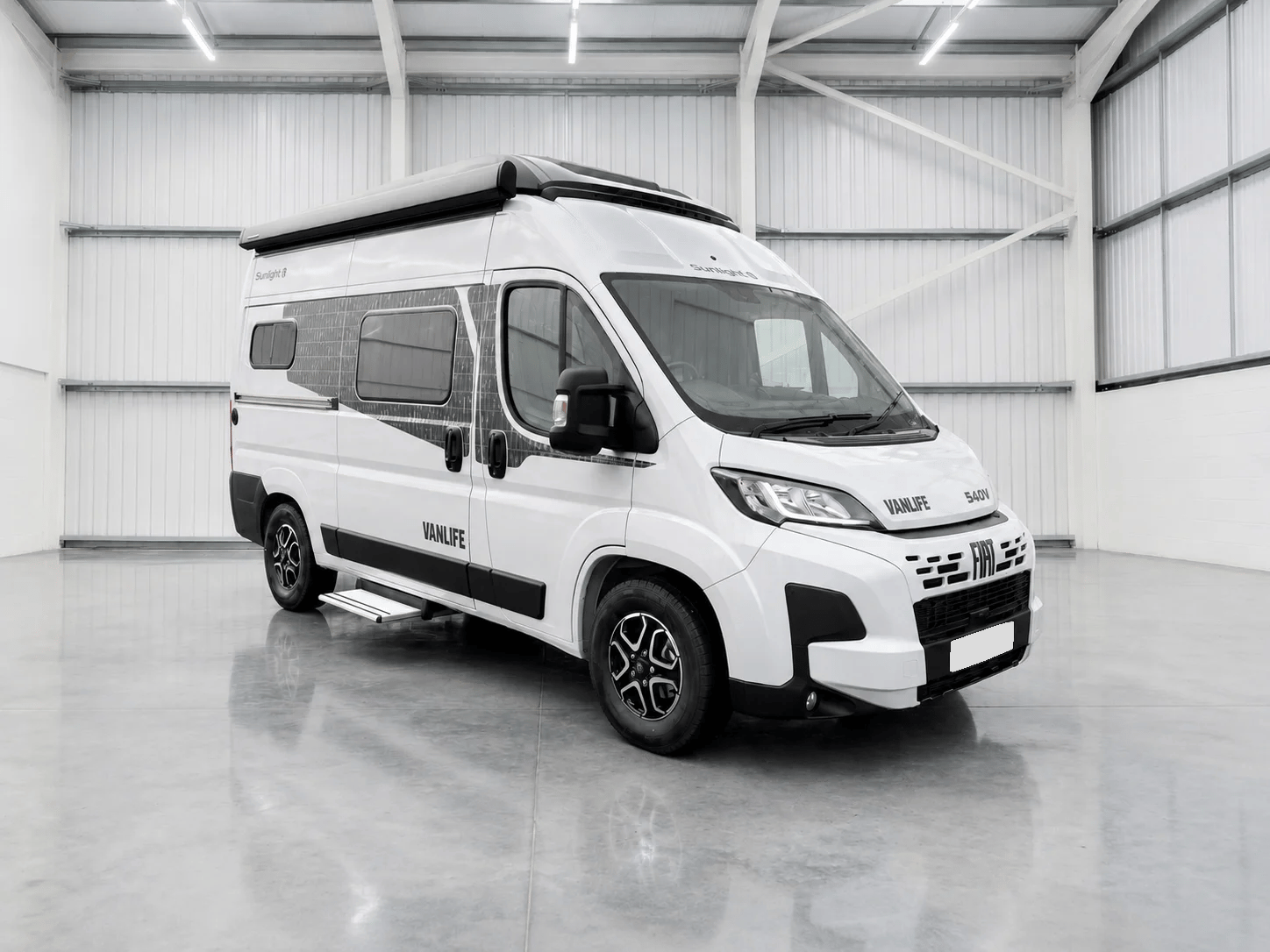
The camper you fall for is rarely the one you can afford. That gap is the whole reason Campervan.win exists. Right now we’re giving away the Sunlight Vanlife, worth around £65,000, and closing that gap is the point: capped entries so the odds stay honest, £10 a ticket, a maximum of five per person, £500 to a UK charity from every full draw, the winner picked by a public randomness beacon anyone can re-check, and one person driving away in the van itself.
Enjoyed this post?
Get more honest campervan guides like this one in your inbox.
You’re in!
Check your inbox. We’ve just sent you a welcome email.

About the author
Oliver
Oliver is the founder of Campervan.win and writes about campervans, travel, and the life-changing freedom that comes with getting out on the road.
Keep Reading
Related Reading
Thoughtful articles that build on what you’ve just read.
New & Noteworthy
12 min read
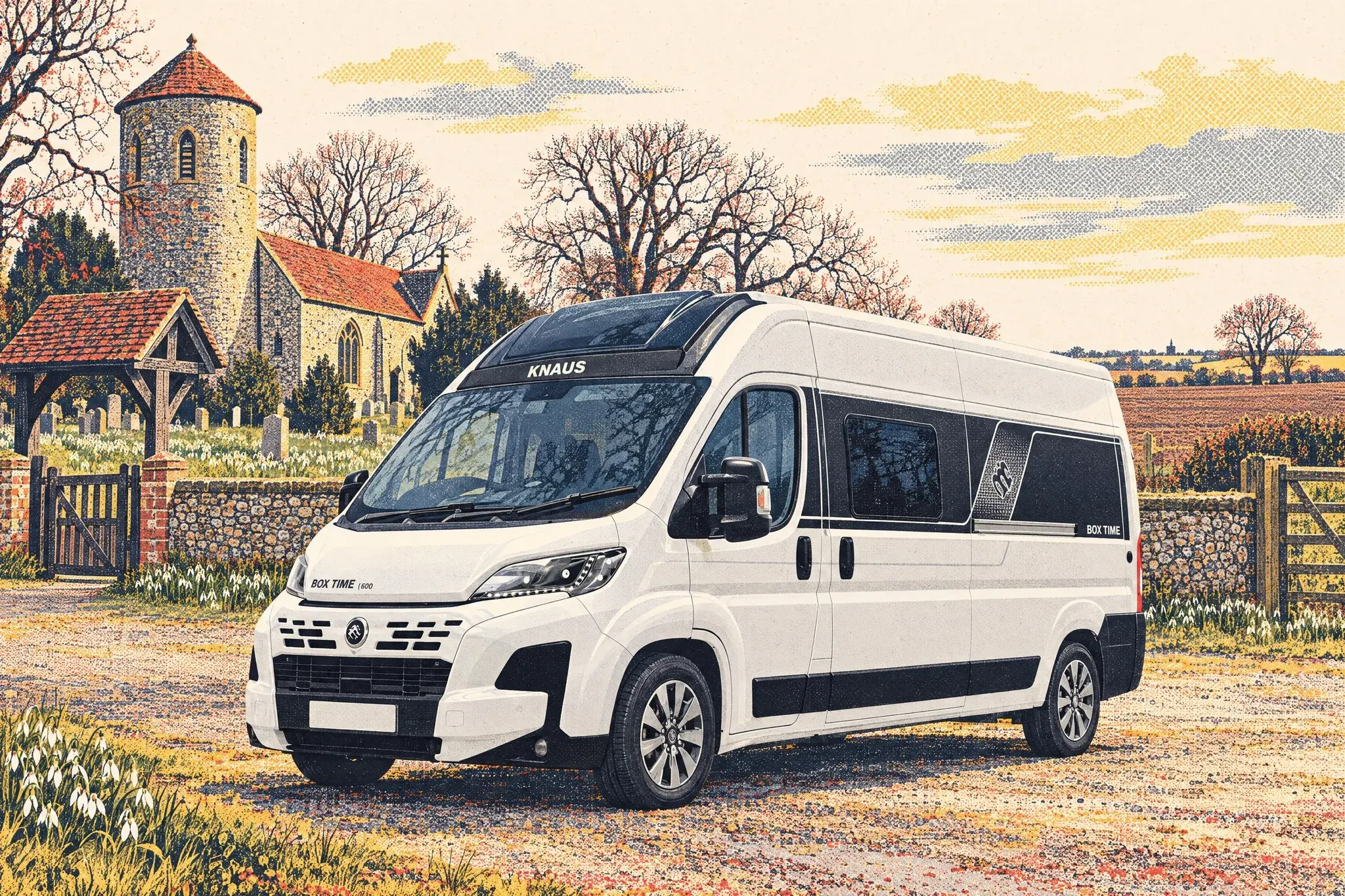
Knaus Boxtime 600 ME (2027): twin singles in 6 m, and the payload figure to question
Knaus's new Boxtime 600 ME squeezes two lengthways single beds into a 5.99 m van from £81,725. We lay out what that layout gives a couple, run the weight sums with Knaus's own figures, and explain why the 211 kg 'maximum payload' line needs a question before you sign.
New & Noteworthy
10 min read
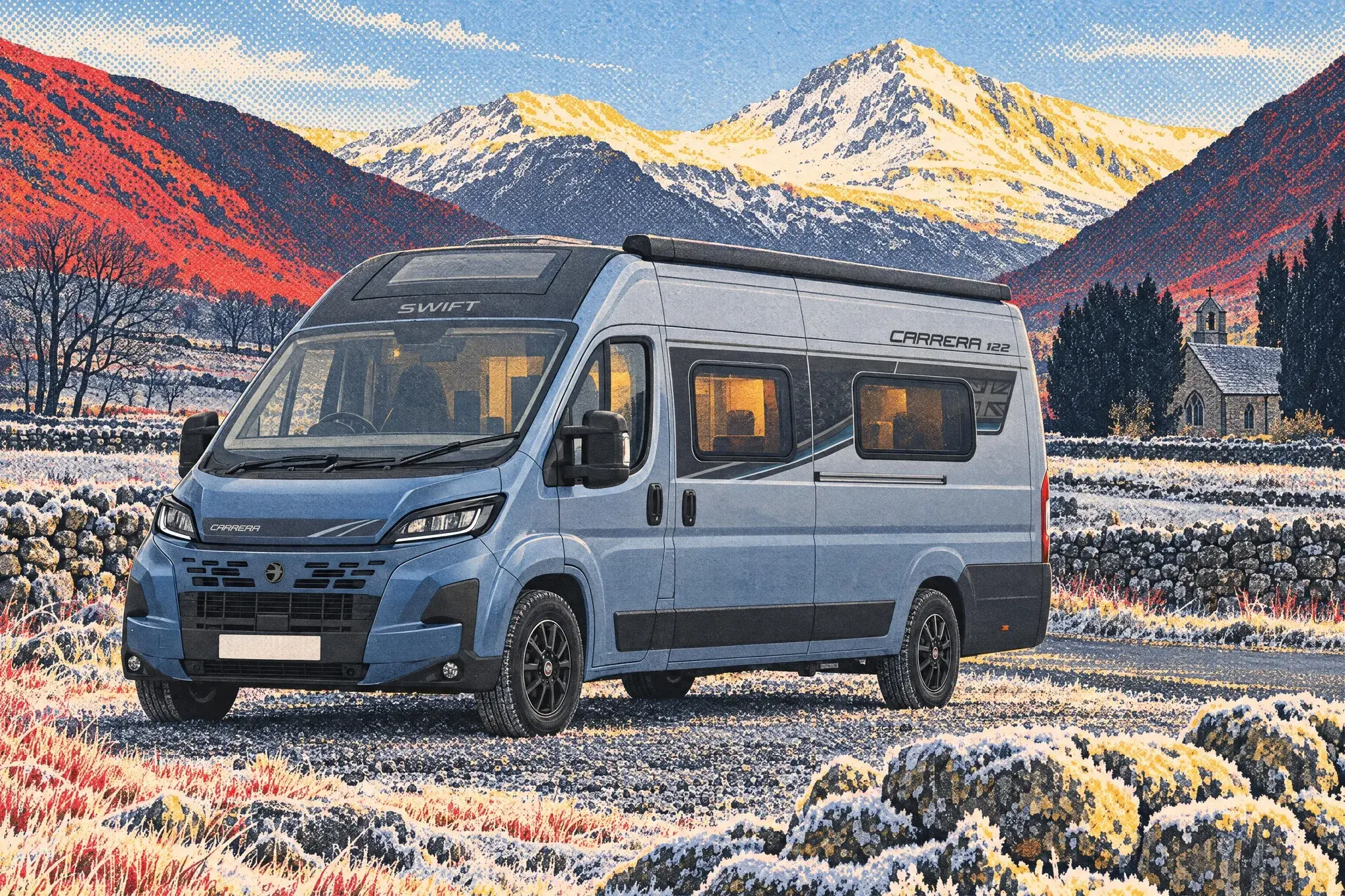
Swift Carrera goes gas-free for 2027: 340Ah lithium, diesel heat and induction cooking
Swift has taken the gas out of its Carrera campervan for 2027, swapping bottles for a 340Ah lithium battery, diesel heating and an induction hob. Here is what that means across a real UK year, how it compares with the cheaper Merlin, and the one question to ask at the NEC.
New & Noteworthy
10 min read
British campervan converters at the NEC 2026: who builds on what, and for how much
A stand-by-stand map of the British campervan converters at the Motorhome and Caravan Show 2026: the vans they build on, their from-prices, seats, roofs and lead times, plus the four questions to put to every one of them.
New & Noteworthy
9 min read
Plug-in hybrid campervans at the NEC: what a PHEV gives you and why full EVs are rare
Four UK converters have hybrid campers at or around the Motorhome and Caravan Show this October, while fully electric campers remain scarce. Here is what a plug-in hybrid camper does well, what the sellers rarely tell you, and the questions to ask on the stand.