
Is ARB worth it? The 4x4 gear, honestly reviewed

Written by
Leo
Leo covers campervan technology, maintenance, kit, and ownership advice, with a clear, practical focus on how things work in real life.
The short answer
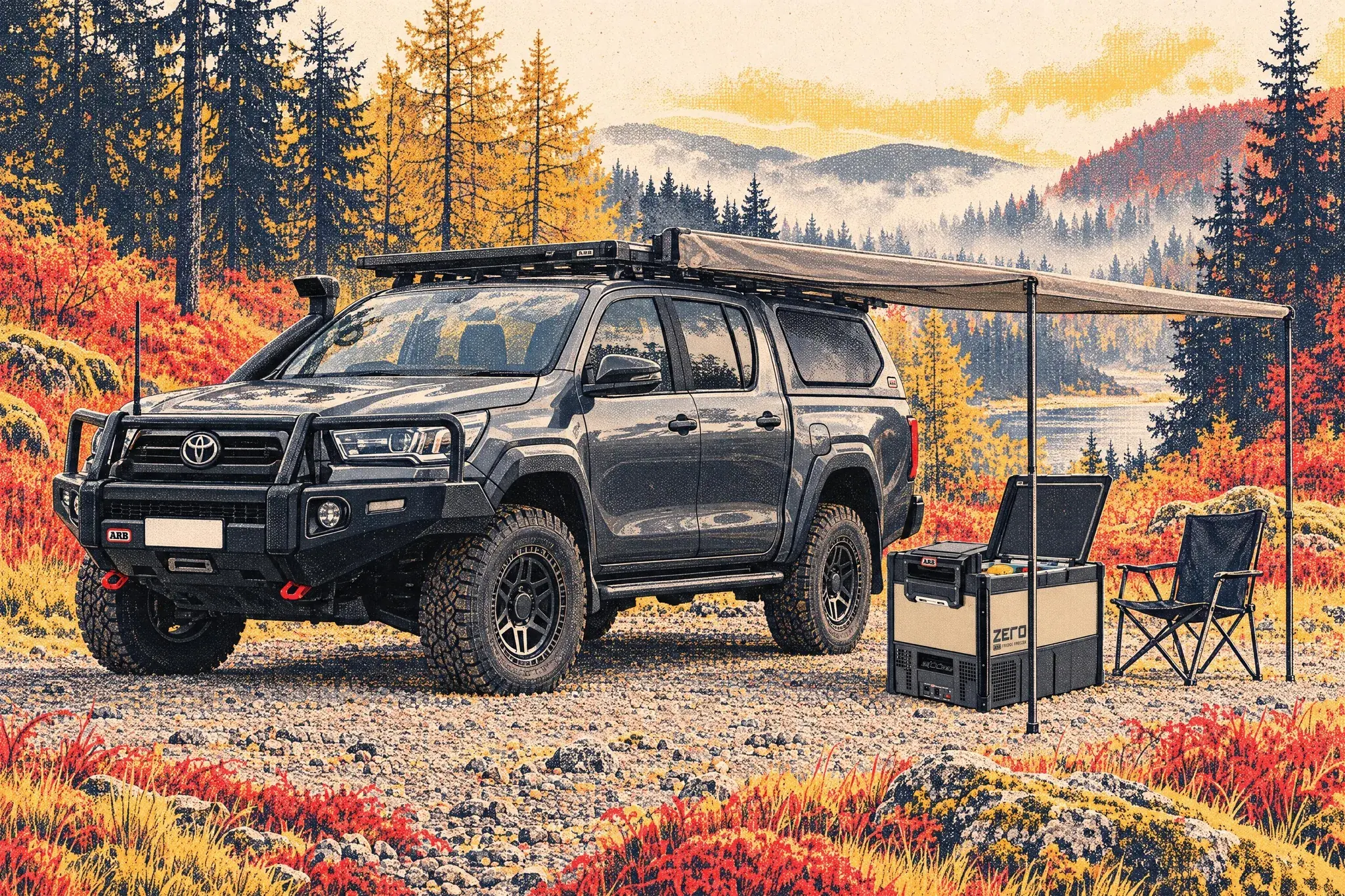
ARB is Australia's biggest name in 4x4 accessories, the kit you fit when you genuinely intend to leave the tarmac, and for the serious adventurer it is absolutely worth the premium. Its class-leading core, the Air Locker differential locker, Old Man Emu suspension and the CKMTA12 twin air compressor, is built to survive hard use for years and does exactly what it promises. The one big thing for van owners to keep in mind is weight: ARB's gear was designed for body-on-frame 4x4s with payload to spare, so on a 3,500kg camper the smart move is to cherry-pick the few pieces that earn their weight rather than fitting half the catalogue. Here is the honest review of what is worth it, and what to leave on the shelf.

If you spend any time around serious off-road vehicles, the same three letters keep appearing: ARB. They're stamped on the bull bar, the fridge in the boot, the air compressor under the bonnet and the awning down the side. ARB is Australia's biggest name in four-wheel-drive accessories, and over fifty years it has built a reputation as the kit you fit when you genuinely intend to leave the tarmac and stay away for a while.
That reputation is why a campervan site is reviewing 4x4 gear. The line between "campervan" and "overland vehicle" has blurred: go-anywhere 4x4 campers like the Sunlight Ibex are arriving in the UK, pickup-and-canopy builds are everywhere, and plenty of van owners want the freedom to point their vehicle down a forest track or onto a remote beach rather than only at a tarmac pitch. The moment you take that seriously, you run into ARB. So this is an honest review of the brand's equipment, written from the perspective of what's actually worth fitting: which products are genuinely class-leading, which are good-but-niche, what to be careful about, and, the question that matters most with ARB, whether the premium is worth paying. We'll be candid about price, weight and the bits that draw genuine criticism, because a review that only gushes is no use to anyone spending this kind of money.
Who ARB are, and why the name carries weight
ARB stands for Anthony Ronald Brown, the Australian who started hand-making roof racks and bull bars in Melbourne back in 1975 after an outback trip showed him how badly off-the-shelf gear coped with corrugated roads. From that beginning, ARB grew into Australia's largest manufacturer and distributor of aftermarket 4x4 accessories, with its own factories in Australia and Thailand and distribution to more than a hundred countries. Along the way it acquired and developed some of the most respected names in the off-road world, including the Air Locker differential locker and Old Man Emu suspension, both of which we'll come to.
The point of that history is reputation. ARB isn't a fashion brand that slapped a logo on imported parts; it's an engineering company that has spent five decades building gear for people whose lives can genuinely depend on it working a long way from help. That shows in the way the products are designed to integrate with specific vehicles, in the depth of the testing, and, less happily for your wallet, in the price. ARB sits firmly at the premium end of almost every category it competes in. The question throughout this review is whether you get premium results for that premium money, and the honest answer varies by product.
For UK buyers, ARB is readily available but it's a specialist purchase rather than a high-street one. The range is sold through an official UK distributor and a network of dealers and specialist retailers, so you can buy the full catalogue here, get it fitted, and have it backed, but you'll be dealing with overland and 4x4 specialists rather than your local accessory shop. Worth knowing before you start: ARB is an import brand in the UK, priced accordingly, and some items are very much install-required rather than fit-it-yourself.
Overlanding meets vanlife: why ARB matters now
A decade ago, ARB was a brand most British van owners had barely heard of. That's changed, and it's worth understanding why, because it explains who this gear is really for. Two trends have collided. First, campervans have got more adventurous: the arrival of genuine 4x4 campers like the Sunlight Ibex and the Bürstner Habiton X, the boom in pickup-and-canopy builds, and a generation of owners who want to reach the wild spot rather than the serviced pitch. Second, overlanding, the idea of self-reliant travel by vehicle, has gone mainstream, and with it the appetite for the kit that makes it possible.
ARB sits right at the centre of that collision, because it makes an entire ecosystem for it: the traction (lockers), the ride (suspension), the air (compressors), the cold storage (fridges), the organisation (drawers), the platform (racks), the shelter (awnings and tents) and the protection (bars). You can build almost the whole vehicle from one brand, which is part of the appeal and part of the expense. For a UK reader, the relevant point is that you no longer need to be heading to the Australian outback to find ARB useful. A Scottish green lane, a remote Welsh beach, a snowed-in track or a self-sufficient week off-grid are all squarely within what this gear is built for. The question is simply how much of that you actually do, which is the thread we'll keep pulling throughout.
The crossover comes with a catch we'll return to, though: ARB's gear was designed for big, body-on-frame 4x4s with payload to spare, and a lot of campervans, especially anything plated at 3,500 kilograms, do not have payload to spare. Fitting outback-grade kit to a weight-limited van is a balancing act, and we'll give the weight question its own section because it catches people out.
Who actually fits this gear
It helps to picture the vehicles ARB kit ends up on, because it tells you whether you're really in the market. The classic ARB build is a body-on-frame 4x4: a Toyota Land Cruiser or Hilux, a Ford Ranger, an Isuzu D-Max, a Land Rover Defender, kitted for serious touring with a locker, suspension, a bar, a rack and a fridge. These vehicles have the payload and the chassis to carry it all, and ARB designs much of its range around exactly them.
The second big group is the pickup-and-canopy crowd: a double-cab truck with an aluminium canopy over the bed, drawers and a fridge inside, a rooftop tent or a camper trailer behind. This is a fast-growing style of adventuring, and ARB, which now owns a canopy manufacturer, is increasingly building for it. The third group is the 4x4 camper proper, the Sunlight Ibex and its kind, where owners want to add capability and off-grid kit to a van that already has all-wheel drive. And the fourth, smallest group is the conventional campervan owner who wants a slice of the overland look and a few genuinely useful pieces, an awning, a fridge, maybe a rack, without going the whole way.
The further down that list you are, the more selective you should be. A Land Cruiser overlander can sensibly fit half the catalogue; a 3,500-kilogram camper owner should cherry-pick the few pieces that earn their weight. Knowing which build you're really doing is the first step to spending well rather than just spending.
The class-leading core: lockers, suspension and air
If ARB is famous for three things, it's these. They're the products that made the brand's name, and they're where the premium is most clearly justified.
Air Locker differential lockers
A differential locker is the single most effective thing you can fit to make a 4x4 genuinely capable off the road, and ARB's Air Locker is widely regarded as the benchmark. The short version of what it does: on an ordinary axle, when one wheel loses grip, the differential sends the power to that spinning wheel and the wheel with grip does nothing, which is exactly why a vehicle gets stuck with one wheel spinning uselessly in the air. A locker forces both wheels on the axle to turn together, so the wheel with grip keeps driving you forward. ARB's version is air-operated and selectable, meaning you flick a switch to engage it only when you need it and the axle behaves normally the rest of the time.
The Air Locker's reputation is genuinely strong, and it's the sort of upgrade that transforms what a vehicle can climb, crawl and claw its way out of. The honest caveats are practical ones. It needs an air source to operate, which in practice means fitting an ARB compressor too (more on that shortly), it requires professional installation inside the differential, and it's a premium-priced item before you've added the fitting. So it's a considered, committed upgrade, not an impulse buy. But for anyone building a vehicle to tackle genuinely difficult terrain, it's close to the definitive answer, and the fact that some manufacturers fit Air Lockers from the factory tells you how the industry rates it.
Old Man Emu suspension
Old Man Emu, usually shortened to OME, is ARB's suspension brand, and it's one of the most respected names in the business. The idea behind it is that off-road and heavily-laden vehicles need suspension tuned for the load they actually carry and the terrain they actually cross, rather than the compromise springs and dampers a vehicle leaves the factory with. OME offers load-rated coil springs and a range of dampers tuned by vehicle, terrain and weight, so a heavily-kitted expedition vehicle can ride and handle properly rather than sagging at the back and crashing over bumps.
The reputation here is well earned: owners consistently praise the ride quality, body control and durability OME brings, particularly on vehicles carrying a lot of weight. In the interest of honesty, it isn't flawless. Trawl through genuine owner reviews and you'll find scattered reports of bushes wearing after a couple of years, the occasional spring sagging, and isolated damper failures, which is to say it's very good rather than infallible, and getting the specification right for your load matters a great deal. Fitted correctly and specced for how you actually travel, OME is one of the upgrades owners rave about most. It's also, predictably, not cheap, and it's a job for a specialist rather than the driveway.
The CKMTA12 twin air compressor
ARB's twin-motor on-board air compressor, the CKMTA12, is the product reviewers most often simply call the best in its class. It's a high-output, hard-working compressor with a 100 percent duty cycle, meaning it can run continuously without overheating, and enough airflow to reinflate a large off-road tyre in well under a minute. Crucially, it's also what powers the Air Lockers, and it'll run air tools too, so it tends to be the hub of a serious ARB build.
What you're paying for is airflow, duty cycle and build quality, and on all three the CKMTA12 delivers a genuinely excellent product. The caveats are the familiar ARB ones: it's a premium-priced item, and it's an installed component wired into the vehicle rather than a cheap portable you throw in the boot. If your needs are modest, airing tyres back up after a soft-sand stint a few times a year, a simple portable compressor will do the job for a fraction of the cost. But if you're running lockers, doing serious mileage off-road, and want one system that does everything quickly and reliably, the CKMTA12 is the one the experts fit.
Keeping food cold: ARB's fridge-freezers
For anyone who camps off-grid, a good compressor fridge-freezer is transformative, and ARB's are among the most respected, if also among the dearest.
The flagship line is the ZERO range, which uses a variable-speed compressor and comes in single-zone sizes (around 47 and 63 quart) and dual-zone sizes (around 73 and 101 quart). The dual-zone models are the clever ones: two independently-controlled compartments, so you can run one side as a fridge and the other as a freezer, or set either to off, which is exactly the flexibility a touring couple wants. They're steel-clad, efficient, and built to live a hard life, with the usual ARB reputation for ruggedness. The honest counterpoints are price, ZERO fridges command a clear premium over plenty of capable rivals, and weight, these are solid, heavy units, which matters on any vehicle where payload is tight.
ARB also makes the Elements fridge, which is a genuinely different proposition: it's fully weatherproof, designed to be mounted outside the vehicle, on a rack or a ute tray, and left exposed to the elements. That's a unique and useful trick for pickup and canopy builds. The trade-off is that it's single-temperature only, so there's no dual-zone flexibility, which makes it a more niche choice. There's also ARB's LINX system, an in-cab digital control unit that lets you monitor and control compatible ARB gear, lighting and the like from one screen, which is the sort of thing that appeals if you're building an integrated, switchable setup rather than a collection of separate accessories.
A word on power, because a fridge needs feeding
A compressor fridge like the ZERO is brilliant, but it's worth understanding what it asks of your electrical system, because this is where fridge choices and battery choices meet. Unlike an old-style absorption fridge, a compressor unit runs off your 12-volt leisure battery, cycling on and off to hold temperature, and over a hot day off-grid that's a meaningful draw. Pair a good fridge with a tired single battery and no way to recharge, and you'll flatten the battery before the food gets warm.
So if you're investing in an ARB fridge for genuine off-grid use, think about the system behind it: a healthy leisure battery (lithium if you're serious), a way to recharge it (solar, a smart charger, or a DC-to-DC charger from the engine), and an honest sense of your daily budget. The fridge is efficient, ARB's variable-speed compressor is designed to sip rather than gulp, but it's still the appliance most likely to dictate how long you can stay out. Get the power system right and the fridge is a joy; bolt a thirsty fridge to a weak system and it becomes the reason your trips are shorter than you'd like.
Storage and load-carrying
Two ARB systems dominate here, and both are well regarded with one honest wrinkle each.
The Outback Solutions drawer system is ARB's modular load-area storage: vehicle-specific drawers that turn a chaotic boot into organised, lockable, slide-out storage, with the option of a fridge slide and a load floor on top. Owners praise the fit, finish and modularity, and it's a genuinely transformative thing for living out of a vehicle. The recurring criticism, and it's worth knowing, is that some owners report the plastic components in the drawer slide-locks breaking, occasionally more than once. It's not a universal experience, but it comes up often enough to mention, so it's worth checking the current design and asking your fitter about it.
The BASE Rack is ARB's flat roof platform, and it's earned a strong reputation, often compared favourably with the established alternatives. Its party trick is a dovetail side-rail mounting system that makes fitting accessories, lights, tables, recovery boards, awnings, genuinely flexible. It's low-profile, looks purposeful, and is built to take a beating. The cost caveat is the ecosystem: the rack is one outlay, and the accessories that make the most of it are another, so a fully-kitted BASE Rack adds up. ARB also makes more conventional roof racks, but the BASE Rack is the one that gets the attention.
The weight question: ARB gear and your payload
Here's the practical reality the glossy build photos never mention, and it matters more on a van than on a Land Cruiser. ARB gear is, by and large, heavy. It's built tough, often from steel, and toughness weighs something. A steel bull bar, a drawer system, a dual-zone fridge, a roof rack and an awning can add up to a serious amount of mass, and every kilogram of it comes out of your payload, the weight you're legally allowed to add to the vehicle.
On a big 4x4 with a generous payload, that's rarely a problem. On a campervan plated at 3,500 kilograms, which covers most of the go-anywhere campers UK buyers can drive on an ordinary licence, it absolutely can be. Payload on a converted 3,500-kilogram van is tighter than it looks once you've accounted for the conversion, and bolting outback-grade accessories onto it can quietly tip it over the legal limit before you've loaded water, kit and people. Overloading isn't a grey area: it's an offence, it can invalidate your insurance, and a heavily-accessorised van is one of the easiest ways to do it without realising.
None of this means ARB gear and campervans don't mix. It means you have to budget weight as carefully as money. Weigh the vehicle, know your real payload, prioritise the kit that earns its weight (traction and a fridge over cosmetic armour, say), and consider the lighter alloy versions where ARB offers them. The owners who get this right end up with a capable, legal vehicle; the ones who don't end up overweight and over budget. On a van, the weighbridge is as important a tool as the spanner.
Protection and recovery, and an important UK caveat
ARB's bull bars are, in engineering terms, excellent: fully-designed replacement front bumpers with integrated mounting, provision for a winch, lights and an antenna, and designs tested for airbag compatibility. On a vehicle built for the outback, where an animal strike is a genuine risk and a winch mount is a necessity, they make complete sense.
Here, though, is the most important honesty point in this whole review for a UK reader, so we'll be clear about it. Full rigid steel bull bars are a contentious and, in places, restricted fitment in the UK and Europe. Frontal protection systems are associated with increased pedestrian injury, and regulations on newer vehicles mean a non-compliant rigid bar can be illegal to fit or can affect your vehicle's crash and airbag behaviour. ARB does offer alloy and airbag-compatible designs intended to address this, but the bottom line is that you must check the legality and compliance of any bull bar for your specific vehicle and how you use it, on UK roads, before fitting one. This is one area where the gear that makes total sense in the Australian outback needs careful thought before it goes on a van or 4x4 used on British roads. It's not a reason to dismiss ARB; it's a reason to take advice from a knowledgeable UK fitter rather than assuming an Australian product is a straight fit here.
On recovery gear, ARB makes the full range, snatch straps, recovery boards, shackles and bundled recovery kits, and it's a recognised, trusted line. We'll resist superlatives, because recovery gear is an area where independent, like-for-like testing matters and we'd rather not crown a "best" without it, but it's solid kit from a brand that understands recovery. The same goes for ARB's snorkels, which raise the engine's air intake for dust and water crossings, a sensible fitment if your adventures genuinely involve either.
Awnings and rooftop tents, in brief
ARB also makes the soft-touch end of overlanding: awnings and rooftop tents. The awnings are rugged, rack-mounted pull-out affairs in canvas, with sizes and accessory rooms to suit, and they're keenly enough priced in the UK to be a sensible buy for the adventurous van or 4x4. We compare them directly with the campervan favourite in our dedicated ARB awning versus Thule awning piece, so we won't repeat all of it here, except to say ARB's awnings are aimed squarely at the roof-racked 4x4 rather than the motorhome, and judged on that basis they're good.
The rooftop tents, the hard-shell Esperance, the lower-profile Flinders and the automated Altitude among them, are ARB's sleeping solution, and they matter to one of the questions people most often ask about the brand, namely whether ARB will ever build its own campervan. The short answer is that ARB's approach to "somewhere to sleep" is rooftop tents and, more recently, an off-road camper trailer, rather than a motorised van, and we dig into that properly in our piece on whether ARB will make a campervan.
ARB versus the alternatives
ARB isn't the only game in town, and a fair review has to say where rivals make more sense. In roof racks and platforms, Front Runner and Rhino-Rack are serious competitors, often lighter or cheaper, and for a van owner watching weight a Front Runner platform is well worth comparing against the BASE Rack. In fridges, Dometic and National Luna are the names that go toe-to-toe with ARB's ZERO range, and several offer comparable performance for less, so the ZERO is the premium choice rather than the only good one. In suspension, the likes of Bilstein and King compete with Old Man Emu, though OME's load-rated, vehicle-specific approach is a particular strength for laden expedition vehicles. And in lockers, while the Air Locker is the benchmark, there are capable mechanical and electronic alternatives from other makers that suit different budgets and air setups.
The pattern across all of these is consistent: ARB is rarely the cheapest, and it's rarely a bad choice. What you're buying with the premium is engineering depth, vehicle-specific integration, a vast and proven ecosystem, and strong resale and support. For some buyers that's worth a clear price premium; for others, mixing the best-value option in each category, a lighter rack here, a keener-priced fridge there, builds a better vehicle for the money. There's no shame in a mixed build, and anyone telling you it has to be all-ARB is selling something. The honest position is that ARB's core engineering (lockers, suspension, compressors) is where the premium is most justified, while its accessories (racks, fridges, drawers) are excellent but face stronger value competition. Shop the categories on their merits, not the badge.
One genuine ARB advantage worth weighing, though, is that single-ecosystem integration. If you want lockers, a compressor to run them, lighting and a fridge all wired and controlled to work together, buying it all from one brand that designed it to interoperate is genuinely simpler than stitching together five makers' products. Whether that's worth the premium depends on how integrated and switchable you want your setup to be.
Where to start: a sensible order of priorities
If ARB's catalogue has seduced you but your budget is finite, which most are, the order you buy in matters. Here's a sensible priority list for an adventure-minded van or 4x4 camper, richest-reward first.
Start with the things that change what the vehicle can do and where it can go. Good suspension specced for your load (OME or a rival) transforms how a laden vehicle rides and handles, and it's the upgrade owners notice every single mile, not just off-road. Recovery gear, a decent kit you actually know how to use, is the cheap insurance that keeps a stuck vehicle from becoming a ruined trip, so buy it early and learn it. If your terrain genuinely demands it, a locker and the compressor to run it are the single biggest capability upgrade, but they're a bigger commitment, so be honest about whether your trips need them.
Then move to the things that change how you live in the vehicle. A good fridge-freezer is the upgrade that most improves off-grid life day to day, so it's high on the list for anyone camping away from hook-ups. Storage, drawers or a simpler system, comes next, turning chaos into order. Shelter, an awning, makes the outside of the van usable in sun and showers. And protection, bars and underbody armour, comes last for most UK users, both because it's the heaviest and because, as we've noted, full bull bars need careful thought on British roads. Buy in that rough order and each pound does the most work; buy the shiny armour first and you've spent the most on the thing you'll use the least.
The ARB range at a glance
| Product | What it is | Verdict |
|---|---|---|
| Air Locker | Air-operated selectable diff locker | Class-leading; needs a compressor and pro fitting |
| Old Man Emu suspension | Load-rated springs and dampers | Excellent for laden vehicles; spec it right |
| CKMTA12 compressor | Twin-motor on-board air compressor | Best in class; premium and installed |
| ZERO fridge-freezers | Single and dual-zone compressor fridges | Rugged and excellent; premium and heavy |
| Elements fridge | Weatherproof external fridge | Uniquely weatherproof; single-temp, niche |
| Outback Solutions drawers | Modular load-area storage | Great fit; watch the slide-lock complaints |
| BASE Rack | Low-profile roof platform | Versatile mounting; the ecosystem adds up |
| Bull bars | Engineered front protection | Superb engineering; check UK legality first |
| Awnings | Rack-mounted pull-out canvas awnings | Good for 4x4s; from around £277 in the UK |
| Rooftop tents | Hard- and soft-shell roof tents | ARB's "somewhere to sleep", not a campervan |
So is ARB worth it?
Here's the honest verdict, because "is it worth it" is the only question that matters at these prices. ARB is premium gear, and for the right buyer it's worth every penny; for the wrong one, it's expensive overkill.
If you genuinely use your vehicle off the tarmac, if you're building a 4x4 camper, a pickup-and-canopy rig or an overland vehicle that will tackle real terrain and spend real time off-grid, then ARB's core kit is some of the best money you can spend. The Air Locker, Old Man Emu suspension and the CKMTA12 compressor are class-leading, and the fridges, drawers and BASE Rack are excellent. You pay a premium, you carry some extra weight, and a few lines have their known niggles, but the engineering depth and the integration are real, and the resale reputation is strong. For this buyer, ARB is the safe, serious choice.
If, on the other hand, your "adventures" are tarmac pitches and the occasional firm grass field, most of ARB's range is far more capability than you'll ever use, and your money is better spent elsewhere. There's no shame in that; it's simply matching the kit to the use. The skill with ARB is buying the right pieces for how you actually travel, not the whole catalogue because it looks the part. Be honest about where your wheels really go, and the brand either earns its premium handsomely or sits unused, an expensive costume on a van that never leaves the road.
What we'd think twice about
In the spirit of an honest review, here's where we'd pause before reaching for the ARB catalogue. A full steel bull bar on a van used mainly on UK roads is the big one: superb engineering, but a real legality and pedestrian-safety question here, and heavy with it, so think hard and take UK-specific advice. Paying ARB money for capability you won't use is the next: if your wheels rarely leave the tarmac, the lockers, the snorkel and the heavy-duty everything are cost and weight you don't need. The Outback drawer slide-locks have a track record of plastic parts breaking, so check the current design and keep an eye on them. And the cumulative weight of a full ARB build is a genuine trap on a payload-limited van, as we've said.
None of these is a reason to avoid the brand; they're reasons to buy it deliberately. ARB rewards the buyer who chooses specific, well-judged pieces for genuine needs, and quietly punishes the one who buys the whole look. Spend where the engineering earns its premium, skip what your trips don't justify, and watch the weighbridge, and you'll end up with a genuinely better vehicle rather than just a more expensive one.
Living with ARB: support and the long game
A review of premium kit should think past the purchase, because gear you'll own for years lives or dies on support and durability, not just the spec sheet. Here the news is mostly good. ARB's UK presence, an official distributor plus a dealer and specialist network, means parts, fitting and backup are genuinely available here rather than a long wait from Australia, which matters when something needs attention. The brand's reputation for durability is, overall, strong: this is gear built to survive corrugated outback roads, and most of it does exactly that for many years.
That's "mostly", not "entirely", and we've been honest about the exceptions: the occasional Old Man Emu bush or damper wearing sooner than hoped, the plastic drawer-lock parts that some owners replace more than once. None of these is catastrophic, and none is unique to ARB, but they're the real-world texture of ownership rather than the marketing version. The flip side is resale: ARB kit holds its value and its desirability well, so a well-chosen, well-fitted setup isn't only money spent, it's partly money stored, which softens the premium over time.
The practical takeaway is to fit ARB through a knowledgeable UK specialist rather than chasing the cheapest grey-import box, keep the paperwork, and maintain the moving parts as you would any hard-working kit. Do that, and ARB rewards you with gear that simply keeps working a long way from anywhere, which, when you strip away the badge and the looks, is the entire point of buying it.
A note on prices
ARB pricing moves, varies by retailer and, for some lines, depends heavily on fitting, so treat any figure as a snapshot and get a current quote. As a guide to where the brand sits, its UK awnings run from around £277 for the compact rear awning up to roughly £690 for the premium aluminium-cased version, with the popular mid-size soft-case awnings around the £350 to £400 mark, plus extra for rooms and walls. The bigger-ticket engineering items, the lockers, suspension, compressors, fridges and drawer systems, are firmly premium-priced and several require professional installation, so budget for fitting as well as the part. The sensible approach is to price up the specific items you want from a UK ARB specialist, fitted, rather than working from headline numbers, because on this kind of kit the installed cost is the one that counts. We've kept prices deliberately broad here for the same reason we will on any kit review: they move with exchange rates, retailer discounting and fitting, so a figure that's right today can mislead in six months. Treat everything as a snapshot and get a live quote.
Frequently asked questions
Is ARB available in the UK?
Yes. ARB's full range is sold in the UK through an official distributor and a network of dealers and overland specialists, so you can buy, fit and have the gear backed here. It's a specialist purchase rather than a high-street one, and prices reflect ARB's premium, imported positioning, so it pays to deal with a knowledgeable 4x4 retailer.
What is ARB best known for?
Three products built ARB's reputation: the Air Locker air-operated differential locker, Old Man Emu (OME) suspension, and its on-board air compressors, especially the twin-motor CKMTA12. These are widely regarded as class-leading. The brand is also well known for its rugged ZERO fridge-freezers, Outback Solutions drawers, the BASE Rack roof platform, bull bars, awnings and rooftop tents.
Is ARB gear worth the money?
For genuine off-road and overland use, yes: the core kit is class-leading and built to last, and many owners rate it as the best money they spent. For tarmac-only touring, no: it's far more capability, weight and cost than you'll use, and your money is better spent elsewhere. The trick is buying the right pieces for how you actually travel rather than the whole range.
Can I fit a steel bull bar to my van in the UK?
Be careful here. Full rigid bull bars are contentious and, on newer vehicles, can be restricted or non-compliant in the UK and Europe because of pedestrian-protection rules, and a non-compliant bar can affect your vehicle's safety systems. ARB offers airbag-compatible and alloy designs, but you must check the legality and compliance for your specific vehicle with a knowledgeable UK fitter before fitting one. Don't assume an Australian-market product is a straight, legal fit here.
Does ARB make a campervan?
No. ARB makes rooftop tents and, since 2023, an off-road camper trailer (the Earth Camper), but not a motorised campervan, and none has been announced. We cover this in full in our piece on whether ARB will make a campervan.
Is ARB better than Front Runner or Rhino-Rack?
For roof racks and platforms it depends on your priority. ARB's BASE Rack is versatile and tough with a clever mounting system, but Front Runner and Rhino-Rack are serious rivals that are often lighter or keener on price, which matters on a weight-limited van. None is clearly "best": ARB is the premium, integrated option, while the others can be better value or lighter. Compare the specific rack and its weight for your vehicle.
What ARB gear should I buy first for a campervan?
Prioritise what changes capability and comfort over cosmetics. Load-rated suspension and a decent recovery kit come first, then a good fridge-freezer for off-grid living, then storage and an awning. Leave heavy protection like bull bars until last, both because of the weight and because of the UK legality questions around rigid front bars. And weigh your van first: outback-grade kit is heavy, and payload on a 3,500-kilogram camper is tighter than it looks.
Does an ARB fridge drain the battery?
A compressor fridge like the ARB ZERO runs off your 12-volt leisure battery and is the appliance most likely to dictate how long you can stay off-grid. It's efficient, but for genuine off-grid use you'll want a healthy leisure battery (ideally lithium) and a way to recharge it: solar, a smart charger or a DC-to-DC charger from the engine. Paired with a sound power system it's no problem; bolted to a weak one, it will flatten the battery.
Is ARB gear reliable?
Broadly yes: it's built to survive hard use and most of it does so for years, which is a large part of why owners pay the premium. The honest exceptions, reported by genuine owners, are occasional Old Man Emu bush or damper wear and some breakages of the plastic parts in the Outback drawer slide-locks. Neither is catastrophic or unique to ARB, but they're worth knowing. Fitting through a knowledgeable UK specialist and maintaining the moving parts keeps the experience firmly on the good side of that ledger.
Common questions
Is ARB gear worth the money?
For serious off-road use, broadly yes. ARB equipment is built to survive hard use and most of it does so for years, which is why owners pay the premium, and its core products are class-leading. The honest exceptions reported by owners are occasional Old Man Emu bush or damper wear and some breakages of plastic parts in the Outback drawer slide-locks, neither catastrophic. For light or tarmac use, much of it is more than you need.
What is ARB best known for?
Australia's largest manufacturer of aftermarket 4x4 accessories, founded in 1975, best known for a class-leading core: the Air Locker differential locker (the benchmark for making a 4x4 genuinely capable off-road), Old Man Emu suspension, the CKMTA12 twin air compressor that reviewers often call the best in its class, ZERO fridge-freezers, bull bars, drawers, racks and awnings.
What ARB gear should I buy first for a campervan?
Cherry-pick by weight. On a body-on-frame 4x4 with payload to spare you can sensibly fit half the catalogue, but a 3,500kg camper owner should pick only the few pieces that earn their weight. A quality fridge and a sensible recovery and traction setup usually justify themselves; heavy steel protection and a full accessory build rarely do on a tight-payload van.
Does ARB gear affect a campervan's payload?
Yes, and it is the main caution for van owners. ARB's gear was designed for big, body-on-frame 4x4s with payload to spare, and bolting outback-grade accessories onto a 3,500kg camper can quietly tip it over the legal limit before you load water, kit and people. Weigh the van and pick only the pieces that earn their weight.
Does an ARB fridge drain the leisure battery?
An ARB ZERO is a compressor fridge, so unlike an old absorption unit it runs off your 12V leisure battery, cycling on and off to hold temperature, which over a hot day off-grid is a meaningful draw. On a big 4x4 with generous power that is rarely a problem; on a tight-payload camper you need to size your battery and charging to suit it.
Is ARB available in the UK?
Yes, the full range is sold through an official UK distributor and a network of dealers and specialist retailers, so you can buy the catalogue here, have it fitted and have it backed. You will be dealing with overland and 4x4 specialists rather than a local accessory shop. Note that some products, like steel bull bars, have UK fitment and legality considerations to check.
The reachable bit
The camper you fall for is rarely the one you can afford. That gap is the whole reason Campervan.win exists. Right now we’re giving away the Sunlight Vanlife, worth around £65,000, and closing that gap is the point: capped entries so the odds stay honest, £10 a ticket, a maximum of five per person, £500 to a UK charity from every full draw, the winner picked by a public randomness beacon anyone can re-check, and one person driving away in the van itself.
Enjoyed this post?
Get more honest campervan guides like this one in your inbox.
You’re in!
Check your inbox. We’ve just sent you a welcome email.

About the author
Leo
Leo covers campervan technology, maintenance, kit, and ownership advice, with a clear, practical focus on how things work in real life.
Keep Reading
Related Reading
Thoughtful articles that build on what you’ve just read.
Campervan Kit & Gear
24 min read
Campervan leveling options: what's best, what's best value, and what should you choose?
A plain-English, in-depth look at every way to level a campervan or motorhome on a sloping pitch, from £20 ramps to fully automatic hydraulic systems, with honest UK prices and advice on which one actually suits you.
Campervan Kit & Gear
27 min read
Lock'n'Level review: a great little tool, and why a smart 'Pro' version makes sense
An honest review of Lock'n'Level, the British inflatable air levelling system: you drive onto a tough air bag and inflate it with a 12V tyre compressor to raise each corner, and a valve holds the level. It covers how it works, the range, the real pros and cons, who it suits, and the case for a smart 'Pro' version that reads the angle for you.
Campervan Kit & Gear
25 min read
ARB awning vs Thule awning: one's for 4x4s, one's for campervans
ARB and Thule both make excellent awnings, but they're built for different vehicles and different lives. One is a rugged, rack-mounted pull-out for 4x4s and overlanders; the other is the wind-out cassette awning that defines campervan and motorhome touring. Here's how they really compare, and which one you actually want.
Campervan Kit & Gear
25 min read
Campervan thermal blinds: the cure for cold nights and wet windows
Thermal screens keep a campervan warm on a frosty night, cool in summer, and free of streaming condensation, and the cab and the pop-top are where you win or lose that battle. Here's the full guide to internal, external and magnetic thermal blinds, with honest pros, cons and prices.