
Kia PV5: the ideal electric campervan base, bar one big problem

Written by
Arthur
Arthur writes buying guides, comparisons, and in-depth explainers to help readers choose the right campervan or motorhome with confidence.
The short answer
The Kia PV5 is a clever, flat-floored electric van designed from the ground up to be reconfigured, with vehicle-to-load power and Kia's own camper version on the way, and it has just been named 2026 International Van of the Year. On paper it is the breakthrough electric campervan base, and it genuinely moves things forward. The one big problem is range: it quotes around 258 official miles, but built into a loaded family camper you will be lucky to see 150 to 180 in the real world, less in winter, which is why long-distance and off-grid EV touring still belongs to diesel for now. The Cargo starts around £27,645 plus VAT. Buy one for the weekends and short adventures it is brilliant at, not the 500-mile haul it is not. Here is the full picture, and the UK converters building on it.

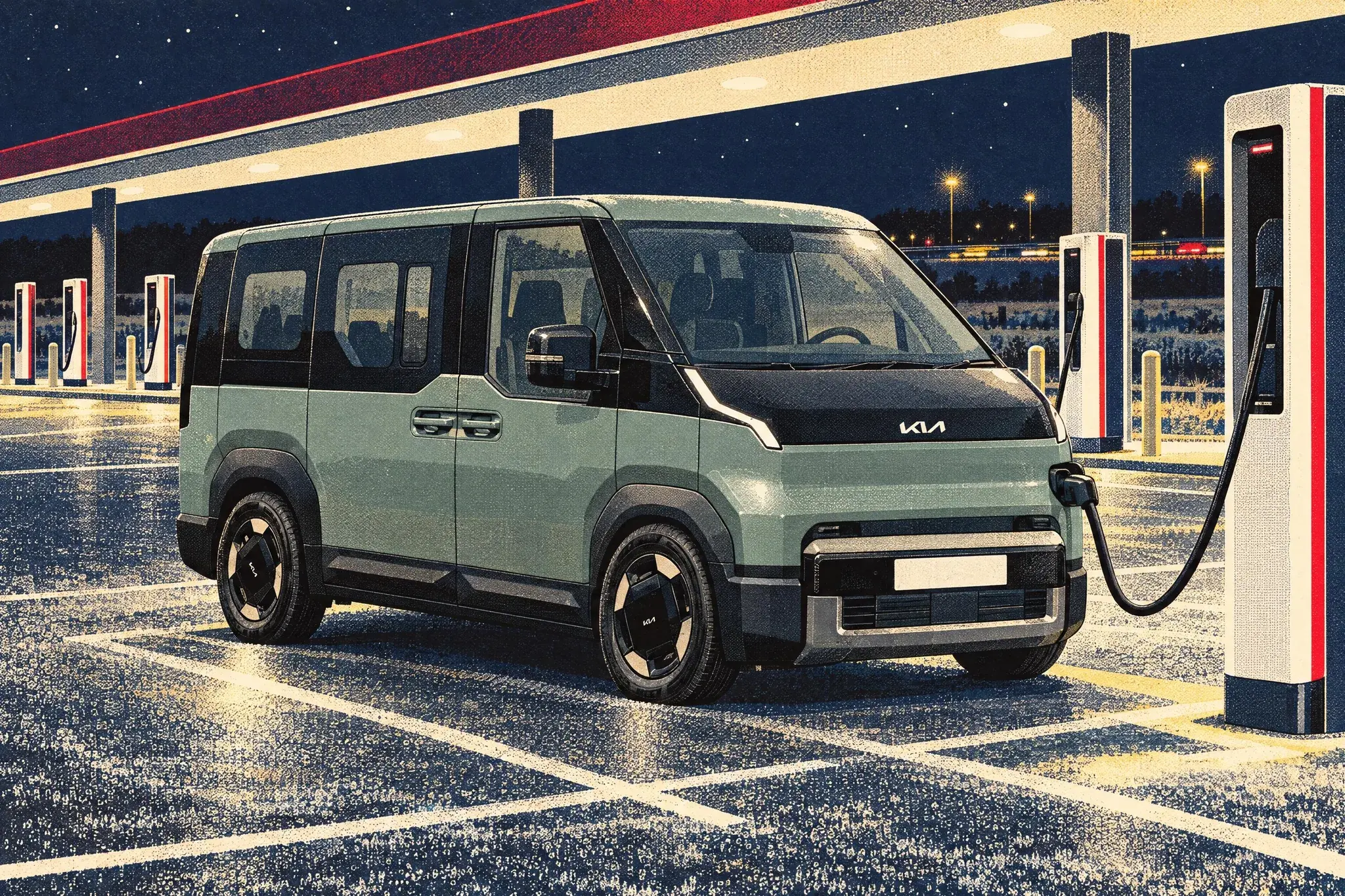
Every now and then a new vehicle comes along that makes you think the future has finally arrived, and the Kia PV5 is one of them. It's a clever, flat-floored, electric van designed from the ground up to be reconfigured into whatever you need, Kia has openly said it will build a camper version, and it's just been crowned International Van of the Year. On paper, it looks like the breakthrough electric campervan base the industry has been waiting for.
And then you load it up, add a family and a fortnight's worth of gear, point it at the coast, and run headlong into the one problem that haunts every electric camper: range. The PV5 quotes around 250 miles. Build it into a camper, fill it, and you'll be lucky to see 150 to 180 in the real world, less in winter. That single number is why, for all its brilliance, the electric campervan revolution is still idling at the lights.
This is a long, honest look at both halves of that story: why the PV5 could be the ideal electric camper base, why range still holds it (and every EV camper) back, and, crucially, what you can actually buy today, because a small but growing band of UK converters is already building electric campers, and some of them are genuinely good. If you want the wider VW angle on the same shift, our piece on VW's electric campervan plans is a useful companion; here, we're focused on the PV5 and the converters making EV campers real right now.
Why the Kia PV5 looks like the ideal electric camper base
Start with why everyone's excited, because the enthusiasm is justified.
The PV5 is the first vehicle in Kia's PBV line, which stands for "Platform Beyond Vehicle". The idea is a modular electric vehicle built on a dedicated skateboard platform, sold in multiple body styles, Cargo, Passenger, Crew and Chassis Cab, with factory Conversion variants designed in from the start. Bigger PV7 and PV9 models are planned to follow. The strategy behind it is worth grasping, because it's unusual: Kia isn't treating these as ordinary vans that might occasionally be converted, but as a platform business, deliberately engineered so the same skateboard underneath can become a taxi, a delivery van, a mobile shop or a camper, with interiors swapped to suit. A manufacturer designing a vehicle from the outset to be reconfigured, and actively inviting converters in to do it, is rare, and it's exactly the posture that makes life easy for camper builders. Most campers begin life as commercial vans never intended for the job; the PV5 was, in part, intended for it. That difference in intent is subtle but real, and it's a large part of why the camper world has taken to the PV5 so quickly. In other words, this isn't a car awkwardly adapted into a van; it's a flexible electric box engineered to be turned into things, which is exactly what a camper converter wants.
Three features make it especially camper-friendly. First, the flat skateboard floor: with the battery under the floor, the cabin is a clear, boxy, reconfigurable space, ideal for fitting furniture. Second, vehicle-to-load power, or V2L, which lets the van run 220-volt appliances directly from its drive battery, an induction hob, a fridge, devices, all without a separate leisure-power system straining. For a camper, that's close to a superpower. In practice it means running an induction hob, a compressor fridge, lights, a kettle, laptops and phone chargers straight from the van's main battery, with no need for the bulky separate leisure-battery-and-inverter setup a diesel camper relies on, or at least a much smaller one. Some owners run power tools from it, or even back up their home in a power cut. For camping, it collapses a whole subsystem into the vehicle itself: the same battery that drives you to the pitch then powers your stay. The only caveat, and it's the familiar one, is that every watt you draw is a watt off your driving range, so V2L is brilliant for a stationary camp and something to use thoughtfully if you're tight on miles. Third, Kia's own intent: the company has run a "PBV Open Innovation Challenge" for converters and said plainly that a camper version is something it "definitely will do". When the manufacturer is actively courting the camper world rather than ignoring it, that changes everything.
The credibility is there too. The PV5 was named 2026 International Van of the Year by a unanimous jury of European commercial-vehicle journalists, and also took What Van?'s Van of the Year. Awards aren't everything, but a clean sweep like that tells you the fundamentals are sound.
On the numbers, the PV5 comes with a choice of batteries: the Cargo offers roughly 51.5kWh or 71.2kWh, and the long-range version claims around 258 miles on the official WLTP test (the Passenger is similar at 256). Real-world figures, even before any camper conversion, land closer to 210 miles. Payload is reasonable for the class, up to around 790kg on the Cargo, dropping as you go up in battery and trim. It charges 10 to 80 per cent in about half an hour on a fast enough charger. And it's keenly priced: the Cargo starts around £27,645 plus VAT, with the Passenger from around £32,995 on the road, and a Plug-in Van Grant has applied to qualifying versions. UK orders opened in May 2025 with deliveries from late that year.
Kia has even shown what it has in mind. There's the PV5 WKNDR, a lifted, off-road-tyred adventure concept; the PV5 Spielraum studio and camping concepts developed with LG, slated for production in the second half of 2026; factory Conversion variants that reportedly include a "Light Camper" and a full camper; and a Kia-sanctioned flat-pack camping kit, an IKEA-style drop-in that plugs an induction hob into the V2L socket and converts to a double bed while keeping the seats, for around the equivalent of two thousand pounds, heading to the UK and Europe. Put all of that together and you can see why the PV5 has the camper world more excited than any electric vehicle since the VW ID. Buzz.
The Guinness record, and why it's a little misleading
You may have seen the headline: a Kia PV5 set a Guinness World Record by driving 430.85 miles on a single charge, while carrying its maximum payload, over a marathon 22-and-a-half-hour run near Frankfurt. It's a genuinely impressive feat and it proves the battery and efficiency have real potential.
But be careful what you take from it, because it's exactly the kind of number that misleads. That was a hypermiling record: very low average speeds, ideal conditions, and a payload that was simply dead weight, sandbags, not a camper conversion with its drag-inducing furniture, roof and shape. It tells you what the PV5 can do when everything is optimised for distance. It tells you almost nothing about what a converted, furnished, family-loaded camper will manage at 65 miles an hour on a cold motorway. Treat the 430-mile record as the optimistic ceiling, and then come back down to earth, because earth is where the problem lives.
The one big problem: range, when it's actually a camper
Here's the issue that holds the PV5, and every electric camper, back. An EV van's range collapses the moment you turn it into a camper, and it does so for four compounding reasons.
First, weight. A camper conversion adds furniture, a kitchen, water, a bed, a leisure setup and often an elevating roof, easily a few hundred kilos, and every kilo costs range. An electric base is already heavy because of its battery, so you're loading weight onto an already-heavy vehicle. To put a number on it, the electric Ford E-Transit is around 752kg heavier than its diesel equivalent before you've added a single cupboard.
Second, aerodynamics. Campers are tall and boxy, and they sprout roof racks, solar panels, awnings and raised roofs, all of which add drag, and drag is what drains an EV at speed. A roof load that barely dents a diesel's economy can take a serious bite out of an electric van's motorway range, especially in a crosswind.
Third, speed. EVs are at their most efficient around town and least efficient on a fast motorway cruise, which is precisely where a camper spends its holiday miles.
Fourth, cold. Heating the cabin in winter draws on the same battery that moves the van, and cold weather also reduces how much energy the battery can deliver, so winter range can fall by a quarter to 40 per cent. Campers, of course, get used year-round and parked up with the heating running.
The evidence is sobering. A Ford E-Transit tested at maximum payload managed just 81 to 95 miles, against a quote of around 116 at half payload, a 20-per-cent-plus hit from load alone. The Bailey Endeavour EV, a concept camper on the E-Transit, was estimated by Ford at around 108 miles real-world, and the conversion left a meagre 178kg of payload. Practical Motorhome's expert advice for an EV camper is to "plan for 170 or 180 miles in good conditions, with less in winter or on motorways", and "as low as 150 miles when temperatures fall". Converters quote real-world bands like 150 to 170 miles for an electric Transporter, 170 to 180 for an e-Scudo, and 180 to 230 for an ID. Buzz, with larger E-Transit campers around 200 to 210 loaded, dropping towards 100 on a motorway with a big load.
So the PV5's 250-ish WLTP miles, once it's a loaded camper, realistically becomes something like 150 to 180 in good conditions and less in winter.
Put that in context against a diesel and the gap is stark. A diesel camper covers 400 to 500 miles on a tank and refuels in five minutes almost anywhere, including the petrol station in the nearest village to your wild pitch. An electric camper covers a third of that and recharges in half an hour to an hour, but only where a fast charger exists, which, in camper country, is the catch. For a weekend a hundred miles away on a site with a hook-up, that difference barely registers, and you gain silent, clean, cheap-to-charge running. For a 600-mile dash to the Highlands or a tour through rural France, it reshapes the holiday: more stops, more planning, more time tethered to chargers. Neither is wrong; they're just different tools, and the loaded range is what decides which trips an electric camper is right for. That's why we keep coming back to it: it isn't a detail, it's the whole question.
That isn't a flaw unique to the PV5; it's physics, and it applies to every electric camper. But it's the single biggest reason the electric campervan still feels like a near-future product rather than a present-day one, and it's why the honest framing of the PV5 is "the ideal base, bar one big problem".
The under-discussed catch: the battery in the floor
There's a second, quieter problem worth knowing, because almost nobody mentions it until they're mid-conversion. The very thing that makes a skateboard EV platform so appealing, the flat floor with the battery underneath, also makes it harder to convert.
Because the battery lives in the floor, the floor sits higher than a conventional van's, and, critically, you can't drill through it. On a diesel van, converters routinely run gas lines, water pipes and waste outlets down through the floor; on a battery-floored EV, that's off-limits, because you must not breach the battery pack. Bailey's design team, working on their E-Transit camper, flagged exactly this: the floor was about 100mm higher than a standard Transit, and the no-drilling rule forced them to move things like air-conditioning to the roof and rethink how services are routed. The same constraint applies in principle to the PV5's skateboard floor. It's not insurmountable, converters are solving it, but it's a real design headache that adds cost and complexity, and it's one reason EV camper conversions aren't simply diesel conversions with a different engine.
The 500-mile question
Here's a thought that's become something of an industry parlour game, and we'll be clear up front that it's opinion, not established fact: the idea that EV campers won't truly go mainstream until they can do a genuinely useful loaded range, perhaps a 500-mile lab figure that translates to a real 300-plus miles packed and on the motorway. There's no official 500-mile threshold; it's a rule of thumb, an editorial thesis. But it's a grounded one, and two real-world signals support it.
The first is that the industry itself is reaching for bigger numbers via range-extenders rather than relying on pure battery range. Thor's "Embark" concept and the Harbinger platform behind it pair a modest electric range with a petrol generator for a combined 475 to 500 miles; Dethleffs' Globevan e.Hybrid does something similar for around 500km of total range. When serious motorhome makers start bolting generators onto electric campers, they're tacitly admitting that pure-EV range isn't enough yet.
The second is the caution of the mainstream converters. Bailey built a complete, impressive electric camper concept and then said it has "no short-term plans" to actually sell it, an R&D learning exercise rather than a product. Parkers ran a piece in late 2025 bluntly titled, in effect, "want an electric campervan? Here's why you can't get one yet". The big, conservative players are watching and waiting, and what they're waiting for is range that works when the van is full. Call it 500 miles on paper, call it 300 miles loaded, the point is the same: we're not there, and most of the industry knows it. Which is exactly why the interesting action right now is at the boutique end, among the converters willing to build genuinely useful electric campers for the trips that do fit within today's range.
How the PV5 compares to the other EV camper bases
The PV5 isn't the only electric van converters are using, so it's worth seeing where it sits, because each base strikes a different balance between size, range and price.
| Base | Battery | WLTP range | Loaded camper range (approx) | Why converters use it |
|---|---|---|---|---|
| Kia PV5 | up to 71.2 kWh | ~258 mi | ~150 to 180 | Flat floor, V2L, price, Kia's camper support |
| VW ID. Buzz | 79 / 86 kWh | ~282 to 294 mi | ~180 to 230 | Best small-EV range, car-like, strong image |
| Fiat e-Scudo / Vauxhall Vivaro-e | ~75 kWh | ~205 to 230 mi | ~170 to 180 | Van-like, practical, mid-price |
| Ford E-Transit | 68 / 89 kWh | ~150 to 200+ mi | ~100 to 210 (very load-dependent) | Space for a bigger build |
| Fiat e-Ducato | ~110 kWh | ~263 mi | large, heavily compromised loaded | The default motorhome base, now electric |
| Maxus eDeliver 3 / 5 | ~50 to 65 kWh | ~150 to 200 mi | compact builds only | Budget micro-campers |
A few takeaways. The VW ID. Buzz is the established choice and the most car-like to live with, with the best real-world range of the small EVs, but it's pricey. The Kia PV5 undercuts it and adds the flat-floor and V2L advantages, which is exactly why it's pulling converters across to it. The Fiat e-Scudo and its Stellantis siblings are the practical, van-like, mid-range option. The big guns, the Ford E-Transit and the new electric e-Ducato, offer the space for a proper coachbuilt-style camper, but their loaded range is the most compromised of all, which is precisely why the larger electric campers remain rare. And the Maxus eDeliver vans serve the budget, compact end.
The pattern across all of them is the one we keep hitting: the smaller, lighter and more car-like the base, the more usable the electric camper, because the range survives. Scale up to a big van and the maths turns against you. The PV5's sweet spot, mid-sized, efficient, flat-floored and keenly priced, is a big part of why it's generating more genuine converter commitment than anything before it.
So what can you actually buy now? The UK's EV campervan converters
This is the part that matters if you actually want an electric camper rather than a lecture about why they're hard. The honest state of play is that it's genuinely nascent: no major motorhome manufacturer sells a production pure-electric camper today. But a real and growing band of boutique UK converters is building them, the bottleneck eased in 2025 when Stellantis launched a converter-ready electric Ducato (around 110kWh and up to 263 WLTP miles, on the platform that underpins most European motorhomes), and the arrival of the Kia PV5 has, for the first time, several UK firms committing to a single electric base at once.
Here are the converters actually building electric campers in the UK right now, the ones delivering or taking firm orders, not just talking about it.
| Converter | Location | EV base(s) | What they offer | From (approx) | Status |
|---|---|---|---|---|---|
| Sussex Campervans | Horsham, West Sussex | Kia PV5 (also Vauxhall Vivaro-e) | "Kingfisher" pop-top full camper; claims a world-first production PV5 pop-top | £68,995 OTR (7-yr warranty) | Pre-order |
| Wellhouse Leisure | Barnsley, S. Yorks | Kia PV5 (51.5 & 71.2 kWh) | Full camper: elevating roof, sliding seat-bed, 200W solar, sink, induction off the traction battery | £53,500 | Orders open, first in build |
| Sunbox Campers | Newhaven, E. Sussex | VW ID. Buzz, Fiat e-Scudo | "E-Chamonix" full camper; world-first low-profile ID. Buzz pop-top | ~£48,000 (complete) | Delivering now |
| CCCAMPERS | Kidderminster, Worcs | Kia PV5, Maxus eDeliver 3, VW ID. Buzz | Bespoke campers, pop-tops, micro-campers, DIY kits; NCC and IMI-EV trained | £15,000 to £50,000+ (conversion) | Active |
| Buzz Conversions | Ramsgate, Kent | VW ID. Buzz Cargo | Day-van / camper, "Horizon Sport" pop-top, seat conversions | Roof from £7,995 | Delivering now |
| VanGo Campers | Edinburgh | Stellantis e-vans (e-Vivaro / e-Expert / e-Dispatch) | "(e)Iona" full electric camper conversion | Enquire | Active |
| Coast2Coast Campers | West Midlands | VW ID. Buzz | Full ID. Buzz camper | ~£50,000 | Active |
| Knights Custom Conversions | Midlands | VW ID. Buzz | "The Buzz" full camper (quotes ~400kg spare payload) | Enquire | Active |
The best of the bunch, in detail
The table is the shortlist; here's the colour on the ones worth knowing best.
Wellhouse Leisure is, for our money, the most significant name on the list, because it's an established, respected converter putting a genuinely affordable full electric camper into production on the Kia PV5. Its PV5 camper has an elevating roof, sliding seats that convert to a bed, 200 watts of solar, a leisure battery, a sink and running water, and an induction hob that can run off the mains or the van's own traction battery, with a heat-pump option. Prices start around £53,500, with the bigger-battery "Plus" version around £58,500. A sub-£60,000 full electric camper from a known converter is a genuine milestone.
Sussex Campervans is the other big PV5 story, with its "Kingfisher" pop-top, which it bills as the first production pop-top conversion of the PV5. At £68,995 on the road with a seven-year warranty, it's pricier than the Wellhouse, but it's a polished, OEM-feeling product, and the pop-top adds the headroom and the fourth and fifth berths that make a small camper genuinely family-usable.
Sunbox Campers is the one to talk to if you want an electric camper you can buy and use today rather than pre-order, because it's delivering now, principally on the VW ID. Buzz and the Fiat e-Scudo. It builds full campers (its "E-Chamonix") and made the first low-profile pop-top for the ID. Buzz. Furniture-only conversions start around £20,000, with a complete electric camper from around £48,000.
CCCAMPERS is the broadest of the bunch, and notable for positioning itself as the UK's only NCC-accredited and IMI-EV-trained camper specialist, which matters more than it sounds: working safely on high-voltage systems is a real skill, and accreditation is reassuring. It converts the Kia PV5, the Maxus eDeliver 3 (its "Kinlet" micro-camper) and the ID. Buzz, among others, and does everything from bespoke full builds to DIY kits, roughly £15,000 to £50,000-plus depending on scope.
Buzz Conversions deserves a mention for sheer credibility: its ID. Buzz camper was the first electric vehicle ever to win at BUSFEST, the big VW camper show. It focuses on the ID. Buzz with modular day-van and camper builds and its "Horizon Sport" pop-top from around £7,995.
Rounding out the list, VanGo Campers in Edinburgh builds its "(e)Iona" on Stellantis electric vans (the Vauxhall e-Vivaro and its Peugeot and Citroën siblings), and Coast2Coast and Knights Custom Conversions both build full campers on the ID. Buzz, the latter quoting a useful ~400kg of spare payload, which, given everything we've said about weight, is a number worth caring about.
Choosing between them comes down to your preferred base and how finished a product you want. If you want a Kia PV5 specifically, Wellhouse and Sussex are the names: Wellhouse for value and a full fit-out, Sussex for the pop-top and the polished, warranty-backed package. If you'd rather the ID. Buzz, Sunbox is the one delivering now with the widest experience, while Buzz Conversions, Coast2Coast and Knights offer strong alternatives. For the broadest choice of electric bases under one roof, plus the reassurance of formal EV accreditation, CCCAMPERS is hard to beat. As with any camper, the single best thing you can do is visit, sit in the builds, and ask the awkward questions about real range and payload in person. The good converters will welcome it, and the way they answer will tell you as much as any spec sheet.
A quick honest note: this is a fast-moving, small-scale corner of the market. Prices, availability and even which bases each firm offers change quickly, and a couple of these builders are at the pre-order or first-build stage rather than churning out vans. Treat the list as a strong starting point for your own calls and visits, not a fixed catalogue, and always confirm the current spec, the real-world range of the exact build, and the warranty before you commit.
Kia's own camper is coming too
Here's something that sets the PV5 apart from rivals like the ID. Buzz: you may not even need an aftermarket converter, because Kia itself is getting into the camper business. The PBV strategy includes factory Conversion variants, reportedly spanning a "Light Camper" and a fuller camper, designed in rather than bolted on afterwards. Kia developed lifestyle and camping concepts, the Spielraum studio and Glow, with LG, and has slated production versions for the second half of 2026. There's the lifted, off-road-flavoured WKNDR concept hinting at a more adventurous direction. And there's the official, Kia-sanctioned flat-pack kit, an IKEA-style drop-in that turns a standard PV5 Passenger into a weekender, induction hob running off the V2L socket, seats converting to a double bed, for roughly the price of a decent awning, heading to the UK and Europe.
That matters for two reasons. First, it means an electric camper on the PV5 could come with full factory backing, warranty and integration, rather than the slight leap of faith a third-party conversion can sometimes involve. Second, it signals that Kia is serious about this market in a way most manufacturers aren't, which tends to pull the whole ecosystem, converters, accessory makers, dealers, along with it. Between Kia's own efforts and the independents building on the same base, the PV5 is quietly assembling the kind of support network that turns a promising vehicle into a genuine camper platform. That, as much as any single spec, is why it feels like a turning point rather than just another interesting van.
Notable builds from further afield
It's worth a quick look beyond the UK, because some of the most interesting EV-camper work is happening abroad and tends to arrive here eventually. In California, Vanlab built the interior of Kia's own PV5 WKNDR concept and created the official PV5 flat-pack camper kit. In Europe, Vantrack offers a modular "LightCamp" kit for the PV5, with a basic package from around €10,000, the kind of low-cost, low-weight, drop-in approach that suits an electric base perfectly. In Germany, Dethleffs has shown the e.Home Eco, an E-Transit-based concept with a flax-composite body and a huge solar array, and the Globevan e.Hybrid, which uses a range-extender to reach around 500km of total range. And in the United States, Thor's range-extended "Embark" is the clearest sign of where the bigger end is heading: rather than wait for batteries to get good enough, it pairs a modest electric range with a generator to hit around 500 miles. The throughline is the same everywhere: the clever money is either keeping electric campers small and light, or adding a range-extender, because pure battery range alone isn't yet enough for the big stuff.
What to look for in an electric campervan
If you do decide to buy one, an electric camper rewards a slightly different checklist from a diesel. Here's what actually matters.
The real, loaded range, not the brochure. Ask the converter for the realistic range of the exact build you're considering, loaded, not the vehicle's WLTP figure. A good converter will give you an honest number; be wary of one that only quotes the manufacturer's headline.
Payload. This is the quiet dealbreaker. An EV base is heavy, and a conversion adds more, so ask how much the finished van can legally carry, people, water, gear and all. A figure like the 400kg some ID. Buzz builders quote is reassuring; much less than that and you'll be over the limit before you've packed the dog.
The power setup. The whole point of an electric camper is the electricity, so understand it: does it use vehicle-to-load to run appliances, is there a separate leisure battery, how big is the solar, and crucially, does running the heating or hob draw on the drive battery and so eat into your range? A heat pump is far kinder to range than resistive heating.
Charging, at home and on your routes. Can you charge at home, and what's the charging like where you actually go? Rural and coastal areas, the camper's natural habitat, often have the worst charging. Check the van's charging speed too.
Weight and licence. Confirm the gross weight and whether it stays within your driving licence; adding batteries and kit can push a van towards the 3,500kg category-B limit.
Warranty and accreditation. You want a warranty on both the vehicle and the conversion, and, because high-voltage systems are involved, a converter with proper EV training and accreditation (look for NCC and IMI-EV credentials). This is not the place for a shed-build special.
Resale and depreciation. Be realistic: EVs depreciate faster than diesels at the moment, and an electric camper is a niche resale proposition. Buy one because it suits how you travel now, not as an investment.
Get satisfactory answers to those, and you'll buy a good one. Struggle to get straight answers, especially on range and payload, and that tells you something too.
Charging and running costs, realistically
Two things make or break the day-to-day reality of an electric camper, and they pull in opposite directions.
The good news is running cost. Charged at home overnight on a cheap tariff, an electric camper is far cheaper per mile than a diesel, and there's less to service, no oil changes, fewer moving parts and often lower routine maintenance. For someone doing mostly local trips with home charging, the sums can be genuinely attractive.
The catch is charging on the road, and it's the same paradox we keep returning to: campers love exactly the remote, rural and coastal places where public charging is sparsest, slowest and least reliable. A fast motorway charger is fine for a top-up en route, but the pretty single-track lane to the perfect pitch rarely has a 150kW charger at the end of it, and not every campsite offers more than a slow hook-up. Public rapid charging is also far pricier than home charging, eroding some of that running-cost advantage on longer trips. The practical upshot is that an electric camper rewards planning: routing around charging, booking sites with charging, and accepting that the spontaneous, drive-till-you-find-somewhere style of trip is harder in an EV. None of that is a dealbreaker for the right user. It's just the honest texture of living with one today, and worth knowing before you discover it on a cold evening with 12 per cent left and nowhere to plug in.
What's not (yet) an electric camper
It's worth clearing up what doesn't count, because the marketing around this gets muddy.
Some big names are circling but haven't committed. Bailey of Bristol built that complete E-Transit camper concept but has no short-term plans to sell it. Stellantis has launched its converter-ready electric Ducato base, but the named conversion partners are still emerging. And at least one well-known converter, Hillside Leisure, looked hard at the ID. Buzz and decided against converting it, which tells you the boutique enthusiasm isn't universal.
Then there are the vehicles people mistake for electric campers but aren't: the plug-in hybrids. The Panama P10E is a hybrid camper with only around 32 electric-only miles; the VW California eHybrid and the Ford Transit Custom Nugget PHEV are plug-in hybrids, not pure EVs. They're perfectly good things, and the silent electric running has real appeal, but if your goal is a zero-tailpipe electric camper, a PHEV isn't it. Keep the categories straight, or you'll end up comparing a battery-electric van's range with a hybrid's and confusing yourself.
The pattern: what works today, and what doesn't
Step back from the list and a clear pattern emerges, and it's a useful one for setting your expectations.
Two kinds of electric camper genuinely work today. The first is the small, car-like EV camper, the ID. Buzz, the e-Scudo, the PV5, where the modest range is perfectly acceptable because the van is used for weekending, short hops and local adventures rather than 400-mile motorway hauls. The second is the modular or removable kit, like the flat-pack systems and pop-top conversions, which add little weight and let you keep the vehicle's range and its day-to-day usability.
What doesn't work yet is the big coachbuilt electric motorhome. Those remain concepts, because the weight and range maths simply don't add up for a heavy, fully-equipped, long-distance machine. That's why Bailey's effort is a concept and not a product.
And the Kia PV5 is the inflection point in all of this. It's the first electric base that multiple credible UK converters are committing to at once, with a sub-£60,000 full camper from Wellhouse, a sub-£70,000 pop-top from Sussex, and factory camper variants of Kia's own coming in the second half of 2026. Add the International Van of the Year credibility and Kia's stated intent to build a camper, and the PV5 is doing something no electric van has quite managed before: making converters commit money, not just admiration. That's genuinely new, and it's why this is the moment the EV-camper conversation got serious.
What happens next is fairly predictable in shape, if not in timing. Batteries keep improving a few per cent a year; the Stellantis electric Ducato gives the big-van builders a base to experiment with; range-extenders bridge the gap at the heavy end; and chargers slowly spread into the rural corners campers love. None of that is a sudden breakthrough, but compounded over a few years it's how the loaded-range problem gets solved, quietly, version by version. When it does, the converters who learned their craft on the PV5 and the ID. Buzz will be the ones ready to scale, and the manufacturers who, like Kia, designed for conversion from the start will have the head start. The electric camper isn't going to arrive with a bang. It's going to creep up on us, one slightly-better-range model at a time, until one day a fully-kitted EV camper does 300 miles loaded without drama and we wonder what the fuss was about.
Should you buy an electric camper now?
Here's the honest buyer's guide, because the right answer depends entirely on how you'll use it.
If you're a weekender or short-hop tourer, someone who'll mostly do trips within a hundred-odd miles of home, camp on sites with hook-up or charge at the pitch, and value silent, emission-free, V2L-powered camping, then an electric camper makes real sense today. A PV5 from Wellhouse or Sussex, or an ID. Buzz from Sunbox or Buzz Conversions, could be a brilliant fit, and you'll love the way it drives and the way it powers your camp.
If you're a long-distance or off-grid tourer, someone who racks up big motorway miles, tours abroad, or disappears off-grid for days far from a charger, then not yet, honestly. The loaded range will frustrate you, the charging stops will lengthen every journey, and a good diesel will simply do the job better for now. There's no shame in waiting; the technology is improving fast.
And if you're somewhere in between, the smart move is to be ruthless about your real, typical trip rather than your once-a-year epic. Most campers do far more short trips than long ones, and if that's you, an EV camper might suit you better than you'd think, with the occasional long haul handled by patience and planning, or by keeping a second vehicle for those. If you're weighing the whole build-it-or-buy-it question, our guide to custom-built versus manufacturer campervans is worth a read alongside this, and if you're still deciding what size and base suit you at all, the Ducato versus Sprinter comparison covers the diesel ground.
Frequently asked questions
Is the Kia PV5 a good base for an electric campervan?
In most respects, yes, it's close to ideal. It has a flat skateboard floor that's easy to convert, vehicle-to-load power to run appliances, Kia's active support for camper conversions, and International Van of the Year credibility. The single big caveat is range once it's a loaded camper.
What's the real-world range of a Kia PV5 camper?
The PV5 long-range quotes around 258 miles on the official test and around 210 real-world as a plain van. Converted into a camper and loaded with people and gear, expect realistically 150 to 180 miles in good conditions, and less in winter or at motorway speeds. That's not a PV5 flaw specifically; it's true of every electric camper.
Why does converting an EV into a camper cut the range so much?
Four things compound: the added weight of the conversion, the extra aerodynamic drag from a taller, boxier, roof-laden shape, the inefficiency of motorway speeds, and cold-weather heating drawing on the drive battery. Together they can knock a quarter or more off the range.
Can you buy an electric campervan in the UK right now?
Yes, from boutique converters. Wellhouse Leisure and Sussex Campervans build on the Kia PV5; Sunbox Campers, Buzz Conversions, Coast2Coast and Knights build on the VW ID. Buzz; VanGo builds on Stellantis electric vans; and CCCAMPERS converts several electric bases. No mainstream motorhome manufacturer sells a production pure-electric camper yet.
How much does an electric campervan cost?
It varies widely. A full electric PV5 camper from Wellhouse starts around £53,500; a Sussex PV5 pop-top is £68,995; a complete ID. Buzz camper from Sunbox is from around £48,000; pop-top-only conversions can be under £10,000. As ever, the exact price depends heavily on the base vehicle and the spec.
Is a plug-in hybrid camper the same as an electric one?
No. Plug-in hybrids like the Panama P10E, the VW California eHybrid and the Ford Nugget PHEV have a petrol engine and a small battery, giving limited electric-only range before reverting to petrol. They're not zero-tailpipe electric campers, though they offer some of the silent-running benefits.
Will electric campers get better soon?
Almost certainly. Batteries are improving, the Stellantis electric Ducato has given converters a bigger base to work with, and range-extender technology is bridging the gap on larger vehicles. The honest view is that electric campers will keep getting more usable year on year, but the long-distance, off-grid use case still needs meaningfully more loaded range than today's vans deliver.
What about charging on a camping trip?
It's the other half of the range question. Fast charging (10 to 80 per cent in around half an hour on the PV5) is fine on a motorway, but rural and coastal areas, exactly where campers like to go, often have sparse or slow charging, and not every campsite offers it. Plan routes around charging, or you'll spend your holiday hunting for a working charger.
Does the Kia PV5 have vehicle-to-load (V2L)?
Yes, on the appropriate trim. V2L lets the van power 220-volt appliances directly from its drive battery, an induction hob, a fridge, devices, which is one of the single most camper-useful features going, because it can replace or shrink the separate leisure-power system a diesel camper needs.
When will Kia's own PV5 camper be available?
Kia has factory Conversion variants and the LG-developed Spielraum camping concepts slated for production in the second half of 2026, alongside an official flat-pack camping kit reaching the UK and Europe. So an electric camper on the PV5 may come straight from Kia's ecosystem, not just from third-party converters.
Can I get a Kia PV5 camper with a pop-top?
Yes. Sussex Campervans offers what it bills as the first production pop-top conversion of the PV5, and Wellhouse Leisure's PV5 camper has an elevating roof. A rising roof adds the headroom and extra berths that make a compact camper genuinely family-friendly.
What's the cheapest electric campervan in the UK?
It depends on how much van you want. Pop-top-only conversions can be under £10,000 on the right base; a complete electric camper starts from around £48,000 on the VW ID. Buzz (Sunbox) or around £53,500 on the Kia PV5 (Wellhouse). Prices move quickly in this fast-evolving corner, so always confirm current figures.
Kia PV5 or VW ID. Buzz for a camper?
Both are good. The ID. Buzz has the edge on real-world range and is the most car-like and image-led, but it costs more. The PV5 is cheaper, has the flat floor and standard V2L power, and benefits from Kia actively supporting camper conversions. For value and convertibility, the PV5; for outright range and badge appeal, the ID. Buzz.
Are there any fully electric coachbuilt motorhomes?
Not in production. Large electric motorhomes, like Bailey's Endeavour EV, remain concepts, because the weight and range maths don't yet work for a big, heavy vehicle. Today's electric campers are all smaller, van-based conversions, which is exactly where the usable range still is.
The verdict
The Kia PV5 is the most convincing electric campervan base yet: clever, flexible, well-priced, manufacturer-backed and award-laden, and it's pulled more UK converters into building electric campers, all at once, than any vehicle before it. That's a genuine turning point, and if your camping is mostly weekends and shorter trips, there has never been a better moment to buy an electric camper, with real, credible options from Wellhouse, Sussex, Sunbox and others.
But the one big problem is real and it isn't going away tomorrow: load an electric van up as a camper and the range falls hard, to the point where long-distance and off-grid touring still belong to diesel for now. The PV5 doesn't solve that, because nothing yet does; it just gets closer than anything before it. Our honest take is that the electric campervan has finally moved from "concept" to "credible for some people", and the Kia PV5 is the vehicle that moved it. The day a fully-kitted EV camper comfortably covers a real 300-plus miles loaded is the day the dam breaks and the big converters pile in. We're not there. But for the first time, you can genuinely see it from here.
If you take one thing from all this, let it be this: an electric camper today is a wonderful thing for the right person and a frustrating one for the wrong person, and the difference between them is almost entirely about range and how you travel. Be ruthlessly honest about your real trips, not the once-a-year epic you imagine, and the decision largely makes itself. Buy one for the weekends and short adventures it's brilliant at, and you'll love it. Buy one expecting it to do what a diesel does on a 500-mile haul, and you'll be disappointed, not because it's a bad van, but because you asked the wrong thing of it. The Kia PV5 has made the right answer available to more people than ever before. The trick is knowing whether you're one of them yet.
Common questions
Is the Kia PV5 a good base for an electric campervan?
Yes, arguably the best yet. It is a flat-floored electric van designed from the ground up to be reconfigured, rather than a commercial van pressed into the job, with vehicle-to-load power and a Kia camper version coming, and it has won 2026 International Van of the Year. The camper world has taken to it quickly. Its one big weakness is range once it is built into a loaded camper.
What is the real-world range of a Kia PV5 camper?
Much less than the brochure. The long-range PV5 claims around 258 official WLTP miles, and real-world even before conversion is closer to 210, but built into a furnished, family-loaded camper at motorway speed you will be lucky to see 150 to 180 miles, and less in winter. That single number is why electric campers are still weekend and short-hop tools rather than long-distance ones.
Why does converting an EV into a camper cut the range so much?
Weight and aerodynamics. A conversion adds furniture, water, gear and people, and the extra mass and the load all eat into range, while cold weather both increases consumption and reduces what the battery can deliver. So a van quoting 250 miles on paper can realistically manage 150 to 180 once it is a loaded camper, and meaningfully less in winter.
Does the Kia PV5 have vehicle-to-load power?
Yes, and it is a big part of its camper appeal. Vehicle-to-load (V2L) lets the van run 220-volt appliances, an induction hob, a fridge, devices, directly from its drive battery without a separate leisure-power system. The only caveat is the familiar one: every watt you draw is a watt off your driving range, so it is brilliant for a stationary camp and something to use thoughtfully if you are tight on miles.
How much does a Kia PV5 cost, and when is the camper coming?
The Cargo starts around 27,645 pounds plus VAT and the Passenger from around 32,995 pounds on the road, with a Plug-in Van Grant on qualifying versions; UK orders opened in May 2025. Kia's own camper versions, including studio and camping concepts developed with LG and a flat-pack camping kit, are slated for the second half of 2026, alongside conversions from a growing band of UK converters.
Should you buy an electric campervan now?
Only if your trips fit. An electric camper today is wonderful for the weekends and short adventures it is brilliant at, especially with home charging, and frustrating if you expect it to do what a diesel does on a 500-mile haul. Be ruthlessly honest about your real trips, not the once-a-year epic, and the decision largely makes itself. The Kia PV5 makes the right answer available to more people than ever, but 2026 is still early.
The reachable bit
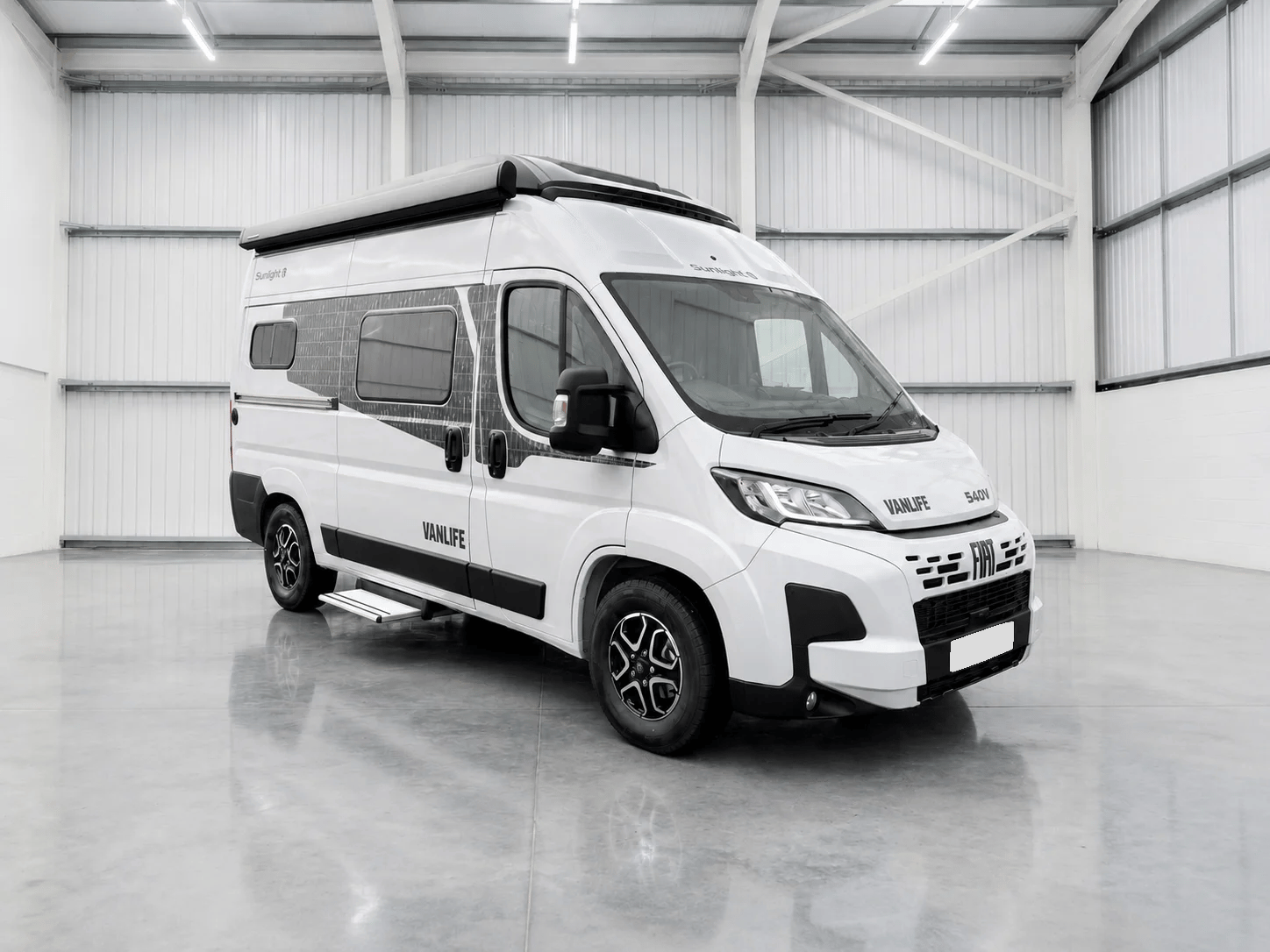
The camper you fall for is rarely the one you can afford. That gap is the whole reason Campervan.win exists. Right now we’re giving away the Sunlight Vanlife, worth around £65,000, and closing that gap is the point: capped entries so the odds stay honest, £10 a ticket, a maximum of five per person, £500 to a UK charity from every full draw, the winner picked by a public randomness beacon anyone can re-check, and one person driving away in the van itself.
Enjoyed this post?
Get more honest campervan guides like this one in your inbox.
You’re in!
Check your inbox. We’ve just sent you a welcome email.

About the author
Arthur
Arthur writes buying guides, comparisons, and in-depth explainers to help readers choose the right campervan or motorhome with confidence.
Keep Reading
Related Reading
Thoughtful articles that build on what you’ve just read.
Campervan Buying Guides
10 min read
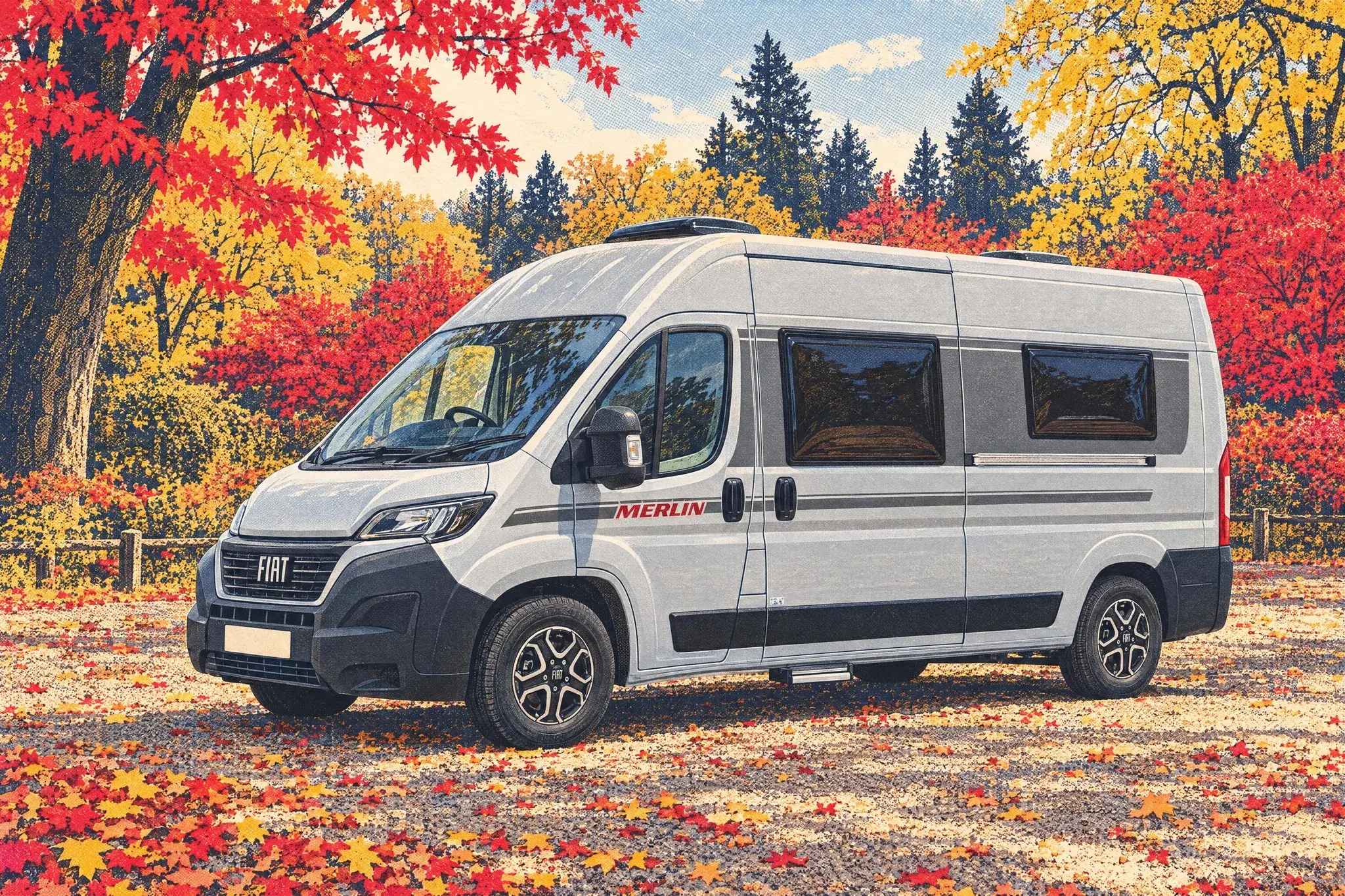
Swift Merlin 2027: nine layouts from £64,190 and how to pick the right one
Swift's all-new Merlin campervan arrives for 2027 with nine layouts on the Fiat Ducato panel van. We sort them into four families, work the payload sum on a four-seat version, and explain what the roof, the automatic and the prices mean for your choice.
Campervan Buying Guides
11 min read
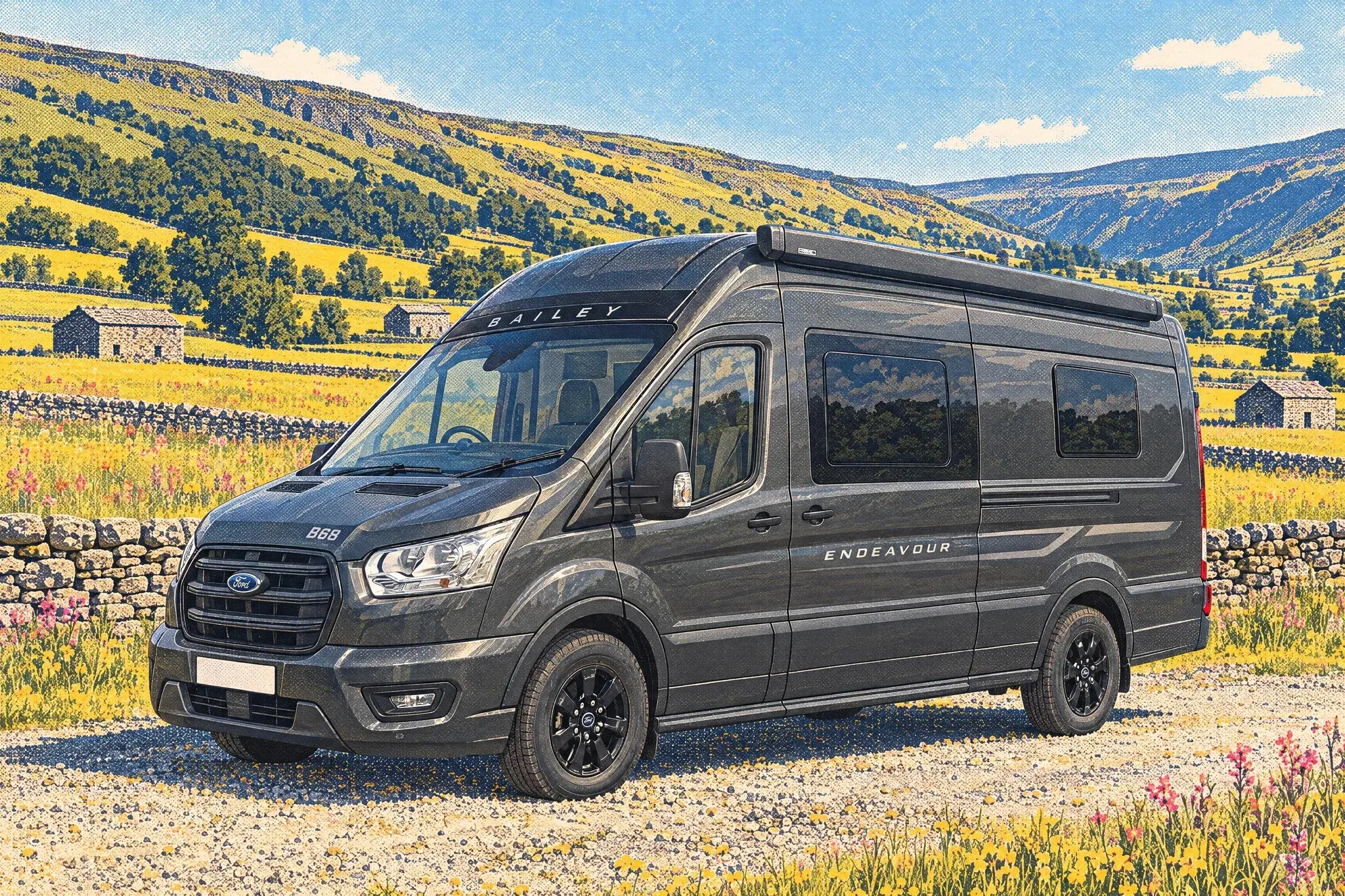
Bailey Endeavour B68: the end-lounge Transit campervan where the pop-top costs 143 kg
Bailey's new Endeavour B68 puts a rear lounge in a 5.98 m Ford Transit campervan. We compare it with the B65 and B62, check the 1.86 m bed, and do the payload sums if you add the £7,500 pop-top.
Campervan Buying Guides
12 min read
New campervans under £60,000 for 2027: what the NEC shows and what the price leaves out
A fair look at the new 2027 campervans listed under £60,000 ahead of the Motorhome and Caravan Show at the NEC, with each price given as its maker words it, and the differences between ex-works, delivered and German-retail-based figures explained so you can compare real on-the-road totals.
Campervan Buying Guides
14 min read
Eura Mobil Vancona 2027: a €57,400 campervan with just 84 to 118 kg left for options
Eura Mobil's new Vancona is a well-equipped Fiat Ducato campervan from €57,400, but its 84 to 118 kg options allowance means you need to order it with the weight sheet open. We explain what the figure means, what the 4.25 t uprate costs you in licence terms, and which options to prioritise.