
Motorhome Tech, Heating & Systems
Hydraulic self-levelling in a campervan: is it worth it?

Written by
Leo
Leo covers campervan technology, maintenance, kit, and ownership advice, with a clear, practical focus on how things work in real life.
The short answer
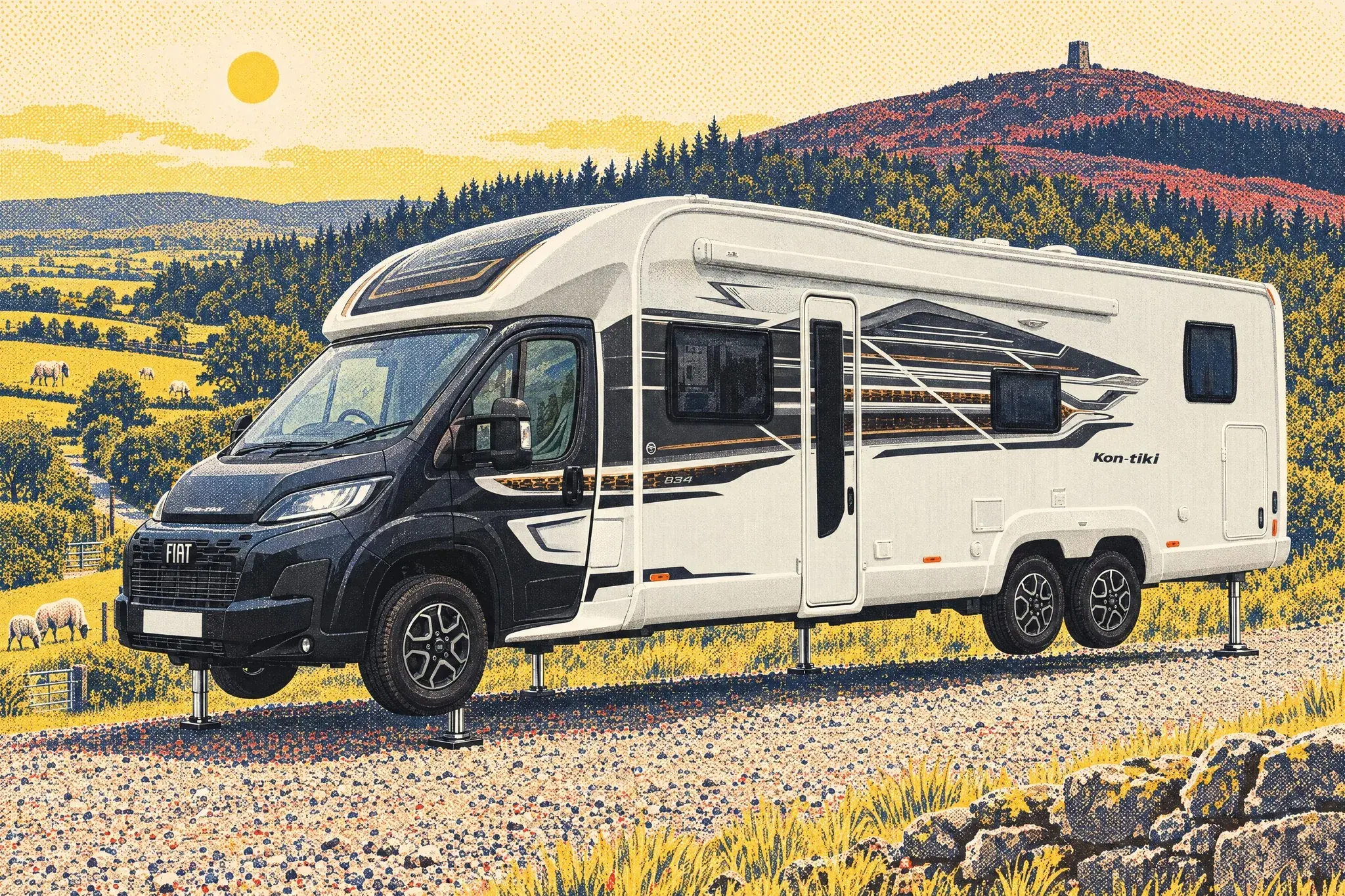
Hydraulic self-levelling fits hydraulic legs near each corner of a motorhome that lift it dead level at the press of a button in about a minute, ending the ramp-and-chock ritual for good, and it is genuinely lovely to use. The honest catch is that it costs several thousand pounds (often £5,500 to £7,000 fitted for a four-leg system) and adds serious weight, around 28 to 60kg, to a vehicle that may not have payload to spare. Brands include AL-KO, E&P, Goldschmitt, HPC and the UK's M-Level. For someone touring level club sites a fortnight a year, a £30 to £90 set of levelling blocks does the same job for almost nothing; for heavy vans, full-timers and demanding pitches, the hydraulics genuinely earn their keep. Here is how to decide whether it is worth it for you.

You arrive at a beautiful pitch after a long drive, and it's on a slope. So begins the ritual every motorhome and campervan owner knows: the ramps come out, you drive up, you get out, you check the little bubble level on the worktop, it's still off, you drive back down, reposition the ramps, try again, and repeat until either the van is level or your patience has run out. Hydraulic self-levelling promises to end all of that with a single button press: park, press, and watch the van level itself in under a minute while you put the kettle on.
It's a genuinely lovely piece of technology, and owners who have it tend to be evangelical about it. But it's also expensive, often several thousand pounds, and it adds a serious amount of weight to a vehicle that probably doesn't have much to spare, which is the part the showroom tends to gloss over. So this is the honest version: what hydraulic self-levelling actually is and how it works, what it really costs in the UK, how many kilos it'll cost you off your payload, what the options are (including AL-KO, which a lot of British motorhomes are built around), and, the question that matters, whether it's actually worth it for you. Prices and weights here are real but vary hugely by vehicle, so treat them as a guide and always get a proper quote.
What hydraulic self-levelling actually is
At its simplest, a hydraulic self-levelling system is a set of hydraulic legs, or jacks, bolted to the chassis near each corner of the vehicle, which extend down to the ground and lift the van until it's level, all controlled automatically by electronics. Press the button, and the system works out which corners need lifting and by how much, and does it for you.
There are a few parts working together. The legs themselves are hydraulic rams that telescope down and take the weight. They're driven by a pump and a reservoir of hydraulic fluid, and here there are two design philosophies worth knowing. Most systems are centralised, with one powerful pump unit (often mounted inside a locker, away from road dirt and salt) feeding fluid to all the legs through hoses; Goldschmitt, HPC, M-Level and E&P's motorhome systems work this way, and a central pump can weigh as little as eight kilograms on its own. AL-KO's flagship HY4 takes the other approach, decentralised, where each leg has its own integrated pump that can be mounted near it. Both work; the centralised approach became standard years ago after early per-pump systems proved unreliable, though AL-KO has revived the per-leg idea with modern engineering.
Tying it all together is an electronic control unit with inclination sensors that read the van's tilt and pitch, and a control interface, which might be a fixed or removable touchscreen, a wireless handset, or increasingly a smartphone app over Bluetooth. Most systems offer more than just one-touch auto-levelling: there's usually a manual mode to raise individual legs (handy for setting a deliberately tilted "comfortable sleeping" position, or a "tank drain" position to empty your waste tank fully), and a stabilise mode that simply puts the legs down for rigidity without trying to level.
A few safety and practical features are worth flagging because they matter. Most systems won't operate unless the handbrake is on. The legs are retracted hydraulically under power, so they won't get stuck down in soft or frozen ground. Crucially, hydraulic systems almost always include a manual hand-pump backup to retract the legs if the pump or electrics fail, which is a real advantage over electro-mechanical (screw-jack) systems that often have no such fallback. And the better systems have safety valves and hose-rupture protection so a burst hose can't drop the van. AL-KO's HY4 even has a weighing function that measures your gross and axle weights to within about three per cent, warning you if you're overloaded, which, as we'll see, is rather appropriate given what these systems weigh.
One more thing worth understanding is how the system decides it's level. The control unit doesn't just split the difference; it works out the lowest corner, plants that leg first, and then lifts the others to match, which is why it can correct a van that's tilted in two directions at once, nose-down and leaning, in a single automatic sequence. The better systems re-check and make micro-adjustments as they go, and some will warn you if the slope is beyond what they can safely handle. It's genuinely clever engineering, and the first few times you use it, it feels a little like magic. The whole point of the sensors and valves is simply that you never have to think about any of it: park, press, done.
It's worth a quick word on the controls, because they've come a long way. Older systems used a simple panel of up-down buttons and a bubble display; modern ones offer a clear touchscreen, a wireless handset you can use while standing outside watching the legs, or a smartphone app over Bluetooth, and they'll run the whole sequence on a single tap. Some even let you save a custom position, a slight nose-up for a better night's sleep, say, and return to it automatically. None of it is essential, but it's the kind of polish that makes a five-figure motorhome feel modern, and it removes the last bit of guesswork from setting up.
Why bother? The benefits
The core benefit is obvious but worth spelling out: a perfectly level pitch in seconds, hands-free, every single time. No getting out, no ramps, no drive-up-check-reverse-repeat. You park, press a button, and watch the floor and the fridge come level while you stay in your seat. The quicker systems claim sixty to ninety seconds; AL-KO quotes about a minute to millimetre accuracy.
Level matters more than newcomers realise. Absorption fridges, the type in many motorhomes, work best and last longest when they're close to level. Shower trays and sinks drain properly only when the van is level. Cooking and pouring are predictable. And, most importantly for a good night's sleep, you're lying flat rather than slowly sliding towards the foot of the bed. Getting level isn't a nicety; it's the difference between a pitch working and not.
Then there's stability, which owners rate even more highly than the levelling. With the legs planted on the ground, that disconcerting rocking-boat movement when someone walks across the van largely disappears, and the van sways far less in wind. "No rocking when it's windy" comes up again and again in owner discussions as the standout benefit, sometimes valued more than the levelling itself.
There's a strong accessibility case, too, and it's arguably the most compelling of all. For owners with arthritis, back trouble, limited strength or any mobility issue, the difference between kneeling in the mud wrestling with heavy ramps and pressing a single button is enormous. For a lot of people, self-levelling is what keeps them touring at all, and that's not a luxury, it's independence. Add the practical bonuses, you can lift a corner to change a tyre or get underneath, and the wheels-up position acts as an anti-theft measure, and the appeal is clear. The owner verdict is overwhelmingly positive: people who fit it rarely want to go back.
It's worth adding that the time saving, while real, isn't the whole story; plenty of experienced owners can deploy ramps in a couple of minutes. What they're really paying for is the removal of friction and faff at the end of every drive, the kneeling, the reversing, the re-checking, and the certainty of getting it right first time, whatever the light or the weather. There's also a dignity element that's easy to overlook until you need it: setting up camp without having to get down on the ground in the rain is a genuine quality-of-life difference, and not only for those with mobility problems. Convenience compounds, and over hundreds of pitches that small daily friction adds up to a great deal.
There's a quieter benefit too, which owners mention once they've lived with it: it changes where you're willing to stop. When getting level is a thirty-second button press rather than a ten-minute wrestle, you become far more relaxed about pulling into an imperfect, sloping pitch, a layby with a view, a friend's bumpy driveway, an overnight aire that isn't quite flat, because levelling it is no longer a chore to dread. In that sense self-levelling doesn't just make your existing trips easier; it subtly widens where you'll happily spend the night, which for a lot of owners turns out to be the thing they value most.
The UK options, brand by brand
The UK market is well served, and it helps to know the main players, because they suit different vehicles and budgets.
E&P Hydraulics is the market leader, the most widely fitted and most manufacturer-approved system in the UK and Europe. A useful thing to know: E&P has been part of the AL-KO group since 2018, so E&P and AL-KO-branded systems are corporate siblings rather than rivals. E&P's LevelM is the mainstream motorhome system (around 60kg, legs lifting two tonnes-plus each), and it has a clever integration that drops air suspension before levelling on the legs. For smaller vans, E&P's LevelVan is notable as the lightest hydraulic van system on the market, from around 49kg thanks to carbon-fibre cylinders, designed for vehicles up to 4,250kg and fitting the Fiat Ducato and Mercedes platforms (though not the Ford Transit), installable in under a day.
AL-KO matters in Britain for a specific reason: many mid-sized and large UK coachbuilts and A-classes (Hymer, Carthago, Bürstner, Adria and others) are built on the AL-KO AMC chassis rather than the bare Fiat one, and AL-KO's own levelling kit bolts straight to it. The flagship HY4 is a decentralised four-leg system with a big 360mm lift, a 6,000kg vehicle limit and that handy onboard weighing function, levelling in about a minute, typically fitted for £6,000 to £7,000. There's also a lighter, cheaper "little brother," the HY2, a two-leg system at around 34kg that supports one axle and can be upgraded to a full HY4 later.
Goldschmitt is the German heavyweight specialist and, in effect, the inventor of the motorhome hydraulic jack back in the early 1990s. Its centralised system (the pump itself only around 8kg) can lift up to 4.5 tonnes per leg, with special versions far higher, so it's the go-to for very heavy A-class and RV-scale motorhomes, with serious safety engineering to match. Premium, price-on-application.
HPC (Glide-Rite) offers a roughly 55kg four-corner system with lightweight aluminium jacks, a central pump, levelling in under ninety seconds, four modes and 12 or 24-volt options, fitting everything from compact campers to big motorhomes, typically £5,500 to £6,550 fitted. MA-VE, an Italian system at around 30kg, was the first to engineer a setup for the Ford Transit (its brackets need no front chassis drilling on a Ford), making it a common pick for Ford-based motorhomes, often around £4,500 fitted. Amplo is one of the lightest auto systems at around 28kg, marketed as quiet and quick to fit. And M-Level has the distinction of being designed and built in the UK, around 55kg, transferable between vehicles, with off-the-shelf fitments for most common chassis.
How do you choose between them? In practice it usually comes down to your chassis and your weight. If your motorhome is built on an AL-KO chassis (as many mid-to-large UK coachbuilts are), AL-KO's own HY4 or HY2, or an E&P system from the same group, is the natural, best-supported fit. If it's on a standard Fiat Ducato or Sevel chassis, E&P, Goldschmitt, HPC and M-Level all cater for it (if you're still choosing a base vehicle, our Ducato versus Sprinter comparison covers the chassis differences). If it's a Ford, MA-VE and Amplo are the names that engineered systems for the Transit when others hadn't. And if it's a very heavy A-class or American RV, Goldschmitt's high-capacity legs are built for that weight. The other deciding factor is the installer: these are specialist fits, and a good, experienced one matters as much as the brand. UK owners repeatedly recommend going to a recognised specialist rather than the cheapest quote, because a clean install, properly braced to the chassis with the pump sensibly sited, is what separates a system that works faultlessly for years from one that leaks and plays up. Ask around the owners' forums for who's good in your area before you book.
Finally, a different approach worth knowing: VB-Airsuspension's FullAir system levels using air bags rather than hydraulic legs, which also transforms the ride and can uprate payload, but it's a different (and pricier) proposition, from around £9,000, and we'll come back to it. Here's the landscape at a glance:
| System | Type | Weight (approx) | Fitted price (approx) | Best for |
|---|---|---|---|---|
| E&P LevelM | Hydraulic, central | ~60kg | ~£4,800 to £6,000 | Mainstream coachbuilts (market leader) |
| E&P LevelVan | Hydraulic, central | from ~49kg (carbon) | quote | Camper vans up to 4,250kg (lightest) |
| AL-KO HY4 | Hydraulic, decentralised | ~68kg per leg (confirm total) | ~£6,000 to £7,000 | AL-KO-chassis coachbuilts; weighing function |
| AL-KO HY2 | Hydraulic, two-leg | ~34kg | quote (cheaper) | Lighter/entry, one-axle, upgradeable |
| Goldschmitt | Hydraulic, central | 50 to 70kg+ | premium, POA | Very heavy A-class / RVs |
| HPC (Glide-Rite) | Hydraulic, central | ~55kg | ~£5,500 to £6,550 | Wide range, incl. compact campers |
| MA-VE | Hydraulic | ~30kg | ~£4,500 | Ford-based motorhomes |
| Amplo | Hydraulic | ~28kg | quote | Lightest, quietest, quick fit |
| M-Level | Hydraulic, central | ~55kg | quote | UK-made, transferable |
| VB-FullAir 4C | Air suspension | varies (can uprate payload) | ~£5,900 to £11,700 | Levelling plus ride comfort |
Hydraulic vs the alternatives
Hydraulic legs aren't the only way to get level, and it's worth being clear about what the alternatives do, because two of them are far cheaper and lighter.
The key distinction is this: ramps and blocks level the van, corner steadies stabilise it, and only an automatic system does both at a push. A set of stackable levelling blocks (Milenco and the like) costs £30 to £90, weighs almost nothing, and lets you raise a low wheel to whatever height you need; drive-on ramps are even cheaper. They're manual and a bit of a faff, and they can sink on soft ground, but they do the core job of getting level for a tiny fraction of the cost and weight. Wind-down corner steadies, often factory-fitted, add stability and stop the rocking, but they don't level. Many owners are perfectly happy with ramps plus a worktop spirit level, and there's no shame in it.
It's worth being clear-eyed that for the majority of pitches, on most British campsites, the ground is gentle enough that a single ramp under one wheel, or a couple of levelling blocks, gets you perfectly level in a few minutes. The case for spending thousands gets stronger the more often you pitch on genuinely awkward ground, the more you hate the faff, the heavier your van, and the more a physical limitation makes ramps a real struggle. For someone who tours level club sites a fortnight a year, honestly, a £40 set of blocks and a £5 spirit level isn't just the cheap option, it's the sensible one, and the four thousand pounds saved is several very good holidays. The automation earns its keep through frequency and difficulty, not occasional gentle use.
The automatic alternatives to hydraulic are electro-mechanical (screw-jack) systems and air suspension. Electro-mechanical systems use 12-volt motor-driven screw legs; they're lighter and cheaper than hydraulic, but have less lifting power, can struggle on soft or uneven ground, and often lack a manual backup if the motor fails, which can leave you stranded with the legs down. Air-suspension levelling, like VB-FullAir, replaces or supplements the suspension with air bags that level the van and, as a bonus, transform the ride quality and can uprate the payload; it's a genuinely different proposition, levelling plus comfort, but it's the priciest option and levels through a smaller range than legs that plant on the ground.
| Method | Cost | Weight | Levels? | Stabilises? | Best for |
|---|---|---|---|---|---|
| Hydraulic auto-levelling | £4,500 to £6,500+ | ~35 to 70kg | Yes (best) | Yes (best) | Big/heavy vans, full-timers, mobility needs |
| Air-suspension levelling | ~£5,900 to £11,700 | varies (can add payload) | Yes | Some | Levelling plus ride comfort |
| Electro-mechanical auto | ~£3,000 to £4,500 | ~48 to 50kg | Yes | Yes | Smaller/medium vans, budget automation |
| Levelling blocks/ramps | £25 to £90 | ~2 to 5kg | Yes (manual) | No | Most users, occasional use |
| Wind-down steadies | often fitted | low | No | Yes | Stability top-up |
Air suspension: the other way to level
Hydraulic legs are the most common route to a level pitch, but they're not the only automatic one, and air suspension deserves its own mention because it solves a slightly different problem. Systems like VB-Airsuspension's FullAir replace or supplement the van's standard suspension with air bags at each corner, controlled electronically. Press the button and the bags inflate or deflate to level the parked van, much like hydraulic legs, but without anything extending to the ground.
The appeal is that air suspension does two jobs at once. As well as levelling on the pitch, it transforms how the van rides and handles on the road, soaking up bumps, reducing body roll and sway, and letting you raise or lower the ride height. On many vehicles it can also effectively increase the usable payload by uprating the suspension, which is a genuine and unusual benefit given everything we've said about weight. For owners whose van wallows or crashes over bumps, air suspension can be worth fitting for the ride alone, with the levelling as a bonus.
The trade-offs are real, though. It's typically the most expensive option, often £9,000 or more fitted, well above a hydraulic system. It levels through the more limited range of the air bags rather than the long reach of legs planted on the ground, so on a steeply sloping pitch it can't lift a corner as far as hydraulic jacks can, and it doesn't give quite the same rock-solid, planted stability. And it's a more involved modification to the suspension itself. So the honest way to frame it is this: if your main complaint is the ride and you'd also like levelling, air suspension is compelling; if your main complaint is the faff of getting level and you want maximum stability and lift on awkward pitches, hydraulic legs are the better tool. A few owners of big motorhomes fit both, air for the road and legs for the pitch, but that's a serious spend.
What it costs
Let's be specific, because "thousands" covers a lot of ground. The honest realistic band for a fitted hydraulic system in the UK is roughly £3,000 at the lighter/electro-mechanical end, £4,500 to £6,500 for a mainstream four-leg hydraulic system on a coachbuilt, and £8,000 or more for heavy A-class setups or air suspension.
In brand terms, real owner-paid prices cluster like this: E&P's LevelM tends to come in around £4,800 to £6,000 fitted, with most coachbuilt owners reporting £5,000 to £5,500; AL-KO's HY4 is £6,000 to £7,000 inclusive of VAT; HPC sits around £5,500 to £6,550; MA-VE is among the more affordable at roughly £4,500; and VB's air system starts around £9,000 and climbs past £11,000. Goldschmitt and M-Level are quote-only, with Goldschmitt at the premium end.
Two things to remember on cost. First, every quote is per-vehicle, because the chassis, the weight, and whether you have air suspension to integrate all swing the price. Second, fitting is a proper job, typically a two-day install involving chassis brackets, so the labour is a real part of the bill. If you want to come in under about £4,000, you're looking at a two-leg system like the AL-KO HY2, an electro-mechanical system, or simply sticking with ramps.
It's also worth thinking about cost in context. On a £120,000 A-class motorhome, a £6,000 levelling system is a five-per-cent option that materially improves daily use, and most buyers at that level take it without blinking. On a £45,000 coachbuilt it's a more considered purchase, and on a £30,000 campervan it can be a fifth of the van's value spent on one convenience, which is much harder to justify. Many owners also find it's cheaper and easier to specify when buying new, factory or dealer-fitted as part of the deal, than to retrofit later, so if you suspect you'll want it, price it into the original purchase rather than adding it down the line. And the running cost is essentially nil, just an annual check, so unlike many extras the spend is almost entirely upfront. As with any big-ticket option, the question isn't only whether it's worth the money in the abstract, but whether that same money would do more for your enjoyment spent elsewhere, on trips, on a better van, or on the lighter, cheaper kit that does most of the same job.
The weight it adds, and why it matters more than the money
Here is the part the brochures bury, and the single most important consideration for a lot of buyers: hydraulic self-levelling is heavy, and it spends your payload.
A mainstream four-leg hydraulic system typically adds somewhere around 50 to 70 kilograms. The lightest systems do better, the carbon-cylindered E&P LevelVan from about 49kg, MA-VE around 30kg, Amplo around 28kg, while the heaviest, highest-capacity setups for big motorhomes can exceed 100kg. AL-KO publishes a figure of around 68kg per leg unit for the HY4, which, if taken at face value across four legs, would make it very heavy indeed; this is the one specification where sources are genuinely ambiguous, so if you're considering an HY4, ask the fitter to confirm the total installed mass for your vehicle rather than assuming.
Why does this matter so much? Because most motorhomes and campervans have surprisingly little spare payload. A typical 3,500kg coachbuilt might have only 300 to 500kg of payload to play with once it's built, and into that you have to fit people, water, gas, food, clothes, bikes, the awning and everything else. A 60kg levelling system swallows 12 to 20 per cent of that allowance before you've packed a single thing. On a payload-tight van, that can be the difference between travelling legally and being overweight, which is not a technicality: an overloaded van handles and brakes worse, and being over your plated weight invalidates your insurance in an accident. For many owners, the weight, not the cost, is the real reason to say no, and it's why, if you do fit one, the lightest system your vehicle can take is often the wisest choice. The one silver lining is that the AL-KO HY4's onboard weighing function at least helps you manage the payload it consumes by warning you before you overload. It's a neat irony that the heaviest premium system is also the one that helps you police the weight, but the broader lesson holds for every system: levelling kit is one of the heaviest single accessories you can add to a van, heavier than a full awning, heavier than a couple of leisure batteries, and it counts in your loaded weight like everything else. If you already travel close to the limit, the kindest thing the weighbridge can do is tell you the truth before you spend, so you're choosing between levelling and, say, carrying full water, rather than discovering you can't legally have both.
A worked example: doing the payload maths
It's worth making the weight issue concrete, because abstract kilograms are easy to wave away. Take a common case: a 3,500kg coachbuilt motorhome that, as built and before you load it, has a payload allowance of 400kg. That sounds like a lot until you start filling it.
Two adults are roughly 150kg. A full 100-litre fresh-water tank is another 100kg. Then there's a full gas bottle or two, food and drink for a fortnight, clothes and bedding, pots, pans and crockery, camping chairs and a table, an awning, tools, an outdoor mat, maybe a barbecue, and all the small stuff that quietly mounts up. It's startlingly easy for that to reach 300kg or more before you've added anything heavy. Now fit a 60kg hydraulic levelling system, and you've spent 15 per cent of your entire payload on one accessory, leaving you genuinely tight.
Add a pair of e-bikes (easily 50kg for two) and a tow bar, and a van like that can be over its plated weight before it leaves the drive, levelling system or not. This is why the honest advice is always to weigh your loaded van on a weighbridge first. If you've already got 380kg of stuff in a van with 400kg of payload, a 60kg levelling system isn't an upgrade, it's an impossibility, and finding that out for the price of a weighbridge ticket is far cheaper than finding it out from a roadside check or an insurance assessor after an accident. If, on the other hand, you've a big motorhome with 700kg of payload and you travel light, 60kg is neither here nor there, and the maths simply isn't a barrier. The point is to know your number before you spend, not after.
The downsides nobody mentions in the showroom
Beyond the cost and the weight, there are a few practical realities worth knowing before you commit.
Hydraulics can develop faults: leaks, pump or valve failures, the occasional electronic glitch. They're generally reliable, but they're not maintenance-free, and they want an annual check, cleaning the rams and giving them a silicone spray. Repairs can be pricey if the van has to be lifted to reach the legs. There's also the failure-on-site scenario: if the system fails while the legs are down, you can't drive away, which is exactly why the manual hand-pump backup on hydraulic systems matters, and why electro-mechanical systems' frequent lack of one is a genuine drawback.
The legs concentrate the van's weight onto small feet, so on grass, gravel or soft or hot tarmac they can sink in or leave marks; you'll want a set of spreader pads to put under them, which is one more thing to carry and remember. The legs and brackets also sit under the chassis, reducing ground clearance (typically to around 100 to 140mm), which matters if you take your van down rough tracks or onto steep pitches. And the systems have limits: on a genuinely steep pitch, some will refuse to operate in automatic mode and force you to level manually, or simply can't reach level at all, so you may still need a block under the lowest wheel even with an expensive system fitted. Finally, fitting one is a notifiable modification: tell your insurer, and be aware that a DIY attempt can affect your warranty.
There's also a subtler long-term consideration: complexity. A set of ramps cannot break, but a hydraulic system is pumps, valves, sensors, hoses and electronics, all of which can eventually go wrong, and all of which add to what a future buyer, or a future you, has to maintain. For most owners that's a perfectly acceptable trade for the convenience, and the systems are mature and generally reliable, but it's worth being honest that you're adding another system to a vehicle that already has plenty of them. When it works, it's wonderful; when it doesn't, it's a specialist repair, not a roadside fix. The flip side, often cited by owners, is that a well-regarded system can actually add to a motorhome's resale appeal, because the next buyer wants it too, so a quality install isn't necessarily money you'll never see again. Weigh the added complexity against the daily benefit honestly.
Living with it: what owners actually report
Beyond the spec sheets, what's it actually like to own? The owner consensus, gathered from years of motorhome-forum discussion, is strikingly consistent, and worth hearing because it's more balanced than either the showroom or the sceptics.
The love is real, and it's mostly about two things: the effortlessness and the stability. Owners describe arriving, pressing the button, and being level and settled before the kettle's boiled, and they talk about how the van stops feeling like a boat, no more lurching when someone gets up in the night. Several call it the single best thing they added to their motorhome, and many who've moved between vans insist on having it fitted to the next one. For owners who tour constantly or struggle physically with ramps, it genuinely changes the experience.
The grumbles are equally instructive. The recurring practical complaints are about steep pitches (where the system can run out of travel or refuse auto mode and make you level manually anyway), about remembering the spreader pads on soft ground, and about the occasional fault or the worry of a failure leaving the legs down. Almost nobody who has it regrets the convenience; the regrets, where they exist, are about the weight, owners who later find themselves payload-limited, and, occasionally, the cost set against how level most of their pitches turned out to be anyway. The clearest signal in all of it is that satisfaction tracks vehicle size and usage almost perfectly: the bigger and more-used the van, the more universally owners rate it; the smaller and less-used, the more they wonder whether the money and the weight were worth it. That pattern tells you most of what you need to know about whether it's for you.
So, is it worth it?
Here's the honest verdict, and it genuinely depends on who you are.
It's worth it, and owners rarely regret it, if you have a big, heavy coachbuilt or A-class motorhome, where ramps are heavy and awkward and the stability gains are largest; if you're a full-timer or frequent tourer who sets up and breaks camp constantly, so the time and effort saving compounds trip after trip; if you have arthritis, back trouble, limited strength or any mobility issue, where it's arguably less a luxury than the thing that keeps you touring; or if you simply loathe ramps, value rock-solid stability, and have the payload and the budget to spare. For these owners, the verdict is almost unanimous: they'd never go back.
It's much harder to justify, and you should think twice, if you have a small campervan or a payload-critical 3,500kg van, where 50 to 70kg is simply too high a price in kilograms; if you're an occasional user who does a handful of trips a year; or if you mostly stay on level, serviced pitches anyway, where a £30 set of blocks does the core job for a fraction of the cost and none of the weight. There's no shame in a spirit level and a set of ramps, and the money, four to seven thousand pounds, buys an awful lot of campsite nights.
The middle ground is real, too, and worth naming: if you love the idea but the weight or cost gives you pause, a lighter two-leg system, an electro-mechanical one, or simply a good set of ramps plus wind-down steadies for stability gets you most of the practical benefit for a fraction of the kilograms and the pounds. You don't have to choose between the full hydraulic system and nothing; there's a sensible scale of options, and the right rung on it depends on how much you'll use it and how much payload and budget you genuinely have to spare.
The fairest one-line summary is that hydraulic self-levelling is a luxury rather than an essential, but it's the kind of luxury that owners who buy it rarely regret, provided they had the payload and the pounds to spare. The trick is being honest with yourself about whether you do.
How to decide, and what we'd do
If you're seriously considering it, a few practical steps will save you grief. First, weigh your van loaded, on a weighbridge, before you spend anything, so you know exactly how much payload you actually have to give up; this single step has talked many owners out of it, and saved others from an illegal van (our guide to what to check when buying a used van or campervan covers payload and weighing in more depth). Second, if payload is tight but you still want levelling, look hard at the lightest systems (the E&P LevelVan, MA-VE or Amplo) or a two-leg setup, rather than the heaviest premium option. Third, get a proper, per-vehicle quote from a reputable installer, ideally one others recommend, and ask specifically about the total installed weight and the ground clearance for your van. Fourth, tell your insurer once it's fitted. And finally, be honest about your trips: if you mostly tour level sites a few weeks a year, buy the £40 ramps and spend the four grand on diesel and ferries.
Our own take, for what it's worth: on a big, heavy motorhome used a lot, or for anyone who struggles physically with ramps, it's money well spent and a genuine quality-of-life upgrade. On a payload-tight campervan used occasionally, it's hard to recommend over a good set of ramps and a spirit level, simply because the weight costs you more than the convenience gives back. As with so much on a van, the right answer comes down to how you actually use it, not how you imagine you will. If you're weighing this up against other upgrades, our rundown of the options that matter most when buying a campervan or motorhome puts self-levelling in context alongside the rest.
Who fits it, and what the install involves
Because this isn't a DIY job for most people, it's worth knowing what you're signing up for. Fitting a hydraulic levelling system means raising the van, bolting the legs and brackets to the chassis at each corner, mounting the pump and reservoir somewhere protected, running hydraulic hoses and electrical wiring through the vehicle, fitting the control panel, and calibrating and testing the whole thing. On a typical coachbuilt it's around a two-day job, and it needs doing properly: the brackets have to be strong enough to take the lifting loads, the hoses routed so they won't chafe, and the pump sited where it won't drown in road spray.
That's why the choice of installer matters as much as the choice of system. The established names have networks of approved fitters, and the motorhome forums are full of recommendations (and the occasional cautionary tale) for installers in each region, so it's well worth seeking those out rather than simply taking the lowest quote. A good installer will also talk you through the realities for your specific van, the exact weight it'll add, the ground clearance you'll be left with, and whether your chassis needs any particular bracketry, before you commit, which is exactly the conversation you want to have. Once it's fitted, keep the paperwork, tell your insurer, and book it in for its annual check, because a hydraulic system looked after is a hydraulic system that keeps working.
Frequently asked questions
How much does hydraulic self-levelling cost in the UK?
Realistically, around £4,500 to £6,500 fitted for a mainstream four-leg hydraulic system on a coachbuilt, with lighter or two-leg systems coming in nearer £3,000 to £4,500 and heavy A-class or air-suspension setups running to £8,000 or more. Prices are per-vehicle, and fitting is typically a two-day job, so always get a specific quote.
How much weight does a self-levelling system add?
Typically around 50 to 70kg for a four-leg hydraulic system, from about 28 to 49kg for the lightest van systems, and over 100kg for the heaviest high-capacity setups. On a 3,500kg van with limited payload, that's a significant chunk of your allowance, and it's often the biggest reason not to fit one.
Is hydraulic self-levelling worth it?
For big, heavy motorhomes, full-timers and anyone with mobility difficulties, yes, it's a genuine quality-of-life upgrade owners rarely regret. For small, payload-critical campervans and occasional users who stick to level pitches, it's hard to justify over a £30 to £90 set of levelling ramps, mainly because of the weight it adds.
What's the difference between hydraulic and air-suspension levelling?
Hydraulic systems use legs that extend to the ground to lift and level the van, giving the most stability and lift. Air-suspension levelling (like VB-FullAir) levels using air bags and also improves the ride and can uprate payload, but it's more expensive and levels through a smaller range. Hydraulic is about levelling and stability; air is about levelling plus ride comfort.
Which is the best hydraulic levelling system?
E&P Hydraulics is the market leader and the most widely approved, and AL-KO is the natural choice on AL-KO-chassis motorhomes (the two are part of the same group). Goldschmitt suits very heavy vehicles, HPC and M-Level are well-regarded all-rounders, and MA-VE or Amplo are good lighter or Ford-based options. The "best" one depends on your chassis, weight and budget.
Can I fit self-levelling to my existing motorhome?
Yes, most systems are designed to be retrofitted, and installers fit them to existing vehicles regularly. It's a professional, roughly two-day job involving chassis brackets, you must check it won't push you over your payload, and you should notify your insurer once it's done.
Do the legs damage the ground or sink in?
They can, because they concentrate the van's weight onto small feet, so on grass, gravel or soft or hot tarmac you should always use spreader pads under the legs. The pads spread the load, protect the surface, and stop the legs sinking and the van going off level.
Can hydraulic levelling lift the van for a wheel change?
Yes, that's a popular side benefit. You can use the system to lift a corner clear of the ground to change a tyre or get access underneath, which removes the need for a separate jack, though you should still follow proper safety precautions and use axle stands for any actual work under the vehicle.
Does self-levelling work on a steep slope?
Up to a point. The systems handle moderate slopes easily, but on a genuinely steep pitch some will run out of leg travel or refuse to operate in automatic mode and require manual levelling, and occasionally you'll still need a block under the lowest wheel even with a system fitted. They're brilliant on normal pitches, not a magic solution to a one-in-five gradient.
How long does a self-levelling system take to fit?
Typically about two days, as it involves bolting hydraulic legs and brackets to the chassis, mounting the pump and control unit, and wiring and testing the system. It's a specialist job best done by an experienced installer, not a DIY afternoon, and you should notify your insurer once it's fitted.
Do I still need levelling ramps if I have a self-levelling system?
Usually not for normal pitches, but it's wise to keep a set in the van as a backup for very steep ground that exceeds the system's range, and in case of a fault. They weigh almost nothing and cost very little, so they're cheap insurance even once you've spent thousands on automation.
Is hydraulic better than electro-mechanical (screw-jack) levelling?
Each has its place. Hydraulic systems are more powerful, cope better with soft and uneven ground, and almost always include a manual hand-pump backup if the electrics fail. Electro-mechanical screw-jack systems are usually lighter and cheaper, but have less lifting power, can struggle on soft ground, and often lack a manual backup. For heavy vans and demanding pitches, hydraulic is generally preferred; for lighter vans on a budget, electro-mechanical can make sense.
Will self-levelling drain my leisure battery?
Not significantly. The system only draws power for the short time it's actually levelling or retracting, a matter of a minute or two, so the energy used per pitch is small. It's the kind of brief, occasional load a healthy leisure battery handles easily, and far less of a drain than running a heater or an inverter.
Common questions
How much does hydraulic self-levelling cost in the UK?
A four-corner hydraulic system typically costs several thousand pounds fitted: roughly 5,500 to 6,550 pounds for an HPC system, 6,000 to 7,000 pounds for AL-KO's flagship HY4, and around 4,500 pounds for a lighter MA-VE on a Ford. A two-leg system like AL-KO's HY2 is cheaper. Prices vary hugely by vehicle, so always get a proper quote.
How much weight does a self-levelling system add?
A serious amount for a payload-tight van: roughly 28 to 60kg depending on the system, with the lightest van systems (like E&P's carbon-fibre LevelVan at around 49kg, or Amplo at around 28kg) at one end and full four-leg motorhome systems at the other. This matters more than the money on a 3.5-tonne van, so do the payload sum before fitting.
Is hydraulic self-levelling worth it?
It depends on how you tour. For heavy vans, full-timers, owners with mobility needs, or anyone who regularly pitches on rough or sloping ground, the convenience and capability genuinely earn the cost. For someone touring level club sites a fortnight a year, a 30 to 90 pound set of levelling blocks and a spirit level is not just cheaper, it is the sensible choice, and the thousands saved buy several good holidays.
What is the difference between hydraulic and air-suspension levelling?
Hydraulic systems use legs that lift the van off its wheels, giving more lift and coping better with soft, uneven ground, usually with a manual hand-pump backup. Air-suspension levelling (like VB-Airsuspension's FullAir, from around 9,000 pounds) levels using the air bags, which also transforms the ride and can uprate payload, but it is a different and pricier proposition that does not lift the van off its wheels.
Can I fit self-levelling to my existing motorhome?
Yes, most systems are retrofittable, typically in a day, and several brands offer off-the-shelf fitments for common chassis. If your motorhome is built on an AL-KO chassis, as many mid-to-large UK coachbuilts are, AL-KO's own HY4 or HY2 (or an E&P system from the same group) is the natural, best-supported fit. Always confirm the system suits your base vehicle and weight.
Will hydraulic levelling drain my leisure battery?
Not significantly. The system only draws power for the short time it is actually levelling or retracting, a minute or two, so the energy used per pitch is small. It is the kind of brief, occasional load a healthy leisure battery handles easily, and far less of a drain than running a heater or an inverter.
The reachable bit
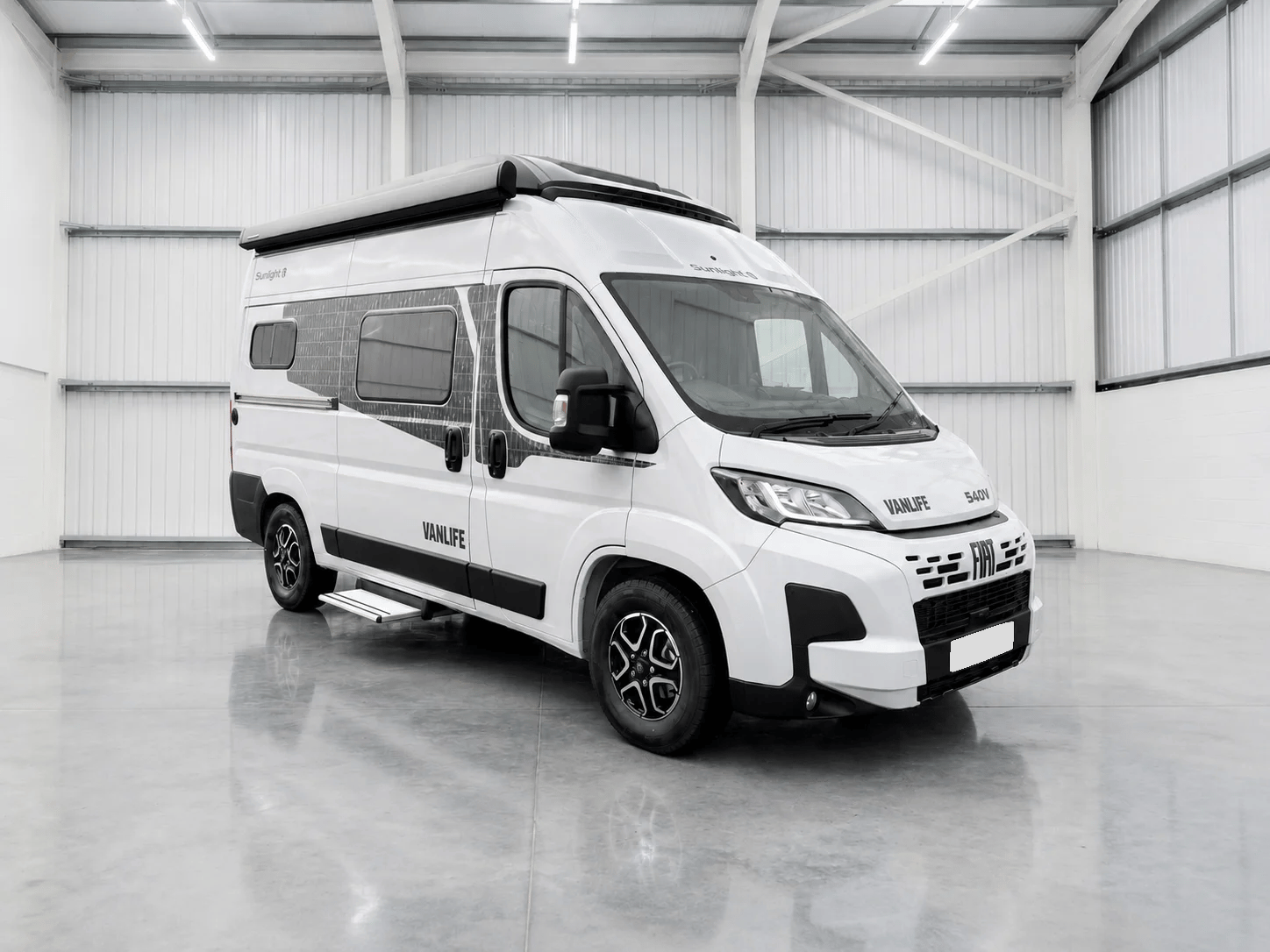
The camper you fall for is rarely the one you can afford. That gap is the whole reason Campervan.win exists. Right now we’re giving away the Sunlight Vanlife, worth around £65,000, and closing that gap is the point: capped entries so the odds stay honest, £10 a ticket, a maximum of five per person, £500 to a UK charity from every full draw, the winner picked by a public randomness beacon anyone can re-check, and one person driving away in the van itself.
Enjoyed this post?
Get more honest campervan guides like this one in your inbox.
You’re in!
Check your inbox. We’ve just sent you a welcome email.

About the author
Leo
Leo covers campervan technology, maintenance, kit, and ownership advice, with a clear, practical focus on how things work in real life.
Keep Reading
Related Reading
Thoughtful articles that build on what you’ve just read.

Motorhome Tech, Heating & Systems
15 min read
Gas-free motorhomes: living without LPG through a UK winter is possible but not simple
A growing list of motorhomes now leave the factory with no gas at all. We look at what gas does in a typical van, what replaces each job, and whether diesel heating, induction cooking and a big lithium bank can cope with short British days, weak winter solar and campsite hook-up.
Motorhome Tech, Heating & Systems
13 min read
Thetford's £420 separating kit changes the cassette chore, and a microwave toilet is next
Thetford now sells a kit that turns its C220 and C260 cassette toilets into separating toilets, Dometic has shown rival kits, and a microwave toilet that burns waste to ash has appeared in Germany. Each one changes the least-loved job in the van in its own way, and each suits a different kind of owner.
Motorhome Tech, Heating & Systems
29 min read
Heated storage and double floors: the cold-weather feature checklist for motorhome buyers
A clear, honest guide to the features that actually keep a motorhome usable in a British winter, from double floors and heated storage to insulation, freeze protection and the standards worth checking before you buy.
Motorhome Tech, Heating & Systems
24 min read
The Hymer SLC chassis explained: what the Super Light Chassis changes for ride and handling
SLC is Hymer's Super Light Chassis, built on a front-wheel-drive Mercedes Sprinter with a lowered double floor and independent suspension. The piece explains the low centre of gravity, payload and handling benefits, and the front-drive traction trade-off versus rear-wheel-drive Sprinter conversions.