
Living with a Sunlight Vanlife 540: heating, off-grid and the payload reality

Written by
Leo
Leo covers campervan technology, maintenance, kit, and ownership advice, with a clear, practical focus on how things work in real life.
The short answer
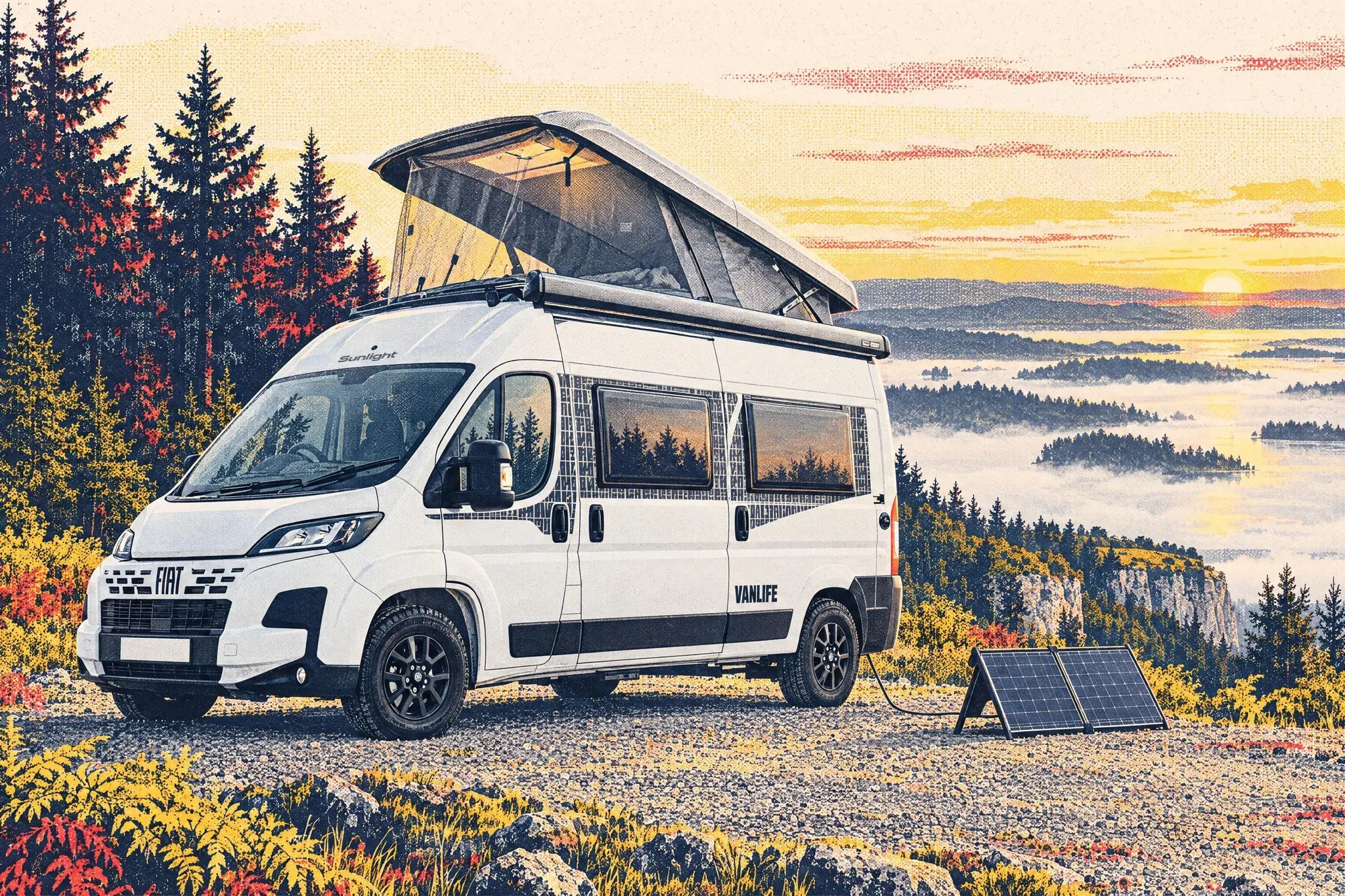
Living with a Sunlight Vanlife 540 V is the happy reality behind the spec sheet: an excellent three-season couple's camper that rewards a little off-grid know-how. The standard 95Ah AGM leisure battery runs the low-draw essentials for a night or two off-grid and indefinitely on hook-up, though not high-draw appliances through an inverter. It carries 100 litres of fresh water (several days for a careful couple) and a 64-litre compressor fridge. The one number to respect is payload: it is tight, so pack with discipline and weigh the van loaded. The good news is that the single upgrade most owners love, a lithium battery with solar, transforms the off-grid freedom. Here is what it is really like to live with, heating, power and payload included.

A spec sheet tells you what a campervan has; it doesn't tell you what it's like to live in. The Sunlight Vanlife 540 V reads well on paper, and we've gone through those numbers in full elsewhere, but the questions that actually matter once you own one are different: how far does the power really stretch, will it keep you warm in October, how long can you go without a hook-up, what should you upgrade, and what does that tight payload mean when you're actually packing for a trip? This is the honest, practical guide to living with the van, written from the perspective of the systems that make or break a camper, because that's where the real ownership experience lives.
None of what follows is meant to put you off; the Vanlife is a genuinely lovely van to spend time in. It's meant to set your expectations correctly, so that you buy it for what it is, an excellent three-season couple's camper that rewards a bit of off-grid know-how, rather than for what a glossy photo implies. Get your expectations right and the systems hold no surprises, which is exactly how a good camper should feel.
Power: the leisure battery and what it really runs
The Vanlife comes as standard with a 95 amp-hour AGM leisure battery, and understanding what that does and doesn't run is the foundation of living with the van. For the everyday low-draw essentials, the LED lighting, the water pump, charging phones and tablets, running the compressor fridge's controls and the heating's electronics, a 95 amp-hour AGM is perfectly adequate, and on a hook-up it's a non-issue because you're topping up from the mains continuously. For a night or two off-grid in mild weather, it'll cope, especially if you're sensible about consumption.
Where it shows its limits is sustained off-grid use and high-draw appliances. AGM batteries don't like being deeply discharged, so you can really only use a portion of that 95 amp-hours before you should recharge, and anything with a heating element run through an inverter, a kettle, a toaster, a hair dryer, will drain it alarmingly fast. The honest picture is that the standard battery is a sensible starting point for hook-up touring and the occasional wild night, not a setup for living off-grid for days. That's not a criticism unique to the Vanlife; it's true of most vans at this price with a single AGM battery. The good news is that it's also the most upgradeable part of the van, which we'll come to.
Staying warm: the heating, and the pop-top question
Heat is where a camper earns its keep outside high summer, and the Vanlife is well equipped here, with a Truma Combi system providing both blown-air heating and hot water, the proven, near-universal setup in European campers. It's effective and reliable, and it'll keep the living area genuinely warm. On the Vanlife the Combi runs on diesel, drawing from the vehicle's own fuel tank rather than relying on gas bottles (a small gas bottle is fitted just for the hob). That's a real convenience for heating: a diesel Combi runs unattended without you watching a bottle gauge, and there's no gas to run out of mid-trip, so the heat keeps coming as long as there's fuel in the tank.
The honest caveat is the pop-top. The fabric sides of the elevating roof, where the main bed lives, are the least insulated part of the van, so on a genuinely cold night that's where you'll feel it, and where condensation will gather. The heating warms the living space well, but the roof bed is the cold spot, as it is on any pop-top. For three-season use, spring through autumn, this is a non-issue with the heating doing its job. For hard winter use you'll want to help it along, with good thermal blinds, a fitted insulating cap or liner for the pop-top, and the habit of ventilating to manage condensation. Treated as a three-season van it's cosy; pushed into deep winter it asks for a bit of preparation, and the staircase layout we describe in our layout piece means the warmest spot is actually the lounge, not the bed.
Water, the kitchen, and off-grid endurance
The Vanlife carries 100 litres of fresh water and 90 litres of waste, with a 64-litre compressor fridge, and these figures set how long you can comfortably go between services. For a careful couple, 100 litres of fresh is genuinely several days' worth if you're not showering lavishly, and the compressor fridge runs efficiently off the 12-volt system, keeping food properly cold without needing mains or gas, which is a real advantage over older absorption fridges.
In practice, your off-grid endurance is usually limited not by water but by power and waste. The fresh tank will often outlast the leisure battery if you're running much off the inverter, and the waste tank fills as fast as you use the fresh, so the rhythm of off-grid life in the Vanlife is the familiar one: keep an eye on the battery, top up water when you pass a tap, and empty the waste and the toilet cassette at proper points. Master that simple routine and the van is a comfortable base for a few days away from facilities; ignore it and you'll be caught out by a flat battery or a full waste tank before the fresh water runs dry. It's all very manageable, just worth understanding before your first off-grid night rather than during it.
The payload reality
Here's the practical truth that the brochure photographs never show, and it deserves its own section because it shapes daily life with the van. The Vanlife is plated at 3,500 kilograms so you can drive it on an ordinary licence, but once you subtract the van's running weight, the usable payload, your allowance for water, passengers, gas, food, clothes, bikes and everything else, is tighter than the headline suggests, as we set out in the specs guide. Fill the 100-litre water tank and that's 100 kilograms gone before you've packed a sock.
In daily use, this means packing with a little discipline rather than throwing in everything you might conceivably want. It means thinking twice about heavy accessories, and ideally taking the loaded van to a weighbridge once you've kitted it out the way you travel, so you know your real spare capacity and aren't unknowingly overweight, which is both illegal and bad for the van. None of this makes the Vanlife impractical; plenty of couples tour happily within its limits for years. But it does make it a van that rewards the traveller who packs light and thinks about weight, and quietly punishes the one who treats it like a removal lorry. Respect the payload and it's a non-issue; ignore it and it's the thing that bites.
Living the layout, day to day
We've covered the staircase layout's cleverness elsewhere, but a few notes on how it lives day to day belong here. The fixed staircase up to the roof bed is, in practice, the feature owners love most: walking up to bed rather than clambering a ladder genuinely changes how you use the upstairs, and the under-step storage is more useful than it sounds. The walled-off cab and rear lounge make the van a pleasant place to simply be, which matters more than people expect on a wet day or a long evening.
The daily realities to be ready for: the second bed, in the rear lounge, is a conversion you make up and pack away, so the guest or kids' sleeping arrangement is a small nightly job. The main roof bed is up a flight of stairs, which is civilised but still a climb, worth bearing in mind for the midnight trip down. And the two-travel-belt limit governs who can come along, which we treat fully in our berths-versus-seatbelts piece, but in daily life simply means this is a van for two on the move. For a couple, none of this is a hardship; it's just the texture of living with this particular, characterful layout.
On the road
Mechanically, living with the Vanlife is living with a Fiat Ducato, which is to say it's largely undramatic in the best way. The 140 horsepower engine and eight-speed automatic make it relaxed to drive, town and motorway alike, and at 5.41 metres it parks and threads through traffic far more easily than a coachbuilt. The thing you feel most is the height: at around 2.81 metres the pop-top roofline catches crosswinds on exposed motorways and rules out the lower car-park barriers, so you plan parking around it and ease off in a strong side wind. Neither is a real problem, just a characteristic to live with.
The Ducato's great practical virtue in ownership is its ubiquity: it's the most common motorhome base in Europe, so servicing, parts and know-how are everywhere, which is reassuring when you're touring far from home. The common Ducato niggles are minor and well-known, the odd notchy reverse, the usual diesel-particulate care if you do lots of short trips, and on a tall, heavy build some owners fit uprated rear springs or air-assistance to firm up the ride when fully loaded. None of it undermines a thoroughly proven, easy-to-live-with base.
What's worth upgrading
If you're going to own a Vanlife and want it to do more, a few upgrades repay the money for most people. Top of the list is power: swapping or supplementing the standard AGM battery with a lithium one transforms the van's off-grid ability, because lithium tolerates deeper discharge and faster charging. Pair it with solar and you go from a night or two off-grid to genuinely living away from hook-ups. One important caveat on solar, though: on this van the factory roof panel isn't available with the pop-top, which takes up the roof space, so solar here means a portable folding panel you set out in the sun, or an aftermarket installation worked around the roof, rather than a simple factory tick-box. Either way it's worth doing, and if serious off-grid is your aim, lithium plus solar is the single best money you can spend.
After that, the winter kit: a heated and insulated waste tank if your build doesn't have one, so it can't freeze, and good thermal blinds plus a pop-top insulator to take the edge off cold nights. A reversing camera (often in the option pack) earns its keep the first time you back the van into a tight pitch. Beyond those, be disciplined, because every upgrade adds weight and eats into that tight payload, so add what genuinely improves your trips and resist the rest. The art of speccing this van well is knowing which upgrades buy real freedom and which just buy weight.
Three-season van, or year-round?
The honest summary of living with the Vanlife 540 V is that it's an excellent three-season camper that can be pushed into winter with a bit of preparation. Spring, summer and autumn, it's close to ideal for a couple: warm, comfortable, characterful, easy to drive, and capable of a few days off-grid with a sensible power setup. Deep winter asks more of it, chiefly because of the pop-top's cold roof and the limits of the standard battery, but with the heating doing its job, the winter insulation kit fitted and a battery upgrade (with solar where you can fit it), plenty of owners use vans like this through the cold months happily.
So set your expectations accordingly. If you're a couple who'll mostly tour in the milder months and want a van that's a joy to spend time in, the Vanlife lives beautifully with very little fuss. If you dream of off-grid weeks in a Highland winter, it'll do it, but only once you've added the kit and accepted the pop-top's nature. Either way, the systems are sound and the experience is honest, which is all you can really ask of a camper: that it does what it says, and that you know what it says before you buy.
Common questions
How long can you go off-grid in a Sunlight Vanlife 540?
For a careful couple, a few days, usually limited by the standard 95Ah AGM leisure battery rather than the 100-litre water tank. The battery comfortably runs the low-draw essentials, but AGM does not like being deeply discharged, so you can only use a portion before recharging. Upgrading to lithium and adding solar transforms how long you can stay out.
Is the Sunlight Vanlife 540 warm enough for winter?
It is an excellent three-season camper that can be pushed into winter with preparation. It has diesel Truma blown-air heating, but the fabric pop-top is the weak point on a genuinely cold night. For real winter use, add a heated waste tank, thermal blinds and a pop-top insulator, and expect to manage condensation, as on any pop-top van.
What can the standard leisure battery in the Vanlife 540 run?
The 95Ah AGM comfortably runs the low-draw essentials, the LED lights, water pump, fridge controls and device charging, for a night or two off-grid, and indefinitely on a hook-up. What it will not do well is run high-draw appliances like a kettle, toaster or hair dryer through an inverter, which flatten it alarmingly fast. Keep those for hook-up or gas.
What is the real payload of the Sunlight Vanlife 540 in daily use?
Tighter than the headline. The van is plated at 3,500kg, but once you subtract the running weight, the usable allowance for water, people, gas, food and kit is modest, and 100 litres of water alone is 100kg before you have packed a sock. Pack with discipline and weigh the loaded van at a weighbridge to know your true spare capacity.
What should I upgrade first on a Sunlight Vanlife 540?
Power, for most people. A lithium leisure battery is the single biggest improvement to off-grid freedom, ideally paired with solar, though it has to be a portable or aftermarket panel since factory roof solar is not offered with the pop-top. After that, winter kit such as a heated waste tank, thermal blinds and a pop-top insulator, and a reversing camera if yours lacks one. Go easy, as each upgrade eats into the tight payload.
What is the Sunlight Vanlife 540 like to drive?
Relaxed. The 140 horsepower engine and eight-speed automatic make it easy town and motorway alike, and at 5.41 metres it parks and threads through traffic far more easily than a coachbuilt. The thing you feel most is the height: at around 2.81 metres the pop-top roofline catches crosswinds on exposed motorways and rules out the lower car-park barriers, so plan parking around it and ease off in a strong side wind.
The reachable bit
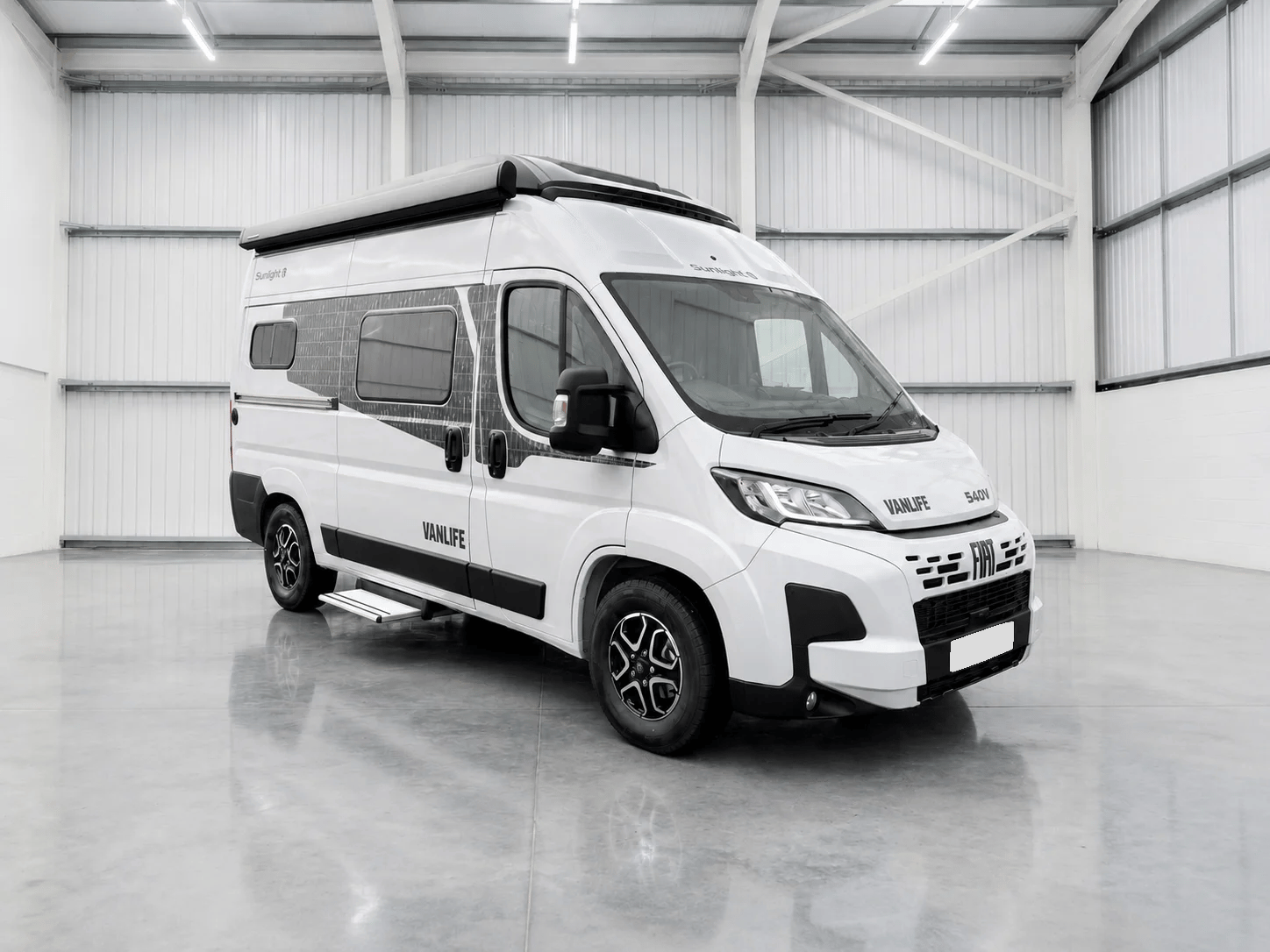
The camper you fall for is rarely the one you can afford. That gap is the whole reason Campervan.win exists. Right now we’re giving away the Sunlight Vanlife, worth around £65,000, and closing that gap is the point: capped entries so the odds stay honest, £10 a ticket, a maximum of five per person, £500 to a UK charity from every full draw, the winner picked by a public randomness beacon anyone can re-check, and one person driving away in the van itself.
Enjoyed this post?
Get more honest campervan guides like this one in your inbox.
You’re in!
Check your inbox. We’ve just sent you a welcome email.

About the author
Leo
Leo covers campervan technology, maintenance, kit, and ownership advice, with a clear, practical focus on how things work in real life.
Keep Reading
Related Reading
Thoughtful articles that build on what you’ve just read.
Campervan Tech & Electrics
10 min read
Campervan electric systems: how to judge a good one
A plain-English guide to reading and reviewing a campervan's electrical setup, from leisure batteries and solar to DC-DC chargers and inverters, so you can tell a genuinely good system from a flashy spec sheet.
Campervan Tech & Electrics
10 min read
The best campervan electrical systems, explained honestly
A plain-English guide to what makes a campervan electrical system genuinely good, from leisure batteries and charging to inverters and safety, with honest setups for different ways of travelling.
Campervan Tech & Electrics
11 min read
Campervan air conditioning: the honest UK guide for motorhomes and vans
A practical look at whether air conditioning is worth fitting to your van, the real pros and cons, the main types, what it takes to run off-grid, and which system suits which budget.

Campervan Tech & Electrics
26 min read
Off-grid for real: what 100Ah lithium and Alde heating get you in a 4x4 van
An honest, detailed look at what a single 100Ah lithium battery and an Alde wet heating system actually deliver in a 4x4 campervan, with real UK figures, day counts, and the mistakes that catch people out.