
Sunlight Vanlife 540 V: the specs, weights and payload, explained

Written by
Leo
Leo covers campervan technology, maintenance, kit, and ownership advice, with a clear, practical focus on how things work in real life.
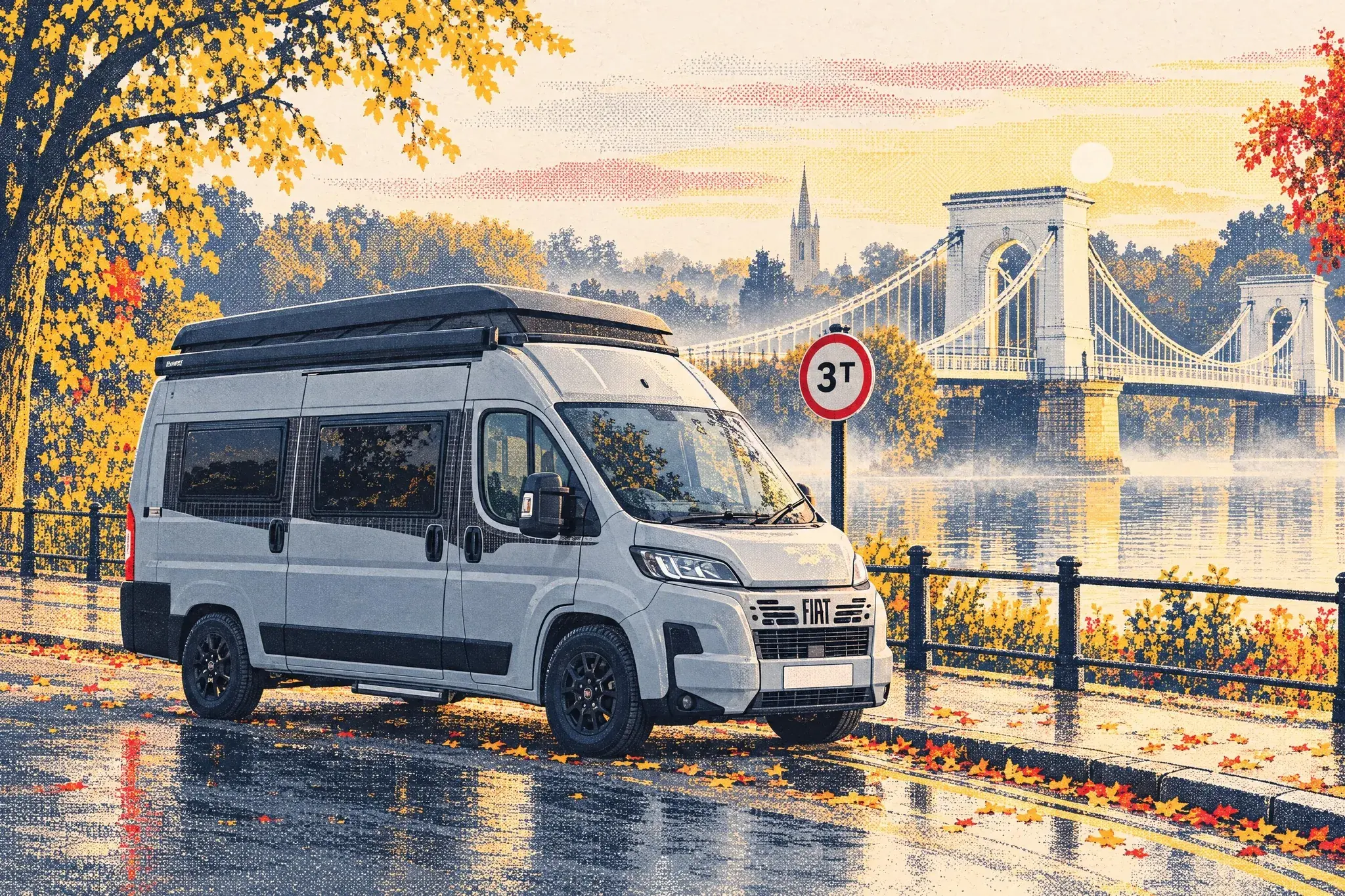
The short answer
The Sunlight Vanlife 540 V is a 5.41-metre pop-top campervan on the Fiat Ducato, with a 2.2-litre 140hp diesel and eight-speed automatic, from around £61,690 on the road with a genuinely generous standard spec. The figure to understand before you fall for it is payload: plated at 3,500kg with a running weight near 2,829kg, the nominal 671kg allowance is really nearer 522kg once tolerances are counted, and a full 100-litre water tank is 100kg of that. It sleeps four but has only two travel belts, stands 2.81m tall (above many car-park barriers), and runs a 64-litre compressor fridge and a 95Ah AGM battery. None of that is a dealbreaker, it just rewards knowing the real numbers. Here are the specs, weights and payload, explained clearly.

A spec sheet is only useful if you know what the numbers mean for the way you'll actually live in the van. Anyone can list the dimensions and the tank sizes; the useful thing is understanding which figures matter, which ones catch people out, and what each one translates to on a wet Tuesday in a car park or a dark evening off-grid. So this is the full specification of the Sunlight Vanlife 540 V, laid out plainly and then decoded, with particular attention to the one number that quietly ruins more campervan purchases than any other: payload.
A quick note before the numbers. The Vanlife 540 V is a 2025/2026 model, and manufacturers tweak specs, packs and prices year to year, so treat the figures here as an accurate snapshot to understand the van rather than the final word for your specific build. Always confirm the exact numbers on the spec sheet of the actual van you're buying. With that said, here's what you're working with. For the bigger-picture verdict, our full Vanlife 540 V review puts all of this in context.
The headline dimensions
| Dimension | Figure |
|---|---|
| Length | 5.41 m |
| Width (body) | 2.05 m |
| Height | 2.81 m |
| Interior standing height | 1.90 m |
| Wheelbase | 3.45 m |
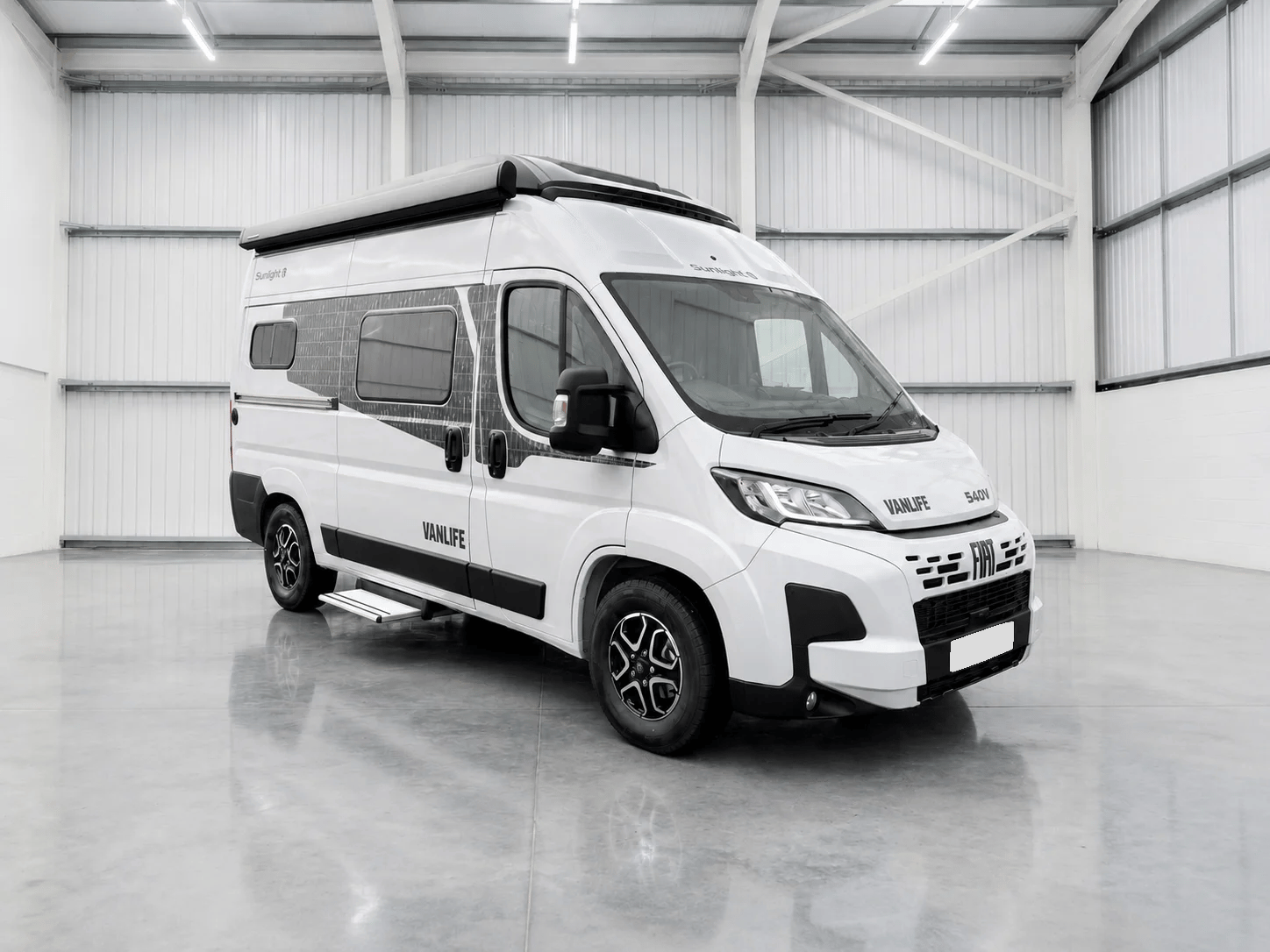
What these mean in practice. The 5.41-metre length is the Vanlife's best everyday trick: it's short enough to fit a standard parking bay and to drive without the constant route-planning that a seven-metre coachbuilt demands, while still packing in a proper layout. The 1.90-metre interior height means most adults can stand up straight inside, which transforms how a wet day feels. The figure to watch is the 2.81-metre exterior height. That's tall, taller than many car-park height barriers, which are commonly set at 2.0 to 2.1 metres, so you'll be parking in the open or in motorhome-friendly spaces, and you'll feel the height in crosswinds and in a small fuel-economy penalty. None of that is unusual for a pop-top van of this type, but the height is the dimension most likely to affect your daily life, so know it before you buy.
Engine and drivetrain
The Vanlife 540 V sits on the Fiat Ducato, the workhorse base of the European motorhome industry, with the 2.2-litre diesel producing 140 horsepower, paired as standard with an eight-speed automatic gearbox. That's a genuinely good combination for a van of this size. The 140 horsepower engine has ample pull for a 3,500-kilogram vehicle, the eight-speed auto makes town driving, hill starts and motorway cruising relaxed rather than a workout, and the Ducato's vast service and parts network across the UK and Europe means you're never far from someone who can look after it. The Ducato isn't flawless, owners note the occasional notchy reverse gear and the usual diesel-particulate-filter care that any modern diesel needs, but as a base for a camper it's about as proven and well-supported as it gets. Worth knowing if you're keeping it a long time: the common Ducato gripes are minor and well-documented, the odd stiff reverse-gear selector, occasional attention to the diesel particulate filter if you only do short trips, and suspension that works hard on a tall, heavy build, so uprated rear springs or air-assistance are a popular fix on a fully-loaded camper. None of these are deal-breakers, and the flip side, that almost any garage in Europe can service a Ducato and parts are everywhere, is a real advantage on a van you'll tour far from home in. We dig into the driving and ownership side in our piece on living with the Vanlife 540.
Sleeping: berths and bed sizes
This is where the Vanlife's clever layout shows in the numbers. It sleeps four across two beds:
| Bed | Size |
|---|---|
| Pop-top roof bed | 206 x 143 cm |
| Rear lounge bed (converted) | 180 x 100 cm |
The roof bed is the generous one, a proper double on a sprung base reached by the van's fixed staircase, and at 206 centimetres long it comfortably takes taller adults, which can't be said of every campervan bed. The rear bed is formed by converting the lounge sofas and is the more compact of the two, fine for two at a push or roomy for one or a child.
Now the critical caveat, and it's important enough that we've given it a whole separate piece. Sleeping four does not mean carrying four. The Vanlife 540 V has only two travel seatbelts, so however many it sleeps, it can legally and safely carry just two people on the road. For a couple that's irrelevant; for a family of four hoping to travel together it's a deal-breaker, and the wrong van entirely. Before anything else, read our explainer on berths versus seatbelts, because it's the single most misunderstood thing about this van.
Weights and payload: the number that catches people out
If you read one section of any campervan spec, make it this one, because payload is where dreams meet physics. Here are the weights:
| Weight | Figure |
|---|---|
| Maximum technically permissible laden mass (MTPLM) | 3,500 kg |
| Mass in running order (MIRO, approx) | ~2,829 kg |
| Nominal payload (MTPLM minus MIRO) | ~671 kg |
| Manufacturer-quoted option/load allowance | ~522 kg |
Here's what those figures actually mean. The van is plated at 3,500 kilograms, which is the maximum you can drive on an ordinary category B car licence, so no special licence is needed, which matters. Subtract the van's running-order weight (with fluids and a notional driver) of roughly 2,829 kilograms and you're left with about 671 kilograms of nominal payload on paper. That sounds healthy, but it isn't the whole story, because the manufacturer's own quoted allowance for options and load is nearer 522 kilograms once you account for the way the figures are calculated and the tolerances involved. And every option you add, the extra battery, the bike rack, the heavier wheels, eats into it before you've packed a single thing.
In the real world, then, your usable payload, the allowance for passengers, water, gas, food, clothes, bikes and everything else, is tighter than the headline 671 looks. Fill the 100-litre fresh water tank and that's 100 kilograms gone. Add a passenger, your awning, an outside table and chairs, a full gas bottle and a loaded fridge, and you can eat through the allowance faster than you'd think. None of this makes the Vanlife unusual, most 3,500-kilogram vans are in the same boat, but it does mean you should pack thoughtfully and, ideally, take the van to a public weighbridge once it's kitted out the way you travel, so you know your real spare capacity. Overloading isn't a grey area: it's an offence, it can invalidate your insurance, and it's surprisingly easy to do. Respect the payload and it's a non-issue; ignore it and it's the thing that catches you out.
Living systems: water, heat and power
| System | Spec |
|---|---|
| Fresh water | 100 litres |
| Waste water | 90 litres |
| Fridge | 64-litre compressor |
| Heating | Diesel Truma Combi (plus a gas bottle for the hob) |
| Leisure battery | 95 Ah AGM |
These numbers tell you how long you can comfortably go off the grid. The 100-litre fresh tank is generous for a van this size and will last a careful couple several days; the 64-litre compressor fridge runs efficiently off 12 volts and keeps food properly cold without needing mains. The Truma Combi system provides both blown-air heating and hot water and, on the Vanlife, runs on diesel, drawing from the vehicle's own fuel tank rather than relying on gas bottles (a small gas bottle is fitted just for the hob). That's a genuine convenience: no gas to run out of mid-trip for your heating. The leisure power comes from a 95 Ah AGM battery, which is a sensible standard fit but, as with most vans, the first thing keen off-gridders upgrade, usually to lithium. One important point on solar: it isn't standard, and on this van the factory roof solar can't be combined with the pop-top, which takes up the roof space, so adding solar means a portable panel or an aftermarket fit rather than a simple tick-box option. We go into how all this performs off-grid, and what's worth upgrading, in living with a Vanlife 540.
What the spec sheet doesn't tell you
A spec sheet captures the numbers but misses the texture of living with a van, so here are the real-world notes that don't show up in a table. The rear bed is a conversion, not a fixed bed: you make it up from the lounge sofas each night and pack it away each morning, a small daily ritual rather than a chore, but worth knowing if you'd rather fall straight into a bed that's always there. The fixed staircase, by contrast, is the star of the show in use, far nicer than clambering up a ladder, and the steps double as storage. The 2.81-metre height that looks like just a number on paper is something you feel on a windy motorway and at every height-barrier car park, so factor it into how and where you'll travel. And while the German build and insulation are good for the class, a pop-top's fabric roof section is always the cold spot on a winter night, so the van is happiest across the milder three seasons unless you add the winter kit. None of these are faults; they're simply the things you learn in the first week that the brochure never mentions, and knowing them in advance is how you buy the right van rather than the best-photographed one.
What's worth upgrading
If you're speccing a Vanlife 540 V, a few upgrades repay the money for most owners. The standard 95 Ah AGM leisure battery is fine for hook-up touring and the odd night off-grid, but anyone planning to camp away from power regularly will want more capacity, and a lithium battery is the single biggest improvement to off-grid freedom, ideally paired with solar, though note that on this van the factory roof solar isn't available with the pop-top, so solar means a portable panel or an aftermarket installation rather than a factory option. For winter use, the heated and insulated waste tank is worth having so it can't freeze, and good thermal blinds or a fitted roof insulator take the edge off the cold pop-top. The Digital Pack's reversing camera earns its keep the first time you reverse a 5.4-metre van into a tight pitch. Beyond that, resist the urge to tick every box, because each option adds weight and eats into a payload that, as we've seen, is tighter than it looks. We go through the off-grid setup in detail in living with a Vanlife 540.
Price, and what's standard versus optional
The Vanlife 540 V starts from around £61,690 on the road in the UK, though as ever you should confirm the current figure. What's notable, and genuinely good value, is how much is included in that standard price: an awning, alloy wheels, painted bumpers and the pop-top roof itself are all standard, where many rivals charge extra for some or all of them. The 140 horsepower engine and eight-speed automatic are standard too.
The main cost options come in packs. A Chassis Pack typically bundles parking sensors, an electric handbrake and electric mirrors; a Digital Pack adds automatic climate control, a larger touchscreen infotainment system and wireless charging. Pack prices aren't always published and vary by model year, so confirm the current figures with a dealer, but expect each to add a four-figure sum. Then there are à-la-carte items such as a heated and insulated waste tank, framed habitation windows, a bike rack and full-LED headlights. As always, the headline price is the start of the conversation: a realistically specced van will land somewhat higher, so price up the packs you actually want before you judge the value. It's also worth knowing that the near-identical Carado CV 541 Pro twin bundles its kit differently, which can change the value calculation.
How it compares on paper
On the numbers, the Vanlife 540 V stacks up well against the compact panel-van campers it competes with, the Adria Twin, the Pössl and Globecar vans, the Knaus Boxstar and the rest. Its trump card isn't any single figure but the layout those figures enable: a fixed double up top, a sociable lounge below and a walled-off cab, in a 5.4-metre van. Where it asks for compromise is the two-belt limit and the payload discipline that any 3,500-kilogram van requires. We line it up against its rivals properly in our Vanlife versus the competition comparison.
Who these numbers suit
Pull the figures together and a clear picture of the ideal owner emerges. The Vanlife 540 V's numbers suit a couple, or a solo traveller, who values a clever, sociable layout and a proper fixed double up top, who tours mainly across the milder three seasons or is willing to add the winter kit, and who'll pack with a little discipline to respect the payload. For that owner, the compact 5.4-metre length, the comfortable standing height, the generous standard kit and the staircase layout add up to one of the most liveable small campervans you can buy.
They suit some people far less well, and the spec sheet says so quietly if you listen. A family of four who need four travel seats won't get them here, this van carries two. Anyone who wants to load heavily without watching the weighbridge will find the payload tight. And a buyer who needs to clear height barriers daily will be caught out by the 2.81-metre roof. For them the numbers are pointing elsewhere, to a four-belt rear-bed layout like the Cliff 540, or a larger van with more payload. The real skill in reading a spec sheet is hearing what it tells you about whether the van fits your life, not just admiring the figures.
Common questions
What is the payload of the Sunlight Vanlife 540 V?
Tighter than the headline. Plated at 3,500kg with a running-order weight of roughly 2,829kg, it has about 671kg of nominal payload on paper, but the manufacturer's own quoted allowance for options and load is nearer 522kg once the tolerances are counted. Since a full 100-litre water tank alone is 100kg, weigh the loaded van at a public weighbridge to know your real spare capacity.
How big are the beds in the Sunlight Vanlife 540 V?
It sleeps four across two beds. The roof bed is the generous one, a proper double on a sprung base reached by the fixed staircase, around 206cm long so it comfortably takes taller adults. The second bed, around 180 by 100cm, is made up by converting the rear lounge. Note it still has only two travel seatbelts, so it sleeps four but carries two.
How tall is the Sunlight Vanlife 540 V, and will it fit under car-park barriers?
It stands around 2.81 metres tall, which is taller than many car-park height barriers, commonly set at 2.0 to 2.1 metres, so you will park in the open or in motorhome-friendly spaces. At 5.41 metres long it still fits a standard parking bay, but the 2.81-metre height is the dimension most likely to affect daily life, and you feel it in crosswinds too.
What engine and gearbox does the Sunlight Vanlife 540 V have?
It sits on the Fiat Ducato with a 2.2-litre diesel producing 140 horsepower, paired as standard with an eight-speed automatic gearbox. The 140hp has ample pull for a 3,500kg van, the eight-speed auto makes town driving and motorway cruising relaxed, and the Ducato's vast UK and European parts and service network means support is never far away.
How much does the Sunlight Vanlife 540 V cost?
From around 61,690 pounds on the road in the UK, with an unusually generous standard specification including an awning, alloys, painted bumpers and the pop-top. Option packs such as the Chassis Pack and Digital Pack add to that, so a realistically specced van costs somewhat more. Confirm current pricing and pack contents with a dealer.
Is the Sunlight Vanlife 540 V good for winter or off-grid use?
It is well equipped for three-season touring, with diesel Truma blown-air heating, a 100-litre water tank and a 64-litre compressor fridge, but the fabric pop-top is the weak point on a genuinely cold night, and the standard 95Ah AGM battery limits off-grid time. For serious winter or off-grid use, add a heated waste tank, upgrade to a lithium battery, add a portable or aftermarket solar panel (factory roof solar is not available with the pop-top), and fit good thermal insulation up top.
The reachable bit
The camper you fall for is rarely the one you can afford. That gap is the whole reason Campervan.win exists. Right now we’re giving away the Sunlight Vanlife, worth around £65,000, and closing that gap is the point: capped entries so the odds stay honest, £10 a ticket, a maximum of five per person, £500 to a UK charity from every full draw, the winner picked by a public randomness beacon anyone can re-check, and one person driving away in the van itself.
Enjoyed this post?
Get more honest campervan guides like this one in your inbox.
You’re in!
Check your inbox. We’ve just sent you a welcome email.

About the author
Leo
Leo covers campervan technology, maintenance, kit, and ownership advice, with a clear, practical focus on how things work in real life.
Keep Reading
Related Reading
Thoughtful articles that build on what you’ve just read.
Campervan Buying Guides
10 min read
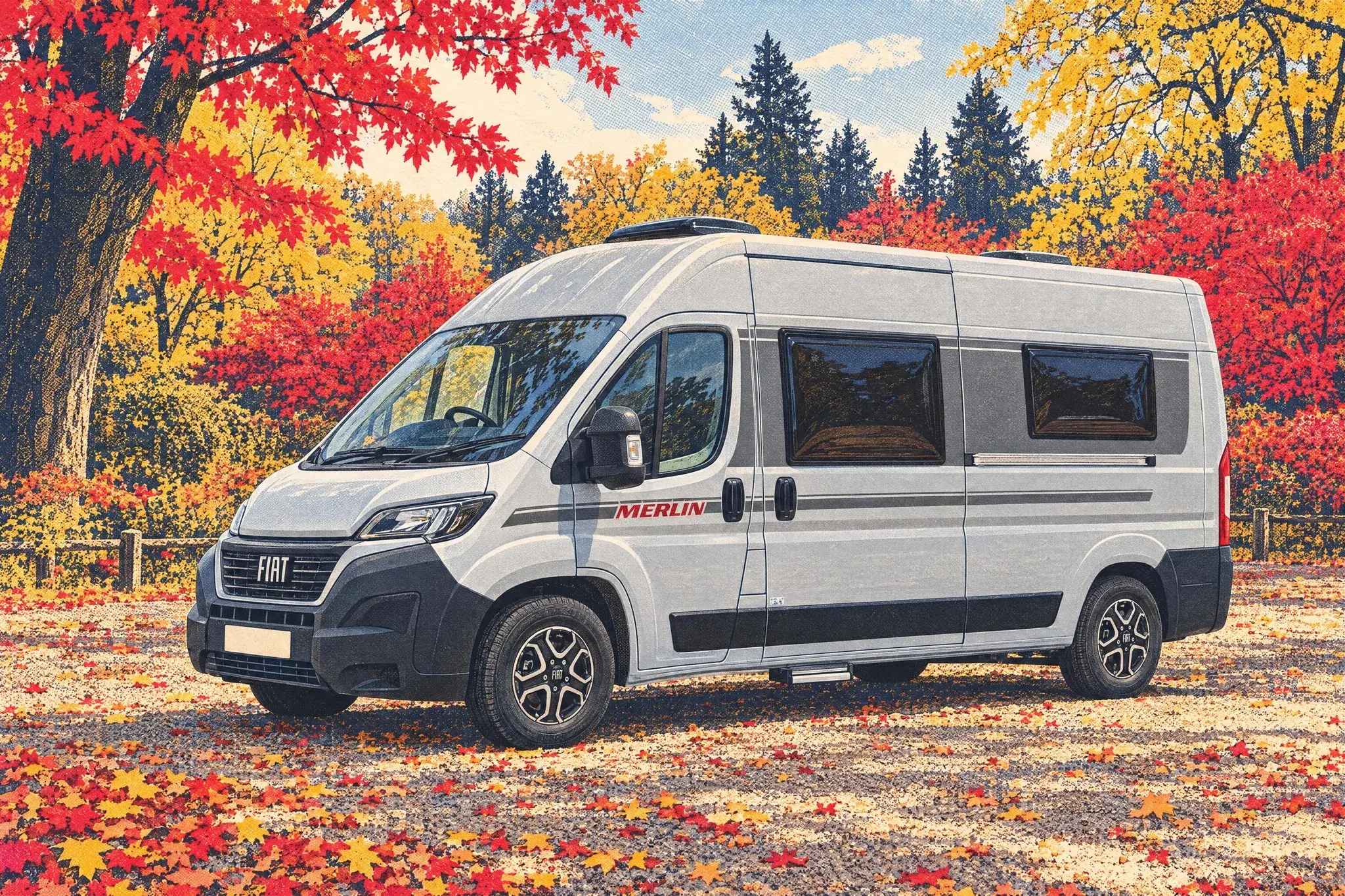
Swift Merlin 2027: nine layouts from £64,190 and how to pick the right one
Swift's all-new Merlin campervan arrives for 2027 with nine layouts on the Fiat Ducato panel van. We sort them into four families, work the payload sum on a four-seat version, and explain what the roof, the automatic and the prices mean for your choice.
Campervan Buying Guides
11 min read
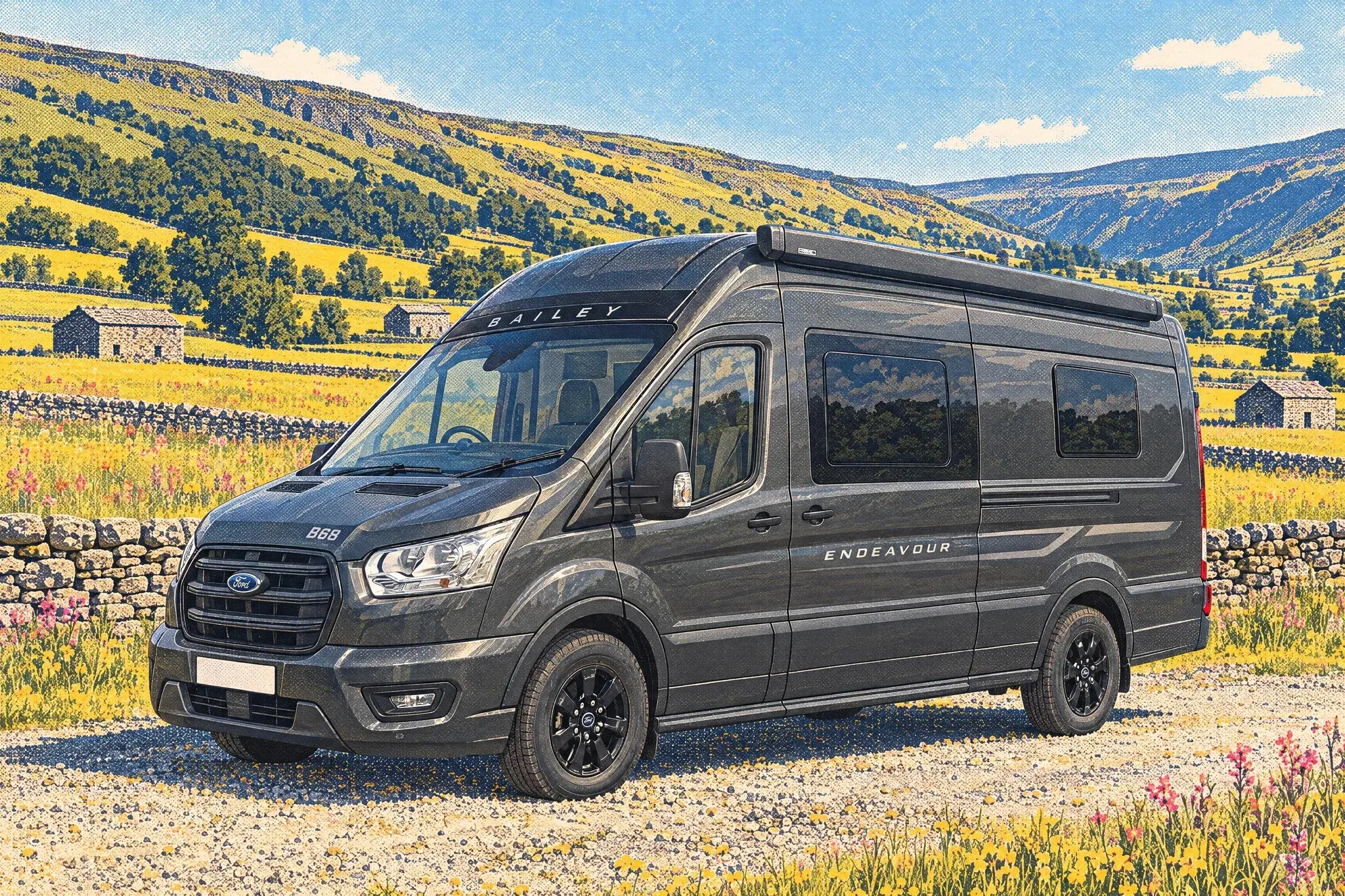
Bailey Endeavour B68: the end-lounge Transit campervan where the pop-top costs 143 kg
Bailey's new Endeavour B68 puts a rear lounge in a 5.98 m Ford Transit campervan. We compare it with the B65 and B62, check the 1.86 m bed, and do the payload sums if you add the £7,500 pop-top.
Campervan Buying Guides
12 min read
New campervans under £60,000 for 2027: what the NEC shows and what the price leaves out
A fair look at the new 2027 campervans listed under £60,000 ahead of the Motorhome and Caravan Show at the NEC, with each price given as its maker words it, and the differences between ex-works, delivered and German-retail-based figures explained so you can compare real on-the-road totals.
Campervan Buying Guides
14 min read
Eura Mobil Vancona 2027: a €57,400 campervan with just 84 to 118 kg left for options
Eura Mobil's new Vancona is a well-equipped Fiat Ducato campervan from €57,400, but its 84 to 118 kg options allowance means you need to order it with the weight sheet open. We explain what the figure means, what the 4.25 t uprate costs you in licence terms, and which options to prioritise.