
OPUS Camper vs PenPod: which small camper trailer should you buy?

Written by
Arthur
Arthur writes buying guides, comparisons, and in-depth explainers to help readers choose the right campervan or motorhome with confidence.
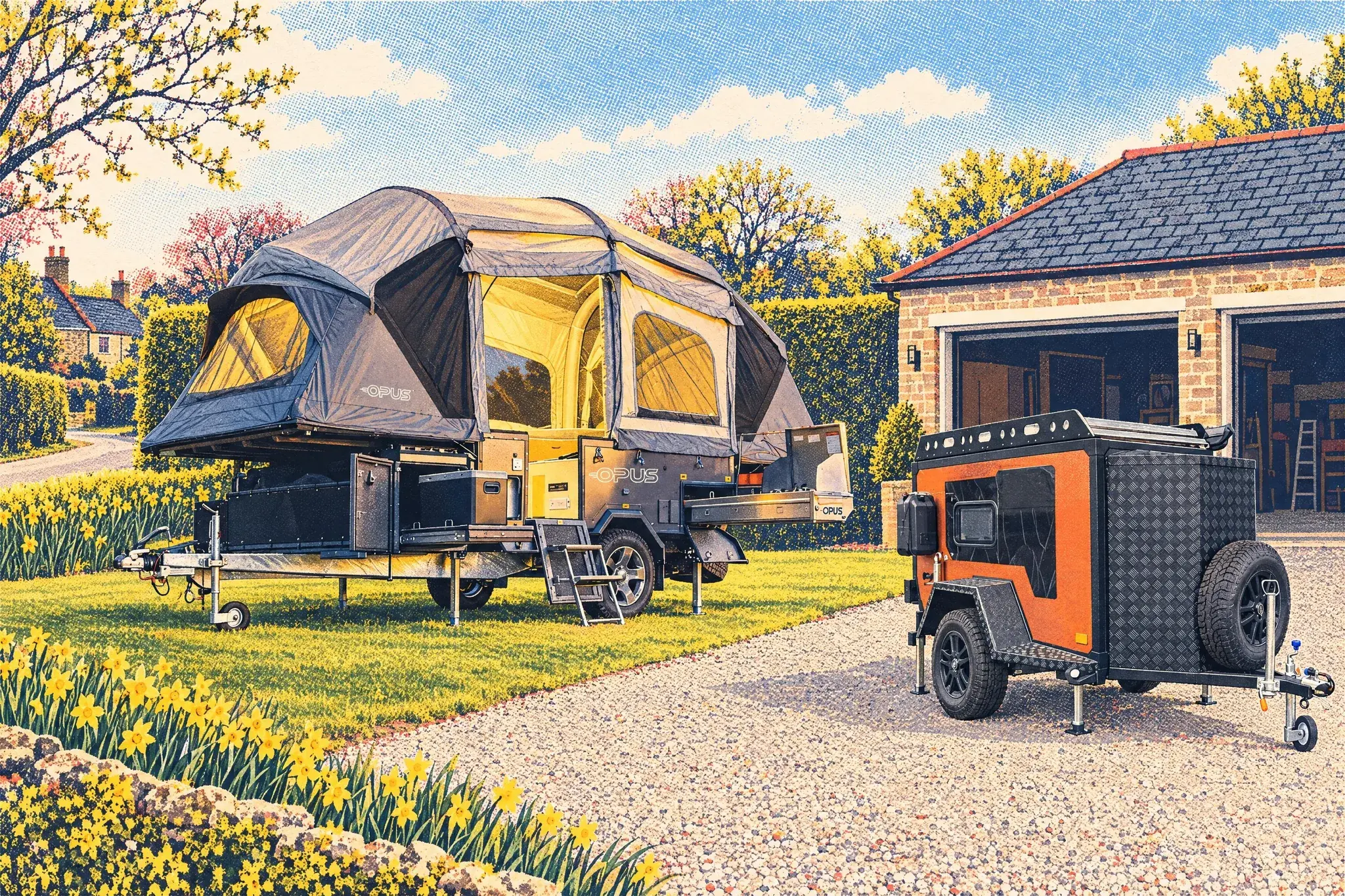
The short answer
The Air OPUS and the PenPod are two opposite small camper trailers at similar money (roughly £20,000 to £25,000), both towable on a normal licence, and the good news is that the choice between them is wonderfully clear-cut. The OPUS is a folding camper whose canvas tent inflates itself in about 90 seconds, giving big, family-sized, standing-height space and 80 litres of water, at the cost of pitching and drying it. The PenPod is a hard-sided, lockable, handbuilt off-road pod for two that needs no pitching and will follow a 4x4 down a rough track, at the cost of space. Choose the OPUS for family space and comfort, the PenPod for security, ruggedness and zero-faff simplicity. Here is the full head-to-head, so you pick the one that fits your kind of trip.

If you've been looking at small camper trailers, two very different British-available options keep coming up, and they could hardly be more opposed. The Air OPUS is a folding camper whose canvas tent inflates itself at the press of a button, giving you a spacious, standing-height, family-sized living space that packs down low and tows behind an ordinary car. The PenPod is a hard-sided, handbuilt off-road pod from Lancashire: a small, rugged, lockable shell for two that needs no pitching at all, that you can leave somewhere wild and walk away from without a second thought.
Both cost roughly the same money, both tow on a normal licence, and both have devoted owners, and yet they answer the question "what's the best small camper" in almost completely opposite ways. So which should you buy? This is the head-to-head, round by round, with a clear verdict at the end and a decision guide by buyer type. We've reviewed each in depth separately, the OPUS Camper review and the PenPod review, so this piece focuses on putting them directly against each other. Prices and specs are current as we write; confirm them with each maker before buying.
The two philosophies, in a sentence
Before the detail, the core difference, because it explains every round that follows. The OPUS is about space and comfort: it gives you a big, airy, family-sized canvas living space, at the cost of having to pitch it (quickly) and dry it before packing. The PenPod is about security and simplicity: it gives you a tough, instant, lockable hard shell, at the cost of space and standing room. Almost everything else flows from that one trade. The OPUS maximises living space within a foldable, towable package; the PenPod maximises ruggedness and ready-to-use simplicity within a tiny one.
It's a genuinely unusual head-to-head, because the two aren't really competing for the same buyer so much as offering two different answers to the same itch, the desire for a small, affordable, towable way to escape that isn't a tent. One answer says: give me room to live and sleep the family, and I'll accept canvas and a quick pitch. The other says: give me a tough, secure box I can use in seconds and leave anywhere, and I'll accept that it's only for two. Neither answer is wrong. The whole purpose of this comparison is to help you work out which itch is actually yours, because once you know that, one of these two will look obviously right and the other obviously not.
At a glance
| Dimension | Air OPUS (All-Road) | PenPod |
|---|---|---|
| Type | Inflatable canvas folding camper | Hard-sided off-road pod (squaredrop) |
| Setup | ~90s to inflate, ~10 to 15 min full pitch | Instant: park, level, fold cushions |
| Pack-down | Must dry the canvas first | Nothing to dry |
| Sleeps (inside) | 4 to 6 (up to 10 with full awning) | 2 (more with roof tent/awning) |
| Standing room | Yes (~2.5m) | No |
| Security | Canvas, less secure when pitched | Hard, lockable shell |
| Off-road | On-road (ORX tougher) | Genuinely off-road built |
| Off-grid (UK) | Basic; no lithium/solar as standard | Add-on power stations/solar |
| Kitchen | Interior 2-burner, sink, fridge/microwave on higher trims | Hob and sink; optional external galley |
| Fresh water | 80L | 40L (2 x 20L) |
| Kerb weight | ~800kg | ~750 to 800kg |
| Licence | Category B | Category B |
| Price (from) | £21,995 (All-Road) | ~£20,000 inc VAT |
| Evidence base | Established, press-reviewed | Handmade, owner-led |
| Best for | Families wanting space and comfort | Couples wanting ruggedness and security |
Now the rounds.
Round 1: Setup and ease of use
The OPUS's whole reputation rests on its setup, and it's genuinely brilliant: the inflatable tent rises on its air beams in around 90 seconds, and a complete, comfortable pitch, legs, interior, beds, hook-up, takes more like 10 to 15 minutes. Compared with a traditional trailer tent or a caravan awning, that's transformative, and it's the thing OPUS owners rave about.
But "10 to 15 minutes" is still more than zero, and there's the canvas tax: you must let the tent dry before you pack it, so a wet departure means either waiting for the sun or packing damp and drying it out at home. The PenPod sidesteps all of that. As a hard shell, its setup is essentially nil: park, level, drop the steadies, fold the cushions into a bed, and you're done, in any weather, with nothing to dry afterwards. You can arrive in driving rain and be inside, dry and warm, in the time it takes to wind down the legs.
It's worth being concrete about the OPUS's dry-canvas problem, because it's the one real friction. If you've had a wet weekend and need to be home on Sunday, you either pack the tent damp and set it back up at home to dry (not always practical), or you accept it'll need airing within a day or two to avoid mildew. Regular OPUS owners build a routine around it and don't find it a dealbreaker, but it's a genuine recurring chore the PenPod simply doesn't have. Against that, the OPUS's pitch is so quick that once it's up the setup-time gap is small; it's really the pack-down and the weather-dependence where the PenPod pulls ahead.
So this round depends on what you mean by "easy." The OPUS is astonishingly easy for a canvas camper; the PenPod is easier still, because it removes pitching and drying entirely. For pure, all-weather, arrive-and-relax simplicity, especially for spontaneous trips, the PenPod edges it. Round to the PenPod, narrowly, with the honest note that the OPUS is still far easier than almost anything else with canvas.
Round 2: Space and sleeping
This is where the OPUS hits back, hard. Inside, it gives you two double beds, a club lounge that seats the family around a table, and crucially around two and a half metres of standing height, so you move around like a person rather than a crab. It sleeps four to six comfortably, and up to ten with the full air awning kit (a theoretical maximum, but the awning genuinely turns it into a proper family space). It feels like a small soft-sided caravan.
The practical upshot for a family is enormous. In the OPUS, four people can be inside, dry, around a table on a wet afternoon, with room to change clothes and move about; in the PenPod, two people fill the space and a third is a squeeze. The OPUS's awning effectively adds a second living room and extra bedrooms, scaling it from a couple's camper to a genuine family base, whereas the PenPod scales by bolting a tent to the roof, which works but reintroduces some of the pitching and weather-exposure the pod was meant to avoid. If there are ever more than two of you, this round alone may decide the whole purchase.
The PenPod is, inside, a two-berth. Its cushions make up a single double bed, and that's the hard interior: two adults, cosily. You can reach "up to six or ten" only by adding a roof tent and an awning, and you cannot stand up inside. For a couple it's a lovely, snug cabin; for a family it simply isn't in the same league as the OPUS.
There's no contest here. If space, standing room and sleeping more than two under cover matter to you, the OPUS wins decisively. Round to the OPUS, comfortably, and it's the single most important round for anyone with children.
Round 3: Security and weather
Now the PenPod's home turf. It's a hard, lockable shell: you can shut the door, leave your gear inside and walk off to the beach without worrying, and it shrugs off wind and rain that would have a tent flapping and a folding camper's canvas straining. With the diesel heater fitted it's a snug, dry den in foul weather, and there's nothing to perish, tear or leak the way canvas eventually can.
The OPUS is canvas. It's properly waterproof and has a heater optimised for British conditions, so it's perfectly comfortable to sit out bad weather in once it's up, and the trailer can be locked when folded for storage. But when it's pitched it's inherently less secure than a hard shell, you wouldn't leave valuables in it on an unattended pitch, and the dry-before-packing rule is a genuine weather vulnerability on a wet departure.
There's a subtler security point too, around leaving the camper unattended on a pitch while you're out for the day. With the PenPod you simply lock it, and your bedding, clothes and kit are behind a hard, lockable door; with the OPUS you're trusting canvas and zips, so most owners take valuables with them or don't leave anything tempting on show. For the way a lot of people actually camp, base yourself somewhere and spend the day out walking, surfing or sightseeing, that everyday peace of mind matters more than it sounds, and it's squarely in the pod's favour.
For security and bombproof, leave-it-anywhere weatherproofing, the PenPod wins clearly. Round to the PenPod.
Round 4: Off-road and off-grid ability
The PenPod is genuinely built to leave the tarmac: a galvanised steel chassis, Knott independent suspension, off-road alloys and the ground clearance to handle rough lanes, farm tracks and wild-ish pitches. It's styled and built for "road, trail and light off-road" use, and it backs the look with real hardware.
The UK OPUS, by contrast, is fundamentally an on-road camper. There's an Off-Road Extreme and a flagship ORX with a tougher chassis, but even those are more about rough-track capability than serious off-roading, and, tellingly, even the ORX comes without the lithium battery and solar you might expect at its price. This is where it's worth knowing, as we explore in the OPUS review, that Australia gets a far more capable off-road, off-grid OPUS that simply isn't sold here; the UK product is the lighter, on-road original.
On off-grid power, neither UK option is brilliant out of the box. The UK OPUS has a basic leisure battery and no standard solar or lithium; the PenPod has a sensible 12-volt setup with off-grid power and solar available as add-ons. Both can be upgraded with aftermarket lithium and solar to manage a few days off-hook-up, but neither arrives as a serious off-grid machine.
It's worth being precise about what "off-road" buys each of them in practice. The PenPod's chassis, clearance and suspension mean it'll genuinely follow a 4x4 down a rutted forestry track or onto a soft, uneven pitch that would beach a low road trailer, which opens up the quieter, wilder spots that are half the point of a small camper. The OPUS, in standard form, is happiest on made roads, hardstanding and firm grass; the ORX adds capability but, again, not the off-grid power to match. So if your idea of camping involves getting somewhere a normal caravan can't, the PenPod is the one actually engineered for it, and the gap isn't close.
On ruggedness and genuine off-road intent, the PenPod wins clearly; on off-grid power they're both modest and both upgradeable. Round to the PenPod, for being honestly built to go where the OPUS isn't.
Round 5: Kitchen and living
The OPUS gives you a more complete domestic setup: an interior galley with a two-burner gas hob, a sink with running water, and on the higher trims a fridge and even a microwave, plus 80 litres of fresh water. You cook and live inside, sheltered from the British weather, which suits the climate well.
The PenPod takes the pod approach: a hob and sink, often arranged as an external galley you access through a side hatch, with a fridge as an option and 40 litres of water across two tanks. Cooking outdoors through the hatch is pleasant in good weather and a faff in a downpour, and it keeps cooking smells and moisture out of the small sleeping space, which is sensible in a pod.
The water capacity gap matters here too, and it's bigger than it looks: the OPUS's 80 litres is double the PenPod's 40, which for a family doing dishes, drinks and the odd wash makes a real difference to how often you're refilling. For a couple on shorter trips the PenPod's 40 litres is fine, especially topped up at a site tap, but for longer or busier stays the OPUS's tanks, and its sheltered interior kitchen, make catering markedly less of a chore. It's another way the two reveal their core audiences: the OPUS set up to feed a family inside, the pod set up to brew up for two through a hatch.
The OPUS offers the fuller, more weatherproof kitchen and more water, which matters for families and longer stays; the PenPod's galley is simpler and more outdoorsy, which suits a couple. For sheer catering capability and bad-weather cooking, round to the OPUS, though the PenPod's approach is well-judged for what it is.
Round 6: Towing, weight and licence
Here they're closely matched, and both score well. The OPUS weighs around 800 kilograms unladen (plated higher depending on spec), and the PenPod around 750 to 800 kilograms. Both tow easily behind an ordinary family car, both are well within a standard category B licence (especially since the December 2021 rule change let all B drivers tow up to 3,500 kilograms), and both are light and low enough not to dominate the tow car or wreck its economy.
The differences are at the margins. The PenPod is a touch lighter and lower, and its compact hard body tucks onto a drive or into a yard very easily. The OPUS, folded, is also low and garageable, but it's a longer, bulkier unit folded than the little PenPod.
In day-to-day terms the differences are small but real. The PenPod's compact hard body is the easier of the two to reverse onto a tight drive or tuck into a yard, and there's no canvas to worry about getting damp in storage. The OPUS, folded, slips under many garage doors, which is a genuine advantage over a caravan, but you'll want it dry before it goes away and it takes up more length. Both are a world away from the storage and manoeuvring headache of a full caravan, which is much of the appeal of choosing a small camper in the first place. Neither is hard to tow; the PenPod is marginally the easier to store and manoeuvre. Round roughly even, with a slight nod to the PenPod for compactness.
Round 7: Price and value
The money is closer than the products' differences suggest. The OPUS All-Road runs from £21,995 (Essential) to £24,995 (Full Monty), with the off-road ORX at around £30,995. The PenPod starts at around £20,000 including VAT, and a properly equipped one, with the near-essential diesel heater, a fridge and some solar, climbs into the mid-£20,000s.
So a family-spec OPUS and a well-equipped PenPod land in broadly the same £20,000-to-£25,000 territory, with the off-road ORX sitting above both. Value, then, isn't really about the headline price, it's about what you get for it, and that depends entirely on your needs. For a family, the OPUS's space makes it the better value; for a couple wanting a tough, secure, lifetime shell, the PenPod's handmade durability justifies its price. Neither is cheap, and both invite comparison with secondhand caravans and campervans at the money.
One subtle value point worth making: with the OPUS you're paying partly for the brand, the dealer network and the air system's convenience, while with the PenPod you're paying for handmade, low-volume British construction and materials built to last. Neither is "better value" in the abstract; the OPUS spreads its cost across more nights of family use, the PenPod across more years of rugged, low-maintenance ownership. If you'll fill the OPUS with a family often, its cost per bed-night is low; if you'll keep the PenPod for fifteen years of couple's adventures, its cost per year is low. Match the maths to your reality, not to the sticker. Round even, decided by use-case rather than price.
Round 8: Build quality, evidence and ownership
The OPUS is the more established, more independently reviewed product: it's been road-tested by the major caravan magazines, it has a long public track record, and it's backed by Purple Line, an established British company with a King's Award for export. The honest caveat, which even Australian reviewers of the better-equipped OPUS make, is that the build is reliable but ordinary in places, thin mattresses, generic fittings, cabinetry that marks, with the genius concentrated in the air system rather than in everything you touch.
The PenPod is the handmade, low-volume product, with strong owner-reported durability (multi-thousand-mile European trips, years without failure) but little independent press testing, so you're buying more on reputation and community word than on a magazine's verdict. Its galvanised-chassis, GRP-body construction is genuinely built to last, and owners are notably loyal.
The right way to read this round is by what reassures you. If you take comfort from a long public review record, a wide owner base and a dealer network you can lean on, the OPUS's established position is genuinely valuable: you're buying a known quantity. If you take comfort from over-engineered construction and the kind of owner stories that involve thousands of hard miles without a failure, the PenPod's handmade toughness will reassure you more, even without the magazine road tests. Both are sound; they simply offer different kinds of confidence, and which one settles your nerves is a personal thing worth being honest about.
So it's a choice between the reassurance of an established, tested, widely-owned product (OPUS) and the character and durability of a handmade British one with a thinner evidence base (PenPod). For independent reassurance, the OPUS edges it; for built-to-last ruggedness, the PenPod does. Round even, depending on whether you value testing or toughness more.
Three buyer profiles, and the camper for each
The cleanest way to decide is to find yourself in one of these.
The festival-and-campsite family. Two adults, a couple of kids, a love of festivals and Caravan Club sites, a normal family car and a garage at home. You want space, somewhere for everyone to sleep, a table to sit round when it rains, and a quick pitch so the holiday starts the moment you arrive. This is the OPUS buyer, squarely. The standing room, the multiple beds, the awning that adds bedrooms and the interior kitchen are all built for exactly this. A PenPod would leave half your family sleeping in a roof tent and the other half wondering where to stand. Get the Full Monty OPUS, add the awning, and you've a brilliant family base.
The off-grid-curious couple. Two of you, a 4x4 or a capable estate, a taste for quiet, rough-access spots over busy sites, and a dislike of faff. You want to drive somewhere a bit wild, lock up and feel secure, shrug off the weather, and not spend an hour pitching or an evening drying canvas. This is the PenPod buyer to the core. Its hard shell, off-road chassis, instant setup and lockable security are precisely what this trip wants, and its two-berth interior is plenty. The OPUS would feel like overkill on space and underdone on ruggedness and security for this use.
The spontaneous soloist or weekender. One or two of you, trips decided on a Friday afternoon when the forecast looks good, a premium on simplicity and the ability to just go. Either camper can work, but the PenPod's zero-setup, lock-and-leave, all-weather nature suits the spontaneous, light, fast trip better, while the OPUS rewards those who'll use its space and don't mind the slightly bigger ritual of pitching. If your trips are short, weather-agnostic and impulsive, lean PenPod; if they're longer, more sociable and space-hungry, lean OPUS.
If none of these is quite you, the honest test is the two questions that decide almost everything: how many people are you sleeping under a roof, and do you prioritise space or security? Answer those and you've answered the whole comparison.
The verdict: which should you buy?
Add up the rounds and the picture is clear, and it isn't really about which is "better," because they're built for different people. The OPUS wins decisively on space and family sleeping, and edges the kitchen and the independent-evidence rounds. The PenPod wins clearly on security, weather, off-road ruggedness and instant simplicity, and shades the setup and towing rounds. They're genuinely close overall, and the right answer falls out of who you are.
Buy the OPUS if: you're a family or a couple who want space, standing room and the ability to sleep four or more; you mostly camp on serviced sites and at festivals; you value caravan-like comfort without caravan bulk; and you're happy to pitch (quickly) and dry the canvas. It's the better family camper, full stop.
Buy the PenPod if: you're a couple or a solo adventurer who wants a tough, secure, instant, lockable shell; you camp in rougher places and changeable weather; you value ruggedness, simplicity and British handmade durability; and you don't need to sleep more than two under a hard roof. It's the better adventure pod, full stop.
In one line: the OPUS is the better family camper, the PenPod is the better couple's adventure pod, and almost nobody should be genuinely torn between them once they're honest about how many people they're sleeping and how they like to camp. Work out which description is you, and the decision makes itself.
If we had to force a single recommendation for the largest number of people, it would lean OPUS, simply because more buyers are families or couples who value space and will use it, and the OPUS's quick pitch removes most of canvas's downside. But "most people" isn't you, and for the specific buyer who wants a tough, secure, instant, two-person shell for wilder adventures, the PenPod isn't a compromise, it's the right answer, and an OPUS would actively annoy them. That's why this comparison resists a single winner: they're both very good at jobs that barely overlap. The mistake is buying the wrong one for your life, not buying a bad camper, because neither is.
The ownership realities beyond the spec sheet
Spec sheets and rounds don't capture what it's actually like to own each, and the day-to-day realities differ as much as the products.
Storage at home. Both are far easier to store than a caravan, but in different ways. The PenPod is a small, hard box you can lock and leave on a drive or in a yard, and it doesn't care about the weather. The OPUS folds down low and is garageable, which is a real plus, but it's a longer unit folded than the little PenPod, and as canvas it's happiest stored dry. If garage or drive space is tight, the PenPod's compactness is the easier answer.
Maintenance. This is a genuine difference. The OPUS, like any canvas camper, needs its tent looked after, kept clean, dried properly, occasionally reproofed, with the air system and zips checked, and the canvas will eventually age in a way a hard shell won't. The PenPod's GRP body and galvanised chassis are essentially fit-and-forget by comparison, with maintenance focused on the running gear and the bought-in kit like the heater and fridge. Over a decade, the hard pod is likely the lower-maintenance ownership.
The lifestyle rhythm. The OPUS rewards a slightly more planned, settled style: arrive, pitch, spread out and stay put for a few days, ideally somewhere you can dry it before leaving. The PenPod rewards the opposite: arrive, done, move on whenever you like, in any weather, no drying ritual. Neither is better, but they suit different temperaments, the OPUS the unhurried family holiday, the PenPod the restless, weather-proof adventure.
Security and insurance. Both should be insured as the valuable items they are, but the PenPod's hard, lockable shell is inherently easier to secure, both against theft of contents on a pitch and, with a hitchlock and wheel clamp, against theft of the trailer itself. The OPUS's contents are only as secure as canvas allows when it's pitched.
Resale. Both hold value reasonably well by camper standards. The OPUS has a broad, liquid used market thanks to its brand recognition and wide ownership, so it's easy to buy and sell. The PenPod's handmade, low-volume nature and waiting list tend to keep used prices firm, though the market is smaller and more specialist. Either way, neither depreciates like a campervan, which is part of the appeal of a trailer over a motorised camper.
Where they sit among the wider alternatives
It's worth zooming out, because the OPUS and PenPod aren't only competing with each other, they're competing with everything else you might buy to get away.
Versus a caravan. Both win on storage, towing ease and stability behind a normal car; a caravan wins on outright space, staying permanently set up, a hard lockable shell and all-weather comfort. If you've the drive space and a decent tow car and you want maximum living space, a caravan may beat both; if storage and towing anxiety are your barriers, both the OPUS and PenPod solve them.
Versus a campervan. A campervan is a single vehicle you drive, with no towing and no pitching, but it costs far more, depreciates faster, and ties up your only vehicle. Both trailers let you keep your normal car and unhitch at the pitch, for a fraction of a campervan's price. If you want one do-everything vehicle, a van wins; if you want to keep your car and add camping capability affordably, a trailer wins.
Versus a trailer tent or roof tent. Both are a clear step up in comfort and convenience from a basic trailer tent or a car-top roof tent, the OPUS for space and the PenPod for security and instant readiness, at a step up in price too. If budget is the overriding concern, a trailer tent or roof tent undercuts both; if comfort and ease justify the spend, both are worth it.
Versus other pods and teardrops. The PenPod competes most directly with British teardrops and micro-caravans like the Henkipod, MINK and Freedom Microlite, where its differentiator is overland toughness over retro prettiness. The OPUS is more unusual, with few direct folding-camper rivals at its level. In short, both occupy a sweet spot between a tent and a caravan: more comfortable, secure and convenient than a tent, far easier to store and tow than a caravan, and much cheaper than a campervan.
The scorecard
| Round | Winner |
|---|---|
| Setup and ease of use | PenPod (narrowly) |
| Space and sleeping | OPUS (clearly) |
| Security and weather | PenPod |
| Off-road and ruggedness | PenPod |
| Kitchen and living | OPUS |
| Towing, weight and licence | Even (slight PenPod) |
| Price and value | Even (use-case decides) |
| Build and evidence | Even (testing vs toughness) |
Tally it and the PenPod takes more rounds, but the OPUS wins the single biggest one, space and sleeping, by the widest margin. That's the comparison in a nutshell: the PenPod is the better-rounded small camper for a couple, while the OPUS is the one that actually fits a family. The "winner" is whichever matches the life you'll give it.
What each one gets wrong
No camper is perfect, and being clear about each one's genuine weaknesses is as useful as listing the strengths.
The OPUS's real flaws are three. First, the dry-canvas chore, the one recurring friction of canvas ownership, which the marketing rather glosses over. Second, the price-to-build-quality gap: at £22,000 to £31,000 the fittings, mattresses and cabinetry are ordinary, with the cleverness concentrated in the air system rather than in everything you touch, so it doesn't feel as premium as it costs. Third, and most pointed, the way the UK range is specced: even the £31,000 "off-road" ORX comes without the lithium and solar that Australians get on far cheaper models, which makes the UK line look under-equipped against its own maker's products. None of these stops it being a brilliant family camper, but they're the honest blemishes.
The PenPod's real flaws are also three. First, the gap between the "sleeps up to ten" marketing and the two-berth reality, which risks disappointing anyone who takes the headline at face value. Second, the price for what you get: £20,000-plus, and mid-£20,000s once specced, for a two-person pod is a lot, and the near-essential diesel heater being an extra rather than standard sharpens that. Third, the thinner evidence base: with little independent testing and some unpublished specs (towing height, internal headroom, insulation detail), you're buying more on reputation and community word than on a magazine's verdict, which demands more diligence from the buyer.
Tellingly, neither camper's flaws are about whether it does its core job well, both do, and both have happy owners. The flaws are about honesty of marketing and value for money, and on those fronts each has its own small sins. Go in knowing them and neither will surprise you.
Frequently asked questions
Is the OPUS or the PenPod better for a family?
The OPUS, clearly. It sleeps four to six (up to ten with the full awning), has standing room and a proper lounge, and offers a more complete interior kitchen. The PenPod is a two-berth inside, so it only works for a family if you add a roof tent and awning, and even then it's a stretch. For children, the OPUS is the obvious choice.
Which is easier to set up?
Both are far easier than a traditional tent or trailer tent. The OPUS inflates in about 90 seconds with a full pitch in 10 to 15 minutes, but you must dry the canvas before packing. The PenPod, as a hard shell, needs essentially no setup at all and nothing to dry, so it's the easier of the two, particularly in bad weather.
Which is more secure?
The PenPod, comfortably. It's a hard-sided, lockable shell you can leave with gear inside, whereas the OPUS is canvas when pitched and less secure. If lock-up-and-leave security matters to you, the PenPod wins.
Which is better off-road?
The PenPod. It's genuinely built for rough tracks with a galvanised chassis, proper suspension and off-road wheels. The UK OPUS is fundamentally an on-road camper, even in ORX form. (Australia gets a far more off-road OPUS, but it isn't sold in the UK.)
Do they cost about the same?
Broadly, yes. A family-spec OPUS runs roughly £22,000 to £25,000 (more for the off-road ORX), and a well-equipped PenPod lands in the mid-£20,000s once you add the heater and key options. The price is similar; what differs is what you get, space versus ruggedness.
Can I tow both on a normal licence?
Yes. Both weigh around 800 kilograms or less, and since December 2021 all UK category B licence holders can tow trailers up to 3,500 kilograms with no extra test. Both are easy, light tows behind an ordinary car.
Which holds its value better?
Both are desirable enough to hold value reasonably well if looked after. The PenPod's handmade, low-volume nature and waiting list tend to support strong used prices, while the OPUS's brand recognition and wide ownership give it a broad, liquid used market. Neither is a bad bet on depreciation by camper standards.
Can I take either one genuinely off-grid?
Not brilliantly, in standard UK form. The UK OPUS has only a basic leisure battery and no standard solar; the PenPod has a sensible 12-volt setup with off-grid power as add-ons. Both can be upgraded with aftermarket lithium and solar to manage a few days off hook-up, but if serious, long off-grid touring is your goal, neither arrives ready for it and you'd want a more specialised product.
Which is better for bad British weather?
Both cope, differently. The PenPod's hard, double-glazed, lockable shell with a diesel heater is the more bombproof in genuinely foul or windy weather, and there's no canvas to dry. The OPUS is properly waterproof and warm once pitched, but it's canvas, so it's more weather-exposed when you pitch and pack. For year-round, all-weather robustness, the PenPod has the edge.
I want one vehicle that does everything. Should I get a campervan instead?
Possibly. Both the OPUS and PenPod assume you keep your normal car and tow the camper, which is cheaper and means your camper isn't your daily driver. If you'd rather have a single vehicle you drive, with no towing or pitching, a campervan makes more sense, but it costs far more and depreciates faster. The trailers are the value play; the van is the convenience play.
Are there any UK-availability issues with either?
No. Both are sold in the UK by UK-based makers (OPUS via Purple Line in Suffolk, PenPod in Lancashire), so there's no import or left-hand-drive complication. The main OPUS caveat is simply that the more capable off-road, off-grid OPUS models sold in Australia aren't offered here.
Is the OPUS or PenPod better for full-time or long-term living?
Neither is really designed for full-timing, but of the two the OPUS is the more liveable for longer stretches thanks to its space, standing room and bigger kitchen and water, provided you can keep it pitched and dry. The PenPod is too compact for extended living for two, though it's a superb base for a string of shorter adventures. For genuine long-term living, honestly, a caravan or campervan is the better tool than either.
Can I tow either with an electric car?
In principle yes, as both are light (around 750 to 800 kilograms) and within many EVs' towing limits, but check your specific car, because some EVs have low towing ratings or none, and towing significantly reduces electric range. If you tow with an EV, expect noticeably fewer miles between charges, which matters more on the way to a distant pitch than the camper's modest weight alone would suggest.
Common questions
Is the OPUS or the PenPod better for a family?
The OPUS, clearly. It opens into a big, airy, family-sized canvas living space with two double beds, a central lounge, an interior kitchen and 80 litres of water, where the PenPod is a compact, hard-sided pod really built for two. For a family, the OPUS's space, standing room and bigger water capacity make it the natural choice.
Which is easier to set up, the OPUS or the PenPod?
The PenPod, because it needs no pitching at all: it is a hard shell you tow, drop and use. The OPUS is famously quick for a tent, with the inflatable beams rising in about 90 seconds and a full, comfortable pitch in 10 to 15 minutes, but that is still more than zero, and you must dry the canvas before packing, so a wet departure means waiting or drying it at home.
Which is more secure, the OPUS or the PenPod?
The PenPod, by a wide margin. It is a hard-sided, lockable shell you can leave somewhere wild and walk away from, where the OPUS is a canvas tent that offers little security and must be packed away. If leaving your camper unattended in remote spots matters, the PenPod is built for exactly that.
Which is better off-road, the OPUS or the PenPod?
The PenPod. Its chassis, ground clearance and suspension let it genuinely follow a 4x4 down a rutted forestry track or onto a soft, uneven pitch that would beach a low road trailer, opening up the quieter, wilder spots. The standard OPUS is more of a campsite and festival trailer, though the off-road ORX version adds some capability.
Do the OPUS and PenPod cost about the same, and can I tow them on a normal licence?
Roughly, yes, both land in the 20,000 to 25,000 pound territory once sensibly specced (the OPUS All-Road from 21,995 pounds, the PenPod from around 20,000), with the off-road OPUS ORX above both. Both weigh around 750 to 800kg unladen and tow easily behind an ordinary car, well within a standard category B licence, especially since the December 2021 rule change.
Which should I buy, the OPUS or the PenPod?
Choose the OPUS if family space, a sheltered interior kitchen and comfort matter most and you are happy to pitch quickly and dry the canvas. Choose the PenPod if you are a couple who want a tough, instant, lockable shell, off-road access to quiet wild spots, and a dislike of faff. For genuine long-term living, though, a caravan or campervan is the better tool than either.
The reachable bit
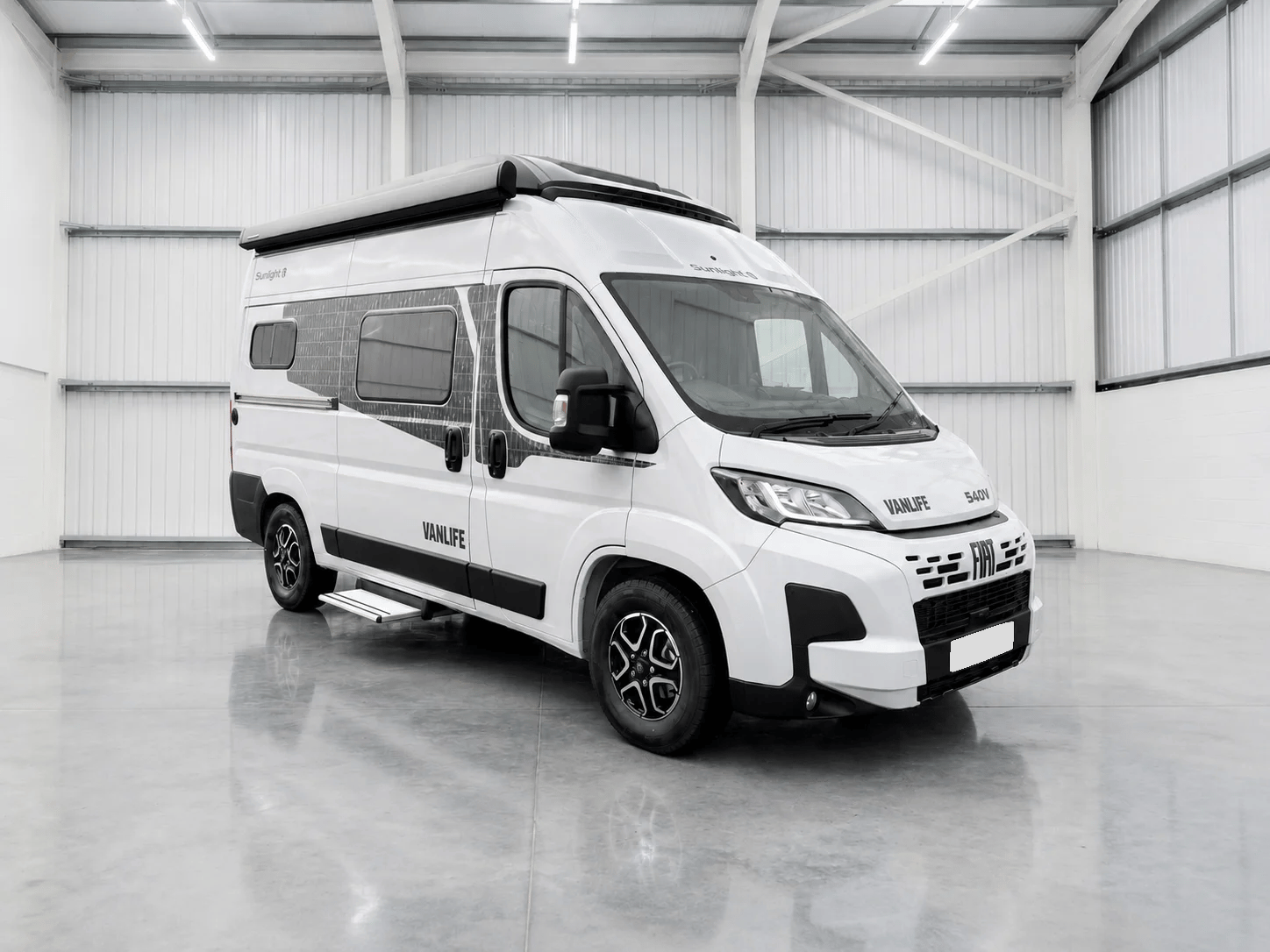
The camper you fall for is rarely the one you can afford. That gap is the whole reason Campervan.win exists. Right now we’re giving away the Sunlight Vanlife, worth around £65,000, and closing that gap is the point: capped entries so the odds stay honest, £10 a ticket, a maximum of five per person, £500 to a UK charity from every full draw, the winner picked by a public randomness beacon anyone can re-check, and one person driving away in the van itself.
Enjoyed this post?
Get more honest campervan guides like this one in your inbox.
You’re in!
Check your inbox. We’ve just sent you a welcome email.

About the author
Arthur
Arthur writes buying guides, comparisons, and in-depth explainers to help readers choose the right campervan or motorhome with confidence.
Keep Reading
Related Reading
Thoughtful articles that build on what you’ve just read.
Campervan Buying Guides
10 min read
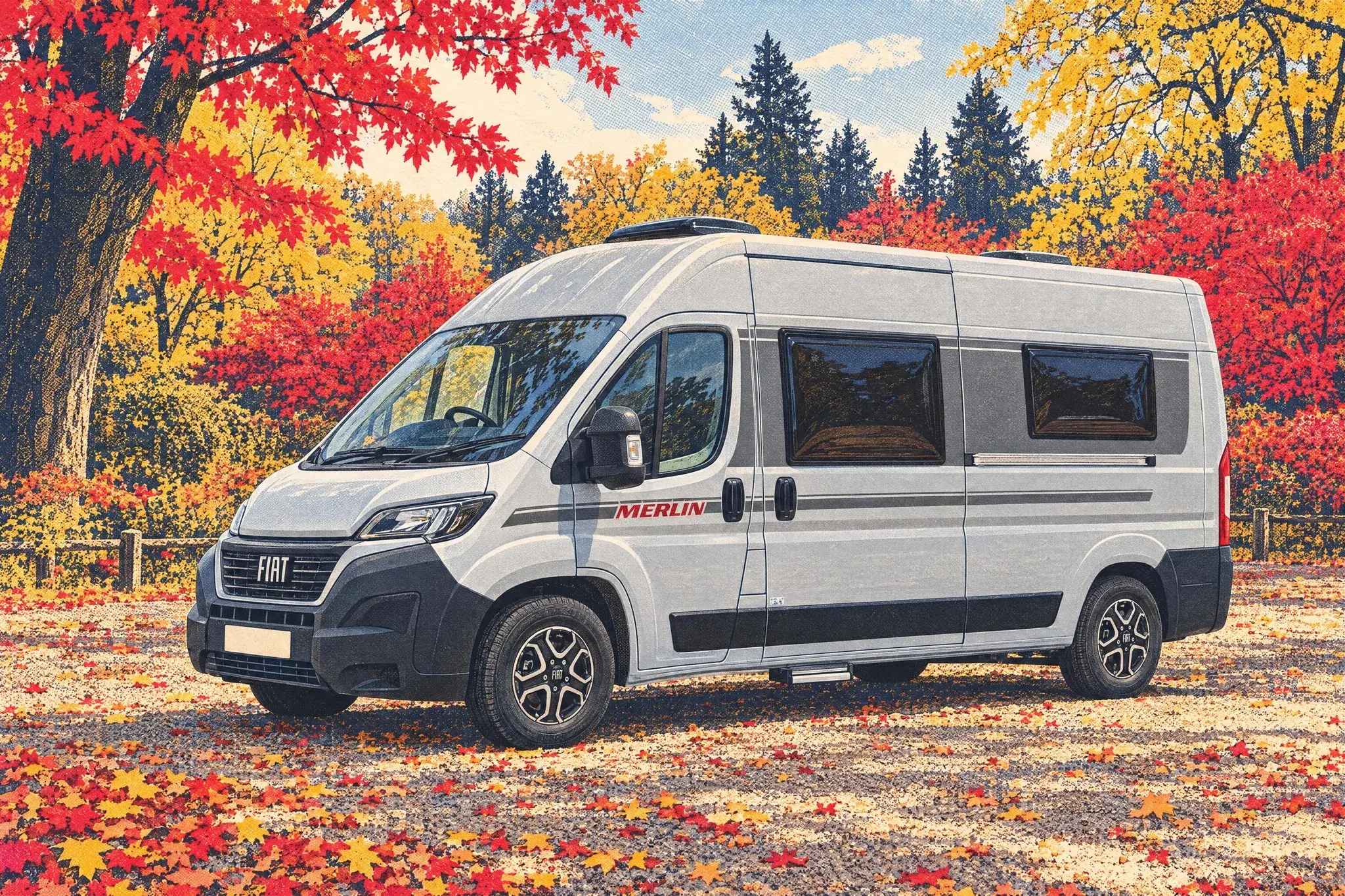
Swift Merlin 2027: nine layouts from £64,190 and how to pick the right one
Swift's all-new Merlin campervan arrives for 2027 with nine layouts on the Fiat Ducato panel van. We sort them into four families, work the payload sum on a four-seat version, and explain what the roof, the automatic and the prices mean for your choice.
Campervan Buying Guides
11 min read
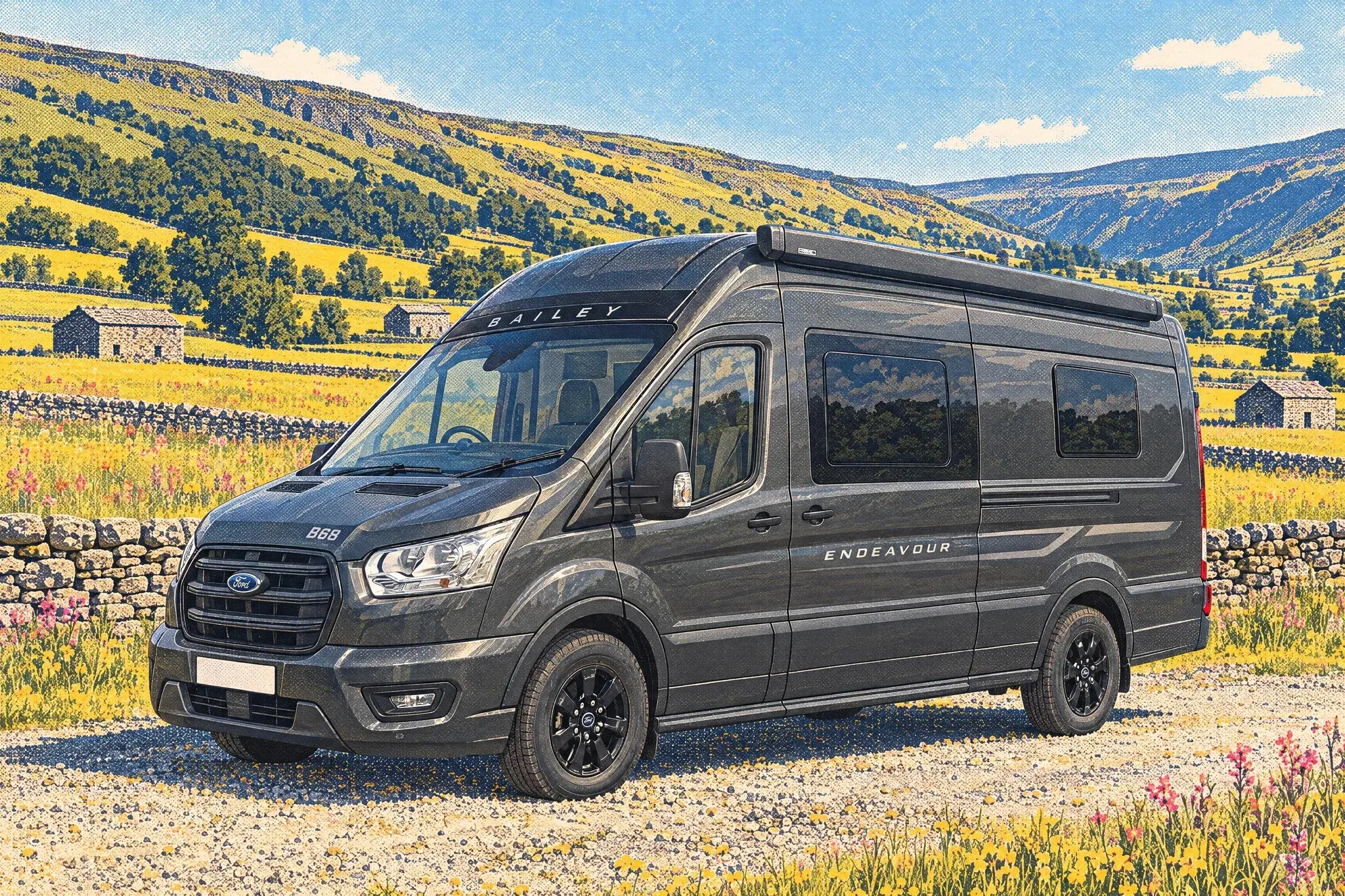
Bailey Endeavour B68: the end-lounge Transit campervan where the pop-top costs 143 kg
Bailey's new Endeavour B68 puts a rear lounge in a 5.98 m Ford Transit campervan. We compare it with the B65 and B62, check the 1.86 m bed, and do the payload sums if you add the £7,500 pop-top.
Campervan Buying Guides
12 min read
New campervans under £60,000 for 2027: what the NEC shows and what the price leaves out
A fair look at the new 2027 campervans listed under £60,000 ahead of the Motorhome and Caravan Show at the NEC, with each price given as its maker words it, and the differences between ex-works, delivered and German-retail-based figures explained so you can compare real on-the-road totals.
Campervan Buying Guides
14 min read
Eura Mobil Vancona 2027: a €57,400 campervan with just 84 to 118 kg left for options
Eura Mobil's new Vancona is a well-equipped Fiat Ducato campervan from €57,400, but its 84 to 118 kg options allowance means you need to order it with the weight sheet open. We explain what the figure means, what the 4.25 t uprate costs you in licence terms, and which options to prioritise.