
PenPod review: the handmade off-road camping pod, and is it worth £20k?

Written by
Felix
Felix covers campervan technology, layouts, and modern conversions, with a focus on design-led thinking and practical performance

The short answer
The PenPod is a handbuilt, hard-sided off-road camping pod (a squaredrop) made in Lancashire: a tough, lockable shell on a galvanised chassis that you tow off the beaten track, drop and use with no pitching, which is its real charm. It is an honest two-berth, with a double bed of around two metres by 1.2 metres, whatever the sleeps-up-to-ten marketing suggests. The standard kit is sensible, but off-grid power, a fridge and the near-essential diesel heater are extras, so a properly specced one climbs into the mid-£20,000s from a start around £20,000. At roughly 750 to 800kg it tows happily on any normal car licence. So is it worth £20k? Here is the full review, so you can decide for your kind of adventure.

If the Air Opus is the soft, spacious, inflate-it-yourself answer to family camping, the PenPod is its hard-shelled opposite: a small, rugged, lockable pod you tow behind almost anything, park, and more or less just get into. No poles, no canvas, no inflation, no drying it out before you go home. It is one of a growing band of British-built off-road camping trailers, and it has a devoted following among the kind of people who'd rather have a bombproof little box they can leave at the end of a green lane than a tent that needs pitching.
This is a full, honest review of what the PenPod actually is, what it costs once you've specced it the way you'd really want it, and, crucially, who it suits and who it doesn't, because the headline "sleeps up to ten" marketing and the real two-berth interior are two quite different things. Prices and details here are current as we write, but a few of PenPod's published figures move around, so confirm everything with the maker before you order.
What the PenPod is, and where it comes from
The PenPod is a handbuilt, hard-sided off-road camping trailer, the kind of thing the community calls a "squaredrop": a boxy, square-backed cousin of the rounded teardrop trailer, designed to be towed off the beaten track and lived out of. The maker pitches it as "more compact than a caravan, more comfortable than a tent," which is a fair summary of where it sits. It's a proper little hard-sided camper on a galvanised chassis, not a glamping pod, not a van conversion, and emphatically not a trailer tent.
It's made by PenPod Overland Ltd in Clitheroe, in the Ribble Valley in Lancashire, in the north of England. A quick myth-bust, because the name invites it: the "Pen" is not Cornish or Welsh. It comes from the founder's surname, Ian Pennington, who has a military background that he credits for the trailer's rugged, no-nonsense appearance. The story goes that Pennington came across Australia's off-road camper-trailer scene while travelling there in 2015, sketched a British take on the idea, and built the first two PenPods in late 2019. The response on social media was strong enough that a company formed around it, and PenPods have been handbuilt in Lancashire ever since, with a showroom added in 2024 alongside the workshop.
That handmade, low-volume, British origin is central to the PenPod's character and its pitch. Every one is built to order and heavily customisable, and the marketing leans hard on craftsmanship and military-grade durability rather than on mass-production polish or, notably, on any explicit eco credentials. If you want a sustainability angle here, it's the buy-it-for-life, handmade-in-Britain kind, not a stated green mission. The trailers are IVA certified, meaning they've been individually approved as road-legal, which matters for a small-batch manufacturer and is worth confirming on any used example too.
It's worth placing the PenPod in a wider trend, because it isn't alone. Over the past few years a small but growing band of British makers has begun building rugged, off-road-styled camping trailers inspired by the long-established Australian and American overland scenes, where towing a tough little camper to a remote spot is a mature, mainstream way to travel. The PenPod is one of the more characterful and committed of these, leaning hard into the military-grade, handbuilt-in-Britain identity, but the broader point is that the hard-sided off-road pod is having a real moment in the UK, driven by the same appetite for wilder, lock-up-and-leave, all-weather adventure that's fuelling the off-grid van scene. If that's the kind of camping that appeals, the PenPod is one of the standard-bearers for it here.
The design: a hard shell built to be thrown about
The PenPod's whole appeal is in its construction, so it's worth going through properly.
Underneath is a galvanised steel chassis, the right material for something that'll live outdoors and get splashed up green lanes, paired with Knott independent suspension and a Knott hitch, set up for road, trail and light off-road use. The body is GRP, glass-reinforced plastic, the same tough, weatherproof composite used on caravans and boats, with hand-built aluminium doors. It rolls on 15 or 16-inch satin-black "Wolf-style" alloys of the sort you'd see on a Land Rover, which give it the purposeful, slightly military look that's clearly the point, and it's finished in any solid colour you like using a Sikkens paint system, with the signature bold orange being the one you'll see most in PenPod's own photos.
A word on the "off-road" billing, because honesty matters. The PenPod is genuinely built tougher than a pretty road-biased teardrop, with the galvanised chassis, the independent suspension and the clearance to handle tracks, farm pitches and green lanes that would worry a low, road-going pod. But "road, trail and light off-road" is the maker's own phrasing, and it's the right one: this is a rugged, go-down-a-rough-lane trailer, not an extreme rock-crawling expedition rig. It looks the part and it'll get you to the kind of wild-ish spots most people actually want to reach, but don't mistake the styling for unlimited capability. For its intended job, getting a couple to a quiet, rough-access pitch and keeping them secure and dry, it's well judged.
A few build details reward a closer look. The galvanised chassis is the foundation everything else hangs off, and it's the right, if unglamorous, choice for a trailer that'll spend its life outdoors and get sprayed up wet, muddy lanes, because galvanising is what stops the rot that eventually kills cheaper trailers. The GRP body panels are tough, weatherproof and repairable, the hand-built aluminium doors feel substantial, and the whole thing is finished in a proper automotive Sikkens paint system, so the signature orange (or whatever colour you choose) is durable rather than a quick respray. The off-road alloys and chunky tyres aren't just for show either: with the Knott independent suspension they give the pod the compliance and ground clearance to take rough tracks at sensible speeds without shaking itself, or you, to bits. It's the kind of construction that explains both the price and the owners' faith in its longevity, and it's a clear step up from the lighter, road-focused build of a typical pretty teardrop.
The squaredrop shape, versus a rounded teardrop, is a deliberate trade: you lose a little aerodynamic prettiness and gain usable internal volume and a flat rear you can build a proper galley or storage into. It's the practical choice, and it suits the rugged aesthetic.
Inside: two berths, and the "up to ten" question
Here's the single most important thing to be clear about, because PenPod's own marketing muddies it. The PenPod is, inside, a two-berth camper. The interior has four foam cushions that arrange as two sofas by day and convert into one double bed of roughly two metres by 1.2 metres (a touch over six and a half feet long) by night. That's it for the hard interior: two adults, comfortably, in a snug, secure, weatherproof shell.
You'll also see "up to six" on the product page and "up to ten" on the homepage, and those numbers need unpacking. They are only reachable by adding extras: a roof tent on top (which sleeps a couple plus a child), an awning with bedrooms, and an optional child bunk or "dog hammock." So the honest way to read it is: two inside, and more outside under a roof tent or awning if you buy and pitch them. If you need to sleep a family of four or more under a hard roof, the PenPod isn't that camper, and the "up to ten" figure shouldn't be taken to mean ten people sleeping inside a small pod. We'd have preferred the marketing to lead with the honest two-berth reality and treat the rest as add-ons, because the pod is genuinely lovely for two and slightly oversold for ten.
What the interior does well, it does nicely. There are two tinted, double-glazed windows with integrated blackout and mosquito blinds, a sunroof or roof vent (also with blackout and fly screen), LED strip lighting throughout, and storage cupboards and shelving down both sides. It's a calm, cosy, properly insulated-feeling little space, the kind of hard shell that's genuinely pleasant in weather that would make tent life miserable. One honest gap worth flagging: PenPod doesn't publish the internal headroom or the exact insulation specification, so if standing-versus-sitting headroom or four-season warmth matters to you, ask them directly. As with most pods, you sit rather than stand inside, so it's a place to sleep, shelter and lounge rather than to live upright in.
For two people, though, it's a genuinely nice space to be. The double is a proper, flat, full-length bed rather than a compromise, the double-glazing keeps condensation and cold at bay far better than a single-skin pod or any tent, and the blackout blinds mean you actually sleep past dawn in summer, with the midge screens keeping the Scottish small-hours at bay. The LED lighting is warm rather than clinical, the cupboards swallow a couple's kit for a long weekend, and with the heater running on a cold night it's the kind of cosy that makes you quietly smug about the tents outside. It's small, undeniably, but it's small in the way a good cabin is small: everything to hand, nothing wasted, and a real sense of shelter.
The galley and the services
The PenPod comes with a kitchen as standard, and the configuration is flexible. The common setup is a hob and sink, and a popular option is a side-opening utility door (around £100) that turns the side of the pod into an external galley with lower storage, shelving, 240-volt and 12-volt sockets and USB. Cooking outside through a hatch is the natural way to use a pod this size, and it keeps cooking smells and moisture out of the sleeping space.
A fridge is an option rather than standard, with Total Cool 35, 45 or 55-litre units offered (roughly £250 to £305) and a pull-out fridge slide for £350. Water is handled by two 20-litre tanks, 40 litres in total, which is modest but appropriate for a two-berth pod used for weekends and shortish trips, topped up from site taps or carried containers.
On power, the standard fit is sensible: a 12-volt leisure battery, a 13-pin connector that charges it while you tow, a 240-volt hook-up, and a spread of USB, 12-volt and 240-volt sockets in the utility area, plus the LED lighting. For going off-grid, PenPod offers add-ons rather than a big built-in system: Atom portable power stations (600W around £369, 1200W around £659), solar (a 100W flexi panel, or a "large" panel around £400), and an upgraded "large battery" on request. It's a build-it-up-as-you-need-it approach, which suits the bespoke nature of the product.
Heating is the option you'll almost certainly want in Britain. A diesel heater is offered (the price list shows a heating system at around £1,043, with dealer-fitted units around 3kW), and owners are near-unanimous that it's essential for comfortable UK use across the seasons. There's also a Total Cool air-cooler option (around £299) for hot weather. The key point for budgeting: the heater is an extra, not standard, so factor it in from the start rather than treating it as a luxury.
In practice, the cook-outside arrangement suits the pod well most of the time. Lifting the utility hatch and cooking on the galley with the kettle on and a view in front of you is one of the quiet pleasures of pod life, and it keeps steam, smells and the inevitable fat splatter out of the space you're going to sleep in. The trade-off is the British one: in a downpour you're either cooking under an awning or porch you've added, or eating something that doesn't need the hob. The 40 litres of water across the two tanks is enough for a couple's weekend of cooking, washing-up and brews if you're sensible, and easily topped up at a site tap; for longer or fully off-grid trips you'll carry extra containers. The spread of USB, 12-volt and mains sockets means devices, lights and a cool box are all easily catered for, and adding one of the Atom power stations or a solar panel turns the pod into a respectable few-days-off-grid setup.
Setting it up and using it
This is where a hard pod earns its keep against a folding camper or tent, and it's the PenPod's quiet superpower. "Setup" barely exists: you tow it to the pitch, level it, plug in the hook-up if there is one, and fold the cushions into a bed. There's nothing to inflate, no poles to thread, no canvas to pitch, and nothing to dry before you leave. You can arrive somewhere in driving rain and be warm, dry and lockable inside in the time it takes to wind down the steadies. If you add a roof tent or awning, that's a few minutes more, but the core pod is essentially instant.
That instant-and-secure quality is the whole reason people choose a pod over a tent or a folding camper. It's lockable, it's weatherproof, it shrugs off wind that would have a tent flapping, and you can leave it set up and walk away with your gear inside far more confidently than you could a canvas structure. For spontaneous, all-weather, lock-up-and-leave trips, especially solo or as a couple, it's a genuinely different and lower-stress way to camp.
What a weekend in a PenPod is actually like
Numbers and options lists don't capture how a pod changes a trip, so here's the texture.
The defining feeling is low friction. You hitch up at home, drive to wherever you're going, and the moment you arrive you're essentially done: level the pod, drop the steadies, and you have a warm, dry, lockable bedroom ready to go. There's no standing in a field threading poles, no waiting for the rain to ease, no two-person wrestling match with canvas. For spontaneous trips, an after-work Friday dash to the coast, a last-minute weather window, that instant readiness is transformative, and it's the thing pod owners talk about most.
The hard shell changes how you feel about leaving it, too. You can lock the door, walk off to the beach or the pub with your gear inside, and not spend the afternoon worrying about a tent in the wind. It shrugs off weather that would have a tent flapping and a folding camper's canvas straining, and on a cold, wet night the diesel heater turns it into a snug little den while everyone in tents nearby is miserable. That security and weatherproofing is the pod's emotional core: it makes camping feel less like roughing it and more like having a tiny, tough holiday home you can park anywhere.
The compromises are the flip side of the same coin. You sit rather than stand, so it's a place to sleep, shelter and lounge rather than to potter about upright in; cooking happens outside through the hatch, which is lovely in good weather and a faff in a downpour; and it's a two-person world, cosy for a couple, tight for anything more. A wet, windy week would test anyone's patience in a space this small, and a roof tent or awning becomes important if you want to spread out or bring children. But for a couple chasing quiet, rugged spots in changeable British weather, the trade, less space for far more security, simplicity and toughness, is exactly the one a lot of people want to make. It's camping with the stress taken out, in a box that feels built to outlast you.
On the road: weight, towing and licence
The PenPod is light, which is central to its appeal. Kerb weight is around 800 kilograms, and it's quoted with a 750-kilogram unbraked maximum, so it sits right around the threshold where trailers move from unbraked to braked, worth a question to PenPod about the exact braked or unbraked setup of the spec you're ordering. Either way, at this weight it's towable behind the great majority of cars within their towing limits, from a family hatchback or estate to a 4x4, and it doesn't dominate a tow car the way a caravan does.
On licensing, the picture is simple and modern. Anyone who passed their car test before January 1997 has always had trailer (B+E) entitlement, and crucially, since December 2021 all category B licence holders can tow trailers up to 3,500 kilograms with no extra test. So at around 750 to 800 kilograms, the PenPod is comfortably within a standard car licence for everyone, and the old "you'll need a trailer test" caveat that haunts older reviews is now obsolete. It's one of the easiest things on the road to tow and to own from a licensing point of view.
A couple of practical towing notes. At under 800 kilograms and with a low, compact body, the PenPod is an undemanding tow: it sits low, doesn't catch crosswinds the way a tall caravan does, and barely registers on a decent tow car's economy. Almost any modern family car, estate or 4x4 will be well within its towing limit, though as always you should check your specific car's braked-trailer figure and keep an eye on the noseweight at the hitch. Because it's so light and low, it's also far less intimidating to reverse and manoeuvre than a caravan, which is a real plus for anyone new to towing. And when you're home, its compact footprint means it'll tuck onto a drive or into a yard far more easily than a caravan, sidestepping the storage problem that puts so many people off bigger leisure vehicles in the first place.
What it costs
The PenPod starts at £16,950 plus VAT, which is around £20,340 including VAT at twenty per cent. A note for the careful buyer: some PenPod material has shown "from £17,500 plus VAT," which looks like a recent price change, so treat the figure as "from roughly £17,000 plus VAT" and confirm the current number when you enquire.
The base price gets you the pod, but as with any bespoke camper the options are where the real-world cost lands, and the things you'll most likely want, the diesel heater, a fridge, some solar, perhaps a roof tent, push a genuinely usable PenPod comfortably into the mid-£20,000s. Here's the published options list to budget from:
| Option | Price (approx) |
|---|---|
| Diesel heating system | £1,043 |
| Extra-large front storage box | £708 |
| Atom power station (600W / 1200W) | £369 / £659 |
| Secondary entry door | £458 |
| Solar panel (large) | £400 |
| Fridge slide | £350 |
| Dog hammock / child bunk | £350 |
| Total Cool fridge (35 / 45 / 55L) | £250 / £275 / £305 |
| Total Cool cooling system | £299 |
| Roof ladder | £280 |
| Door fold-down table | £220 |
| Aluminium tyre table | £162.50 |
| Side-opening utility door | £100 |
Two practical ownership notes. First, lead time: PenPod's current FAQ quotes around six to ten weeks to build, though older sources cited four to five months and a sizeable booking deposit, so confirm the current wait and deposit when you order. Second, there's no delivery: PenPod state you collect from them, so factor in a trip to Lancashire (and the tow home) into your plans. You buy direct, bespoke, via the website, phone or the showroom, and there is a small used market through specialist caravan dealers and club classifieds if you'd rather buy ready-made.
On the value question, it's worth being honest both ways. Twenty-thousand-plus pounds for a two-berth pod sounds steep next to a tent or even a basic teardrop, and if you only camp a couple of weekends a year it's hard to justify on pure economics. But set against the alternatives it's more reasonable than it first looks: it undercuts the family Opus trims, it's a fraction of the price of a campervan, it barely depreciates if it's looked after (handmade, low-volume products with waiting lists tend to hold their value), and it should last decades rather than years. Whether it's good value comes down to how much you'll use it and how much you weight security, simplicity and ruggedness against the living space you give up. For frequent two-person adventuring it can make a lot of sense; for occasional family use, it doesn't.
Models: PenPod, "Xtreme" and the Utility Ox
A quick word on the range, because the naming can confuse. The core product is simply the PenPod camper described here. You'll also see "PenPod Xtreme" used across the brand's social media and an older YouTube channel name, but that's essentially brand dressing for the same off-road camper rather than a separate model. Separately, PenPod builds the "Utility Ox," which is a larger utility-trailer line aimed at hauling kit and expedition loads rather than at being a camper, so don't conflate the two: if you want the camping pod, it's the PenPod you're after, and the Utility Ox is a different, bigger tool for a different job. As ever with a bespoke maker, the lines blur because almost everything is configurable, but the core camper is what this review covers.
Build quality and ownership
Here's an important piece of honesty about the evidence base. Unlike the Opus, which has been road-tested by the major caravan magazines and has a long public review trail, the PenPod has little mainstream press coverage. The evidence is mostly owner testimonials, forum threads, social-media videos and rental listings, which is credible and encouraging but is largely first-party and community-sourced rather than independent testing. We'd treat owner quotes as genuine real-world experience rather than as a substitute for a magazine's instrumented road test, and we'd encourage anyone serious to go and see one in person.
That said, the owner feedback is consistently positive about durability, which is exactly what you'd hope from a product whose whole pitch is ruggedness. One owner reported around 4,500 miles through the Pyrenees, Andorra, southern Spain and Portuguese sand tracks with no issues; another, after five years of ownership, said "nothing has failed, these robust campers really do work." On enthusiast forums, including among Ineos Grenadier and Land Rover owners, the PenPod draws praise for its looks and colour-matching, with the practical consensus being that it suits couples well and that a diesel heater is a must for UK use. If you want to try before you buy, there's at least one PenPod available to hire through Camplify, which is a sensible way to test whether pod life suits you before committing £20,000-plus.
It's worth being clear-eyed about what the owner-led evidence does and doesn't tell you. On the plus side, the consistency of the durability reports, multi-thousand-mile European trips, five years without a failure, hard use on rough tracks, is genuinely reassuring for a product whose entire pitch is toughness, and it tallies with the galvanised-chassis, GRP-body construction. What's missing is the independent, instrumented testing the big caravan brands get: nobody's published towing-stability figures, noise measurements or a fleet-wide reliability survey. For a low-volume handmade product that's normal, and the owner enthusiasm is a fair proxy, but it does mean you're buying partly on the maker's reputation and the community's word rather than on a magazine's verdict. The practical answer is the one that applies to any bespoke maker: go and see one, talk to owners (the Facebook group is active and candid), and ideally hire one for a weekend before you commit. A product this personal and this expensive deserves that diligence.
Pros and cons
The strengths are clear and genuine. It's hard-sided, secure and lockable, all-weather, and effectively instant to use with no pitching or canvas to dry. It's genuinely off-road styled and built, with a galvanised chassis and proper suspension, where most small camper rivals are road-biased and retro-cute. It's light enough at around 750 to 800 kilograms to tow behind an ordinary car on a standard licence. It's handbuilt, bespoke and British, with strong owner-reported durability and a real sense of being made to last.
The honest weaknesses are equally clear. It's a two-berth inside, and the "up to six or ten" marketing depends entirely on add-ons. It's not cheap for a small pod, with a base around £20,000 including VAT and a properly equipped one well into the mid-£20,000s once you add the near-essential heater, a fridge and solar. The diesel heater being an extra rather than standard is a small frustration given how necessary it is here. There's no delivery, a build wait of several weeks or more, and some published spec gaps (towing height, internal headroom, insulation detail) that make it slightly less transparent than the big-brand rivals. And compared with a folding camper, you get far less living space and no standing room, the price of a hard, compact shell.
How it compares
The most useful comparison, and the one we explore in depth in our OPUS versus PenPod head-to-head, is against the Air Opus folding camper. The two represent opposite philosophies. The PenPod is a hard, secure, instant, off-road, two-berth shell at around £20,000; the Opus is a canvas folding camper with far more living space, standing room and family sleeping capacity, but it's bulkier when pitched, you must dry the canvas, and family trims run £22,000 to £25,000. Put simply: choose the PenPod for security, ruggedness and simplicity for one or two people; choose the Opus for space, comfort and family numbers.
Against the wider field of British teardrops and micro-caravans, the PenPod's differentiator is its overland toughness. The likes of the Yorkshire-built Henkipod and the Icelandic MINK are more polished, more road-biased and often prettier; the Freedom Microlite is the lightweight value benchmark; the Go-Pod is the cosy couples' micro-caravan pioneer. Most of these cluster in the £15,000 to £25,000-plus range, sleep one or two, and tow behind small cars.
| Camper | Type | Sleeps | From (approx) | Character |
|---|---|---|---|---|
| PenPod | Hard off-road squaredrop | 2 (more with roof tent) | ~£20,000 inc VAT | Rugged, military-styled, go-down-a-lane |
| Air Opus All-Road | Inflatable folding camper | 4 to 6 (up to 10 with awning) | £21,995 | Spacious, family, fast-pitch canvas |
| Henkipod | Handbuilt teardrop | 2 | teardrop money | Polished, road-biased, pretty |
| MINK 2.0 | Luxury teardrop | 2 | premium | Insulated composite, design-led, very light |
| Freedom Microlite | Pop-up micro-caravan | 2 | ~£15,295 | Lightweight value benchmark |
| Go-Pod | Micro-caravan | 2 | mid-teens | Cosy couples' pioneer |
The honest way to choose within this set is by use-case rather than spec sheet. If your camping is gentle, road-based and you want it to look smart on the drive, a Henkipod or MINK will charm you; if it's about value and lightness, the Freedom Microlite leads; if it's rough-access, all-weather and adventurous, the PenPod's hard, tough, off-road shell is the one that's actually built for it. The PenPod sits among them as the rugged, military-styled, go-down-a-lane option, where the others lean retro and refined. If your camping is gentle and road-based, a teardrop may suit you better and look smarter doing it; if it's rough-access, all-weather and adventurous, the PenPod's hard, tough shell is the point.
Who it's for, and the verdict
The PenPod is for a fairly specific, and entirely real, kind of camper: couples and adventurous solo travellers who want a rugged, secure, weatherproof, off-grid-capable little camper they can tow with an ordinary car and use at a moment's notice, who value British handmade kit and durability, and who don't need a big family interior. Green-laners, 4x4 and pickup owners, festival and expedition users, and anyone who's been put off by the faff and insecurity of tents will find a lot to love. It's a brilliant lock-up-and-leave, arrive-and-relax machine for two.
It's not the camper for families needing to sleep four or more under a hard roof, for anyone wanting to stand up and live inside, or for buyers chasing the lowest price, because once you've added the heater and the kit you actually want, you're in the mid-£20,000s for a two-berth pod. Go in clear that it's a superbly rugged, secure, instant little shell for one or two people, rather than a family camper or a budget buy, and it's a genuinely desirable, characterful, well-made British thing. The honest verdict: for the right couple, the PenPod is close to perfect; just buy it for what it actually is, a two-berth off-road pod, not for the "sleeps ten" headline.
Our steer on speccing one: treat the diesel heater as non-negotiable, add a fridge and at least a portable power station if you'll ever pitch away from hook-up, and seriously consider the utility door for the external galley, because that's the configuration that makes pod life genuinely pleasant rather than merely possible. Resist the temptation to chase the "sleeps more" extras unless you'll really use them, and put the money instead into the kit that makes two people comfortable, which is exactly what the PenPod is fundamentally for.
If you're cross-shopping, read it alongside our OPUS Camper review and the head-to-head comparison, and if you're considering a used example, our what-to-check-when-buying-used guide applies to a pod just as much as a van.
Frequently asked questions
How many people does a PenPod sleep?
Two, inside. The interior converts to a single double bed of about two metres by 1.2 metres. The "up to six" and "up to ten" figures in PenPod's marketing rely on adding a roof tent, an awning with bedrooms and an optional child bunk, so the honest answer is two inside, and more outside if you buy those extras.
Can I tow a PenPod on a normal car licence?
Yes. At around 750 to 800 kilograms it's well within a standard category B car licence for everyone, especially since the December 2021 rule change let all B licence holders tow up to 3,500 kilograms with no extra test. It's also light enough to tow behind most family cars.
How much does a PenPod cost?
From around £16,950 plus VAT (about £20,340 including VAT), though some PenPod material shows from £17,500 plus VAT, so confirm the current figure. A realistically equipped one, with the near-essential diesel heater, a fridge and some solar, climbs comfortably into the mid-£20,000s.
Do I need the diesel heater?
For UK use across the seasons, effectively yes. It's an option rather than standard (around £1,043), but owners are near-unanimous that it's essential for comfortable camping in British weather, so budget for it from the outset.
Is the PenPod a proper off-roader?
It's genuinely rugged, with a galvanised chassis, Knott independent suspension and off-road alloys, and PenPod describes it as suitable for "road, trail and light off-road" use. That's the right framing: it'll handle rough lanes, farm tracks and wild-ish pitches that would trouble a road-going teardrop, but it's not an extreme expedition rig, so judge it as a tough, go-down-a-lane pod rather than a rock-crawler.
PenPod or Opus?
Choose the PenPod if you want a hard, secure, instant, off-road shell for one or two people and you value ruggedness and simplicity. Choose the Opus if you want far more living space, standing room and family sleeping capacity, and you're happy with canvas that takes a few minutes to pitch and must be dried before packing. They're opposite answers to "what's the best small camper," and the right one depends entirely on how many of you there are and how you camp.
Where do I buy one, and how long is the wait?
Direct from PenPod in Clitheroe, Lancashire, built to order, via the website, phone or the showroom. The current FAQ quotes a build time of around six to ten weeks (older sources said longer), and there's no delivery, so you collect. There's also a small used market through specialist dealers and caravan-club classifieds.
Is the PenPod insulated and usable in winter?
It's a hard, GRP-bodied shell with double-glazed windows, which makes it far warmer and drier than any tent and better than a single-skin pod, and with the diesel heater fitted owners use them year-round. PenPod doesn't publish the exact insulation specification, though, so if four-season warmth is a priority, ask them directly and confirm the heater is included.
Can you stand up inside a PenPod?
No. Like almost all pods and teardrops, it's a sit-and-lounge space rather than a stand-up one, so you sleep, shelter and relax inside and do most cooking through the external galley hatch. If standing room indoors matters to you, a folding camper like the Opus or a caravan will suit you better.
Is a PenPod secure?
Yes, and it's one of its main advantages over canvas campers. It's a hard-sided, lockable shell, so you can shut it up and leave your gear inside far more confidently than you could a tent or folding camper, and the trailer itself can be locked and stored. That lock-up-and-leave security is one of the big reasons people choose a pod.
What's the difference between the PenPod and the Utility Ox?
The PenPod is the camping pod reviewed here. The Utility Ox is a separate, larger utility-trailer line PenPod also builds, aimed at hauling kit and expedition loads rather than at being a camper. If you want the camper, it's the PenPod you're after.
Does the PenPod come with a warranty?
PenPod is a handmade British product and has a warranty policy, but the published detail is limited, so confirm the exact terms (and what's covered on the trailer versus the bought-in components like the heater and fridge) with the maker before you order, as you would with any bespoke camper.
Common questions
How many people does a PenPod sleep?
Genuinely two. PenPod markets it as sleeping up to ten with extensions, but the real interior is a two-berth: four foam cushions arrange as two sofas by day and convert into one double bed of roughly two metres by 1.2 metres at night. Treat sleeps-up-to-ten as a theoretical maximum, not a real family arrangement; it is a couple's pod.
Can I tow a PenPod on a normal car licence?
Yes, comfortably. At around 750 to 800kg kerb weight it is light and low, towable behind the great majority of cars within their limits. Since the December 2021 rule change, all category B licence holders can tow trailers up to 3,500kg with no extra test, so the old you-will-need-a-trailer-test caveat from older reviews no longer applies.
How much does a PenPod cost?
It starts at around 20,000 pounds including VAT, but a properly equipped one, with the near-essential diesel heater (around 1,043 pounds), a fridge (roughly 250 to 305 pounds) and some solar or a portable power station, climbs into the mid-20,000s. As a handbuilt, bespoke camper, confirm the exact spec and current prices with the maker before ordering.
Do I need the diesel heater on a PenPod?
Owners are near-unanimous that it is essential for comfortable UK use across the seasons. It is offered as an option (a heating system at around 1,043 pounds, with dealer-fitted units around 3kW) rather than standard, which sharpens the price, but for anything beyond high summer it is the box to tick on a hard-sided pod you will want to use in spring and autumn.
Is the PenPod a proper off-roader?
Yes, that is its whole point. It is built on a galvanised chassis with the ground clearance and suspension to genuinely follow a 4x4 down a rutted track or onto a soft, uneven pitch, finished with chunky Land Rover-style alloys. It is a hard-sided, lockable shell built to be thrown about and left somewhere wild, not a campsite glamping pod.
PenPod or OPUS, which should I choose?
Choose the PenPod if you are a couple who want a tough, instant, lockable hard shell with genuine off-road access to quiet, wild spots and a dislike of pitching. Choose the OPUS if you want big, family-sized canvas space and an interior kitchen and are happy to pitch quickly and dry the tent. They answer the best-small-camper question in almost opposite ways.
The reachable bit
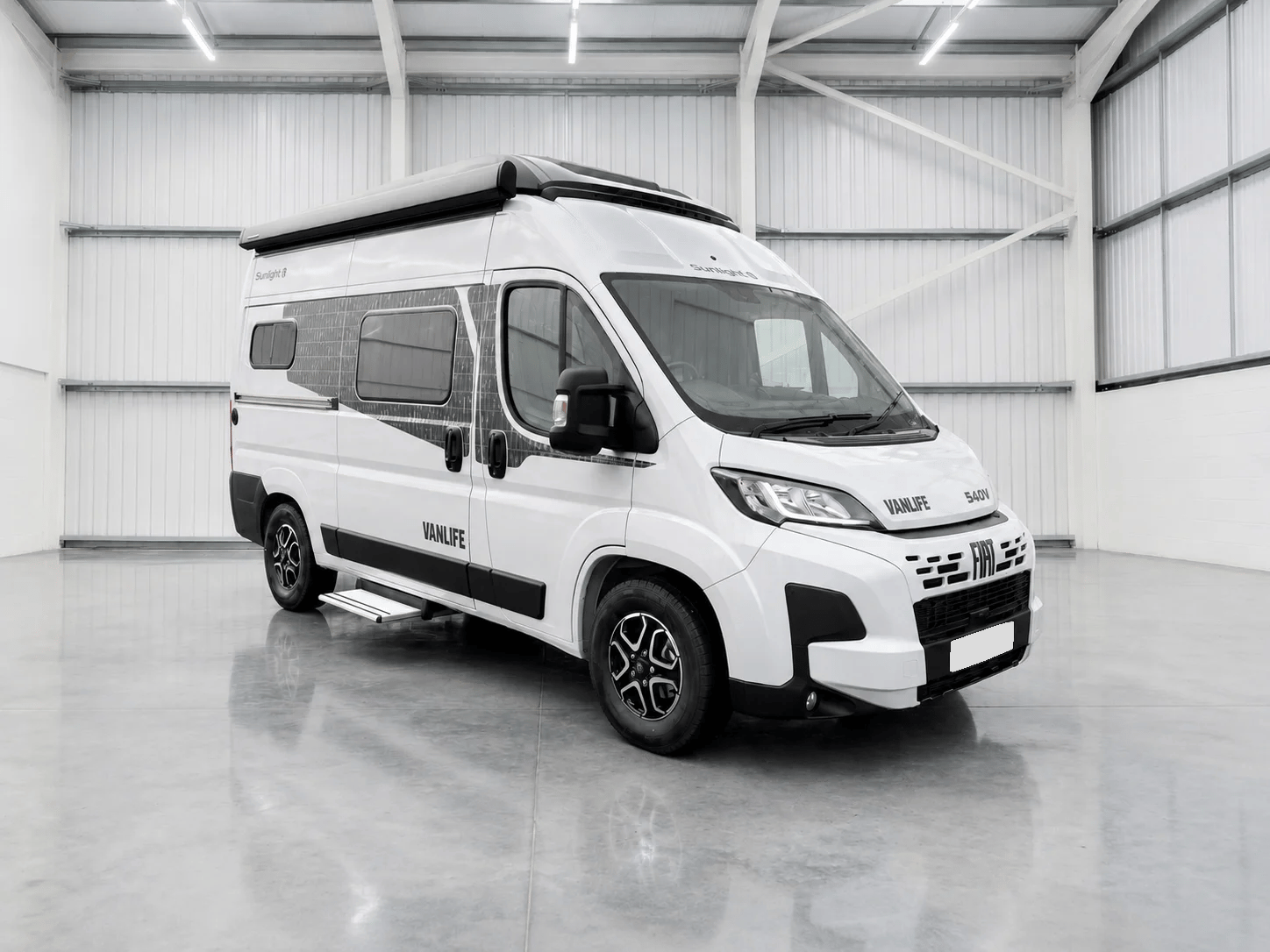
The camper you fall for is rarely the one you can afford. That gap is the whole reason Campervan.win exists. Right now we’re giving away the Sunlight Vanlife, worth around £65,000, and closing that gap is the point: capped entries so the odds stay honest, £10 a ticket, a maximum of five per person, £500 to a UK charity from every full draw, the winner picked by a public randomness beacon anyone can re-check, and one person driving away in the van itself.
Enjoyed this post?
Get more honest campervan guides like this one in your inbox.
You’re in!
Check your inbox. We’ve just sent you a welcome email.

About the author
Felix
Felix covers campervan technology, layouts, and modern conversions, with a focus on design-led thinking and practical performance
Keep Reading
Related Reading
Thoughtful articles that build on what you’ve just read.
Campervan Reviews
10 min read
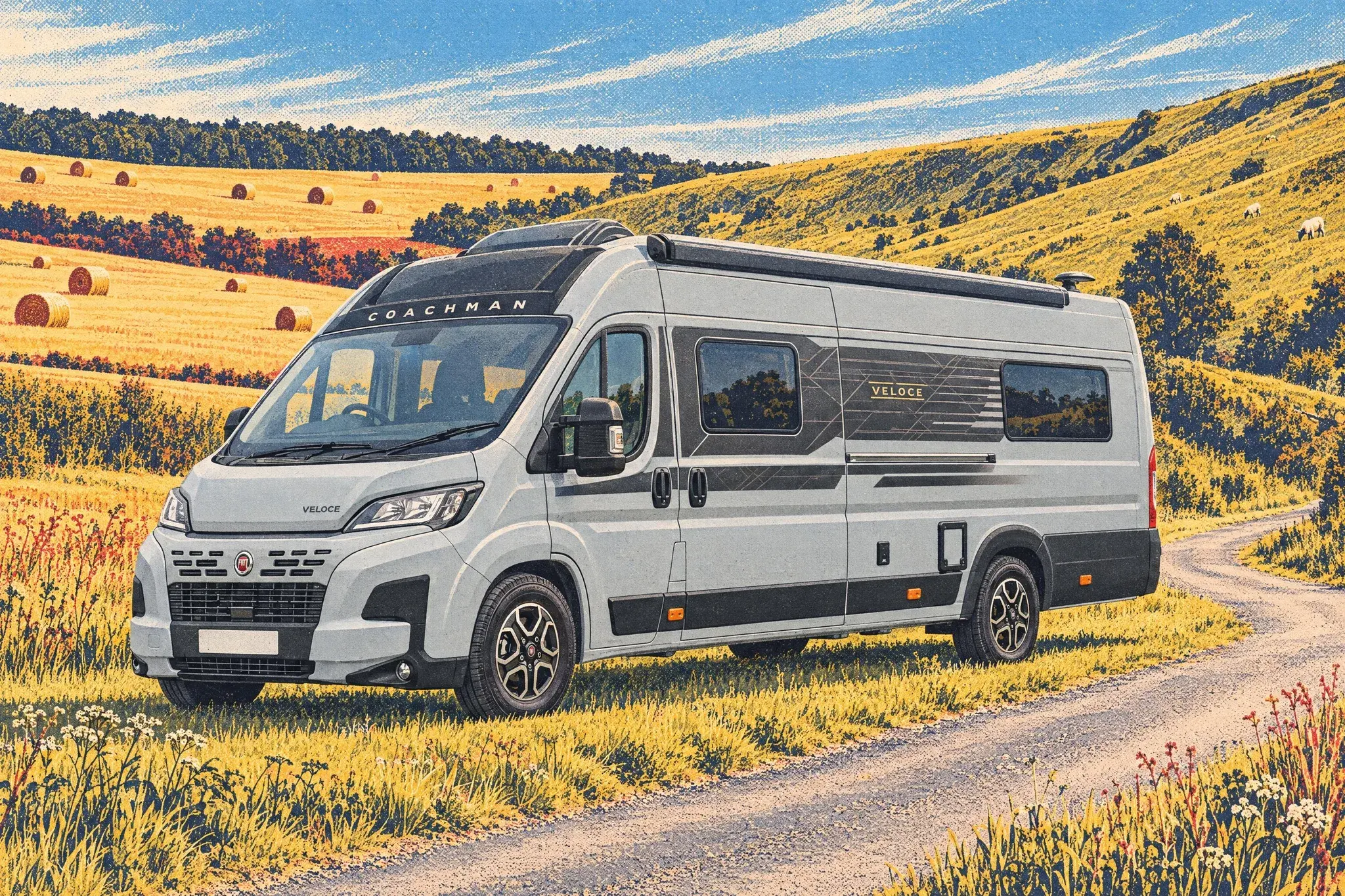
Coachman Veloce (2027): a UK-built Fiat Ducato campervan at £86,500, and who it is for
Coachman has built its first Fiat Ducato campervans in the UK, the Veloce VL65 and VR65, at £86,500 each. We go through what that price includes, the payload sums for four seats, the heating and power kit, and who a premium British panel van like this suits.
Campervan Reviews
27 min read
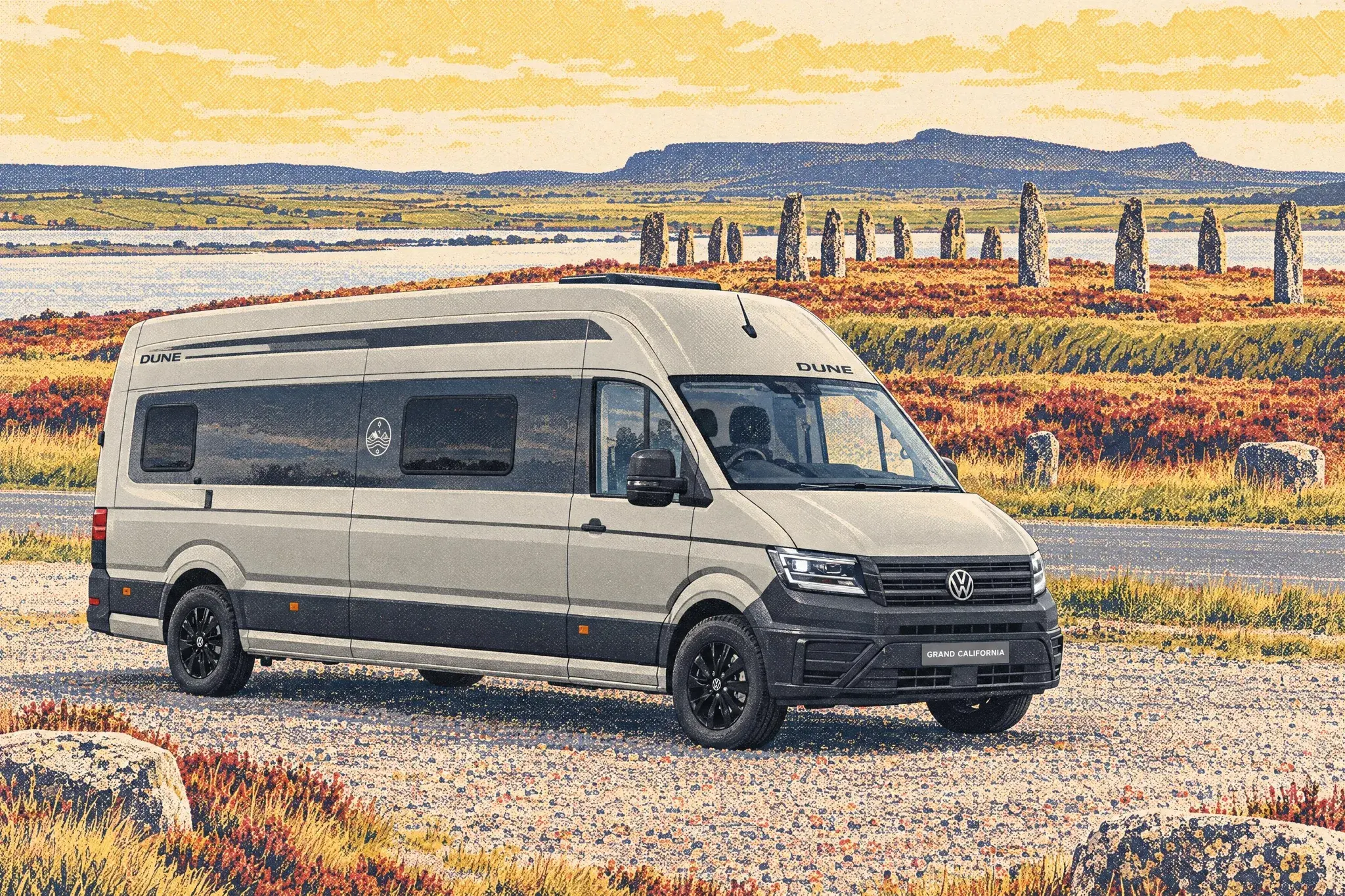
VW Grand California 680 Dune deep dive: the long two-berth tourer, the C1 licence, and FWD or 4MOTION
A full look at the Volkswagen Grand California 680 Dune as a two-person long-distance tourer: dated UK prices, why the 3,880 kg weight means a C1 licence for many drivers, the real payload sums for front-wheel drive against 4MOTION, the lengthways bed, four-season kit and a viewing checklist.
Campervan Reviews
35 min read
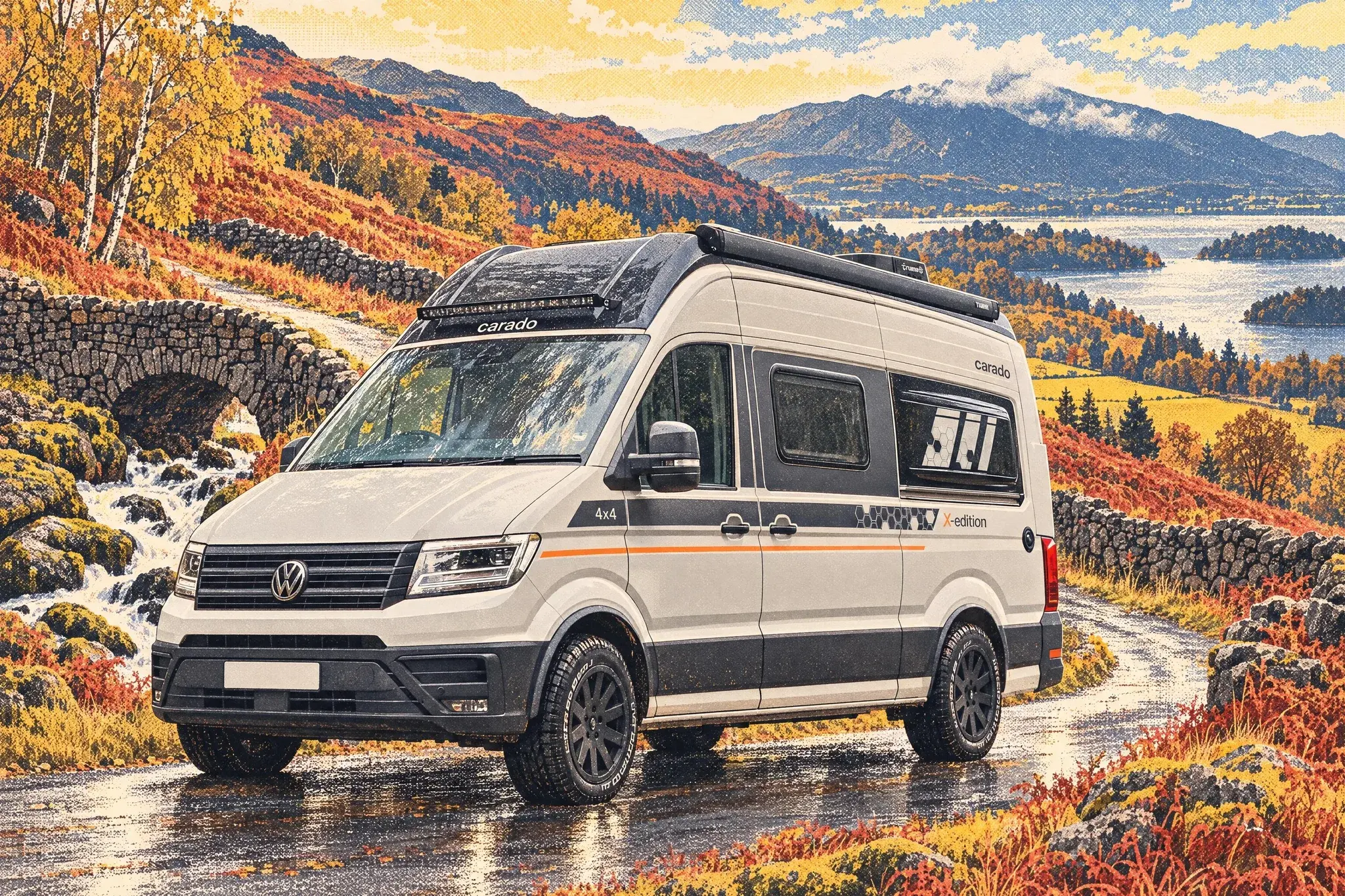
Carado CV595 X-Edition explained: the £87,890 4x4 VW Crafter campervan, for UK buyers
A long, honest look at Carado's first VW Crafter campervan: what 4MOTION and the off-road pack really do, how the 3,500 kg payload works out, what the 200 cm transverse bed and no-solar spec mean for British touring, and what to confirm before you order one at £87,890.
Campervan Reviews
13 min read
Coachman Affinity One explained: who the Polish-built 6.36 m Fiat Ducato campervan really suits
The Coachman Affinity One is a long, tall Fiat Ducato campervan built in Poland and sold in the UK under the Coachman name. Here is what the fixed French bed, front bunk, washroom, 3,500 kg weight and 6.36 m length really mean for the people who might buy one.