
OPUS Camper review: a brilliant folding camper, and why the UK gets the downgraded version

Written by
Rowan
Rowan writes editorial features, comparisons, and industry context pieces that help readers understand the campervan and motorhome landscape.
The short answer
The Air OPUS is a folding camper trailer whose canvas tent inflates itself on air beams in about 90 seconds (a full pitch in 10 to 15 minutes), giving surprisingly spacious, family-sized living that packs down low and tows behind an ordinary car on a normal licence. It is a deservedly successful, genuinely clever bit of kit, and good fun to use. The one honest catch is that the UK version is noticeably more basic than the Australian one, which gets a heavy-duty off-road chassis, big lithium-and-solar power and a full external kitchen, while even the £31,000 UK off-road ORX ships without lithium or solar. Prices run from around £21,995 to over £30,000. Here is the full review, and why the UK gets the pared-back version.

There is a particular moment with an Air OPUS that turns sceptics into believers. You arrive at a pitch, press a button, and the tent inflates itself, rising out of the folded trailer on a set of air beams with no poles to thread, no frame to wrestle, no swearing. Ninety seconds later the structure is standing. It is one of the genuinely clever ideas in modern camping, and it has made the OPUS a deserved success.
But spend any time looking at the OPUS across markets and you run into something the UK marketing would rather you didn't notice. The same name, on the other side of the world, is a markedly more serious machine: an off-road, off-grid camper with a heavy-duty chassis, a big lithium-and-solar power system, large water tanks and a full external kitchen, built to disappear into the Australian outback for weeks. The version Britain gets is lighter, simpler and, frankly, far more basic, and even the most expensive UK model doesn't close the gap. So this review does two jobs. It tells you whether the OPUS is a good camper (it is, with caveats), and it asks the more uncomfortable question: why does the UK get the downgraded one? Prices and specs here are current as we write, but always confirm them with OPUS before you buy.
What the OPUS actually is
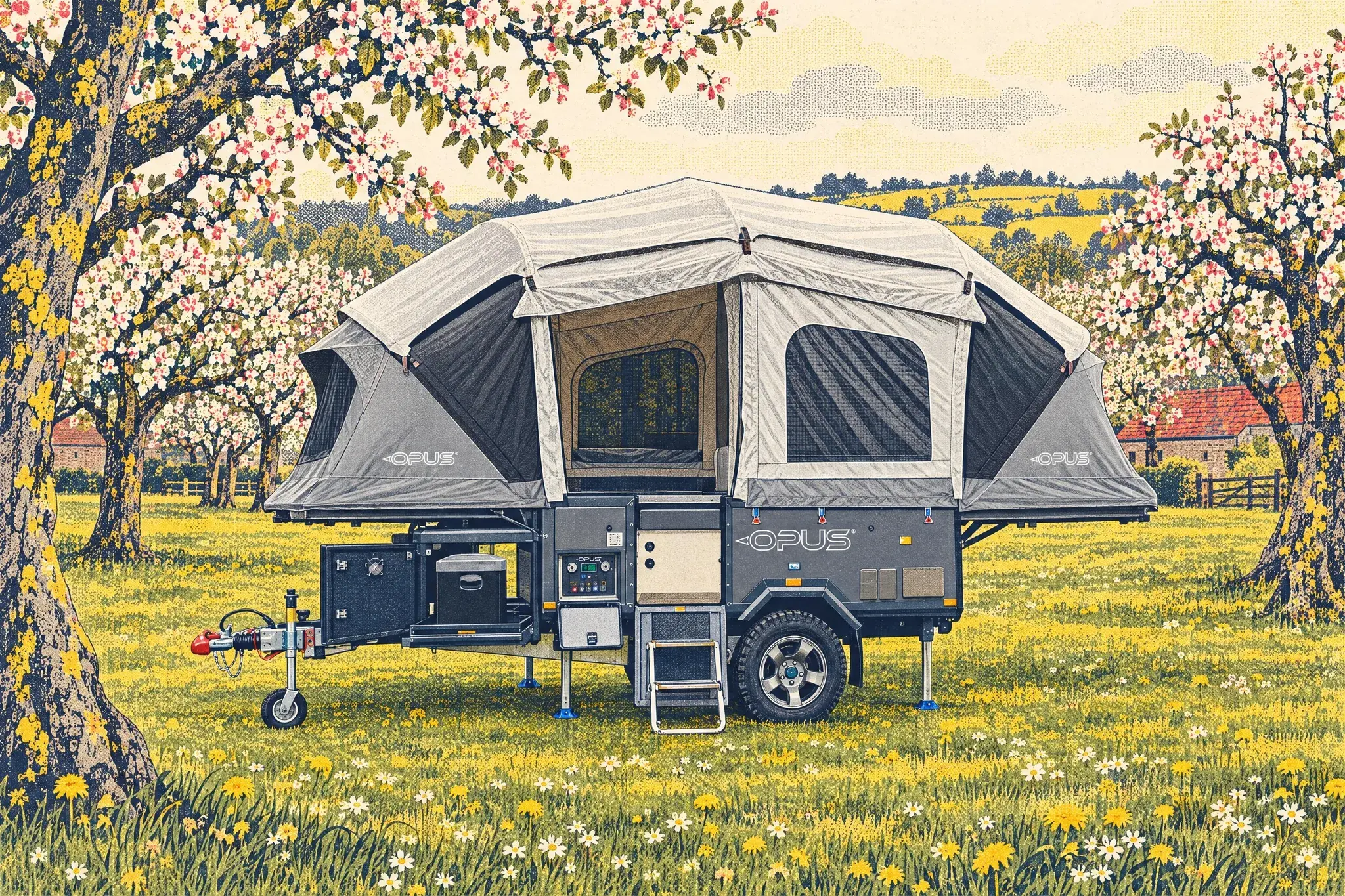
The OPUS is a folding camper trailer: a low, towable box that opens out into a surprisingly spacious canvas-and-bed living space, sitting somewhere between a trailer tent and a caravan. What sets it apart is the AIR system. Instead of the poles and frames that make pitching a traditional trailer tent a chore, the OPUS uses inflatable air beams that an onboard 12-volt pump fills in seconds, so the tent more or less erects itself. It is the headline feature, the patented party trick, and the reason most people look at one in the first place.
It comes from Purple Line, a Suffolk company founded in 2002 that originally made caravan accessories like motor movers and security devices. The idea, hatched in the office, was to build something sellable to anyone with a car rather than only to existing caravanners, and the OPUS was the result. The original poled version arrived around 2014, the team famously pitched it on Dragons' Den in early 2016 (Deborah Meaden invested), and the inflatable Air OPUS followed in 2016 and quickly became the definitive version. The UK campers are hand-assembled in Suffolk and carry Made in Britain certification, and Purple Line has since picked up a King's Award for Enterprise for its export trade (a King's Award, worth noting, not a royal warrant). It is, in short, a proper, established, well-regarded British product, not a flash in the pan.
The story is worth a moment, because it explains the product. The original poled OPUS arrived around 2014, a clever but fiddly folding camper that still took the best part of 20 minutes to pitch. Purple Line's team took it onto Dragons' Den in early 2016, asking for investment and ending up accepting Deborah Meaden's offer of £80,000 for a 25 per cent stake, and the publicity helped. The real breakthrough came in 2016, when the AIR inflation system debuted at the giant Düsseldorf Caravan Salon and turned that 20-minute pitch into a 90-second one; it won a Good Design Award and quickly became the only version that mattered. Today OPUS builds regionally rather than exporting from one factory: the UK and European campers in Suffolk, the Australian ones in Melbourne, and a US line in California. That regional structure is the single most important fact for understanding why the UK and Australian products differ so much, because each arm engineers its own.
The current UK range splits into three: the All-Road, aimed squarely at campsites and festivals; the Off-Road and Off-Road Extreme; and the ORX, the flagship "off-road" model launched in 2024. There is also a separate line of self-inflating Smart Tents, but it's the trailers we're concerned with here. Hold that range structure in mind, because the gap between even the toughest UK OPUS and the Australian product is central to the whole story.
The party trick: the AIR system
Let's give the AIR system its due, because it really is the OPUS's masterstroke. An onboard electric pump inflates a set of canvas air beams that form the tent's arched frame, and the tent rises into shape with no poles at all. OPUS quotes around 90 seconds for that inflation, and that figure is honest as far as it goes: the beams really do fill that fast.
The honest fuller picture is that a complete, comfortable pitch takes longer, because you still have to wind down the legs, sort the interior, make up the beds and connect the hook-up. UK reviewers in the real world tend to quote somewhere around 10 to 15 minutes for the whole job, which is still dramatically quicker and less sweary than erecting a traditional trailer tent or awning, and a world away from the old poled OPUS that it replaced. The beams are individually valved, so a single puncture shouldn't collapse the whole tent, and packing away is genuinely quick, a matter of deflating and folding, with the one universal folding-camper caveat: you must let the canvas dry before you pack it, or you'll be unpacking a damp, musty tent at home. It's the kind of design that earns its keep every single time you arrive somewhere in the rain and want to be inside fast.
A couple of practical notes on the system. The air beams are individually valved and isolated, so the marketing claim that one puncture won't bring the whole tent down is a genuine design feature, not just spin, and repairs are simple roadside affairs. Early prototypes had some valve teething troubles when the system first launched, but it's long since settled into a dependable bit of kit. The pump is a 12-volt unit that runs off the trailer's battery, so you don't need a hook-up to pitch, and deflation for packing takes around half a minute. The only discipline it demands is the canvas-must-be-dry rule on the way home, which is the one part of OPUS ownership that still feels like tent life.
What it's actually like to camp in one
Spec sheets don't tell you how a camper feels, so here's the texture of OPUS ownership.
The defining experience is arrival. Where a tent or trailer tent turns the first hour of a holiday into a sweaty, fractious chore, the OPUS turns it into a non-event: unhitch, level, press the button, and while the tent inflates you're already thinking about the kettle. For families especially, removing that friction changes the whole emotional tone of a trip, and it's the thing owners rave about most. The flip side is the departure: the canvas has to be dry, so a wet last morning means either waiting for the sun or packing damp and drying the tent out at home, which is a genuine faff and the price you pay for canvas.
Once it's up, the interior is genuinely pleasant. The hoop-free space feels airy and bright, the standing height means you move around like a grown-up rather than a crab, and the club lounge is a sociable spot for meals, cards and waiting out rain. The beds are comfortable enough, if not luxurious (the thin mattresses are a fair criticism), and the whole thing feels more like a small soft-sided caravan than a tent. In warm weather the big openings and ventilation make it lovely; in cold or wet weather the heater and waterproof canvas keep it cosy, which is exactly the British use case it's tuned for.
The day-to-day niggles are the ones common to all folding campers: there's less lockable security than a hard-sided van, condensation can form on cold mornings, and interior storage is modest, so you live a little more out of boxes than you would in a caravan. None of it is a dealbreaker; it's simply the nature of a clever canvas box that folds down small. What you're buying is the combination of caravan-ish space and comfort with trailer-tent packability, plus that magic-trick pitch, and for a lot of people that combination is exactly right.
Living with it: the UK spec, in detail
Inside, the OPUS is more spacious and airy than its folded size suggests, and that hoop-free, open interior is a real pleasure compared with the pole-cluttered insides of older trailer tents. The standard layout gives you two double beds, each around 190 by 140 centimetres, and a central club lounge that seats the family around a table. Standing height inside is generous, around two and a half metres at the peak, so nobody's stooping.
The kitchen is where the UK spec starts to show its modesty. You get an interior galley with a two-burner gas hob, a sink with running water and worktop space, with a small fridge and a microwave appearing on the higher trims. It's perfectly serviceable for cooking a family meal, and the interior location suits the British weather, you're not cooking outdoors in the drizzle. Water comes from two 40-litre tanks, 80 litres in total, which is fine for a few days on a pitch with a tap nearby. Power is the bit to pay attention to: the mainstream UK OPUS runs a leisure battery charged on the move and via a hook-up, and crucially there is no lithium battery and no solar as standard, even reasonably high up the range. The flagship ORX adds a 110Ah leisure battery, but OPUS's own specification sheet for it lists no solar, no lithium and no inverter. Heating is an electric heater, sensibly optimised for the cold, damp conditions a British camper actually faces.
A few more lived-in details round out the picture. Storage is functional rather than generous, with lockers and under-seat space but nothing like a caravan's wardrobes, so families tend to travel with soft bags and plastic boxes. The optional full AIR awning on the Full Monty is more than a nicety: it effectively doubles the living and sleeping space, adding bedrooms and a covered area, and it's the single upgrade that turns the OPUS from a couple's camper into a genuine family one. A portable toilet is included on the Full Monty, though there's no fixed washroom or shower on the UK models, so you're relying on site facilities, which is normal for the class but worth knowing if you're used to a caravan's en-suite. The twin-double layout is well thought out and the lounge converts easily, but it pays to see one set up in person and picture your own family in it, because the difference between "cosy" and "cramped" depends entirely on how many of you there are and how much you bring.
The sleeping-capacity figures deserve an honest word too. OPUS markets the camper as sleeping up to 10 with the full air awning kit, and on paper that's true, but the comfortable real-world number is more like four to six. Owners who've used one as a family of four describe it as cosy rather than cavernous, and "sleeps 10" is best read as a theoretical maximum involving every extension, not a relaxing family arrangement. None of this makes it a bad camper. It makes it a well-judged, weather-appropriate, campsite-friendly one, which is exactly what the UK market mostly wants. The question is whether that's all it should be, and we'll come to that.
On the road: towing, weight and licence
This is where the UK OPUS plays its strongest hand. With an unladen weight around 800 kilograms, and plated options typically between 900 and 1,500 kilograms depending on how you spec it, the OPUS is light, low and easy to tow behind an ordinary family car. It doesn't dominate your mirrors, it doesn't hammer your fuel economy the way a tall caravan does, and when it's folded it's low enough to slip into many garages, which solves the where-do-we-store-it problem that puts so many people off caravans.
On the licence question, the good news is simple: you can tow a standard OPUS on an ordinary category B car licence. Since the rules changed in December 2021, all category B holders can tow trailers up to 3,500 kilograms without any additional test, so there's no licence barrier to an OPUS for anyone. It's worth flagging that the pre-2021 licence rules, which did pinch at 750 kilograms for newer drivers, are part of the historical reason the UK product was designed light in the first place, but that's now heritage rather than a current legal limit. Today, the lightness is about easy towing, economy, stability behind a normal car and garageability, all of which are genuine virtues.
What it costs, and how that's climbed
The OPUS is not cheap, and price is the single most consistent criticism in UK owner circles. The All-Road range currently starts at around £21,995 for the Essential, rising through about £22,995 for the Voyager to roughly £24,995 for the Full Monty with its full awning kit, motor mover, fridge and microwave. The Off-Road Extreme and ORX climb to around £30,995 and £29,995 respectively.
For context, the Air OPUS launched in 2017 at about £15,495 for the base model. So in under a decade the entry price has risen by something like £6,500, which is steep even allowing for inflation and for the kit being added along the way. At these numbers the OPUS is competing not just with other folding campers but with secondhand caravans and even some campervans, and that's the lens through which a lot of buyers, fairly, judge it. It's a lovely thing, but you're paying a real premium for the convenience and the brand.
The UK range at a glance
| Model | From | Notable kit | Sleeps |
|---|---|---|---|
| All-Road Essential | £21,995 | Two doubles, club lounge, sink, 2-burner hob | 4 to 6 |
| All-Road Voyager | £22,995 | Adds motor mover, king-bed upgrade, sun canopy | 4 to 6 |
| All-Road Full Monty | £24,995 | Adds full AIR awning, motor mover, fridge, microwave | up to 10 |
| Off-Road Extreme | ~£30,995 | Tougher off-road chassis | 4 to 6 |
| ORX (flagship) | £29,995 | Off-road chassis, 110Ah battery, XL slide-out 4-burner kitchen | 4 to 6 |
The jump worth noting is from the All-Road to the off-road models: you pay £6,000 or more to move from the £24,995 Full Monty to a £29,995-plus ORX, and what that money mostly buys is a tougher chassis and the slide-out kitchen, not the lithium-and-solar off-grid system you might assume comes with an "off-road" badge at that price.
Now the uncomfortable bit: the Australian OPUS is a different animal
Here's where the review turns, because you can't honestly assess the UK OPUS without knowing what the same badge means in Australia. Over there, OPUS isn't a campsite-and-festival folding camper. It's a serious off-road, off-grid camper trailer, built by Purple Line's Australian arm in Melbourne for outback touring, and the specification is on another level.
The Australian OPUS rides on a heavy-duty galvanised off-road chassis that sits substantially higher than the UK one, with independent coil suspension and twin shocks (earlier models used a seven-leaf beam axle), proper electric drum brakes, an articulating off-road hitch and mud-terrain tyres on alloys, with serious ground clearance. Where the UK camper has a leisure battery, the Australian one has lithium, typically two 100-amp-hour batteries, and the hybrid models go far higher, up to 600 amp-hours. It has solar as a matter of course, 400 watts and up, a 2,000 to 3,000-watt inverter, large fresh-water tanks of 140 to 240 litres, a grey-water tank, an external slide-out stainless kitchen with a four-burner hob and a proper compressor fridge, and often an external shower. The all-up weights run from around 1,800 kilograms for the campers to nearly 3,000 for the hybrids, and prices span roughly A$32,000 to A$70,000.
The Australian line-up makes the point even more starkly. At the camper-trailer end sit models like the OP2 and the best-selling OP4, already specced with lithium, solar and an external kitchen as standard. Above them is a whole range of hard-sided hybrid caravans, the OP13, OP15, OP19 and OP21, with progressively bigger power systems, 400 to 630 watts of solar, 180 to 240 litres of fresh water and grey-water tanks. And at the top sits the 2026 Expedition range, whose flagship Expedition Max packs 600 amp-hours of lithium, 800 watts of solar, a 3,000-watt inverter, 240 litres of fresh water, a 130-litre fridge and a galvanised off-road chassis on heavy-duty suspension, all for around A$67,500. There is, in other words, an entire ecosystem of capable, off-grid OPUS products in Australia, of which Britain gets only the entry-level concept. It isn't that OPUS can't build a serious off-grid camper. It's that it doesn't sell one here.
To put the gap in one place:
| Spec | UK OPUS (All-Road; ORX where noted) | Australian OPUS (OP4 / hybrids) |
|---|---|---|
| Chassis | Lighter on-road chassis; ORX a tougher off-road chassis | Heavy galvanised off-road chassis, raised ride height |
| Suspension | Rubber torsion-bar (on-road) | Independent coil with twin shocks, heavy-duty |
| Brakes | Override | Electric drum + breakaway |
| Hitch / tyres | Standard ball hitch, road tyres | Off-road articulating hitch, mud-terrain tyres, ~350mm clearance |
| Battery | Leisure battery; ORX 110Ah lead-acid | 2 x 100Ah lithium, up to 600Ah on hybrids |
| Solar | None as standard | 400W to 800W |
| Inverter | None as standard | 2,000W to 3,000W |
| Fresh water | 80L | 140L to 240L (plus grey-water tank) |
| Kitchen | Small interior 2-burner; ORX slide-out 4-burner | Large external slide-out 4-burner, prep bench, fridge |
| All-up weight | 900 to 1,750kg | 1,800 to 3,000kg |
| Price (from) | £21,995 (All-Road); £29,995 (ORX) | ~A$32,000 to A$70,000 |
Look down that table and the pattern is unmistakable. On chassis, suspension, brakes, power, water and kitchen, the Australian product is in a different class, and crucially, even the UK's most expensive, most "off-road" model, the ORX, still has no lithium, no solar and no large water as standard. The gap isn't just between the cheap UK camper and the dear Australian one. It persists right at the top of the UK range.
Why does the UK get the downgraded version?
So what's going on? Is OPUS quietly short-changing British buyers? The honest answer is more nuanced than a simple yes, and it's worth getting right.
The first thing to understand is that these aren't the same product with different stickers. The UK OPUS is, in effect, the original lightweight on-road design, and the Australian team separately up-engineered it, within a year of the original concept, into a heavier off-road machine to suit Australian conditions. Each region builds its own (the Australian campers have around 50 per cent local content), so each specs to its own market. So the precise framing isn't "OPUS took the good Australian one and stripped it for Britain." It's "Britain gets the original light design, and Australia built a tougher, far better-equipped version that we don't get." The end result for a UK buyer feels the same, you get less, but the history matters for fairness.
As for why the markets diverged, the reasons are real and they mostly make sense. Australians tour the outback, off-grid, for days or weeks at a time, on corrugated dirt roads and through river crossings in extreme heat, with no hook-ups or taps for hundreds of miles. That use case demands big lithium and solar, large water tanks, an off-road chassis with clearance and electric brakes, and an external kitchen for cooking outside in the heat. British campers, by contrast, mostly use serviced campsites and festival fields with mains hook-up and taps on tap, reached by short drives on sealed roads, in a cool, wet climate. For that, an interior kitchen, a heater, modest water and a charge-on-the-move leisure battery are genuinely adequate. The Australian tent is even vented for heat while the UK one is optimised for cold. There's also the towcar question: keeping the UK camper light keeps it towable by an ordinary car, economical and stable, which is central to its whole pitch, whereas the Australian kit pushes weights up towards two tonnes and beyond. And there's plain market demand: Australia has a large, mature off-road camper-trailer market that expects lithium, solar and slide-out kitchens as standard, while the UK market mostly wants an affordable, easy, campsite-friendly camper.
There's a commercial logic on top of all that, too. Adding lithium, solar, big water tanks, an off-road chassis and an external kitchen doesn't just add capability, it adds weight and cost, and both work against the UK OPUS's core pitch. A heavier camper needs a heftier towcar and loses the easy-tow, garage-it, any-car appeal; a dearer one bumps harder against the secondhand caravans and campervans it already struggles to undercut. From OPUS's point of view, the lighter UK spec keeps the product in the sweet spot its market actually buys. The trouble is that this logic rests on an assumption, that British buyers only want a campsite camper, that's becoming less true every year as off-grid and wilder camping grows. The market is drifting towards the Australian use case, and the UK range hasn't really followed.
All of which is reasonable. And yet.
Is "downgraded" fair?
Here's the honest verdict on the central question. For the way most British people actually camp, serviced sites, hook-ups, cool weather, shortish trips, the UK OPUS's modest specification is genuinely fine. You don't need 600 amp-hours of lithium and 240 litres of water to spend a long weekend at a Camping and Caravanning Club site with electricity at the pitch. Judged against how it's used, the UK OPUS is well matched to its job, and calling it "downgraded" risks implying it's inadequate, which for campsite use it isn't.
But the criticism still lands, for two reasons. The first is that the off-grid, go-anywhere style of camping is growing fast in Britain too, and a buyer who wants exactly that, to take a capable camper somewhere remote and live off it for a week, simply can't get the Australian-grade OPUS here. They have to look elsewhere. The second is the price. When the UK's flagship ORX costs around £31,000 and still comes without the lithium, solar and large water that Australians get as standard on cheaper models, it's hard not to feel that British buyers are paying premium money for a notably less capable product. That's the part that genuinely rankles, and it's a fair thing to point out. The OPUS is a very good campsite camper sold at a price that invites comparison with far more capable machines, and the existence of the Australian version makes the UK one look under-equipped by its own maker's hand.
The off-grid gap: can you upgrade a UK OPUS?
If you love the OPUS concept but want it to do more off-grid, the obvious question is whether you can simply add the kit yourself. The answer is yes, partly, but it's worth understanding the limits before you assume you can recreate the Australian product in your driveway.
The power side is the most upgradeable. There's nothing to stop you adding a lithium leisure battery, a portable or roof-mounted solar panel and a decent inverter, and plenty of owners do exactly that to extend their time away from hook-up. A few hundred watts of solar and a 100 to 200 amp-hour lithium setup, professionally fitted, will run lights, a fridge and device charging for days, and it's the single most worthwhile upgrade for anyone who wants to pitch somewhere without electricity. Budget roughly £1,500 to £3,000 depending on how far you go, on top of the camper's price.
Water is also easy enough to extend with extra portable containers, though you can't readily bolt on the large fixed tanks and grey-water systems the Australian models have. The hard limits are structural: you cannot retrofit the Australian off-road chassis, the higher ride height, the electric brakes or the heavy-duty suspension to a UK on-road OPUS, so genuine rough-terrain capability is off the table whatever you spend. And the external slide-out kitchen is built into the Australian product's architecture, not a bolt-on.
So the honest position is that you can close the power-and-water gap reasonably well with aftermarket kit, turning a UK OPUS into a respectable few-days-off-grid camper, but you can't turn it into the outback machine Australia sells. If serious off-road, off-grid touring is the goal, you're better off starting with a product built for it, a hard-sided off-road pod, a proper off-grid van conversion, or one of the Australian-style off-road trailers a handful of UK firms now build, than trying to upgrade your way there from an All-Road.
The honest caveats on build quality
One more piece of honesty, and it applies on both sides of the world. Even Australia's far better-equipped OPUS draws a consistent criticism from reviewers: the tent is brilliant, and the rest is ordinary. Judges who've crowned it Camper Trailer of the Year still flag a domestic-style kitchen, thin mattresses, generic fixtures, minimal storage and finishes that mark easily, with the recurring line being that if OPUS applied the cleverness of the air system to the rest of the trailer, it would be untouchable. That critique is worth carrying into a UK buying decision, because the cheaper, shared elements, the cabinetry, the fittings, the mattresses, are common to both products. The OPUS's genius is concentrated in how it pitches, not in the quality of everything you touch once it's up. It's well made in the ways that matter for reliability, but it isn't a luxury object, and at these prices some buyers expect it to feel like one.
To be fair, "ordinary build quality" doesn't mean unreliable. OPUS campers are well put together where it counts, the structure, the air system and the towing hardware, and owners report them lasting for years and many trips without drama. The criticism is about the touchpoints rather than the bones: the white cabinetry marks easily, the fittings are generic caravan-industry parts, the mattresses are thin enough that many owners add a topper, and the storage feels functional rather than designed. At £15,000 that would be entirely forgivable; at £22,000 to £31,000 it's reasonable to expect a little more polish, and that gap between the cleverness of the pitch and the ordinariness of the fittings is what stops the OPUS feeling like the premium product its price implies.
Who it's for, and the verdict
For the right buyer, the UK OPUS is a genuinely excellent thing. If you're a family or a couple who camp mostly on serviced sites and at festivals, who want caravan-like comfort and standing room without the bulk, weight, storage headache and reversing anxiety of a caravan, and who'll happily tow it behind the family car and slot it into the garage at home, the OPUS is hard to beat. The fast, pole-free pitch alone will transform how you feel about arriving somewhere, and it's well built where it counts and properly backed by an established British company.
Who should think twice? Anyone whose dream is genuine off-grid touring, parking somewhere wild and living self-sufficiently for days, because the UK OPUS isn't built for that and the version that is isn't sold here. And anyone for whom the price is a stretch, because at £22,000 to £31,000 the OPUS sits in territory where secondhand caravans, campervans and rival campers all compete hard for the same money.
The honest one-line verdict: the Air OPUS is one of the cleverest and most convenient campers you can buy in Britain, and a genuinely lovely way to camp on a serviced site, but it's a more basic machine than the badge implies if you've seen what Australia gets, and you're paying a premium for the privilege. Go in knowing exactly what it is, and what it isn't, and you'll love it.
If you do buy one, our steer on speccing it: on the All-Road, the Full Monty's awning genuinely transforms the usable space for a family and is worth the jump up from the Essential, but think hard before paying ORX money for an "off-road" badge that still doesn't bring lithium or solar, because for serviced-site use you're paying a lot for a chassis you may never need. And if off-grid capability is genuinely what you're after, be honest with yourself that the UK OPUS isn't the tool for it, and either budget for the aftermarket power upgrades above or look at a hard-sided off-road pod or a proper off-grid conversion instead.
If you're weighing it against a hard-sided alternative, our PenPod review and our head-to-head OPUS versus PenPod comparison are the natural next reads, and if you're considering a used OPUS, our guide on what to check when buying used applies just as much to a trailer as to a van.
How a folding camper compares to the alternatives
It helps to place the OPUS among the things you might buy instead, because "folding camper" is a specific compromise with clear rivals.
Against a caravan, the OPUS wins on towing, storage and ease: it's lighter, lower, more stable behind a small car, far less terrifying to reverse, and it folds away into a garage. A caravan wins on outright space, on staying permanently set up, on security (a hard shell you can lock) and on bad-weather comfort. If you have the drive space and a decent towcar and you camp in all weathers, a caravan may suit you better; if storage and towing anxiety are what's stopping you, the OPUS solves both.
Against a traditional trailer tent, the OPUS is simply a generation ahead: the AIR system turns the slowest, most-dreaded part of trailer-tent camping into a 90-second job, and the interior is airier without the pole clutter. The trailer tent wins only on price.
Against a hard-sided pod or teardrop like the Lancashire-built PenPod, it's a genuine philosophical split. The OPUS gives you far more living space, standing room and family sleeping capacity, but it's canvas (less secure, and you must dry it before packing) and bulkier when pitched. A pod gives you a hard, lockable, instant, weatherproof shell, but it really only sleeps two and has no standing room. We pit them directly against each other in our OPUS versus PenPod comparison.
And against a campervan, the trade is the obvious one: a campervan is a single vehicle you drive, with no towing and no pitching, but it costs far more, depreciates, and ties up your only vehicle; the OPUS lets you keep your normal car and unhitch at the pitch. The OPUS, in short, is for people who want caravan-grade space and comfort without caravan-grade bulk, towed by the car they already own.
Frequently asked questions
How long does an Air OPUS really take to set up?
The inflatable tent itself rises in around 90 seconds, which is the figure OPUS quotes and it's accurate. A complete, comfortable pitch, winding down the legs, sorting the interior, making the beds and connecting hook-up, realistically takes 10 to 15 minutes. That's still far quicker and easier than a traditional trailer tent or a caravan awning.
Can I tow an OPUS on a normal car licence?
Yes. A standard OPUS weighs around 800 kilograms unladen, and since December 2021 all UK category B licence holders can tow trailers up to 3,500 kilograms with no extra test. It's also light and low enough to tow comfortably behind most family cars.
Does the UK OPUS have solar and a lithium battery?
No, not as standard, and that's the crux of this review. The mainstream UK OPUS runs a conventional leisure battery, and even the flagship ORX's official spec lists no solar, no lithium and no inverter. The Australian OPUS, by contrast, comes with lithium and solar as standard on much cheaper models.
Why is the Australian OPUS so much better equipped?
Because it's built for a different job. Australians tour the outback off-grid for long periods, so the Australian arm engineered a heavier off-road chassis with lithium, solar, big water tanks and an external kitchen. The UK product is the original lighter, on-road design aimed at serviced campsites, where that off-grid kit isn't needed, so it was never added.
Is the OPUS good value?
It's the most common criticism. The OPUS is well made and brilliantly convenient, but at £22,000 to £31,000 it's expensive for a folding camper, and the UK price has risen sharply since 2017. Whether it's worth it depends on how much you value the fast pitch and the comfort over the cheaper caravans and campers you could buy instead.
How many people can sleep in an OPUS?
Comfortably, four to six. OPUS markets it as sleeping up to 10 with the full awning kit, but that's a theoretical maximum using every extension; most families will find four to six the realistic, comfortable number.
Is the OPUS any good in bad weather?
Yes, within reason. The canvas is properly waterproof and the UK models have an electric heater optimised for cold, damp conditions, so it's a comfortable place to sit out British weather. The one rule, common to all folding campers, is that you must let the canvas dry before packing it away, which can mean a damp-pack on a wet departure and a dry-out at home.
Can you leave an OPUS set up, and is it secure?
You can leave it pitched for the duration of a stay, but as a canvas structure it's less secure than a hard-sided caravan or pod, so it's not ideal for leaving valuables in on an unattended pitch. Folded and hitched, the trailer can be locked and is garageable, which makes it more secure to store at home than a caravan on a drive.
OPUS or a caravan?
Broadly: choose the OPUS if storage space, towing ease and stability behind a smaller car matter most, and you're happy to pitch (quickly) on arrival. Choose a caravan if you want maximum space, a hard lockable shell, the ability to stay set up, and you have the drive room and towcar for it. The OPUS is the answer to "I'd love a caravan but I can't store or tow one."
Where is the OPUS made?
The UK and European OPUS campers are hand-assembled in Suffolk and carry Made in Britain certification. The Australian models are built separately in Melbourne, and there's a US operation in California, each engineering its product for its own market.
Common questions
How long does an Air OPUS really take to set up?
OPUS quotes around 90 seconds, and the inflatable beams really do fill that fast, but that is just the tent rising. UK reviewers find the whole job, legs, interior, beds and hook-up, takes more like 10 to 15 minutes, which is still dramatically quicker and less sweary than a traditional trailer tent. Deflation for packing takes about half a minute.
Can I tow an OPUS on a normal car licence?
Yes. With an unladen weight around 800kg (plated typically 900 to 1,500kg depending on spec), the OPUS is light and easy to tow behind an ordinary family car. Since the December 2021 rule change, all category B licence holders can tow trailers up to 3,500kg without any extra test, so there is no licence barrier.
Does the UK OPUS have solar and a lithium battery?
No, and this is the most pointed criticism. The UK range has a basic leisure battery and no standard solar or lithium, and even the flagship 31,000-pound off-road ORX ships without lithium, solar or an inverter. Australians get those on far cheaper OPUS models, which makes the UK line look under-equipped against its own maker's products. You can add power gear aftermarket.
Why is the Australian OPUS so much better equipped?
Because it is a different machine built for a different market. The Australian OPUS is engineered for the outback as a serious off-road, off-grid camper with a heavy-duty chassis, big lithium-and-solar power, large water tanks and a full external kitchen, built separately in Melbourne. The UK and European models are hand-assembled in Suffolk and designed lighter and simpler, partly a legacy of older UK towing-licence limits.
How many people can sleep in an OPUS?
Comfortably, about four to six. OPUS markets it as sleeping up to 10 with the full air awning kit, and on paper that is true, but that is a theoretical maximum involving every extension. The standard layout gives two double beds (around 190 by 140cm) and a central lounge, and owners using one as a family of four describe it as cosy rather than cavernous.
Is the OPUS good value?
It is clever and well-liked, but the value is debatable. Even a basic All-Road is around 21,995 pounds and a fully specced one over 30,000, while the cleverness is concentrated in the air system rather than the fittings, and the UK spec omits the lithium and solar Australians get cheaper. It is the answer to wanting a caravan you cannot store or tow, rather than the cheapest way to camp.
The reachable bit
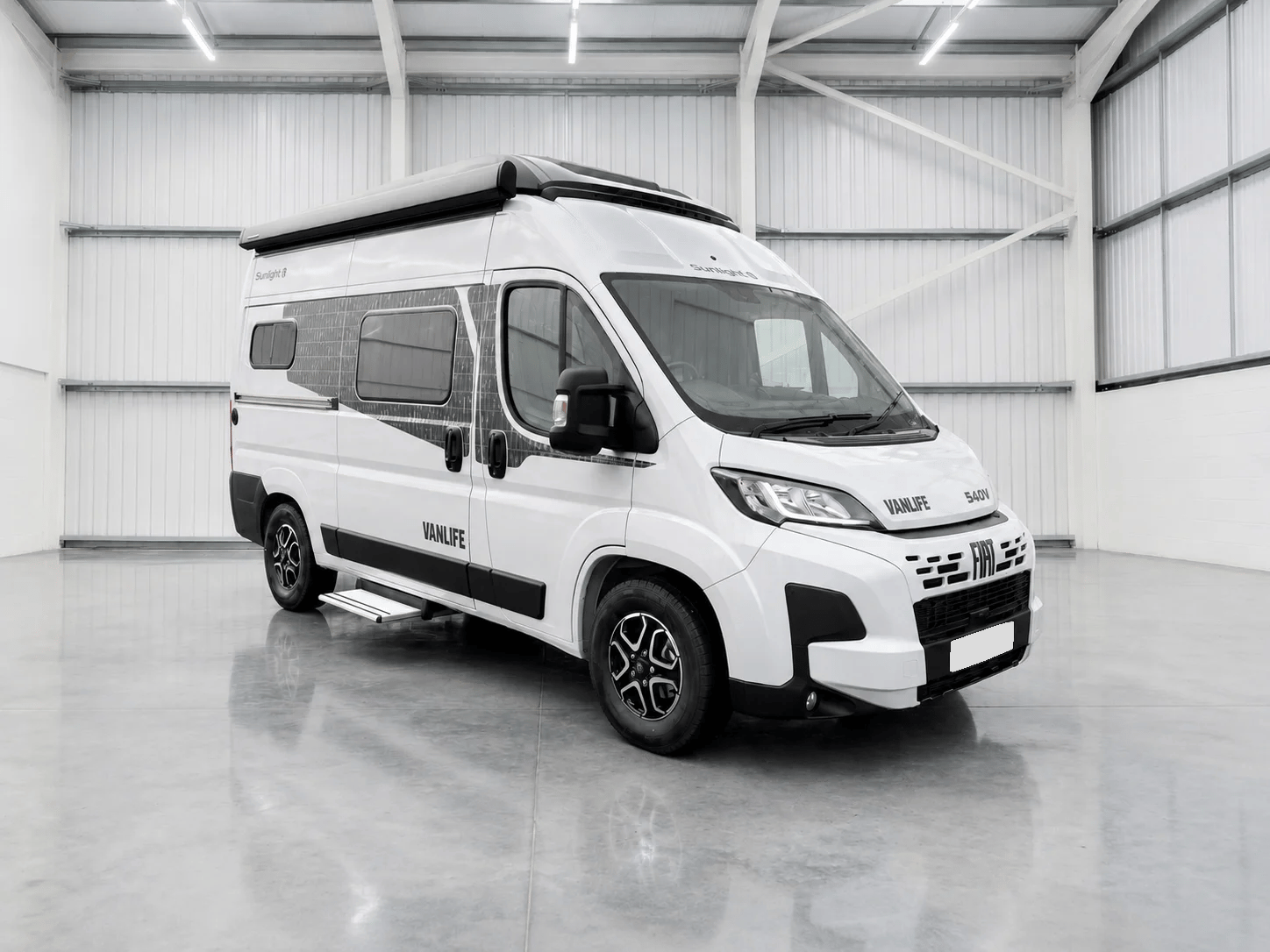
The camper you fall for is rarely the one you can afford. That gap is the whole reason Campervan.win exists. Right now we’re giving away the Sunlight Vanlife, worth around £65,000, and closing that gap is the point: capped entries so the odds stay honest, £10 a ticket, a maximum of five per person, £500 to a UK charity from every full draw, the winner picked by a public randomness beacon anyone can re-check, and one person driving away in the van itself.
Enjoyed this post?
Get more honest campervan guides like this one in your inbox.
You’re in!
Check your inbox. We’ve just sent you a welcome email.

About the author
Rowan
Rowan writes editorial features, comparisons, and industry context pieces that help readers understand the campervan and motorhome landscape.
Keep Reading
Related Reading
Thoughtful articles that build on what you’ve just read.
Campervan Reviews
10 min read
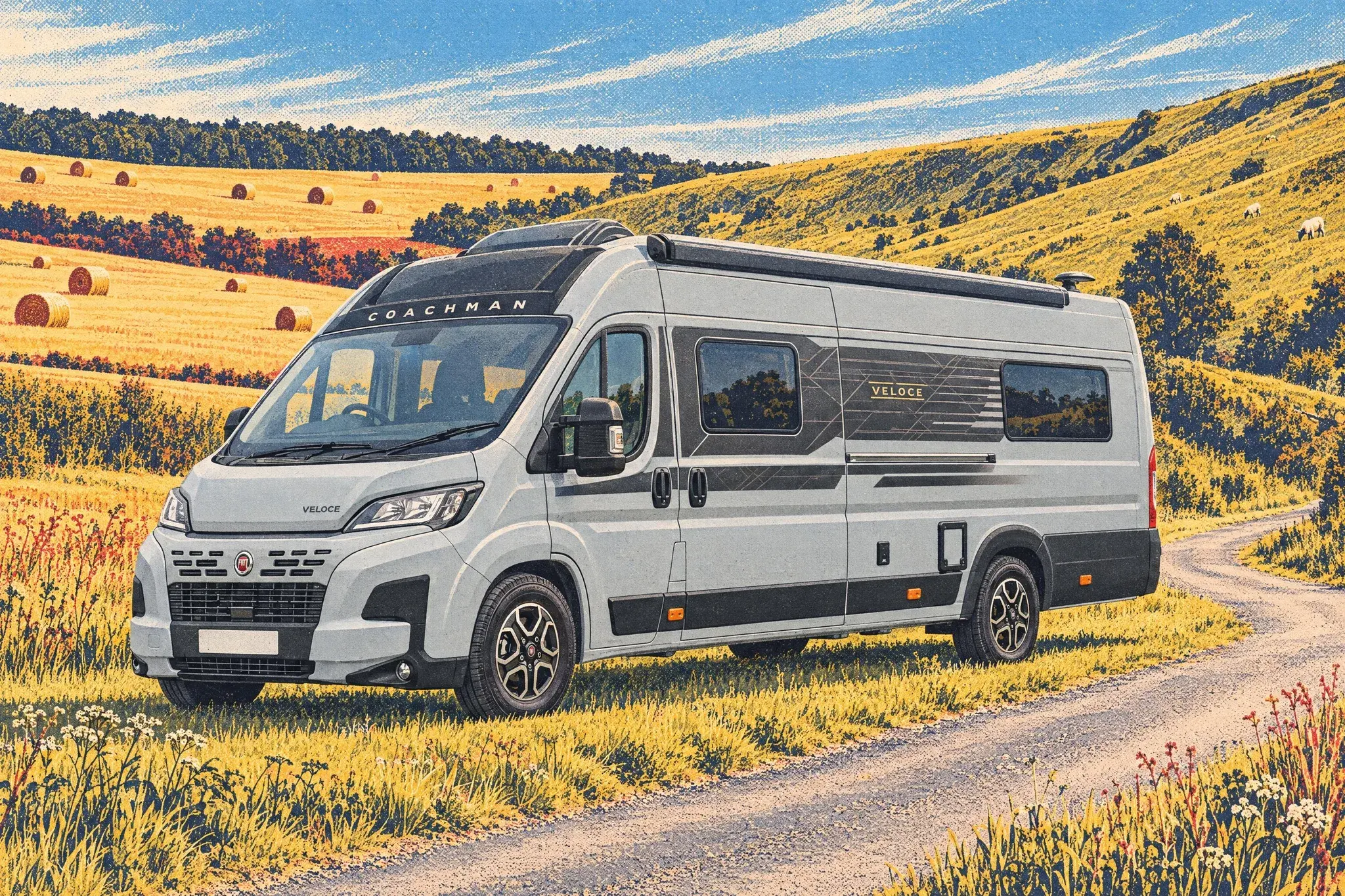
Coachman Veloce (2027): a UK-built Fiat Ducato campervan at £86,500, and who it is for
Coachman has built its first Fiat Ducato campervans in the UK, the Veloce VL65 and VR65, at £86,500 each. We go through what that price includes, the payload sums for four seats, the heating and power kit, and who a premium British panel van like this suits.
Campervan Reviews
27 min read
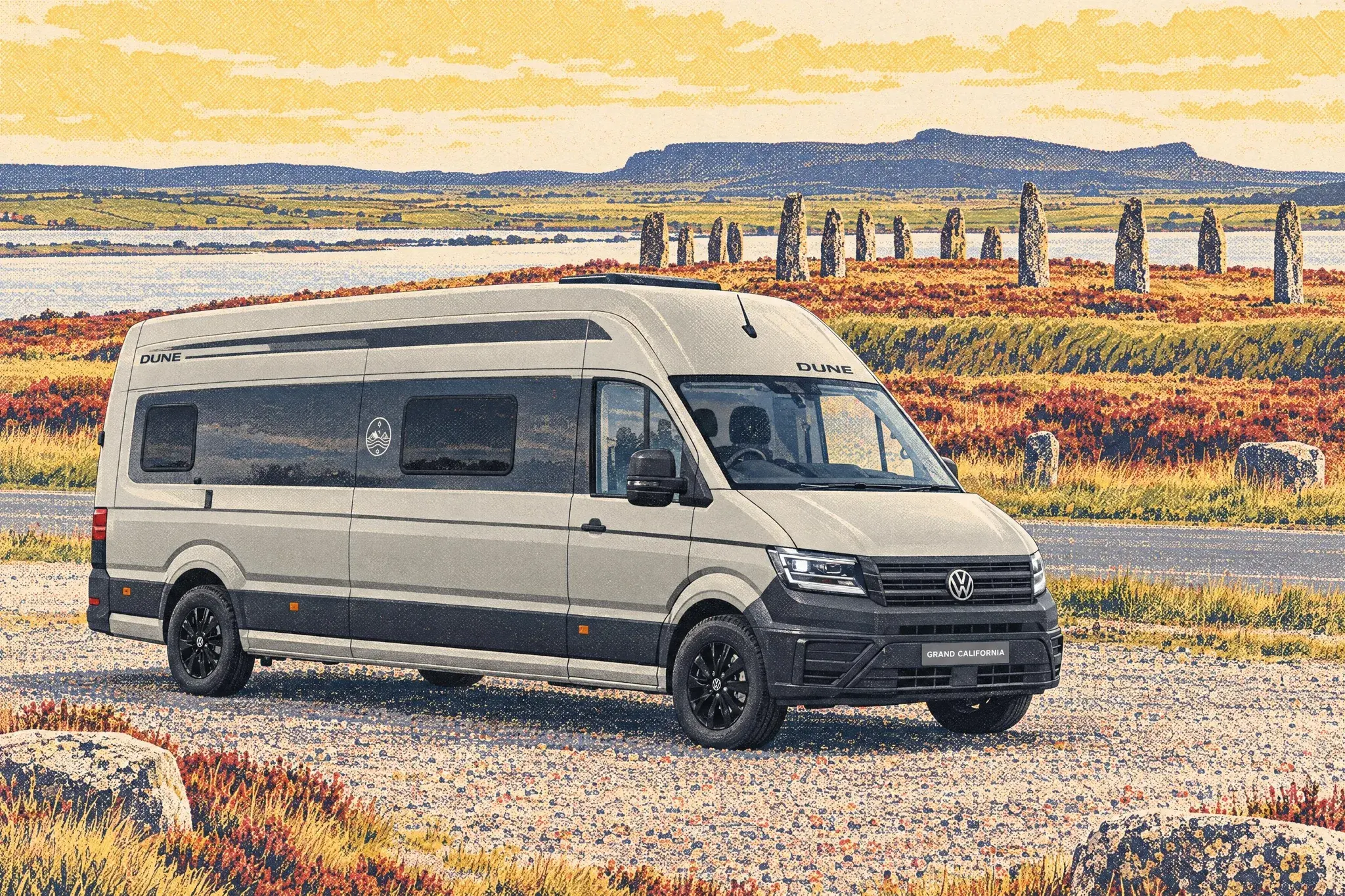
VW Grand California 680 Dune deep dive: the long two-berth tourer, the C1 licence, and FWD or 4MOTION
A full look at the Volkswagen Grand California 680 Dune as a two-person long-distance tourer: dated UK prices, why the 3,880 kg weight means a C1 licence for many drivers, the real payload sums for front-wheel drive against 4MOTION, the lengthways bed, four-season kit and a viewing checklist.
Campervan Reviews
35 min read
Carado CV595 X-Edition explained: the £87,890 4x4 VW Crafter campervan, for UK buyers
A long, honest look at Carado's first VW Crafter campervan: what 4MOTION and the off-road pack really do, how the 3,500 kg payload works out, what the 200 cm transverse bed and no-solar spec mean for British touring, and what to confirm before you order one at £87,890.
Campervan Reviews
13 min read
Coachman Affinity One explained: who the Polish-built 6.36 m Fiat Ducato campervan really suits
The Coachman Affinity One is a long, tall Fiat Ducato campervan built in Poland and sold in the UK under the Coachman name. Here is what the fixed French bed, front bunk, washroom, 3,500 kg weight and 6.36 m length really mean for the people who might buy one.