
Pop-top campervan roofs: the types, the costs, and which is best

Written by
Leo
Leo covers campervan technology, maintenance, kit, and ownership advice, with a clear, practical focus on how things work in real life.
The short answer
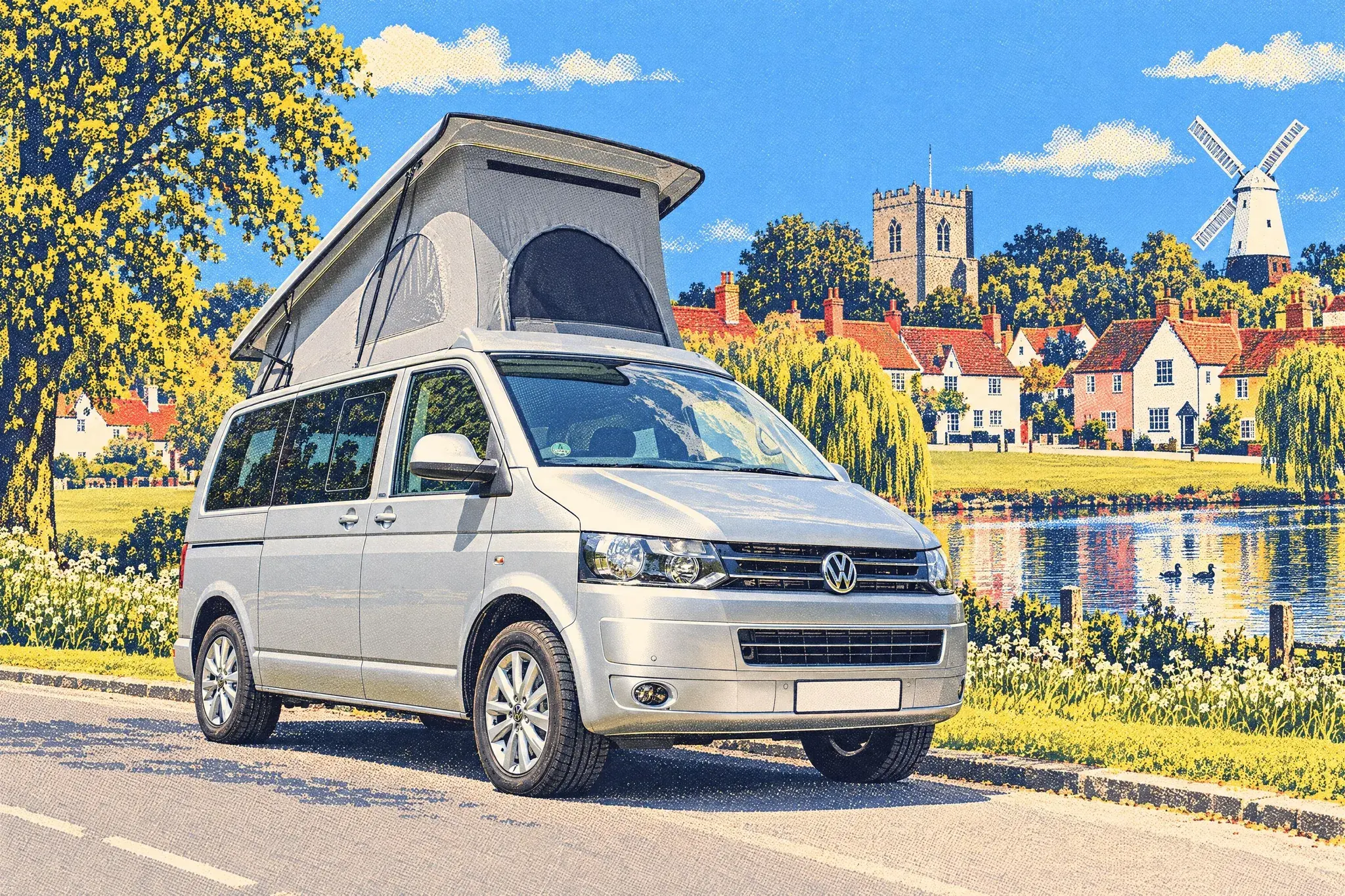
A pop-top is the section of a van's roof replaced with a hinged or lifting panel and folding fabric walls, giving you standing room when raised and usually a second double bed up top, while keeping a low, van-like profile for everyday driving, which is much of its charm. There are three types: front-elevating, rear-elevating and scissor (parallel-rising). A supplied-and-fitted roof on a VW T5 or T6 typically costs £2,500 to £5,500. Two practical things to know: the bed is rated to around 150kg (not to be confused with the roughly 70kg driving roof-load), and a pop-top adds roughly 45 to 160kg to the van. Insist on a certified, TÜV or M1-tested roof, and declare it to your insurer. Here are the types, the costs, and which is best for you.

The pop-top roof is the single thing that turns a van into a campervan. It's the bit that lifts up to give you standing room where there was none, and the bit that, on most vans, adds a second double bed in thin air above your head. It's the heart of the classic British camper, the reason a VW with a raised roof feels like a holiday and the same van without one feels like a builder's runaround. And it's a bigger, more considered decision than most people realise when they start, because there are three quite different types of roof, a handful of brands that range from excellent to anonymous, a wide gap between a cheap fit and a good one, and a few genuinely important safety and legal points that nobody mentions until afterwards.
So this is the honest guide. What a pop-top actually is, the three mechanisms and how they differ, the brands worth knowing, what it really costs in 2026, the truth about the bed and its weight limits, the downsides nobody volunteers, and the serious business of cutting a hole in your van's roof safely and legally. By the end you'll know not just whether you want a pop-top, but which type and which roof suits your van, your family and your budget, which is where most of the money is won or lost. There's no single best roof, only the best one for how you'll use it.
What a pop-top actually is
A pop-top, also called an elevating or rising roof, or a sleeping roof, is a section of the van's metal roof that's cut out and replaced with a hinged or lifting panel, with folding fabric "bellows" walls that concertina up as the roof rises. Raised, it gives standing headroom and, on most designs, a sleeping platform up top for two. Lowered, it sits close to the van's original height, so the vehicle still looks and drives much like a standard van. The roof is lifted by gas struts, sometimes with a hydraulic or assisted mechanism on premium models, and clamped down with latches for travel.
That dual nature, tall and roomy when you want it, low and normal when you don't, is the whole point, and it's what separates a pop-top from a fixed high-top. A high-top gives you permanent standing room but is permanently tall, with all the parking, height-barrier and fuel consequences that brings. A pop-top gives you the standing room only when you're parked up and the roof is raised, and the rest of the time you get a van you can use day to day. It's a clever compromise, and for a huge number of people it's the right one. Where it sits among the other ways to build a camper is something we cover in our guide to the types of campervan conversion, but if you've settled on a van conversion with an elevating roof, the next question is which kind.
The three types of pop-top roof
There are three mechanisms, and the difference between them shapes where you sleep, where you get headroom, and how the van drives. This is the first real choice, and it matters more than the brand.
Front-elevating
The most common type by far, especially on VW T5 and T6 vans, is the front-elevating roof. It's hinged at the rear and tilts up at the front, so the tall opening and the bed sit over the cab. The big advantages are that you sleep in the direction of travel, which suits the common layout of a kitchen and seating at the rear, and that the headroom is greatest at the front, over the cab, where you stand to get dressed. Closed, the front-elevating roof forms a low wedge that sheds rain forwards and keeps the most aerodynamic, lowest profile of the three, which is why it dominates the market. For most buyers, most of the time, a front-elevating roof is the default and the safe choice.
Rear-elevating
Less common is the rear-elevating roof, hinged at the front and lifting at the rear, so the bed and the tall opening sit at the back. The case for it is specific: it suits a van with a rear kitchen or rear doors you want to open to a view, and some people love being able to lie in the roof bed and look out of the back of the van at the stars or the sea. It's a minority choice in the UK, and the bed orientation, across or at the back, feels less natural to some, but for the right layout it's a genuinely nice thing. If your dream involves waking up looking out of the open tailgate at a Scottish loch, a rear-elevating roof is worth seeking out.
Scissor, or parallel-rising
The third type rises level on a scissor mechanism or a set of posts, so the whole roof section lifts straight up and the fabric walls are near-vertical all the way round. The payoff is the most even, full-width headroom of any type, and a flat platform up top that makes a roomy, generous upstairs bed. The trade-off is more mechanism to maintain, and on some scissor designs the top platform is weight-limited in ways the simpler roofs aren't, so check what it's rated to carry. For a tall person who wants proper standing room across the whole van rather than just over the cab, or for anyone who values the squarest, roomiest raised space, a scissor roof is the one to look at, accepting a little more complexity in exchange.
The main brands worth knowing
The roof market has a clear hierarchy, and knowing the main names saves you from the anonymous, hard-to-research roofs that turn up on cheap conversions.
SCA is the German market leader and the roof you'll see most often on quality VW conversions. Its model numbers encode the van and the lift direction, so an SCA 190 and 191 are the front and rear-elevating options for a short-wheelbase T5 or T6, the SCA 194 is a taller "High" version, and there are dedicated roofs for the Transit Custom, the Vivaro and Trafic family, the Vito and even the Crafter. SCA roofs are known for their engineering, full German TÜV testing, a low closed profile and the broadest van coverage. You pay a premium, but you get a thoroughly proven roof. One word of caution: you'll see SCA marketed in places as the "only VW-approved roof", and that's best treated as a retailer's flourish rather than a verified fact, because other reputable roofs carry their own approvals too.
Reimo, also German, is the other heavyweight, with more than forty years behind it and possibly the widest van coverage of all, including the bigger vans like the Ducato and Sprinter that others skip. Its ranges include the Easy-Fit, with an integrated reinforcing frame, and the very low-profile Classic Superflat. Austops is the UK value leader, British-made, TÜV pull-tested, with a five-year warranty, a sensible 180kg bed and, usefully, a typical fitting time of a single day. Skyline, made in Somerset, is another well-regarded UK option, with its low-profile Aurora roof, and WestDubs is known for M1 crash-tested roofs with hydraulic-assisted lift. There are other names about, and plenty of converters fit re-badged or own-brand roofs, but if a roof's manufacturer is hard to identify or research, treat that as a reason for caution rather than a bargain.
A note on van coverage: the VW T5, T6 and T6.1 (and increasingly the T7) and the Ford Transit Custom are by far the best served, with the widest choice of roofs. The Vivaro, Trafic and Expert family and the Mercedes Vito have good options from SCA and Reimo. The big vans, the Ducato, Crafter and MAN TGE, are catered for mainly by Reimo and SCA, but on a van that size many people fit a fixed high-top instead, because the extra space and insulation usually matter more than keeping a low profile.
What it costs
Prices in this market move and vary by van, brand and options, so treat everything here as a "from" figure and get a current quote, but the shape of it is consistent. A supplied-and-fitted pop-top on a VW T5 or T6 typically lands somewhere between £2,500 and £5,500 all in, with budget jobs near £3,000 and premium roofs with a good bed and colour-coding nearer £5,000 and up.
| Roof / van | Rough price (from) | Notes |
|---|---|---|
| Budget roof, VW T5/T6 SWB, supply & fit | ~£2,999 | Entry-level, trims and headliner included |
| Budget roof, VW T5/T6 LWB | ~£3,119 | |
| Vivaro / Trafic / Transit Custom | ~£3,240 to £3,360 | Budget tier, supply & fit |
| Austops (UK, TÜV, 5yr), SWB / LWB | ~£3,800 / £4,100 | UK-made value, single-day fit |
| Skyline Aurora, supply & fit | ~£4,000 to £6,000 | UK-made, low profile |
| SCA 194 (roof only, supply) | ~£5,148 | Premium German, you arrange fitting |
| Converter package (Reimo roof + bed + lining) | ~£7,000 + VAT | A full bundle, not just the roof |
The big add-ons stack up, so budget for them: a basic bed board might be £180, while a sprung or LED-lit deluxe bed runs £420 to £550, a bi-fold bed adds around £500 and a deluxe sprung one around £650, and colour-coding the roof to match the van ranges from about £100 for a solid colour to £450 for metallic, with a factory colour match on a premium roof adding £800 plus VAT. Buying the roof supply-only is cheaper than supply-and-fit, but then you take on cutting the van's roof yourself, which, as we'll come to, is not a job to take lightly. What drives the price overall is the brand and country of origin, whether it carries full TÜV or crash certification, the quality of the bed and the canvas, the bed size, colour-coding, and, crucially, the quality of the fitting. A modest roof fitted superbly is a better buy than a premium roof fitted badly.
The bed up top, and two weight numbers people confuse
The upstairs bed is a big part of the appeal, so it's worth being precise about it. On a short-wheelbase van, the roof bed is typically around 190 to 200cm long and 112 to 120cm wide, a snug double; on a long-wheelbase van it can stretch to 240cm. The mattress is thin, often around 35mm on a slatted base, because the whole thing has to fold flat when the roof comes down, so it's comfortable enough but it's not your bed at home.
Now the important bit, because two different weight figures get muddled all the time and the confusion can be dangerous. The first is the bed, or sleeping, load: how much weight the raised bed platform can hold when you're asleep on it. That's typically around 150kg, described as "two adults", on the major roofs, with some, like Austops, rated to 180kg. The second is the roof load: how much weight the closed roof can carry on a rack when you're driving, which is a much smaller number, often around 70kg. These measure completely different things, and you must not read the 70kg driving figure as a sleeping limit, nor assume the 150kg sleeping figure means you can pile that much on the roof rack. As a practical matter, the 150kg "two adults" rating is fine for two average adults but can be exceeded by two large ones, and in most family setups the lighter, simpler answer is to put the children up top, with a safety net for small ones, and the adults on the bed downstairs. Check the specific roof's two figures and respect both.
The fabric, the cold, and condensation
The folding sides of a pop-top are fabric, usually a breathable cotton-mesh or a marine-grade canvas, typically with two or three windows, midge screens and zip-out panels for airflow and a view. That fabric is part of the charm, but it's also the roof's weak point in cold weather, and it's worth being honest about it. The raised section is the least insulated part of the whole van, so on a cold night it's where you lose heat, and condensation tends to gather where the canvas meets the top of the van. Some owners barely notice; others find a winter night up top distinctly chilly and damp.
You can mitigate it. Insulated or "all-seasons" bellows are offered on better roofs and genuinely help, an insulated roof liner or a fitted thermal cap makes a difference, and good ventilation, opening a window a crack to let moisture escape rather than sealing everything up, does more than people expect. But no fabric-sided pop-top will match a solid, insulated roof for warmth, and if you intend to use the van seriously through British winters, factor that in: you may end up sleeping downstairs in the cold months and saving the roof bed for summer. It's not a fault so much as the nature of the thing, and knowing it in advance saves a disappointed first frosty night.
The honest downsides
Beyond the cold, a few more trade-offs are worth knowing. The first is height, though it cuts the right way: closed, a pop-top sits close to the van's standard height, often under two metres, so unlike a three-metre high-top it'll clear many car-park height barriers, which is one of the format's best features. Just measure your specific roof, because any closed roof and roof bars add a little, and that one barrier you use every week is the one that matters.
The second is aerodynamics and fuel, where the honest answer is "a small effect, don't oversell it". Closed, a pop-top keeps a near-standard roofline, so the fuel and crosswind penalty is modest, much less than a tall high-top, but the front wedge and any roof rack do add some drag, and sources differ on whether the slight extra weight cancels out the aero gain. Expect a minor, often-unnoticed change, not a dramatic one. The third is weight: a pop-top adds roughly 45 to 160kg to the van, far less than a high-top build but still a chunk out of a payload-tight VW, so it counts against everything else you load, the same hard sums we cover in our guide to what to check when buying a used van.
The fourth is maintenance. A pop-top is an extra system with moving parts and seals, and it needs care: gas struts weaken over the years and may need replacing, seals and fabric need checking, and the canvas itself typically needs replacing every eight to twelve years. A well-maintained roof is generally leak-free, but worn seals and heavy rain occasionally produce a drip, so it's something to inspect and look after rather than fit and forget. None of these is a reason not to have a pop-top. They're simply the things to know so the roof stays a joy rather than becoming a nagging problem.
The serious bit: fitting, safety and the law
This is the part that deserves your full attention, because a pop-top means cutting a large hole in the structural roof of your van, and that is permanent and safety-critical. Get it right and you have a brilliant camper; get it wrong and you have a weakened, leaky, possibly unsafe vehicle that's hard to sell.
Cutting the roof removes structure, so a reputable roof and a competent fitter add steel or aluminium strengthening frames to restore rigidity. There's a genuine safety dimension here: cut too close to a B-pillar, which often provides the top seatbelt anchorage, and you can compromise crash safety, because a modern van is engineered as a complete shell. This is exactly why certification matters, and why you should insist on a roof that carries proper testing, German TÜV or M1 crash approval, as SCA, Reimo, Austops, Skyline and WestDubs all do. A professional fit by an established firm is usually a single day's work; a DIY fit is possible and saves money, but you take on the structural risk and any warranty gaps yourself, and it's not a job for the unsure.
On the law, two points. First, type approval: cutting a van to fit a fixed high-top can sometimes trigger an Individual Vehicle Approval inspection because it substantially alters the bodywork, whereas a pop-top fitted by an established maker is generally treated as a standard, certified modification rather than an approval trigger. The guidance hinges on substantial structural change, so confirm with your fitter. Second, and counter-intuitively, if you ever want the DVLA to record the vehicle's body type as "motor caravan", be aware that the official list of qualifying features specifies a high-top roof and explicitly notes that this does not include a pop-top elevating roof. The important nuance, which is widely got wrong, is that the high-top is only one of several optional external features, so a pop-top does not automatically bar reclassification; it simply doesn't satisfy that particular criterion, and you'd need to meet the others, under what are now fairly tight DVLA rules. And whatever you do, declare the roof to your insurer, because a pop-top is a modification, and an undeclared modification can invalidate a claim. Use a specialist campervan insurer who expects these things.
Which pop-top is best for you
Pulling it together, here's how the choice tends to fall out, because the right roof really does depend on what you want from it.
For a VW T6 family weekender where the kids sleep up top, a mainstream front-elevating roof is the answer: an Austops for the best value, UK-made with a same-day fit and a sturdy bed, or an SCA for the premium option with full TÜV and a generous bunk. Add a bi-fold or sprung bed and a safety net for small children. For a tall person who wants real standing room, look at a scissor or parallel-rising roof, or one of the taller "High" front-elevating models, which give the most even, full headroom rather than headroom only over the cab. For keeping fuel economy and a low profile, for stealth, for those car-park barriers, any slimline front-elevating roof closed sits near factory height, which is exactly where pop-tops beat high-tops, just don't expect dramatic fuel savings. And for a big van like a Ducato or Crafter, your choice narrows to SCA and Reimo, but it's worth asking yourself honestly whether a fixed high-top would serve you better, since on a vehicle that size the extra space, insulation and winter warmth often matter more than a low closed profile. Match the roof to the way you'll actually use the van, and you'll be glad of it for years.
Common questions
How much does a pop-top roof cost to fit?
A supplied-and-fitted pop-top on a VW T5 or T6 typically lands between 2,500 and 5,500 pounds all in, with budget jobs near 3,000 and premium roofs with a good bed and colour-coding nearer 5,000 and up. Add-ons stack up: a sprung or LED-lit bed can add 420 to 650 pounds, and colour-coding ranges from about 100 to 450 pounds or more.
What are the three types of pop-top roof?
Front-elevating (the most common, hinging up at the front, especially on VW T5 and T6), rear-elevating (hinging up at the rear), and scissor or parallel-rising (which lifts level rather than tilting). The VW T-range and the Ford Transit Custom are by far the best served for roofs, with the widest choice of brands and fitments.
Can two adults sleep in a pop-top roof?
Usually yes. Most roof beds are rated to around 150kg combined, described as two adults, with some like Austops rated to 180kg. That is fine for two average adults but can be exceeded by two large ones. Do not confuse this sleeping rating with the much lower roof-rack driving load, often around 70kg, which is for weight on the closed roof while moving.
Are pop-top roofs cold in winter?
Yes, the raised section is the least insulated part of the van, so it is the coldest spot and where condensation gathers on a cold night. Insulated bellows, a thermal roof cap and good ventilation all help, but no fabric-sided roof matches a solid one for warmth. Many owners use the roof bed in summer and sleep downstairs in the coldest months.
Does fitting a pop-top affect insurance or the van's classification?
You must declare a pop-top to your insurer as a modification, because an undeclared modification can invalidate a claim; use a specialist campervan insurer who expects them. On DVLA classification, a pop-top does not count as the high-top roof feature used to reclassify a vehicle as a motor caravan, though that is only one of several criteria. A quality, certified roof generally helps resale.
Which pop-top roof is best?
There is no single best, only the best one for your van and use. For a VW T6 family weekender where the kids sleep up top, a mainstream front-elevating roof is the answer: an Austops for the best UK-made value with a same-day fit and a sturdy 180kg bed, or an SCA for the premium option with full TUV approval. Whatever you choose, insist on proper TUV or M1 crash certification, as SCA, Reimo, Austops, Skyline and WestDubs all carry.
The reachable bit
The camper you fall for is rarely the one you can afford. That gap is the whole reason Campervan.win exists. Right now we’re giving away the Sunlight Vanlife, worth around £65,000, and closing that gap is the point: capped entries so the odds stay honest, £10 a ticket, a maximum of five per person, £500 to a UK charity from every full draw, the winner picked by a public randomness beacon anyone can re-check, and one person driving away in the van itself.
Enjoyed this post?
Get more honest campervan guides like this one in your inbox.
You’re in!
Check your inbox. We’ve just sent you a welcome email.

About the author
Leo
Leo covers campervan technology, maintenance, kit, and ownership advice, with a clear, practical focus on how things work in real life.
Keep Reading
Related Reading
Thoughtful articles that build on what you’ve just read.
New & Noteworthy
12 min read
Knaus Boxtime 600 ME (2027): twin singles in 6 m, and the payload figure to question
Knaus's new Boxtime 600 ME squeezes two lengthways single beds into a 5.99 m van from £81,725. We lay out what that layout gives a couple, run the weight sums with Knaus's own figures, and explain why the 211 kg 'maximum payload' line needs a question before you sign.
New & Noteworthy
10 min read
Swift Carrera goes gas-free for 2027: 340Ah lithium, diesel heat and induction cooking
Swift has taken the gas out of its Carrera campervan for 2027, swapping bottles for a 340Ah lithium battery, diesel heating and an induction hob. Here is what that means across a real UK year, how it compares with the cheaper Merlin, and the one question to ask at the NEC.
New & Noteworthy
10 min read
British campervan converters at the NEC 2026: who builds on what, and for how much
A stand-by-stand map of the British campervan converters at the Motorhome and Caravan Show 2026: the vans they build on, their from-prices, seats, roofs and lead times, plus the four questions to put to every one of them.
Campervan Buying Guides
10 min read
Swift Merlin 2027: nine layouts from £64,190 and how to pick the right one
Swift's all-new Merlin campervan arrives for 2027 with nine layouts on the Fiat Ducato panel van. We sort them into four families, work the payload sum on a four-seat version, and explain what the roof, the automatic and the prices mean for your choice.