
Buying a used van or campervan: what to check, and how to inspect it properly

Written by
Leo
Leo covers campervan technology, maintenance, kit, and ownership advice, with a clear, practical focus on how things work in real life.
The short answer
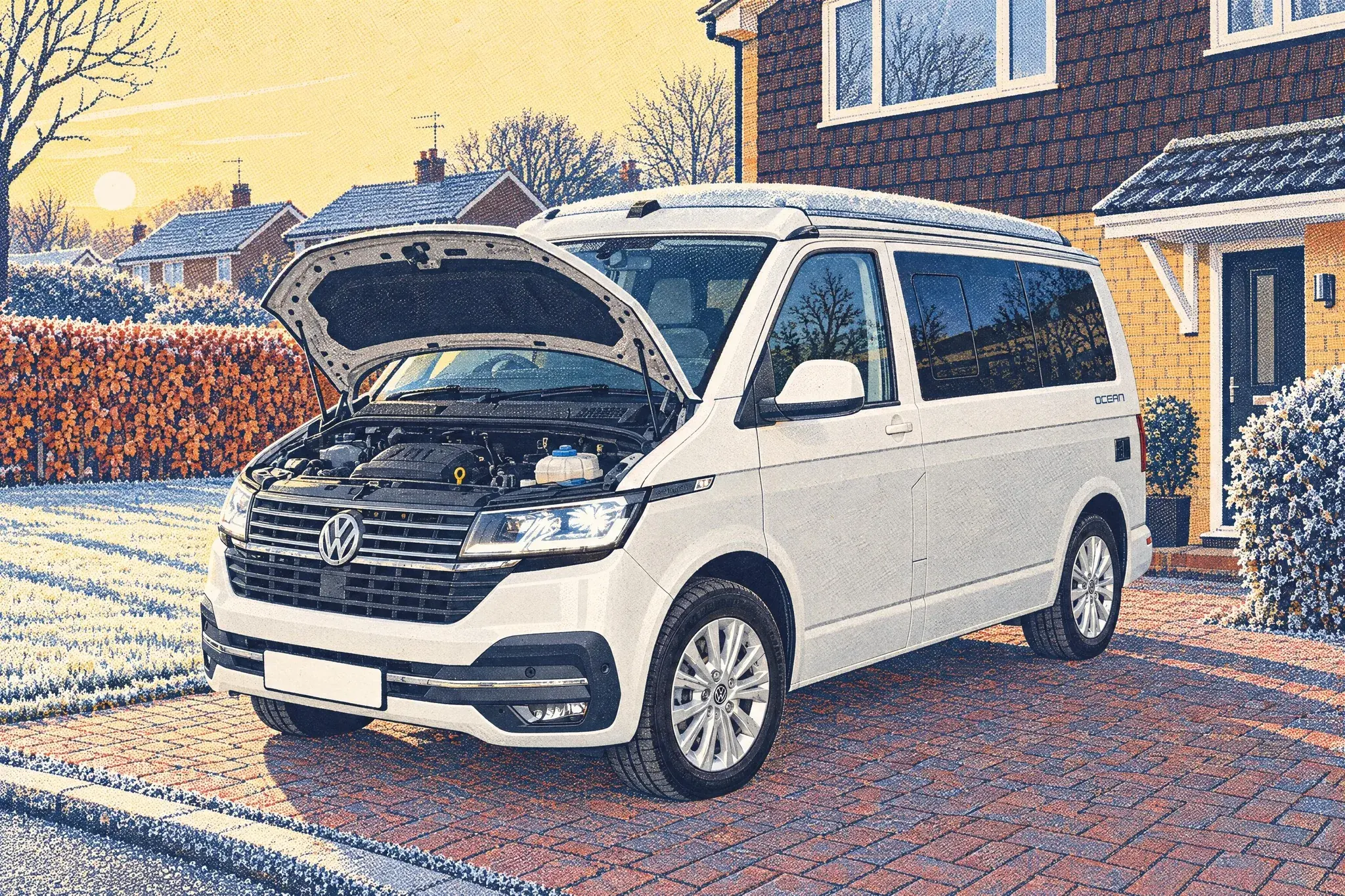
Buying a used campervan is the sensible, value-smart way into van life, but it is also where the most expensive mistakes happen, because a van hides its problems well: rust under the cladding, a timing belt about to go, or damp quietly rotting a camper's floor. The good news is that the thing separating a great buy from a costly one is entirely within your control, and that is inspection. Do the cheap armchair checks first (a £5 to £20 history check for finance, write-off and mileage), then pay for a professional pre-purchase inspection (around £200 to £340) and, for a camper, a separate habitation and damp check (around £200 to £300). Buy on evidence, not on emotion or pressure. Here is exactly what to check, and how to inspect it properly.

Buying used is, for most people, the sensible way into van life. A two or three-year-old van has taken its heaviest depreciation hit on someone else's wallet, and a well-kept used campervan can be every bit as good as a new one for a lot less money. But buying used is also where the worst, most expensive mistakes happen, because a van hides its problems better than almost any vehicle you can buy: rust under the cladding, a timing belt about to let go, or, in a camper, damp quietly rotting the floor while everything looks lovely on a sunny afternoon.
The difference between a great used buy and a costly one comes down to a single thing: inspection. Knowing what to check, checking it properly, and, for the things you can't assess yourself, getting a professional to do it. This is the full guide to that, the paperwork to pull before you travel, the mechanical and habitation checks to make in person, the specific weak spots of the popular base vehicles, and, importantly, how to arrange a professional inspection, including a neat way to get the seller to share the cost. Take your time with it. The patience you bring to the viewing is the cheapest insurance you'll ever buy.
A van is really two inspections in one
The single most useful thing to understand before you start is that checking a used campervan is two jobs stacked on top of each other.
The first is the base vehicle: the engine, gearbox, chassis, brakes, rust and paperwork, exactly the things you'd check on any used van. The second is the habitation side: the damp, the gas, the 12-volt and 240-volt electrics, the water system and the appliances, a completely separate discipline that has nothing to do with how the van drives. A camper can be mechanically perfect and a habitation disaster, or the other way around.
That's why the gold standard for a used camper is, in effect, two inspections, one mechanical and one habitation, or a single inspection from a specialist who genuinely covers both. Keep that split in your head throughout, because it's easy to fall in love with how a van drives and forget to press the walls for damp, or to obsess over the kitchen and never look under the engine.
It also means budgeting for both. A camper that needs a habitation check as well as a mechanical inspection is two inspection fees, not one, and that's money well spent on a vehicle which combines the failure modes of a van with those of a small, mobile building. The good news is that some specialists, and the NCC Approved mobile workshops, can cover the whole lot in a single visit, which saves you both time and a second trip.
Start before you travel: the armchair checks
Before you drive a single mile to view a van, there's a set of checks you can do from home, for free or for pennies, that will weed out a good proportion of bad buys. Do these first, because there's no point spending £200 on an inspection of a van that turns out to have outstanding finance against it.
The free MOT history check. Go to the gov.uk MOT history service, type in the registration, and you get the van's entire test history for nothing. Read it properly. The advisories matter as much as the passes: an advisory one year often becomes a failure the next, and the same item flagged year after year points to a fault nobody's fixing. Above all, check the mileage recorded at each test. It should climb steadily and plausibly; a drop between tests, or a suspiciously low annual figure, is a classic sign of "clocking", an odometer that's been wound back. Cross-check that mileage trail against the seller's claim and the service stamps.
A paid history check. For somewhere between about £5 and £20, a vehicle history check (HPI is the best-known name, but several rivals draw on the same core databases for less) tells you the things that can turn a bargain into a nightmare: outstanding finance (so the van can't be repossessed from under you), whether it's been an insurance write-off and in what category, whether it's recorded as stolen, and any mileage anomalies. On write-offs, the categories matter: Cat A and Cat B vehicles should never return to the road and are a hard no; Cat S (structural) and Cat N (non-structural) damage can be fine if professionally repaired and priced to reflect it, but they demand extra scrutiny and an independent inspection. This check is cheap, fast, and should be done before you travel.
The V5C and the questions. Ask to see the V5C logbook before you go, and confirm the seller's name and the viewing address match it. Remember the V5C shows the registered keeper, who isn't necessarily the legal owner, which is exactly why the finance check matters. Ask about service history, when the cambelt was last done (more on why that's critical below), and, for a camper, when it last had a habitation check and whether the gas and electrics have ever been certified. The answers, and how readily they come, tell you a lot before you've even met the van.
Get a professional to check it (the bit that saves you thousands)
Here's the part most buyers skip and most regret skipping. You can learn to spot a great deal of trouble yourself, and we'll go through how below, but some of the most expensive faults, a tired turbo, a stretched timing chain, structural rust, a dangerous gas or mains installation, are genuinely hard to assess without the right training and equipment. Against the cost of getting one of those wrong, a professional inspection is the cheapest insurance going. Put it in money terms: a thorough inspection costs a few hundred pounds, while a failed turbo, a snapped cambelt or a rotten floor can cost thousands to put right, sometimes more than the van is worth. Spending one or two per cent of the purchase price to confirm you're not buying the other ninety-eight per cent into a money pit is, frankly, a bargain, and on the rare occasion it talks you out of a bad van it pays for every inspection you'll ever commission. The mistake people make is skipping it to save a couple of hundred pounds, then spending two thousand finding out why they shouldn't have. There are three routes, and they're not mutually exclusive.
Route one: a manufacturer or marque service-centre health check
If the van is based on a mainstream platform, the franchised network that services it can give it a thorough going-over, and a technician who sees that exact van every day knows precisely where the weaknesses are. If it's a VW Transporter or Crafter, a VW Van Centre can do it; if it's a MAN TGE, a MAN service centre can, and here's a genuinely useful quirk: the MAN TGE is essentially a rebadged VW Crafter, built in the same factory, so a TGE can be inspected and serviced at either a MAN centre or a VW Van Centre, and they share most mechanical parts and faults. The same logic applies to a Mercedes Sprinter at a Mercedes-Benz Vans dealer, or a Fiat Ducato at a Fiat Professional dealer.
One honest note on terminology: the free "health check" these dealers advertise is usually a quick visual check bundled with a service, not a full buyer's survey, so don't treat the freebie as a substitute for a proper inspection. What you want is to book a genuine, paid pre-purchase inspection or a full service-level health check, and to ask for a written report. Phone the service centre, explain you're buying a used example, and get a quote for a thorough check.
Now the negotiation tip, because it's a good one. Once you've found a van you're seriously considering, suggest to the seller that it goes in for that full health check at the relevant service centre, and ask them to cover half the cost of the inspection, splitting the bill with you. The logic is simple and fair: a clean bill of health helps the seller as much as you, because it proves the van is what they say it is, so a confident seller of a sound van has every reason to welcome the check and to go halves on it. If they happily agree, you've de-risked the purchase and shared the cost of doing so. If they flatly refuse to let the van be inspected at all, that tells you something important in itself. Treat the cost-sharing as a reasonable ask rather than an entitlement, though; the stronger negotiating position, if the check throws up issues, is always "the inspection found this work, let's reflect it in the price."
Route two: an independent pre-purchase inspection
If a dealer route doesn't suit, or the van is an older or more unusual base, an independent inspection does the same job. The big names are the AA and the RAC, both of which send a qualified engineer to inspect the vehicle and produce a report. One crucial detail: the AA's cheapest "Basic" inspection is for cars only, so for a van or campervan you must book the Comprehensive or Advanced tier, which roughly run from around £200 to £340 depending on the vehicle and level. The RAC's equivalents are priced similarly, broadly £110 for a basic check up to around £260 to £275 for an advanced one. These are thorough and carry real weight, though, because they're delivered through a network of contracted engineers, the experience can vary with the individual.
For convenience, a mobile mechanic service like ClickMechanic will send someone to the seller's address, with inspection tiers from roughly £79 up to about £137 for the most thorough, which includes raising the vehicle to check underneath. One caveat to confirm when booking: these mobile services typically can't inspect insurance write-offs or large motorhomes over 7.5 tonnes, so they suit panel-van-based campers better than big coachbuilts.
Often the best option of all, especially for a known-fault marque, is an independent marque specialist, a VW Transporter specialist, a Sprinter specialist, and so on, who will frequently travel out to inspect a van with you, or have it brought to them. You pay them for their time, typically somewhere in the £100 to £250 region depending on what's involved, and in return you get someone who knows exactly where that model hides its problems. For a van you're spending five figures on, that is money extraordinarily well spent. This is also the "bring a mechanic with you" route: if you have a trusted mechanic, paying them to come along and cast an expert eye over a van before you buy is one of the smartest things you can do.
Route three (for campers): a habitation and damp check
For a campervan or motorhome, the mechanical inspection is only half the story, and the habitation check is the part that catches people out. This is the leisure-living equivalent of an MOT: a specialist tests the van for damp with a moisture meter, checks the gas system for leaks and safety, inspects the 12-volt and 240-volt electrics, tests the water system and runs every appliance. It usually takes three to four hours and costs roughly £200 to £300, with a dedicated pre-purchase habitation inspection (more detailed, with a full written report) at the upper end of that.
The name to look for is an NCC Approved Workshop. The scheme is run jointly by the National Caravan Council and the two big clubs, its workshops are independently inspected every year, and it's the only scheme backed by all the major manufacturers, so using one also keeps any habitation warranty intact. There are over 550 of them across the UK, fixed and mobile. For any used camper, and especially a home-converted one with gas and mains electrics you can't fully judge yourself, a habitation check is the single best couple of hundred pounds you can spend before handing over many thousands.
A practical word on sequencing: do the cheap, remote checks first (MOT history, history check), view the van yourself next, and only commission the paid inspections once you're seriously interested and the basics stack up, there's no point paying for a hab check on a van you'd reject on sight. Where you can, get the mechanical and habitation checks done close together, or use a single specialist who does both, so you're not making two trips. And whatever the report says, read it in full rather than glancing at the headline, because the value is as much in the advisories and the "monitor this" notes as in any outright fail: those are your negotiating points and your future maintenance bills.
The inspection options, at a glance
| Option | What it checks | Typical cost | Best for |
|---|---|---|---|
| Free gov.uk MOT history | Test history, advisories, mileage trail | Free | Everyone, before you travel |
| Vehicle history check (HPI etc.) | Finance, write-off, stolen, mileage | ~£5 to £20 | Everyone, before you pay |
| Manufacturer / marque service centre | Full mechanical health check by brand techs | Get a quote (often £150+) | Mainstream bases (VW, MAN, Mercedes, Fiat) |
| AA / RAC inspection | Mechanical, bodywork, road test, report | ~£110 to £340 (book the van tier) | Independent peace of mind |
| Mobile mechanic (e.g. ClickMechanic) | Mechanical inspection at the seller's address | ~£79 to £137 | Convenience (not write-offs / 7.5t+) |
| Marque specialist / your own mechanic | Expert, model-specific inspection | ~£100 to £250 | Known-fault marques; best value insight |
| Habitation check (NCC Approved) | Damp, gas, electrics, water, appliances | ~£200 to £300 | Every used campervan or motorhome |
Prices are approximate and worth confirming when you book. And one rule overrides all of it: a seller who won't let you have the van independently inspected is telling you not to buy it.
Checking the base vehicle yourself
You won't replace a professional inspection, but a careful eye at the viewing will catch a lot, and it tells you whether a van is even worth paying to inspect. View in daylight, in the dry (more on why below), with the engine stone cold.
Bodywork and rust. Walk the whole van slowly. Look for mismatched paint, ripples or overspray that hint at accident repair, and crouch to check the sills, wheel arches (and, where you can, behind the plastic arch liners, which trap moisture), door bottoms and the underside. Surface rust is one thing; bubbling paint, flaking and soft, crunchy metal are another, and structural rust on a chassis is expensive, sometimes terminal, surgery. A magnet and a torch are your friends.
Under the bonnet. With the engine cold, check the oil on the dipstick (and look under the filler cap for a mayonnaise-like sludge, a warning of head-gasket or coolant trouble), look for oil leaks around the sump and turbo, and check the coolant level and for any leaks or staining. Then start it from cold and listen: a rattle on first fire-up, a puff of smoke that won't clear, or a lumpy idle are all worth investigating. Diesels suffer particularly from clogged diesel particulate filters and EGR valves if they've lived a short-journey urban life that never gets them hot, so ask about the kind of driving the van has done.
The test drive. Drive it properly, not round the block. Feel for a clutch that slips (revs rising without matching speed), a rattle at idle or on clutch engagement that suggests a worn dual-mass flywheel, and on an automatic or DSG gearbox any judder or hesitation at low speed, which often just means an overdue fluid change but should be priced in. Check every gear including reverse, brakes that pull straight and feel firm rather than spongy, steering that doesn't wander or vibrate, and any warning lights, especially ones that vanish when you restart (a trick to hide a fault during a viewing). Try to drive it the way you'll actually use it, not just gently round the block: get it up to a proper speed where vibrations, wandering and noises reveal themselves, and find a slow, full-lock turn in a car park to listen for the clicking of worn driveshaft joints. Brake firmly where it's safe to feel for pulling, juddering or a long pedal, and on anything with a clutch, find a slight hill and pull away to check it bites cleanly without slipping. Five extra minutes of varied driving tells you far more than a quick lap of the street.
Tyres. This one catches campervan buyers out constantly. Campers cover few miles and sit still for long periods, so their tyres usually fail from age, not wear. Read the four-digit DOT date code on the sidewall (week and year, so "2419" is the 24th week of 2019) and look for cracking or crazing in the rubber. Industry guidance is to replace at around five to seven years regardless of tread, and motorhome tyres ideally carry a "CP" marking for the higher static loads they bear. A van with plenty of tread but seven-year-old, cracked tyres needs a full set, so factor that in.
Signs of a hard life. A worn steering wheel, shiny pedal rubbers or a battered load area on a van claiming low mileage all suggest the odometer and the reality don't match. Kerbed wheels, mismatched tyres and racking holes tell their own stories.
A few cheap tools make all of this easier. A torch and a small magnet (wrapped in cloth so it doesn't scratch) help you find filler hiding rust. An inexpensive plug-in OBD diagnostic reader can pull stored fault codes, even ones not currently lighting up the dashboard, which is a quick way to catch a problem a seller has recently cleared. And old clothes mean you'll actually get down and look underneath rather than giving it a cursory glance, which is precisely where rust and leaks hide. If you can view the van on a sloping drive, or get it up on a ramp, better still. None of this replaces a professional with a lift, but it turns a polite once-over into a real inspection.
The cambelt, and why time matters more than miles. This is the big, overlooked one on campers. Many timing belts degrade with age as well as mileage, so on a low-mileage van that's spent years sitting, the time interval usually expires long before the mileage one. A snapped cambelt on an interference engine means catastrophic, four-figure engine damage. Always find out when it was last changed, and on which date, not just at what mileage, and budget for the job if the history is missing or overdue.
Known weak spots by base vehicle
Every base vehicle has its own well-documented trouble spots, and knowing them turns you from a hopeful buyer into an informed one. Here are the big ones for the popular platforms. (If you're still choosing between bases, our Fiat Ducato versus Mercedes Sprinter comparison goes deeper on the trade-offs.)
| Base vehicle | Watch out for |
|---|---|
| Fiat Ducato / Peugeot Boxer / Citroen Relay | Notchy gear selection, especially reverse (worn engine mounts, corroded linkage); rust at the front crossmember and front chassis legs (water traps); a known weak ECU earth strap causing odd electrical faults; turbo and injectors with age |
| Ford Transit / Transit Custom | The 2.0 EcoBlue "wet" timing belt (runs in oil; can disintegrate and destroy the engine, with failures well before the old interval, now revised to ~6 years / 100,000 miles); rust behind the plastic arch liners, sills and subframe |
| Mercedes Sprinter | Rust is the defining issue (worst on pre-2019 vans: arches, door bottoms, sills, window and floor seams); injector "Black Death" seal leaks; AdBlue/emissions sensor and pump faults on 2010 to 2013 models |
| VW Transporter (T5 / T6) | DSG auto judder from skipped fluid changes; DPF, EGR and injector faults; timing-chain rattle on the 2.0 TDI; the 2.5 TDI is widely considered the one to avoid, the simpler 1.9 TDI the durable choice |
| VW Crafter / MAN TGE | Turbo, DPF and AdBlue faults, especially high-mileage; cambelt history critical on belt engines; first-gen rust at arches, sills and windscreen; on 4MOTION versions, a Haldex four-wheel-drive system that fails if its oil is never serviced (budget a change roughly every 20,000 miles) |
None of these is necessarily a dealbreaker, plenty of high-mileage examples of all of them give years of faithful service, but they're the things to ask about, look for, and have an inspector check. A documented history of the relevant maintenance (oil changes on a wet-belt Transit, fluid changes on a DSG, Haldex servicing on a 4MOTION) is exactly what turns a risky example into a sound one.
It's worth saying why this matters so much for campers specifically. A panel van that's been a working vehicle has usually been driven regularly and serviced to keep it earning; a camper often does the opposite, sitting unused for months between trips, which brings its own troubles, seized brakes, perished tyres, flat batteries, damp and a cambelt ageing out while the mileage barely moves. So when you check a camper's base vehicle you're really looking for two different histories at once: the hard-use wear of a van that's worked, and the neglect-by-disuse of a vehicle that's sat. The ideal is a camper used often enough to stay healthy and maintained carefully enough to stay sound, and the service history and the MOT mileage trail, read together, tell you which kind you're looking at.
The habitation side: where campers really catch you out
Now the camper-specific half, and the area where a beautiful-looking van can hide the most expensive problems.
Damp: the single biggest issue
Damp is the rot that quietly kills campervans, and finding it is the most important habitation skill you can have. Use three senses. First, smell: the instant you open a van that's been shut up, a musty, damp odour is the earliest warning there is, which is one reason you should never let a seller air it out or warm it up before you arrive. Second, touch: press firmly on the walls, around the windows, and on the floor, especially the edges and corners. Anything soft, spongy or creaky means moisture has got into the board behind the surface. Third, sight: look for staining, tide-marks, black mould in corners, and bubbling or lifting wallboard.
A professional hab check uses a moisture meter, and as a rough guide the readings run something like under 15 per cent safe, 16 to 20 per cent borderline and worth monitoring, over 20 per cent likely active damp, and over 30 per cent almost certainly a serious live leak. The usual entry points are the seals, around windows and rooflights, along every seam where walls meet the roof and floor, around awning rails, and under any roof-mounted fitting like a solar bracket or vent. A single failed sealant joint caught early is a cheap fix; the same leak ignored for two years can rot the frame and floor and write the van off. If you take one thing from this whole guide for a camper, let it be: take damp seriously.
A point of perspective, though: a damp reading isn't automatically a walk-away. Minor, localised, freshly-caught damp from an obvious failed seal can be a cheap fix and a fair reason to knock money off. What you're really trying to tell apart is surface damp from structural rot, moisture that's reached and softened the timber frame and floor. The first is a job; the second can be a write-off. If a hab check finds damp, ask the engineer exactly that, how far has it got, and let the answer, and the repair quote, either set the price or send you on your way.
Gas safety
Gas is the other thing that can genuinely hurt you, so treat it with respect. A point of law worth knowing: a gas safety certificate is not legally required for a campervan in private personal use, though it is a legal requirement if you ever hire the van out, and many insurers and campsites want to see evidence of a safe installation regardless. The work, and any certification, should be done by an engineer on the Gas Safe Register who holds the specific category for LPG in leisure vehicles (a domestic gas ticket isn't enough), to the BS EN 1949 standard.
At the viewing, run every gas appliance: the hob, the oven and grill, the space heater and the water heater, and on a three-way fridge, check it works on gas, 12 volts and mains. Look at the pipework, regulator and pigtails for age and wear, and confirm there's a working carbon monoxide alarm fitted, which is non-negotiable. A proper gas soundness test is part of a habitation check; if the van has no recent gas history and you can't satisfy yourself it's safe, make a hab check a condition of buying.
Electrics, water and structure
On the electrics, check the 12-volt leisure side (the battery's type and age, whether it holds charge, the control panel, lights and water pump running without the engine or hook-up) and the 240-volt mains side (the hook-up inlet, a consumer unit with a working RCD, and the mains charger). Solar, if fitted, should actually be charging. Be especially wary of the mains side on a home conversion, because amateur 240-volt work is where things get genuinely dangerous, undersized cable, a missing or wrong RCD, poor earthing, so if there's any mains and no certification, get it inspected.
On the water system, run the pump, check the fresh and waste tanks and all the taps and pipework for leaks, and ask whether the van was drained and winterised, because water left to freeze over winter cracks pumps, heaters and pipes.
On the structure, check the roof and every seal and seam (the damp ingress points again), that windows and rooflights open, close, lock and don't leak, and, if it has a pop-top, examine the canvas or bellows closely for tears, mould and perished stitching, and make sure the mechanism lifts and locks smoothly.
Conversion quality
Finally, judge the conversion itself. A professional conversion from a known converter, with documentation and ideally NCC-approved status, is lower risk and holds its value better. A DIY conversion can be superb or alarming, and the things to scrutinise are the safety-critical ones: the gas and mains electrics, whether the furniture, bed and units are genuinely bolted to the structure rather than just screwed to thin ply (a loose unit is dangerous in a crash), adequate fixed ventilation for the gas appliances, and basic fire safety, an extinguisher, a fire blanket, and smoke and carbon monoxide alarms. If you can't fully assess a DIY build yourself, that's exactly what the habitation check is for.
Campervan paperwork: the bits people miss
Beyond the standard van paperwork, campers come with a few extra documents worth understanding.
The big one is the DVLA body type. A van that's been formally reclassified shows "motor caravan" on its V5C, and it's worth knowing how that works because there's a lot of misinformation about it. The current DVLA guidance still asks to see both internal features (fixed seating and a table, sleeping, cooking and storage facilities) and a set of external features it "expects to see", which include two or more windows on at least one side, a separate habitation door, motor-caravan-style graphics, an awning rail, and a high-top roof, with pop-top elevating roofs explicitly excluded. That last point catches out a lot of genuine pop-top campers, which often can't be reclassified at all. Reclassification has been hard to get since the rules tightened (only a small fraction of applications succeed), so a van already registered as a motor caravan has a certain scarcity value, but don't overpay purely for the wording: body type doesn't affect your insurance category or speed limits, and its practical effects are mostly around identification and some insurers' preferences.
Then check the weight plate. Find the maximum authorised mass and work out the real payload by subtracting the van's actual kerb weight (with the conversion) from it. Overweight campers are surprisingly common, illegal to drive when loaded, and a sign the conversion was done without weight in mind. It also matters for your licence: anything over 3,500kg needs the C1 entitlement, which younger drivers don't get automatically. Finally, ask for any gas and electrical certification and, for a professional conversion, the converter's documentation and any habitation service history.
Buying from a dealer or privately: what protection you get
Where you buy changes how much the law is on your side, and that should shape how hard you inspect.
Buy from a dealer (a trader) and you're covered by the Consumer Rights Act. The van must be of satisfactory quality, as described, and fit for purpose. If it isn't, you have a short-term right to reject it for a full refund within the first 30 days, and further rights for up to six months, during which a fault is generally assumed to have been present at the sale unless the dealer can prove otherwise. That's real protection, and it's a large part of what you pay a dealer's premium for. It doesn't make inspection pointless, returning a van is a hassle you'd rather avoid, but it's a meaningful safety net.
Buy privately and that net mostly disappears. A private sale only has to be "as described", and the principle is essentially buyer beware: if you didn't ask and it wasn't misrepresented, a fault you find afterwards is your problem, not the seller's. There's no right to reject for general poor quality. That's not a reason to avoid private sales, they're often where the value is, but it is the reason to inspect a private van far more thoroughly, because the law won't bail you out later. Auctions offer the least protection of all, frequently with vehicles sold genuinely as seen and little or no chance to inspect or test drive, which is why they're best left to people who can afford to be wrong.
The practical upshot is to match your diligence to your protection. From a dealer, a careful viewing and a history check may be enough for a sound-looking van, with an inspection for anything pricier or older. Privately, treat a professional inspection as close to essential, because you are your own consumer protection. And whatever the source, get every promise the seller makes, service just done, cambelt replaced, no damp, in writing, because "as described" only helps you if you can show what you were told.
A few special cases worth knowing
A handful of used vans deserve a special mention, because they change the calculation.
Ex-fleet and ex-rental vans are often the cheapest way into a given model, and they're not the bogeyman they're made out to be. Yes, they've usually had a hard, high-mileage life with many drivers, but they're also typically serviced on time to a strict schedule, which privately-owned vans aren't always. The key is the service history: a well-documented ex-fleet van can be a genuine bargain, an undocumented one is a gamble. Check the load area and cab for heavy wear, and inspect for the dents and scrapes of working life.
Imported vans, including left-hand-drive campers brought in from Europe, can offer something you can't easily get here, but they come with extra homework: the history is harder to verify (a UK history check won't cover a life lived abroad), left-hand drive affects everyday usability and resale, and you'll want to confirm UK registration, any modifications and that the paperwork is all in order. Budget for the inspection and go in extra cautious.
Electric vans are the newest special case. All the usual checks apply, but you add one big new one: battery health. An EV's traction battery is its most expensive component, and its state of health, how much capacity it has lost over time, is the number that matters most, so ask for a battery health (state-of-health) readout and factor the remaining real range into the price. On an electric camper, the habitation power often draws on the main battery too, which complicates things further. Our guide to the Kia PV5 and electric campervans covers the EV-specific considerations in depth.
The cheap project van. There's nothing wrong with knowingly buying a rough van to convert or fix up, as long as you've priced the work honestly and the bones, chassis, engine and structure, are sound. The trap is buying a "project" you thought was a runner. The inspection is exactly what tells the two apart.
Red flags and walking away
Some warning signs should stop a purchase in its tracks. The clearest of all is a seller who won't let you have the van independently inspected, or won't let you start it from cold, test drive it or run the habitation systems, because a genuine seller of a sound van has nothing to hide. Be wary, too, of pressure tactics ("another buyer's coming this evening"), which exist purely to stop you doing your homework; of missing or patchy service history; and of any mismatch between the seller, the V5C name and the viewing address, or a VIN that doesn't match the logbook, which can signal a cloned or stolen vehicle.
Watch the conditions of the viewing as well. A seller who'll only show the van in the rain, or who's had the heating running before you arrive, may be hiding leaks, damp staining and a damp smell, or a heater that doesn't work. Insist on viewing in the dry, in daylight, with the van cold and recently unopened, so you can smell damp and test everything from cold. And a van priced suspiciously below the market, with a thin story to match, is almost always cheap for a reason you haven't found yet.
When the checks turn something up, use it. Itemise the findings, attach rough repair costs, and either negotiate the price down by that amount or ask the seller to put it right. An overdue cambelt, tyres past their age limit, a borderline damp reading or a needed gearbox service are all legitimate, evidenced bargaining points. But know when to walk: a Cat A or B write-off, unresolved outstanding finance, a clone or stolen marker, high active damp with rot, or a Transit whose wet belt has clearly already failed are all reasons to say no and move on. There is always another van, and the pressure to buy this one is the single biggest enemy of a good decision.
Your pre-viewing checklist
Take this with you. It's the short version of everything above.
- Run the free MOT history and a paid history check before you travel.
- View in daylight, in the dry, with the van cold and recently unopened.
- Check bodywork and underside for structural rust, especially the known hotspots for that base.
- Cold-start the engine; check oil, coolant, leaks, and listen for rattles and smoke.
- Test drive properly: clutch, all gears, brakes, steering, warning lights.
- Read the tyre date codes and check for age cracking; budget for a set if over five to seven years.
- Confirm the cambelt's last change by date, not just mileage.
- For a camper: smell and press for damp; run every gas appliance; test 12V and 240V electrics; run the water system; check seals, seams and any pop-top canvas.
- Match the V5C name and address to the seller; check the VIN; confirm payload on the weight plate.
- Arrange a professional inspection (mechanical and, for a camper, habitation) before you pay, and ask the seller to go halves on the cost.
- If anything feels wrong, or the seller resists inspection, walk away.
Frequently asked questions
Should I get a used campervan professionally inspected?
For anything but the cheapest van, yes, ideally twice: a mechanical inspection of the base vehicle and a habitation check of the living area, or one specialist who covers both. An inspection costs a few hundred pounds; the faults it catches can cost many thousands. It's the best-value money you'll spend in the whole purchase.
How much does a pre-purchase inspection cost?
Roughly: a free MOT history check and a £5 to £20 history check to start; an AA or RAC inspection from around £110 up to £340 (book the van or motorhome tier, not the cars-only basic); a mobile mechanic from around £79 to £137; a marque specialist around £100 to £250; and a habitation check for a camper around £200 to £300. Prices are approximate, so confirm when booking.
Can I ask the seller to pay for the inspection?
You can ask, and it's a reasonable request, though not an entitlement. A good approach is to suggest the van goes in for a full health check at the relevant service centre and ask the seller to cover half the cost of the inspection, splitting the bill, since a clean result helps them sell too. Keep that separate from price negotiation: if the check then finds faults, the stronger move is to negotiate the price down by the cost of putting them right. A seller who refuses any inspection at all is a red flag.
Can a MAN service centre check a VW Crafter (or vice versa)?
Effectively yes. The MAN TGE is a rebadged VW Crafter, built in the same factory and sharing most mechanical parts, so a TGE can be inspected and serviced at either a MAN service centre or a VW Van Centre. It's a genuinely useful bit of flexibility for owners of either van.
What's the most important thing to check on a used campervan?
Damp. It's the most common, most expensive and best-hidden fault in a used camper, and it can write a van off. Smell for it the moment you open the van, press the walls and floor for soft spots, and have a hab check confirm it with a moisture meter before you buy.
How do I check a van for outstanding finance?
Run a paid vehicle history check (HPI or a cheaper rival using the same databases) for around £5 to £20 before you hand over any money. It reveals outstanding finance, write-off status, stolen markers and mileage anomalies. Buying a van with outstanding finance risks it being repossessed, so this check is essential.
Is a high-mileage van always a bad buy?
No. A well-maintained, high-mileage van with a full service history can be a far better buy than a neglected low-mileage one, especially as camper engines often suffer more from sitting still than from covering miles. Judge the history and condition, not the headline number, and remember that low mileage makes age-related issues like tyres and cambelts more, not less, important.
Does it matter if a camper isn't registered as a "motor caravan"?
Less than people think. Body type doesn't change your insurance category or speed limits. It mainly affects identification and, for some insurers, the ease of getting leisure cover. Reclassification is hard to obtain now, so a van already listed as a motor caravan has some scarcity value, but it isn't worth a big premium on its own.
Is it safe to buy a campervan privately?
It can be, and it's often where the best value is, but you get far less legal protection than buying from a dealer. A private sale only has to be "as described", so the onus is on you to inspect thoroughly, ask the right questions and get the seller's promises in writing. Treat a professional inspection as close to essential on a private buy.
What documents should a used campervan come with?
At a minimum: the V5C logbook, a valid MOT (and you can pull the full history free online), and ideally a service history with stamps and invoices. For the camper side, look for any habitation service history, gas and electrical certification, the conversion paperwork if it was professionally built, and the appliance handbooks. The more complete the paperwork, the lower the risk.
Should I buy a van with no service history?
Be cautious. No history means you're inheriting unknown maintenance, so you should budget for the big-ticket items (a cambelt, fluid changes, a possible habitation service) as if they're due, inspect harder, and use the gap as a negotiating point. It's not an automatic no, but it should be reflected in the price, and a professional inspection becomes even more worthwhile.
How do I check an electric van's battery health?
Ask for a battery state-of-health (SoH) figure, which shows how much of the original capacity remains, and ideally an independent battery health check. The traction battery is an EV's most valuable component and sets its real range, so its condition matters more than almost anything else, and a tired battery should be reflected in the price.
The final word
A used van or campervan can be one of the best purchases you'll ever make, or one of the worst, and the thing that decides which is almost entirely down to how thoroughly you check it before you pay. Do the free and cheap homework before you travel, view with a careful and slightly sceptical eye, take damp and the base vehicle's known weak spots seriously, and, for anything you can't confidently assess yourself, pay a professional to look, and ask the seller to share that cost. None of it is difficult, and all of it is far cheaper than getting it wrong. Buy on evidence, not on emotion or pressure, and you'll get the van you actually wanted. (For the wider picture on buying used, our used campervan buying guide is a good companion, and if you're weighing a converted van against a factory one, our look at custom-built versus manufacturer campervans is worth a read.)
Common questions
What is the most important thing to check on a used campervan?
Damp, on the habitation side, and the base vehicle's known weak spots on the mechanical side. A camper is really two inspections in one: how it drives, and the separate world of damp, gas, electrics and water. Damp is the single biggest issue, since it quietly rots the structure while everything looks lovely, so a moisture-meter habitation check is essential.
Should I get a used campervan professionally inspected?
For anything you cannot confidently assess yourself, yes; it is far cheaper than getting it wrong. Options include a marque service-centre health check, an independent pre-purchase inspection (AA Comprehensive or Advanced from around 200 to 340 pounds, RAC similar, or a mobile service like ClickMechanic from roughly 79 to 137 pounds), and, for a camper, a dedicated habitation and damp check.
What checks should I do before travelling to view a used van?
The cheap armchair checks, because there is no point inspecting a van with finance against it. For about 5 to 20 pounds, a vehicle history check (HPI or a rival) flags outstanding finance, insurance write-offs and their category, theft markers and mileage anomalies. Also ask to see the V5C logbook and confirm the seller's name and the viewing address match it before you go.
What is a habitation and damp check, and what do the readings mean?
It is the leisure-living equivalent of an MOT: a specialist tests for damp with a moisture meter, checks the gas system, the 12V and 240V electrics, the water system and every appliance, taking three to four hours and costing roughly 200 to 300 pounds. As a rough guide, moisture readings under 15 percent are safe, 16 to 20 percent borderline, over 20 percent likely active damp, and over 30 percent almost certainly a serious live leak.
How do I check a used van for outstanding finance?
Run a vehicle history check (HPI is the best-known, with cheaper rivals drawing on the same databases) for about 5 to 20 pounds. It tells you whether there is outstanding finance, so the van cannot be repossessed from under you, plus write-off status, theft markers and mileage anomalies. Remember the V5C shows the registered keeper, not necessarily the legal owner, which is exactly why the finance check matters.
How do I check an electric van's battery health when buying used?
Ask for a battery state-of-health (SoH) figure, which shows how much of the original capacity remains, and ideally an independent battery health check. The traction battery is an EV's most valuable component and sets its real range, so its condition matters more than almost anything else, and a tired battery should be reflected in the price.
The reachable bit
The camper you fall for is rarely the one you can afford. That gap is the whole reason Campervan.win exists. Right now we’re giving away the Sunlight Vanlife, worth around £65,000, and closing that gap is the point: capped entries so the odds stay honest, £10 a ticket, a maximum of five per person, £500 to a UK charity from every full draw, the winner picked by a public randomness beacon anyone can re-check, and one person driving away in the van itself.

Enjoyed this post?
Get more honest campervan guides like this one in your inbox.
You’re in!
Check your inbox. We’ve just sent you a welcome email.

About the author
Leo
Leo covers campervan technology, maintenance, kit, and ownership advice, with a clear, practical focus on how things work in real life.
Keep Reading
Related Reading
Thoughtful articles that build on what you’ve just read.

Campervan Buying Guides
10 min read
Swift Merlin 2027: nine layouts from £64,190 and how to pick the right one
Swift's all-new Merlin campervan arrives for 2027 with nine layouts on the Fiat Ducato panel van. We sort them into four families, work the payload sum on a four-seat version, and explain what the roof, the automatic and the prices mean for your choice.

Campervan Buying Guides
11 min read
Bailey Endeavour B68: the end-lounge Transit campervan where the pop-top costs 143 kg
Bailey's new Endeavour B68 puts a rear lounge in a 5.98 m Ford Transit campervan. We compare it with the B65 and B62, check the 1.86 m bed, and do the payload sums if you add the £7,500 pop-top.

Campervan Buying Guides
12 min read
New campervans under £60,000 for 2027: what the NEC shows and what the price leaves out
A fair look at the new 2027 campervans listed under £60,000 ahead of the Motorhome and Caravan Show at the NEC, with each price given as its maker words it, and the differences between ex-works, delivered and German-retail-based figures explained so you can compare real on-the-road totals.

Campervan Buying Guides
14 min read
Eura Mobil Vancona 2027: a €57,400 campervan with just 84 to 118 kg left for options
Eura Mobil's new Vancona is a well-equipped Fiat Ducato campervan from €57,400, but its 84 to 118 kg options allowance means you need to order it with the weight sheet open. We explain what the figure means, what the 4.25 t uprate costs you in licence terms, and which options to prioritise.