
Taylored Offtrail vs VW California: does the badge justify the price?

Written by
Rowan
Rowan writes editorial features, comparisons, and industry context pieces that help readers understand the campervan and motorhome landscape.
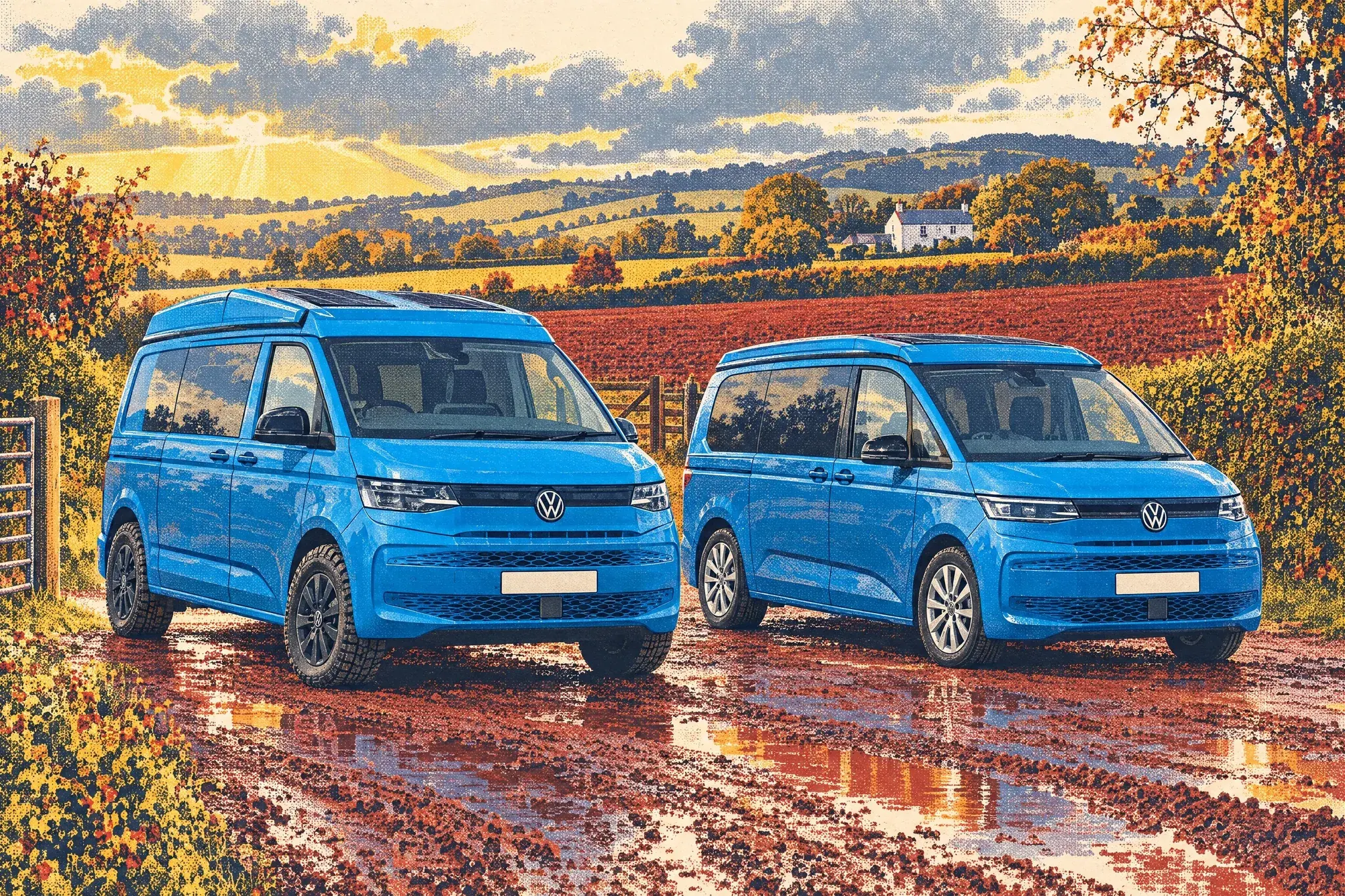
The short answer
At around £75,000 you can buy either a VW California or a Taylored Offtrail pop-top camper for much the same money, and the genuinely interesting question is what the VW badge is actually worth. The new California is built on the car-based Multivan (Beach from £64,432, Ocean from £78,748). The Offtrail is Taylored's own conversion of the VW Transporter T7 (from £74,500) which, with a nice irony, is a Ford Transit Custom underneath. For your money the Offtrail gives a genuinely off-grid, better-equipped, more adventure-styled van; the California gives the badge, the strongest resale, a hybrid option and a dealer everywhere. In a line: the California is the safer thing to own, the Offtrail the better thing to use. Here is the full head-to-head, so you can decide what the badge is worth to you.

Picture the decision. You've got around £75,000 and a clear idea of the life you want: a pop-top camper small enough to use daily, big enough to disappear off-grid for a long weekend. Volkswagen will sell you a California. A family firm on a Devon business park will sell you an Offtrail for much the same money. The badge points you one way. The van, as we'll see, points you the other.
The honest question is what the VW badge is worth to you, because once you line the two up on price, kit and support, the Offtrail makes a quietly compelling case. Let's go through it in detail, VW's genuine strengths included.
The two vans, and a small irony
The new VW California is built on the Multivan, VW's MQB people-carrier, in three trims: Beach (from £64,432), Coast (from £71,740) and the flagship Ocean (from £78,748), with a 150PS diesel, a 204PS petrol and a 245PS plug-in-hybrid 4MOTION on the engine list. It's about 5.17m long and stays just under two metres tall, which keeps it out of trouble with car-park barriers.
The Taylored Offtrail is a conversion: Taylored start with a VW Transporter T7 (Commerce Pro trim, 2WD) and build the camper themselves, pop-top and all. It lists from £74,500, which they break down on their configurator with refreshing honesty as £45,000 for the van and £29,500 for the conversion. A long-wheelbase version is £1,000 more.
The irony worth getting out of the way: the Transporter T7 the Offtrail is based on is, under the skin, a Ford Transit Custom, while the California rides on VW's own Multivan. So the factory van is technically the more Volkswagen of the two. It matters less than the badge implies, but it's true, and worth saying.
Price: what you actually pay
The Offtrail's £74,500 lands between a California Coast (£71,740 to £74,704) and an Ocean (from £78,748), so this was never about being the cheap option. It's about what the same money buys, and here the two firms made opposite calls. VW spent your money on a badge, a dealer network and a famous name. Taylored spent it on the van. Here's what that means in practice.
At a glance
| Spec | Taylored Offtrail | VW California |
|---|---|---|
| Price from | £74,500 | £64,432 Beach / £71,740 Coast / £78,748 Ocean |
| Base vehicle | VW Transporter T7 | VW Multivan |
| Solar | 260W, standard | None (aftermarket only) |
| Leisure battery | Clayton Power 2500 lithium | 40Ah lithium modules |
| Hob | Induction, gas-free | Single gas ring |
| Fresh water | 12L (51L option) | 29L |
| Heating | Diesel air heater | Fuel-fired parking heater |
| Warranty | VW warranty on the base van; conversion cover on request | 3yr / 100k + 5+ Promise |
| Best for | Off-grid capability, hand-built feel | Dealer back-up, resale |
What you get as standard
The Offtrail's £74,500 isn't a stripped base waiting for an options sheet. Every Offtrail leaves Devon with:
- Power. A Clayton Power 2500 all-in-one lithium system (battery, inverter and charging in one tidy box), 260W of twin MIPV solar bonded to the roof, and a 7-inch touchscreen to run it all. We put the Clayton head to head with the rivals in our campervan power systems guide.
- Cooking and living. A gas-free induction hob, hand-built birch-ply cabinetry with soft-close drawers, a choice of low or high units at no extra cost, a stow-away table and full upholstery.
- Sleeping. A Mobiframe 112/118 sliding bed with ISOFIX points and a memory-foam mattress below, plus a memory-foam bed in the elevating roof.
- Warmth and weather. A diesel air heater with a remote fob, four-seasons insulation, thermal screens, a full window package with VanShades blackout pods all round, carpet lining and a cab sliding headlining cover.
- The bits that add up. A 25m hook-up cable, a passenger swivel seat and four travel seats.
In practice that means waking in a quiet layby and putting the kettle on the induction hob while the diesel heater chases off the morning chill, with no gas bottle to check and no hook-up to hunt for. That's the whole point of the thing, and it's standard.
What the California gives you for the money
Now the same money at VW. The California is beautifully made and cleverly packaged, but the off-grid kit is thinner than the price suggests, and VW's own brochure makes that plain:
- Solar. None. VW offers no factory solar on any California, at any price. You fit it aftermarket or go without.
- Battery. Small 40Ah lithium modules, with leisure power that reviewers consistently call modest.
- Cooking. A single gas ring, down from two on the old model, and fed from gas, so there's a bottle to mind, where the Offtrail is gas-free.
- Water. 29 litres fresh and 23 waste, and that's your lot. The Offtrail starts smaller at 12 litres but takes a 51-litre underslung tank with an external shower for £1,200, which changes how long you can stay out.
- Heat. Honours even: a fuel-fired parking heater each.
So for broadly the same outlay, one van is built to leave the hook-up behind, and the other, oddly for the money, needs an aftermarket shopping list to match it.
The kitchen and the cabinetry
This is the part a photo undersells. Taylored's interiors are hand-built from birch ply, and you feel it: the drawers shut with the soft, weighted click you only get from real joinery rather than bolt-in modules. Crucially they're yours, too. You pick the layout, the colours (nine at the last count, from Graphite Dust to Warm Green) and the finish. The California's interior is genuinely good in the way production things are good, consistent, hard-wearing, exhaustively tested. But it's identical in every California and built to a line's budget. One is made for you. The other is made by the thousand, a difference we get into in hand-built vs factory campervans.
Sleeping and seats
Both sleep four, two below and two in the pop-top. The California's lower bed is on the narrow side, with testers measuring around 1.08m. The Offtrail uses a Mobiframe sliding bed with ISOFIX and memory foam: pull the VanShades pods across and the cabin goes properly dark, slide the bed out and two adults fit without the nightly furniture-shuffle some campers make you do. You can spec the seating around how you actually travel, too: four travel seats as standard, a third rear seat for £225, or up to six.
The options worth knowing
Because the Offtrail is built to order, the extras are à la carte and Taylored publish every price on the configurator, which is refreshingly clear:
- Long wheelbase: £1,000
- 51-litre underslung water tank with external shower: £1,200
- Zeliox Neo 4000 power upgrade (200Ah, 4,000W inverter): £720
- Swamper or road alloy wheels: £1,200
- Pull-out side awning: £850
- Modular roof rack: £650
- Third rear seat: £225
Spec it sensibly and you've a genuinely capable, properly off-grid van still comfortably under £80k.
On the road
Both drive far better than "van" implies. The California, on its car-derived platform, feels the most car-like in the class, though testers note the DSG hesitates from a standstill and the ride's firm. The Offtrail's Transporter T7 base is just as modern, quiet and comfortable over distance, offered with 110, 150 or 170bhp diesel and an eight-speed auto. VW's one real on-road edge is height: the California's sub-two-metre roof clears more car-park barriers.
Support: the part the brochure gets backwards
Conventional wisdom hands this to the factory, and it deserves a fair hearing. VW gives you a formal warranty plus the "5+ Promise" (five years of cover, five services, five years' roadside assistance), with a dealer in nearly every town. On paper, reassuring.
But look at how it actually breaks down. The van under your Offtrail is a VW Transporter T7, and it keeps its own VW warranty no matter who fits the furniture, so the engine, gearbox and chassis are covered exactly as they would be on a California. What changes is who fixes the camper. If a light plays up, the water pump sulks or a catch works loose, you're not explaining your conversion to a service desk that's never seen one; you're back with the eleven people who drew it, cut it and wired it. They know your van because they built your van. A small firm also has nowhere to hide from its own reputation, which tends to sharpen the after-sales.
The one thing to nail down, and do nail it down: Taylored don't publish a written conversion warranty the way VW publishes the 5+ Promise. So get their aftercare in writing before you sign, exactly what's covered and for how long. The relationship is worth a lot; put it on paper anyway.
Where the VW still makes its case
None of this makes the California a bad buy, and it's only right to say where it wins:
- Reach. A VW commercial dealer within an hour of almost anywhere beats one firm in North Devon the day you break down near Inverness.
- Resale. VW camper values are softening from the post-Covid peak, but a used California still sells faster, to more people, than a conversion from a make most buyers haven't heard of.
- The hybrid option. VW will sell you a 245PS plug-in-hybrid 4MOTION California, which no small converter can match. Mind the payload, though: VW's own brochure lists the hybrid Ocean with just 287kg spare.
- Known quantity. Tens of thousands on the road and a forum for every question.
Take those seriously. If your priority is resale and the comfort of a dealer network, they tilt things back towards VW. For a lot of buyers, though, that's a premium paid to insure against problems the Offtrail's builder would simply fix.
Looks: the one you'll argue about
Opinion, not fact, so treat it as such. The Multivan-based California has a tall, MPV-ish stance. The Offtrail, on the more commercial Transporter T7 with a colour-coded pop-top, optional all-terrain wheels and a roof rack, looks like a proper adventure van rather than a posh people-carrier. To my eye the Taylored is the better-looking thing by some way, especially in a dark metallic on chunky wheels. But a VW California makes some people feel something a conversion doesn't, and that feeling is theirs to value.
So which should you buy?
Here's the split, and it leans towards Devon.
Buy the Offtrail if the camper itself is the point: if you want to live off-grid without an aftermarket list, if hand-built joinery and a gas-free, solar-fed, lithium setup matter more than a logo, and if you'd rather your van came from people who'll still know it intimately in five years. You take on a little more risk on resale and a support network of one firm, in exchange for materially more van, and a better one to actually use.
Buy the VW California if peace of mind on paper is the priority: the dealer everywhere, the strongest resale in the class, the hybrid option, and a van you can sell to anyone without explaining what it is. You'll pay for the badge, and accept a single gas ring and no solar for your £75k to £80k, but you're buying certainty, and that's a real product too.
In a line: the California is the safer thing to own, the Offtrail is the better thing to own and to use. For more and more buyers, once they see what £75k actually buys, that's enough to point them at Devon.
Common questions
Is the Taylored Offtrail better value than a VW California?
On kit and capability, yes; on certainty, the California. The Offtrail, from 74,500 pounds, lands between a California Coast and an Ocean, so it was never the cheap option, but its price buys a genuinely capable, properly off-grid, well-equipped van, where for the same money the California gives you a single gas ring and no standard solar but the badge, the resale and the dealer network.
What is the Taylored Offtrail built on?
It is Taylored's own conversion: they start with a VW Transporter T7 (Commerce Pro, 2WD) and build the camper, pop-top and all, themselves. The irony is that the Transporter T7 is, under the skin, a Ford Transit Custom, while the VW California it competes with rides on VW's own car-based Multivan. So the VW Offtrail base is really a Ford.
What does the VW California cost?
The new California, on the Multivan, comes in three trims: Beach from 64,432 pounds, Coast from 71,740 and the flagship Ocean from 78,748, with a 150PS diesel, a 204PS petrol or a 245PS plug-in-hybrid 4MOTION. It is about 5.17m long and under two metres tall, so it clears car-park height barriers, which is part of its everyday appeal.
Is the Taylored Offtrail's warranty as good as the VW California's?
The base vehicle is covered the same: the Transporter T7 under your Offtrail keeps its own VW warranty no matter who fits the furniture, so the engine, gearbox and chassis are covered as on a California, which also has VW's 5+ Promise (five years' cover, services and roadside). The one thing to nail down in writing is the conversion warranty, since Taylored do not publish one to match VW's 5+ Promise.
Where does the VW California still beat the Offtrail?
On certainty. The California has a dealer in nearly every town, the strongest resale in the class, the plug-in-hybrid 4MOTION option, and a van you can sell to anyone without explaining what it is. You pay for the badge and accept a single gas ring and no standard solar, but you are buying peace of mind on paper, which is a real product.
Should I buy the VW California or the Taylored Offtrail?
Buy the California if peace of mind on paper, the dealer everywhere, the strongest resale and the hybrid option matter most. Buy the Offtrail if you want the better-equipped, genuinely off-grid, more adventure-styled van to actually use, once you have seen what 75,000 pounds buys. In a line: the California is the safer thing to own, the Offtrail the better thing to own and use.
The reachable bit
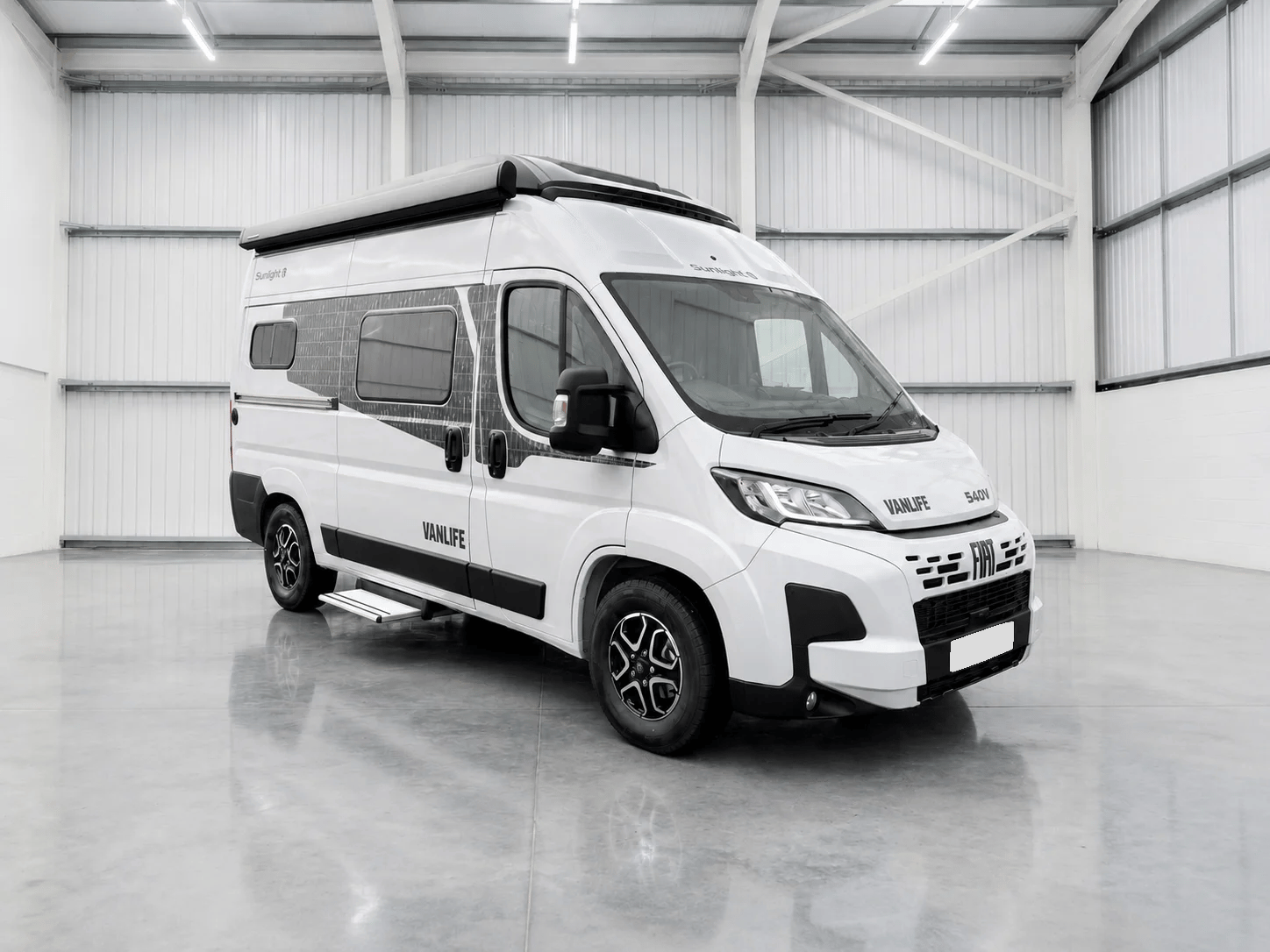
The camper you fall for is rarely the one you can afford. That gap is the whole reason Campervan.win exists. Right now we’re giving away the Sunlight Vanlife, worth around £65,000, and closing that gap is the point: capped entries so the odds stay honest, £10 a ticket, a maximum of five per person, £500 to a UK charity from every full draw, the winner picked by a public randomness beacon anyone can re-check, and one person driving away in the van itself.
Which would you actually buy?
Same money on the table. Tap your pick.
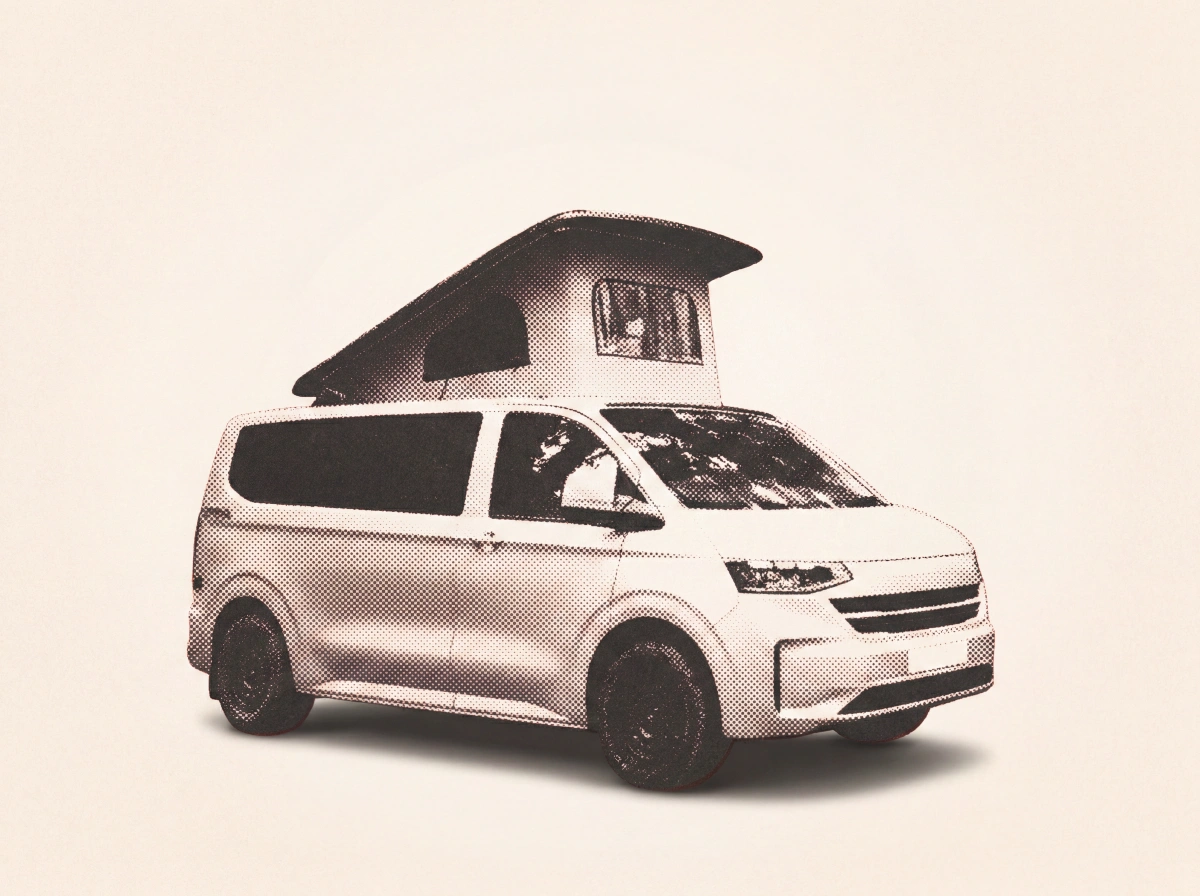
Taylored Offtrail
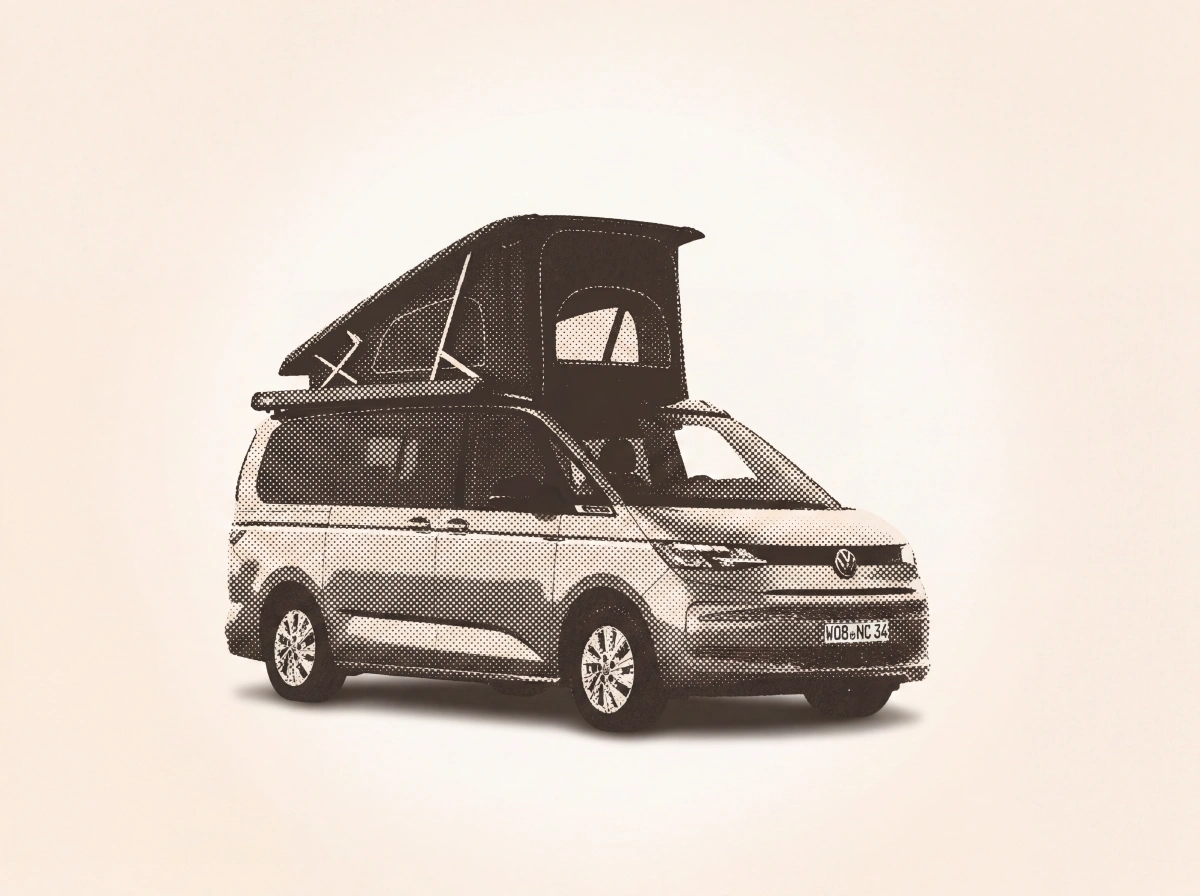
VW Grand California
Tap a side to vote. It’s anonymous.

About the author
Rowan
Rowan writes editorial features, comparisons, and industry context pieces that help readers understand the campervan and motorhome landscape.
Keep Reading
Related Reading
Thoughtful articles that build on what you’ve just read.
Campervan Buying Guides
10 min read
Swift Merlin 2027: nine layouts from £64,190 and how to pick the right one
Swift's all-new Merlin campervan arrives for 2027 with nine layouts on the Fiat Ducato panel van. We sort them into four families, work the payload sum on a four-seat version, and explain what the roof, the automatic and the prices mean for your choice.
Campervan Buying Guides
11 min read
Bailey Endeavour B68: the end-lounge Transit campervan where the pop-top costs 143 kg
Bailey's new Endeavour B68 puts a rear lounge in a 5.98 m Ford Transit campervan. We compare it with the B65 and B62, check the 1.86 m bed, and do the payload sums if you add the £7,500 pop-top.
Campervan Buying Guides
12 min read
New campervans under £60,000 for 2027: what the NEC shows and what the price leaves out
A fair look at the new 2027 campervans listed under £60,000 ahead of the Motorhome and Caravan Show at the NEC, with each price given as its maker words it, and the differences between ex-works, delivered and German-retail-based figures explained so you can compare real on-the-road totals.
Campervan Buying Guides
14 min read
Eura Mobil Vancona 2027: a €57,400 campervan with just 84 to 118 kg left for options
Eura Mobil's new Vancona is a well-equipped Fiat Ducato campervan from €57,400, but its 84 to 118 kg options allowance means you need to order it with the weight sheet open. We explain what the figure means, what the 4.25 t uprate costs you in licence terms, and which options to prioritise.