
Sunlight Ibex vs Bürstner Habiton X: two 4x4 campervans, one big decision

Written by
Felix
Felix covers campervan technology, layouts, and modern conversions, with a focus on design-led thinking and practical performance
The short answer
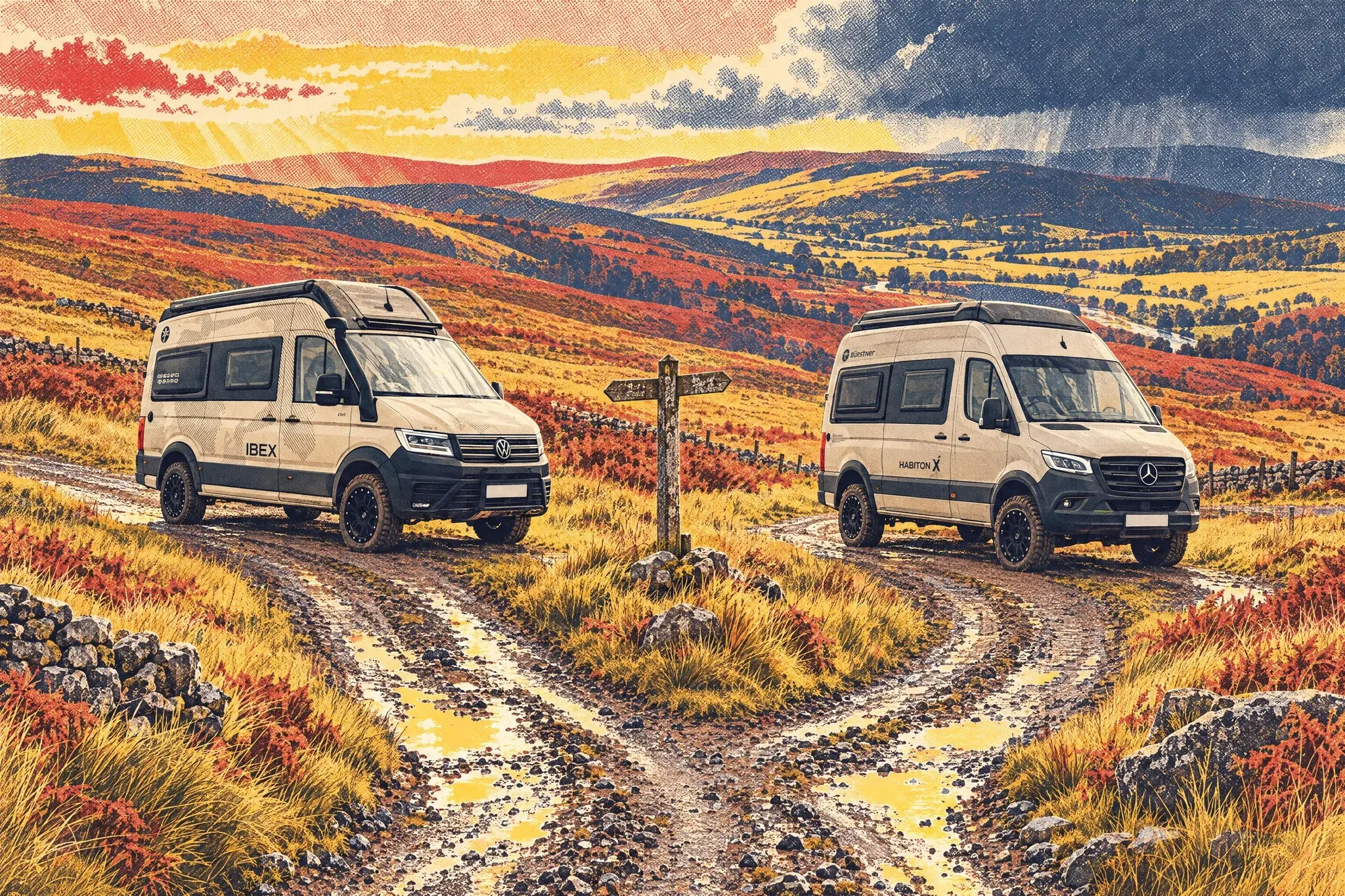
The Sunlight Ibex and Bürstner Habiton X are two 4x4 campervans from the same Erwin Hymer Group built around opposite ideas, so the decision is genuinely interesting rather than a simple better-or-worse. The Ibex is the value play: a VW Crafter 4x4 at £86,690 that, crucially, stays on a 3,500kg category B licence as standard, though it sleeps only two plus one and one UK dealer says deliveries start in September or October 2026. The Habiton X is the clever-premium one: a Mercedes Sprinter 4x4 with a patented sliding bathroom and the option of four berths, on sale now, but it costs £102,000 to £107,000 and at 4,100kg needs a C1 licence. The Ibex's trump card is a real 4x4 you can drive on a car licence. Here is the full head-to-head, and which suits which buyer.

Updated 6 October 2026: Sunlight has published the production IBEX 604D's UK price and specification, so we have corrected the figures below.
Here's a curious thing. Two of the most interesting 4x4 campervans you can put on a UK driveway come from the same parent company, the Erwin Hymer Group, and yet they're built around almost opposite ideas. The Sunlight Ibex is the value play: a go-anywhere camper on the VW Crafter, listed at £86,690, and crucially drivable on an ordinary car licence. The Bürstner Habiton X is the clever-premium one: a Mercedes Sprinter 4x4 with a genuinely novel patented sliding bathroom, the option of more berths, and a price to match. They're cousins, but they're chasing different buyers.
That makes them the natural cross-shop for anyone in the market for a proper four-wheel-drive camper, and it makes the decision a real one rather than a coin toss. So this is a clear, honest comparison of the two: where each wins, where each loses, and which one is right for you. We've written separately about the Ibex's price and spec and asked in our Ibex review whether it's the best-value 4x4; this piece puts it head to head with the rival it most has to beat. One caveat up front, in the spirit of the site: the Habiton X is on sale now and well documented, while the Ibex is newer. Sunlight has now published the price and specification of the IBEX 604D, as it calls the VW version, and one UK dealer says deliveries start in September or October 2026.
The quick verdict
If you just want the answer, here it is, with the detail to follow.
Choose the Sunlight Ibex if value and licence matter most: it's cheaper, at £86,690, and at its standard 3,500 kilograms it stays on an ordinary category B car licence, while still giving you genuine factory all-wheel drive, with a locking differential in the optional off-road pack. The catches are that it sleeps only two plus one, it's a brand-new model with no track record yet, and one UK dealer says deliveries only start in September or October 2026.
Choose the Bürstner Habiton X if you want it now and you want flexibility: it's available today in right-hand drive, it carries four with four travel belts and can sleep up to four with the pop-top, and its patented sliding bathroom is the cleverest piece of design in either van. The catches are the price, roughly £102,000 to £107,000 in 4x4 form, and that the 4x4 version is plated at 4,100 kilograms, so it needs a C1 licence that many drivers don't hold.
In one line: the Ibex is the value-and-accessibility van, the Habiton X is the available-and-clever one. Now the detail.
At a glance
| Sunlight Ibex | Bürstner Habiton X | |
|---|---|---|
| Base vehicle | VW Crafter, factory 4x4 | Mercedes Sprinter 419 CDI 4x4 |
| Engine | 2.0 TDI, 163 PS | 2.0 diesel, 190 PS |
| Gearbox | 8-speed automatic | 9-speed automatic (9G-TRONIC) |
| Length | approx. 5.99 m | 5.93 m |
| Height | 2.72 m | 2.83 m |
| Plated weight (4x4) | 3,500 kg (3,880 kg uprating optional) | 4,100 kg |
| Licence needed (4x4) | Category B (C1 if uprated) | C1 |
| Berths | 2 to 3 (2 + 1) | 2, or 4 with pop-top |
| Travel seatbelts | 4 | 4 |
| Signature feature | Inside-outside pull-out fridge, integrated awning | Patented sliding bathroom |
| UK price (4x4) | £86,690 (off-road pack £6,280 extra) | approx. £102,000 to £107,000 |
| Availability | On sale; one dealer quotes deliveries from September or October 2026 | On sale now, RHD, in stock |
Same group, different philosophies
It helps to know where these two sit in the family, because it explains everything that follows. Both are Erwin Hymer Group vans, but Sunlight and Bürstner occupy different rungs. Sunlight is the group's value-and-design brand, built to undercut on price by being smart about specification rather than by skimping on engineering, as we explain in our guide to who makes Sunlight campervans. Bürstner sits a step up, a more premium badge with a reputation for clever, design-led interiors. So this isn't really a fight between two equals; it's the value brand and the premium brand each taking a swing at the same niche, and that framing predicts where each lands. The Ibex wins on price and accessibility; the Habiton X wins on polish, flexibility and that headline piece of design. Keep that in mind, and the rest of the comparison falls into place.
The base vehicle: Crafter versus Sprinter
The first real divergence is under the skin. The Ibex, which Sunlight calls the IBEX 604D, is built on the Volkswagen Crafter with factory permanent all-wheel drive (VW's 4MOTION system), using the 2.0-litre TDI diesel with 163 PS and an eight-speed automatic. The Habiton X is built on the Mercedes-Benz Sprinter, specifically the 419 CDI 4x4, with a 2.0-litre diesel producing 190 PS and the slick nine-speed 9G-TRONIC automatic. Both, importantly, use proper factory all-wheel drive from the base-vehicle maker, not a third-party conversion, which is the reassuring way to do it.
On paper the Mercedes has the edge on outputs: more power, an extra gear ratio, and the badge that many buyers still regard as the gold standard for a big van. The 9G-TRONIC is a particularly smooth automatic, and the Sprinter's all-wheel-drive system is well proven. The Crafter answers with a strong safety record, a wide and accommodating commercial service network, and an eight-speed automatic that's no slouch. For most drivers, both will feel refined, capable and easy to live with; the Sprinter is the slightly more powerful, slightly more premium-feeling base, and the Crafter is the slightly more value-oriented one, which is exactly the pattern of the whole comparison. If badge and outright outputs matter to you, the Habiton X's Mercedes base is a genuine draw. If they don't, the Crafter gives little away where it counts.
In daily ownership, both bases are easy to live with, but in slightly different ways. The Sprinter has long been the default for big-van buyers and has the broadest specialist support, plus that intangible badge appeal; the 190 PS engine and nine-speed automatic make it the marginally brisker, more effortless drive of the two. The Crafter, Volkswagen's close relation to the MAN TGE, is every bit as modern, with strong driver-assistance systems and a service network used to working vans, and its eight-speed automatic is smooth and well-judged. Neither will disappoint on a long motorway haul or a slow, technical track. The honest summary is that the Sprinter is the more powerful, more prestigious base and the Crafter the more value-minded one, and unless outright outputs or the three-pointed star are decisive for you, the difference in everyday use is smaller than the price gap between the two vans implies.
The licence divide: the single biggest difference
If one thing decides this comparison for a lot of people, it's this, so we'll give it room. The Sunlight Ibex is plated at 3,500 kilograms as standard, which keeps it on an ordinary category B car licence: if you can drive a normal car, you can drive an Ibex. Sunlight does offer an uprating to 3.88 tonnes, but that would put the Ibex in C1 territory too, for anyone who passed their test on or after 1 January 1997. The Bürstner Habiton X, in its 4x4 form, is plated at 4,100 kilograms, which is over the B-licence limit and requires a C1 entitlement. Many drivers, particularly anyone who passed their test after 1997, don't have C1, and getting it means an additional test and a medical.
This is not a small detail; for a large group of buyers it's the whole decision. A van you can't legally drive on your current licence is, to you, not a rival at all. So the practical choice often isn't "Ibex versus Habiton X on level terms", it's "an Ibex I can drive now versus a Habiton X I'd have to pass another test to drive at all". On that basis the Ibex has a decisive advantage, and it's the cleanest argument in its favour.
There's a nuance worth knowing, because it cuts both ways. Bürstner does offer the Habiton in a two-wheel-drive form (the plain HM 6.0) plated at 3,500 kilograms, which is B-licence friendly and cheaper, around £86,000. But that version isn't a 4x4, so it doesn't do the go-anywhere job at all. That's the crux: if you want genuine all-wheel drive, the Habiton X makes you choose between four-wheel drive and a B licence, while the Ibex gives you both at once. That single fact, a real 4x4 you can drive on a car licence, is the Ibex's trump card, and nothing else in this comparison is quite as consequential. The only caveat is the one we keep flagging: keeping a 4x4 under 3,500 kilograms puts pressure on payload, and Sunlight's figures leave the Ibex 438 kilograms before options and packs.
Price and availability
The money follows the brand positions. The Ibex's UK list price is £86,690, the off-road pack is £6,280 more, and one UK dealer lists a right-hand-drive UK-specification van with packs at £101,070. The Habiton X 4x4 lists in the UK at roughly £102,000 to £107,000, depending on dealer and specification. So in 4x4 form the Ibex undercuts the Habiton X by something like £15,000 at the base end, narrowing once you add the Ibex's off-road pack and other packs. Either way, the Ibex is the cheaper 4x4, which is the value brand doing its job.
But price isn't the only axis, and availability is where the Habiton X hits back hard. It's on sale now, in right-hand drive, with stock on UK dealer forecourts: you can go and see one, sit in it, and order it for delivery in a sensible timeframe. The Ibex is newer: its price and specification are now published, but one UK dealer says customer deliveries only start in September or October 2026. So you're weighing a cheaper, brand-new van you may have to wait for, against a dearer van you can have, and inspect, now. For some buyers the wait is no obstacle and the saving is worth it; for others, wanting it this year and being able to see it in the metal is worth the premium. That's a genuine trade, not a tie-breaker that goes one way for everyone.
Size and driveability
On the road, the two are near-identical in footprint, which is worth knowing because it means neither has a meaningful parking or manoeuvring advantage. The Ibex is about 5.99 metres long and 2.72 metres tall; the Habiton X is 5.93 metres long and 2.83 metres tall. The Ibex is about 11 centimetres lower, but otherwise they're the same size for practical purposes: both fit most campsite pitches (and overhang a standard car-park bay), both thread through traffic far more easily than a coachbuilt motorhome, and both are too tall for the typical 2.0 to 2.1-metre car-park height barrier, so with either you'll be parking in the open or in motorhome-friendly spaces. The all-terrain tyres and rugged roofs add to the height on both, so measure your garage or gateway whichever you choose.
Where they differ on the road is weight and power, and it ties back to the licence point. The Habiton X 4x4 is the heavier vehicle at 4,100 kilograms, with the more powerful 190 PS Mercedes engine and nine-speed automatic to haul it; the Ibex is lighter at 3,500 kilograms with 163 PS and an eight-speed auto. In practice both will feel relaxed and capable, the Mercedes marginally the more effortless, the VW perfectly adequate, but the Habiton X's extra weight is the very thing that pushes it into C1 territory, so its on-paper performance edge comes at the cost of the licence many buyers can't meet. The Ibex trades a little outright muscle for the freedom of an ordinary licence, which for most people is the better bargain.
Layout and living: two very different interiors
This is where the two vans diverge most as places to live, and as a design comparison it's the most interesting part, so let's take it slowly.
The Ibex keeps it classic and rugged. There's a permanent rear transverse double bed, around 200 by 136 centimetres, always made up and ready. Ahead of the bed, the kitchen and a wet washroom face each other across the van, divided from the rear by a sliding partition, with the galley's standout being a pull-out fridge you can reach from inside and from outside the van. It's an efficient, proven adventure-van layout: bed at the back, services in the middle, everything where a couple living off-grid would want it. The inside-outside fridge and the awning recessed into the moulded roof are the clever touches, small but genuinely useful in the field.
The Habiton X takes a bolder swing, and it's the reason the van exists. Its headline feature is a patented sliding bathroom, which Bürstner calls the Slidebath: the entire wet-room cubicle runs on floor rails, so by day it slides out of the way to free up living and sleeping space, and at night it slides back to release two full-length single beds. It's a genuinely original answer to the oldest problem in compact campers, how to have a proper bathroom and enough sleeping length in a van under six metres, and it won Bürstner two UK awards for it: Best Campervan Innovation in the 2026 Out & About Awards, and Best 2-Berth Campervan with Shower and Toilet at the Practical Motorhome Awards. Instead of the Ibex's fixed transverse double, you get two longitudinal singles, each extendable, and the option of a pop-top roof that adds a heated double bed above.
So the living comparison is really a choice of philosophies. The Ibex offers the simplicity and convenience of a permanent, always-there double and a couple-focused layout, with the lovely inside-outside fridge as its party piece. The Habiton X offers cleverness and flexibility: a transforming bathroom, two singles that can become a layout that suits different needs, and a pop-top that turns a two-berth into a four-berth. If you value a fixed bed you never have to think about and a van optimised purely for two, the Ibex's layout is the more restful. If you're drawn to ingenious, space-multiplying design and want the option of more beds, the Habiton X is genuinely special, and the sliding bathroom is the kind of feature you'll find yourself showing people.
The sliding bathroom, examined
It's worth dwelling on the Habiton X's party trick, because it's the clearest example of what the premium brand's extra money buys, and because as a piece of design it's genuinely the most interesting thing in either van. The problem it solves is the oldest one in compact campers: in a van under six metres, every centimetre is contested, and a fixed bathroom big enough to use is a fixed bathroom that steals space from living and sleeping. Most makers compromise, a cramped wet room, or beds that aren't quite long enough. Bürstner's answer is to refuse the compromise by making the bathroom move.
The Slidebath runs on floor rails. By day, the cubicle slides into a compact position, opening up the living area and freeing the length needed for a proper lounge. At night, it slides back, and that movement is what releases two full-length single beds, beds that simply wouldn't fit if the bathroom were fixed. It's a clever bit of mechanical thinking, and the two UK awards it won, Best Campervan Innovation and Best 2-Berth with Shower and Toilet, reflect that the industry rates it too. In use, it means you get a real, full-size washroom and beds long enough for tall adults in a van that, on the outside, is no bigger than the Ibex.
The Ibex takes the opposite view: don't add complexity, add convenience. Its rear transverse double is simply always there, made up and ready, with a fixed wet room alongside, and the cleverness goes instead into the inside-outside fridge and the integrated awning. There's a real philosophical choice here, and it's the heart of the comparison. The Habiton X's transforming bathroom is ingenious and space-multiplying, but anything that moves is a thing that can wear, need maintenance or simply ask you to operate it each day; the Ibex's fixed layout asks nothing of you and has nothing to go wrong, at the cost of being less flexible. If you love clever design and the idea of a van that reconfigures around you, the Habiton X is a delight. If you'd rather a van that's simply ready, every time, with no daily ritual, the Ibex's honest simplicity has its own appeal. Neither is wrong; they're two different theories of how a small van should work, and which you prefer says as much about you as about the vans.
Berths and belts: who can come along
Layout leads straight into the most practical question of all, the one we always urge buyers to settle first, and which we cover in depth in our berths versus seatbelts piece: how many people can actually travel and sleep in each van.
The Habiton X wins this, but on beds rather than belts. It carries four, with four travel seatbelts, and it sleeps two as standard or up to four with the optional pop-top roof. That makes it the more flexible van for anyone who occasionally travels with more than a partner and wants everyone to sleep aboard: friends or older children. It isn't a full family van in the four-growing-children sense, but four belts and up to four berths is a real, useful flexibility.
The Ibex is mainly a couple's van. It has four belted seats, so it can carry four, but Sunlight lists it as sleeping two plus one, so it can't sleep four. This is the clearest area where the dearer van earns its money: if you ever need to sleep four, the Habiton X can, with its pop-top, and the Ibex can't.
Off-road capability
Both are genuine 4x4s, so this is closer than the rest, but there are differences worth knowing. The Ibex has factory permanent all-wheel drive and a standard electric off-road step, and its optional off-road pack (£6,280) adds a rear locking differential, which is a serious traction aid, along with hill start and descent assist, 18-inch all-terrain tyres and an LED light bar; the snorkel, bull bar, rear ladder and spare-wheel carrier seen on show vans aren't in Sunlight's factory lists. The Habiton X has the Mercedes factory all-wheel drive, and its off-road hardware, all-terrain tyres on steel wheels, an underbody skid plate, hill-descent control, an electric off-road step and a front bar, comes as an optional Offroad-Pack rather than all as standard.
So both can genuinely leave the tarmac, and for the tracks, fields and passes most owners will actually tackle, either will do the job well. The Ibex's differential lock is a point in its favour for outright traction on broken ground, while the Habiton X's skid plate is a useful addition of a different kind, and both off-road packs include hill-descent assistance. On both vans, note that the rugged off-road kit is at least partly an optional package, so the headline price buys the all-wheel drive and the serious hardware is an addition to confirm and cost. The Ibex has no suspension lift on offer, so if hardcore off-roading is your aim, confirm ground clearance on both before deciding. For the realistic majority, this category is close to a draw: two capable factory 4x4s, each with a sensible kit list.
Off-grid and equipment
For a van meant to spend time away from hook-ups, the off-grid kit matters, and both are now fully specified, so you can compare like with like. The Habiton X carries 110 litres of fresh water and 90 litres of waste, a 69-litre compressor fridge with a freezer compartment, diesel heating with a small gas bottle for the hob, a 95 amp-hour AGM leisure battery as standard with an optional upgrade to lithium of up to 150 amp-hours, and solar available as part of an off-grid pack. Those are solid, known numbers you can plan around.
The Ibex carries 90 litres of fresh water and 70 litres of waste, an 84-litre pull-out compressor fridge, Truma Combi 4 diesel heating (the Combi 6 DE, with an electric element, is a £630 option), one 5 kg gas bottle, and a 95 Ah AGM leisure battery as standard, with lithium a £900 option. Despite a June dealer listing, there's no solar panel in Sunlight's lists, as standard or as an option. So on paper the Habiton X has the bigger tanks and a solar option, while the Ibex has the bigger fridge, and that counts for something when you're spending this much.
Build, finish and the value-versus-premium question
Spending six figures, you're entitled to ask what the price difference buys beyond the spec sheet, and a lot of it comes down to finish. Bürstner sits above Sunlight in the group hierarchy as a more premium brand, and that typically shows in the softer, harder-to-list things: the quality of the trim and upholstery, the feel of the fittings, the detailing, the sense of a more considered interior. It's the same pattern you see across the group, the premium badge puts more into the touch and finish, and you pay for it.
Sunlight, as the value brand, builds to a sharper price by being smart about specification rather than by skimping on the engineering that keeps you safe and dry. The fundamentals, the chassis, the all-wheel drive, the build integrity, are backed by the same group know-how. Where the value brand usually gives a little is in the plushness of the finish and the length of the standard equipment list. That's not a criticism, it's the deal: you accept a slightly less lavish cabin in exchange for a meaningfully lower price.
So the build-quality question isn't really "which is better made" in any safety sense, both are properly engineered group products, it's "how much does the finish matter to you, and is it worth the premium". If you're someone who notices and values the nicer materials, the more polished detailing and the more generous standard kit, the Habiton X earns its extra money and will feel special every time you step in. If you'd rather put that money towards options, trips, or simply keep it, and you're happy with a sensible, well-built but less lavish interior, the Ibex's value proposition holds. We'd strongly suggest sitting in both, when you can, before deciding how much the finish difference is worth to you, because it's the kind of thing that's hard to judge from photographs and easy to judge in person.
Maturity and ownership
There's a less glamorous factor that deserves weight: one of these vans is a known quantity and the other isn't, yet. The Habiton X is on sale, award-winning, and being driven by real owners, with Bürstner's established dealer and warranty network behind it. You can buy it knowing what you're getting. The Ibex is a brand-new model, from a brand that hasn't built anything quite like it, with deliveries starting in September or October 2026, according to one UK dealer, and no track record yet for reliability, durability off the road, or resale value. Buying it means buying first, with the upside of a distinctive van and the downside of the unknowns that come with any all-new vehicle.
For some buyers that's an easy call in the Habiton X's favour: they want the reassurance of a proven, available van and they're happy to pay for it. For others, the Ibex's value and licence advantages are worth the early-adopter risk, especially if they'd rather have the cheaper, B-licence van and don't mind waiting. Neither instinct is wrong; it depends on your appetite for being first versus your preference for certainty. It's just worth naming, because it's a real difference that the spec sheets don't show.
Running costs compared
The differences don't end at the showroom. Both are tall, heavy 4x4 vans, so neither will sip fuel, but the Habiton X's higher 4,100-kilogram plate and more powerful engine suggest it'll be the thirstier of the two on a long run, while the lighter-plated Ibex may have a small edge; in practice both will cost more to fuel than a sleek two-wheel-drive camper, so budget accordingly. All-terrain tyres on either van wear faster and cost more than road rubber, especially if most of your miles are tarmac. Servicing is straightforward for both, at Volkswagen and Mercedes commercial networks respectively, though Mercedes servicing can carry a small premium to match the badge.
Insurance is worth quoting early on both: these are high-value, specialist vehicles, and a £100,000-ish 4x4 camper attracts premiums to match, so don't assume. On depreciation, the Habiton X has the advantage of being an established, available model with a known market, which makes its residuals easier to predict, whereas the Ibex is an unproven newcomer whose resale is genuinely hard to call, rarity could help it, or an untested market could hurt it. None of this changes the headline that the Ibex is the cheaper van to buy, but it's worth folding the running side into the decision, because over years of ownership the gap between the two narrows or widens depending on these less visible costs.
A third option: the two-wheel-drive Habiton
There's a third path worth mentioning, because it muddies the neat two-way choice in a useful way. Bürstner sells the Habiton in two-wheel-drive form, the plain HM 6.0, plated at 3,500 kilograms and priced from around £86,000. That gives you the Habiton's clever sliding bathroom, its four belts and its premium finish, on an ordinary B licence and for less than the 4x4 version, indeed for a touch less than the Ibex. So if what draws you to the Habiton X is the bathroom, the flexibility and the finish rather than the off-road ability, the two-wheel-drive Habiton may be the smarter buy, and it sidesteps the C1 problem entirely.
The catch, of course, is that it isn't a 4x4, so it can't do the go-anywhere job at all. That's the real fork. If you genuinely need all-wheel drive, the two-wheel-drive Habiton is irrelevant and the choice is the 4x4 Habiton X (dearer, C1) versus the Ibex (cheaper, B licence). If you don't truly need 4x4 but you love the Habiton's design, the two-wheel-drive version gets you most of what's special about it without the weight, cost and licence penalty of the all-wheel-drive hardware. It's worth being honest with yourself about which camp you're in, because it can change the answer entirely, and it's another reason we keep urging buyers to settle whether they really need a 4x4 before anything else.
So which should you buy?
Settle the hard constraints first, and the choice usually makes itself.
Buy the Bürstner Habiton X if you need to sleep four (it has an optional four berths, while the Ibex sleeps two plus one), if you want the van now rather than waiting for the Ibex's first deliveries, if the patented sliding bathroom genuinely appeals, or if you value the Mercedes base and a proven, available vehicle, and you either hold a C1 licence or are happy to get one. It's the more flexible, more polished, more immediately ownable van, and for the buyer who wants those things it's worth the premium.
Buy the Sunlight Ibex if value and licence are your priorities: if you want a genuine 4x4 you can drive on an ordinary car licence, for meaningfully less money, and two to three berths are enough. You'll need to accept a possible wait for delivery and the risk of an unproven model, but in return you get arguably the only true 4x4 camper in this class that pairs real capability with a B-licence plate and a sub-£100,000 price. For the right couple, that's a compelling package.
And if you're torn, let the licence question break the tie. If you don't hold C1 and don't want to sit another test, the Ibex effectively wins by default, because the 4x4 Habiton X isn't an option you can legally exercise. If you do hold C1, then it's a genuine choice between the available, flexible, clever Bürstner and the cheaper, B-licence-friendly Sunlight, and it comes down to whether you value flexibility and immediacy or value and accessibility. Both are good vans; they're just built for different people.
Two buyers, two answers
To make the choice concrete, picture two buyers, because the right van really does depend on who you are.
The first is a couple in their fifties who've sold the family caravan and want a van for wild, off-season touring: the north-west of Scotland, the Atlantic coast, snowed-in passes in the shoulder months. They travel just the two of them, they're in no rush, and they're watching the budget after a big life change. For them, the Ibex is close to ideal. The B-licence plate means no extra test, the £86,690 list price leaves money for trips, the fixed double and wet bath suit two people perfectly, and the genuine 4x4 with a diff lock will take them down the tracks they're dreaming of. The unproven-model risk is real, but for a patient couple chasing value and capability, the Ibex is the better answer.
The second is a younger couple who hold a C1 licence, want the van this year, and regularly bring a friend or a teenager along, sometimes needing to sleep three or four. They've got the budget, they love clever design, and they want the reassurance of a proven, available vehicle they can go and sit in this weekend. For them, the Habiton X is the better buy without much argument: the optional four berths do what the Ibex can't, the sliding bathroom will delight them, the Mercedes base and premium finish justify the premium they can afford, and they can have it now rather than waiting for a new model's first deliveries. Same niche, same group, completely different right answers, which is exactly why both vans exist.
Frequently asked questions
What's the main difference between the Sunlight Ibex and the Bürstner Habiton X?
Two things. First, licence and price: the Ibex is plated at 3,500 kilograms as standard (a B licence) and listed at £86,690, while the 4x4 Habiton X is plated at 4,100 kilograms (a C1 licence) and costs roughly £102,000 to £107,000. Second, layout and flexibility: both carry four, but the Ibex sleeps two plus one with a fixed rear double, while the Habiton X sleeps up to four with a pop-top and has a patented sliding bathroom.
Which is the better 4x4, the Ibex or the Habiton X?
Both are genuine factory 4x4s and either will handle the tracks, fields and passes most owners actually tackle. The Ibex's optional off-road pack adds a locking differential for outright traction, plus hill start and descent assist; the Habiton X's off-road pack adds a skid plate and hill-descent control. On both, the rugged hardware is at least partly an optional package. For the realistic majority of use, it's close to a draw, two capable 4x4s with sensible kit.
Do you need a special licence for either van?
For the Ibex, not as standard: at 3,500 kilograms it's a standard category B car licence, though Sunlight's optional 3.88-tonne uprating needs C1 for anyone who passed their test on or after 1 January 1997. For the Habiton X 4x4, yes: at 4,100 kilograms it needs a C1 licence. Note Bürstner also offers a two-wheel-drive Habiton at 3,500 kilograms that's B-licence friendly, but that version isn't a 4x4. So among genuine 4x4s, the Ibex is the one you can drive on an ordinary car licence.
Which is available sooner?
Probably the Habiton X. It's on sale now in right-hand drive, with stock on UK forecourts. The Ibex is on sale too, with its price and specification published, but one UK dealer says deliveries only start in September or October 2026. If you want a 4x4 camper this year, ask dealers for firm delivery dates on both.
Which is better value, the Ibex or the Habiton X?
On price, the Ibex: it undercuts the 4x4 Habiton X by roughly £15,000 at the base end, and it's drivable on a cheaper-to-attain B licence. But value isn't only price, and the Habiton X counters with availability now, the option of four berths, a proven track record and the award-winning sliding bathroom. If raw value and licence are what you weigh, the Ibex wins; if flexibility, immediacy and design win your vote, the Habiton X justifies its premium. Our Ibex review digs further into the value question.
Are the Sunlight Ibex and Bürstner Habiton X made by the same company?
They're made by different brands within the same parent group, the Erwin Hymer Group. Sunlight is the group's value-and-design brand; Bürstner sits a step above as a more premium badge. So they're corporate cousins built around different philosophies and price points, which is why they share group engineering but feel like quite different vans. Our guide to who makes Sunlight campervans explains the family.
Which has the better bathroom, the Ibex or the Habiton X?
The Habiton X, for sheer cleverness: its patented sliding bathroom moves on rails to free up space by day and release two full-length beds at night, and it won UK awards for the idea. The Ibex has a conventional fixed wet room, a perfectly good indoor loo and shower, but nothing as ingenious. If a transforming, space-saving bathroom appeals, the Habiton X is the clear winner; if you'd rather a fixed layout with nothing to operate, the Ibex's simplicity is the trade.
Are the Sunlight Ibex and Bürstner Habiton X the same size?
Near enough, yes. The Ibex is about 5.99 metres long and 2.72 metres tall; the Habiton X is 5.93 metres long and 2.83 metres tall, so the Ibex is about 11 centimetres lower. In practice they have the same footprint: both fit a standard parking bay, both are easier to drive than a coachbuilt, and both are too tall for typical car-park height barriers. The meaningful difference isn't dimensions but weight: the 4x4 Habiton X is plated at 4,100 kilograms (needing a C1 licence) against the Ibex's 3,500 kilograms (a standard B licence).
Common questions
What is the main difference between the Sunlight Ibex and the Bürstner Habiton X?
The licence. Both are around six-metre 4x4 campervans from the Erwin Hymer Group, but the Ibex (on the VW Crafter) is plated at 3,500kg as standard so it stays on an ordinary category B licence, while the Habiton X (on the Mercedes Sprinter) is 4,100kg in 4x4 form and needs a C1 entitlement. Price differs too: the Ibex is cheaper, at £86,690 versus 102,000 to 107,000.
Do you need a special licence for the Ibex or the Habiton X?
For the Ibex, not as standard: at 3,500kg it is covered by a standard category B car licence, though Sunlight's optional 3.88-tonne uprating would need C1 for anyone who passed their test on or after 1 January 1997. For the 4x4 Habiton X, yes: at 4,100kg it is over the B-licence limit and needs a C1 entitlement, which many drivers, especially anyone who passed their test after 1997, do not hold, and gaining it means an extra test and a medical. That single difference is the Ibex's trump card.
Which is better value, the Ibex or the Habiton X?
The Ibex, on price. Its UK list price is £86,690, with the off-road pack 6,280 more, against the Habiton X's roughly 102,000 to 107,000, so it undercuts its rival by something like £15,000 at the base end. It is the value brand doing its job, though the gap narrows once you add the Ibex's off-road pack and other packs.
Which has the better bathroom, the Ibex or the Habiton X?
The Habiton X, with its standout feature: a patented sliding bathroom that reconfigures the washroom space cleverly. The Ibex has a more conventional mid-van wet washroom. If a genuinely novel, space-efficient bathroom matters to you, that is one of the Habiton X's key arguments for its higher price and the C1 licence it requires.
Which is available sooner, the Ibex or the Habiton X?
Probably the Habiton X, which is on sale now and well documented. The Ibex is on sale too, with its price and specification published, but one UK dealer says deliveries only start in September or October 2026. So if you want a 4x4 camper soon and can drive the weight, the Habiton X may be the quicker route, but ask dealers for firm delivery dates on both.
Which should I buy, the Sunlight Ibex or the Bürstner Habiton X?
Choose the Ibex if value and the standard B licence matter most and two to three berths are enough. Choose the Habiton X if you want it now, need four berths, want the clever sliding bathroom and the Mercedes badge, and either hold a C1 licence or will gain one. Either way, keeping a 4x4 under 3,500kg pressures the Ibex's payload, and Sunlight's figures leave 438kg before options.
The reachable bit
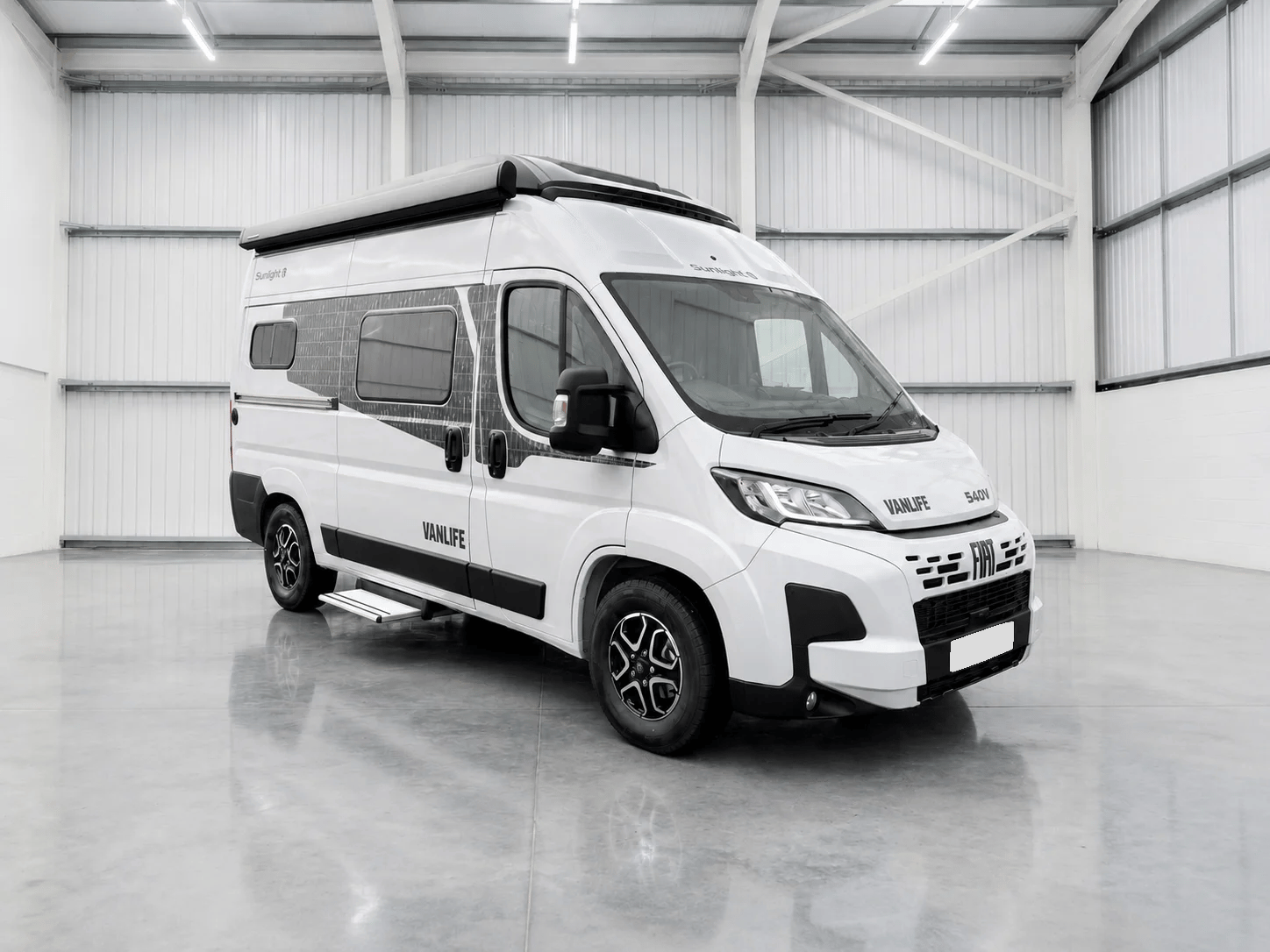
The camper you fall for is rarely the one you can afford. That gap is the whole reason Campervan.win exists. Right now we’re giving away the Sunlight Vanlife, worth around £65,000, and closing that gap is the point: capped entries so the odds stay honest, £10 a ticket, a maximum of five per person, £500 to a UK charity from every full draw, the winner picked by a public randomness beacon anyone can re-check, and one person driving away in the van itself.
Enjoyed this post?
Get more honest campervan guides like this one in your inbox.
You’re in!
Check your inbox. We’ve just sent you a welcome email.

About the author
Felix
Felix covers campervan technology, layouts, and modern conversions, with a focus on design-led thinking and practical performance
Keep Reading
Related Reading
Thoughtful articles that build on what you’ve just read.
Campervan Buying Guides
10 min read
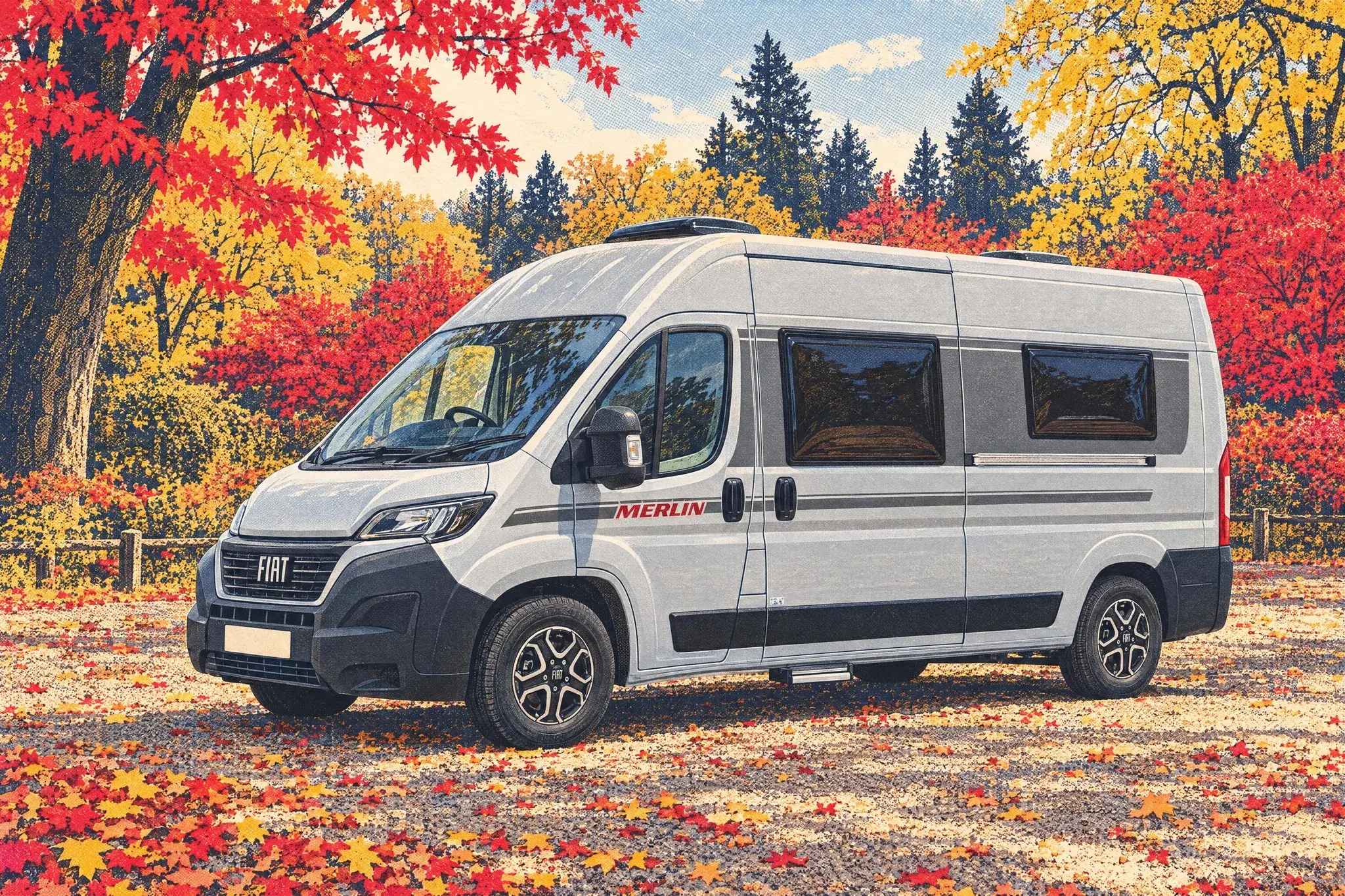
Swift Merlin 2027: nine layouts from £64,190 and how to pick the right one
Swift's all-new Merlin campervan arrives for 2027 with nine layouts on the Fiat Ducato panel van. We sort them into four families, work the payload sum on a four-seat version, and explain what the roof, the automatic and the prices mean for your choice.
Campervan Buying Guides
11 min read
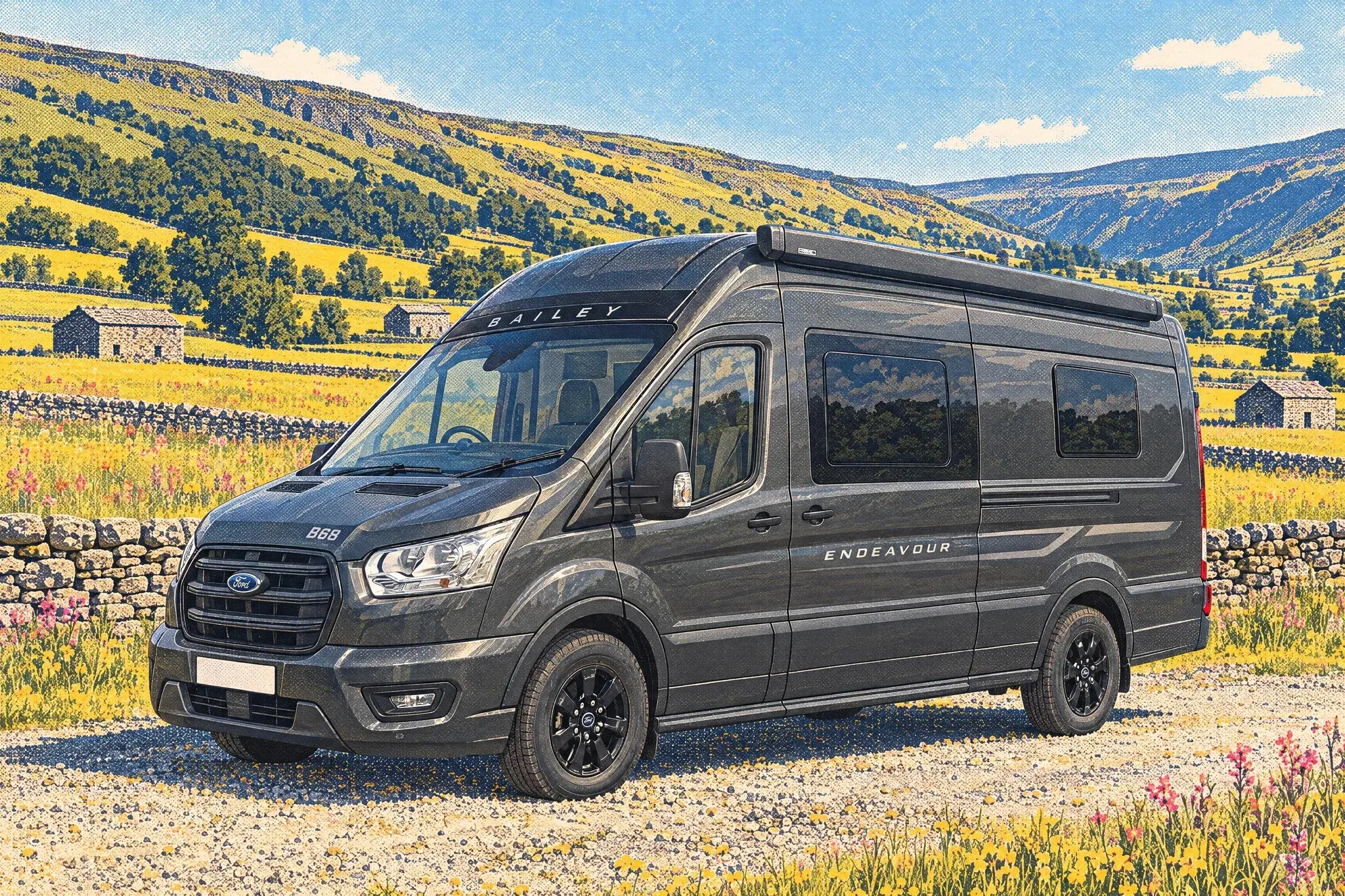
Bailey Endeavour B68: the end-lounge Transit campervan where the pop-top costs 143 kg
Bailey's new Endeavour B68 puts a rear lounge in a 5.98 m Ford Transit campervan. We compare it with the B65 and B62, check the 1.86 m bed, and do the payload sums if you add the £7,500 pop-top.
Campervan Buying Guides
12 min read
New campervans under £60,000 for 2027: what the NEC shows and what the price leaves out
A fair look at the new 2027 campervans listed under £60,000 ahead of the Motorhome and Caravan Show at the NEC, with each price given as its maker words it, and the differences between ex-works, delivered and German-retail-based figures explained so you can compare real on-the-road totals.
Campervan Buying Guides
14 min read
Eura Mobil Vancona 2027: a €57,400 campervan with just 84 to 118 kg left for options
Eura Mobil's new Vancona is a well-equipped Fiat Ducato campervan from €57,400, but its 84 to 118 kg options allowance means you need to order it with the weight sheet open. We explain what the figure means, what the 4.25 t uprate costs you in licence terms, and which options to prioritise.