
Sunlight Ibex: the UK price and full spec of the VW Crafter 4x4 camper

Written by
Leo
Leo covers campervan technology, maintenance, kit, and ownership advice, with a clear, practical focus on how things work in real life.
The short answer
The Sunlight Ibex, officially the IBEX 604D, is a genuine go-anywhere 4x4 campervan on the VW Crafter, with permanent all-wheel drive, a moulded fibreglass roof, an optional off-road pack with a diff lock, light bar and all-terrain tyres, and one quietly brilliant trick up its sleeve. Sunlight's UK price is £86,690 (€87,999 in Germany), the off-road pack is £6,280 more, and one UK dealer says deliveries start in September or October 2026. The clever part is the weight: it is plated at 3,500kg as standard, so it stays on an ordinary category B licence, unlike its Mercedes-based rival the Bürstner Habiton X, though the optional 3.88-tonne uprating needs C1 for drivers who passed their test from 1997. It has four belted seats and two to three berths, with a rear double bed and a mid washroom. Here is the full UK price and spec, laid out clearly.

Updated 6 October 2026: Sunlight has published the production IBEX 604D's UK price and specification, so we have corrected the figures below.
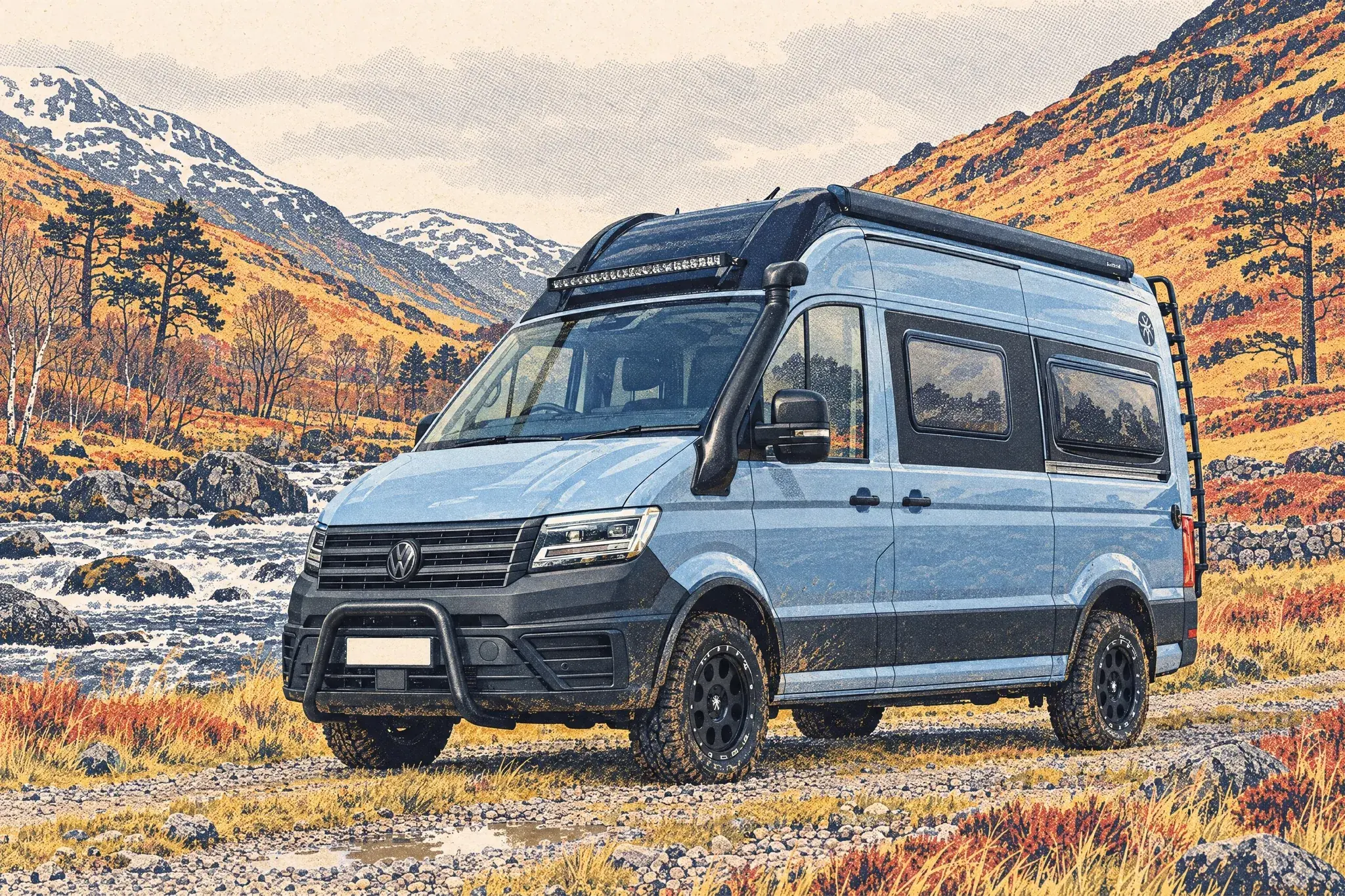
Sunlight has built its name on sensible, well-priced campers: the Cliff and the Vanlife, both on familiar Stellantis and Ford vans, both aimed at people who want a lot of camper for a fair price. The Ibex is something else entirely. It's a proper go-anywhere 4x4 campervan, built on the Volkswagen Crafter with permanent all-wheel drive, a moulded fibreglass roof and, in its optional off-road pack, an LED light bar and chunky all-terrain tyres. It looks like an expedition vehicle, and it's the most ambitious thing the brand has put its badge on.
When we first wrote this guide in June 2026, the official numbers hadn't landed, which made writing about it a careful job. They have now. Sunlight's model-year 2027 price lists, valid from 1 August 2026, give the full specification and a UK price for the IBEX 604D, Sunlight's name for the VW version (its 2027 range also has a Ford IBEX 603D on the Transit, which this guide doesn't cover). UK dealers list it too, and one says deliveries start in September or October 2026. So this is an honest spec-and-price guide: what Sunlight and UK dealers are quoting, what the van actually is, what's standard, and, just as importantly, what costs extra or was only seen on show vans. We've kept those differences clearly marked, because on a brand-new model that's where buyers get caught out.
What the Sunlight Ibex actually is
Start with the shape of it. The Ibex is a panel-van conversion, around six metres long, built on the VW Crafter and fitted from the factory with all-wheel drive. It has four belted seats and two to three berths, with a rear transverse double bed, a kitchen and a wet washroom in the middle, and a walk-through cab. On top of that ordinary-sounding description sit a standard electric off-road side step and an awning recessed into a bespoke moulded roof, plus an optional off-road pack with a rear differential lock, hill start and descent assist, 18-inch all-terrain tyres and an LED light bar. The front bull bar, air-intake snorkel and rear ladder seen on show and concept vans aren't in Sunlight's factory lists. Sunlight ran its prototypes through Iceland, the Faroe Islands and Morocco before committing to production, which tells you the intent: this is meant to actually go to the places the photographs imply, not just look the part in a car park.
In Sunlight's own range it sits right at the top, above the Cliff and the Vanlife. If you've read our piece on who makes Sunlight campervans, you'll know Sunlight is the value-and-design brand within the Erwin Hymer Group, the same group that owns Hymer, Bürstner, Dethleffs and Carado. The Ibex is Sunlight's halo model, the one that stretches the brand upmarket and into a niche almost nobody else occupies at this size. It isn't even Sunlight's only 4x4, the Cliff range has long offered a 4x4 Adventure version, but the Ibex is a different order of thing: purpose-built around the off-road idea rather than a standard van with traction added.
That's the elevator description. The rest of this guide goes through the price, the base vehicle, the full specification and the off-road kit in turn, then lays out plainly what's confirmed and what's still worth checking.
The headline: what the Sunlight Ibex costs in the UK
Let's deal with the number everyone wants first, with the honesty it deserves, because there are really two answers and you need both.
The official answer is in Sunlight's model-year 2027 UK price list, valid from 1 August 2026: the IBEX 604D costs £86,690, a figure Out and About Live calls the on-the-road RRP. In Germany it's €87,999 including 19% VAT, ex works.
The practical answer is what UK dealers are asking, and that depends on the options you tick. Cara Motorhomes and Kenmore Caravans list the Ibex from £86,690, in line with Sunlight's list, while Continental Caravans lists a "Right-hand drive UK specification" van with packs at £101,070 on the road. The off-road pack alone is £6,280. So the working UK picture is from £86,690 for the van, rising to £101,070 for one dealer's van with packs.
| Source | Figure | What it represents |
|---|---|---|
| UK dealers (Cara Motorhomes, Kenmore Caravans) | from £86,690 | Starting price, in line with Sunlight's UK list |
| UK dealer (Continental Caravans) | £101,070 | "Right-hand drive UK specification" van with packs, on the road |
| Sunlight Germany | €87,999 | Official price including 19% VAT, ex works; the off-road pack is €6,999 more |
| Sunlight UK | £86,690 | Official UK list price for model year 2027, valid from 1 August 2026 |
Does £86,690 make sense? It's a little below the roughly £90,000 UK dealers were quoting in June, and Sunlight's German price is €87,999. What we'd caution against is treating £86,690 as the price you'll pay, because that will depend heavily on which options and packs you tick: the off-road pack alone is £6,280, lithium is £900 and the 3.88-tonne uprating is £1,950.
Where that price sits, and why it's interesting
£86,690 is a lot of money, and it's worth being clear-eyed about that. It's also, in the strange world of 4x4 campervans, not as outlandish as it first sounds, because this is a genuinely expensive niche. For context, Sunlight's own Vanlife 540 V, a conventional two-wheel-drive camper, starts from around £61,690 in the UK, as we cover in our Vanlife specs guide. So the Ibex commands something like a £25,000 premium over a standard Sunlight van, which is the price of the all-wheel drive, the bespoke roof and the flagship positioning, before the optional off-road pack.
Look sideways at the rivals and the picture sharpens. The most direct competitor, the Bürstner Habiton X, is another Erwin Hymer Group 4x4, built on the Mercedes Sprinter, and it lists in the UK at roughly £102,000 to £107,000. The Hymer Grand Canyon S 4x4, a tier above again, sits around £119,950. Against those, an Ibex from £86,690 looks like the value option in its class, which is the whole argument of our separate Ibex review asking whether it's the best-value 4x4. We won't relitigate that here, but it's worth flagging now, because the price only means something next to what else your money buys. On the raw figure, the Ibex is positioned to undercut its closest EHG sibling by a useful margin, and that's clearly deliberate: Sunlight is the group's value brand, and the Ibex is priced to do the value brand's job even at the top of its range.
There's one more number that quietly matters more than the headline, and we'll come to it properly in the spec section: the Ibex is plated at 3,500 kilograms as standard, which keeps it on an ordinary car licence. Its closest rival isn't, and that single fact changes the value conversation. Hold that thought.
Why 4x4 campervans cost what they do
It helps to understand why this whole class of vehicle is expensive, because the Ibex's price only looks sane against that backdrop. Four-wheel-drive campervans are rare, and rarity is the first cost. A converter like Sunlight starts from a base van that is itself a low-volume, premium item: factory all-wheel-drive panel vans are built in far smaller numbers than the standard versions, and they cost the converter considerably more before a single cupboard goes in. Add the engineering of fitting a camper interior, water, power and heating around the extra drivetrain hardware, often with a bespoke roof and reinforced fittings, and you're building something closer to a hand-made expedition vehicle than a mass-market van.
Then there's the simple matter of demand. The overwhelming majority of campervan buyers never need all-wheel drive: they tour on tarmac, pitch on hardstanding, and a normal van does everything they ask. So the market for a genuine 4x4 camper is small, and small markets don't enjoy the economies of scale that keep ordinary campers affordable. The vans that do exist cluster at the premium end almost by definition. Look at the company the Ibex keeps: the Bürstner Habiton X, the Hymer Grand Canyon S 4x4, the larger VW Grand California 4Motion, the various Mercedes-based expedition builds. None of them is cheap, and several are a good deal dearer than the Ibex.
There's also a payload tax, which we'll come back to. All-wheel-drive running gear, off-road tyres and protective hardware all weigh something, and on a van plated at 3,500 kilograms every kilo of drivetrain is a kilo you can't use for water, kit or people. So you're paying more for a van that, in raw carrying terms, gives you a little less. That's not a flaw unique to the Ibex; it's the deal you make for the ability to leave the road, and it's part of why these vehicles are priced where they are.
Seen in that light, an Ibex from £86,690 isn't an outlier, it's a sharply-priced entry into an expensive niche. The question isn't whether it's cheap, it isn't, but whether it does the 4x4 job for less than the obvious alternatives. On the published numbers, it does, which is the whole reason it's worth taking seriously.
The base vehicle: VW Crafter with 4MOTION
The choice of base vehicle is the Ibex's first real talking point, because it's unusual. Most compact and mid-size 4x4 campers in this part of the market are built on the Mercedes Sprinter or, occasionally, the MAN TGE. The Ibex is on the Volkswagen Crafter, and specifically the all-wheel-drive Crafter, which Volkswagen markets with its 4MOTION system.
A quick word on naming and certainty, because we like to be precise. Sunlight's own materials describe the van as having all-wheel drive, or simply "4x4". The German motoring press has attributed the system as VW's factory 4MOTION, which is almost certainly correct, since that's the Crafter's factory all-wheel-drive system and there's no sign of a third-party conversion such as a Dangel. We're comfortable calling it factory all-wheel drive on the Crafter, and Sunlight's 2027 price lists now confirm it as 4MOTION permanent all-wheel drive, so the substance, that this is proper built-in all-wheel drive rather than cosmetic, is not in doubt. A UK dealer listing even specifies a differential lock as part of the off-road package, which is a meaningful traction aid and not the sort of thing you fit to a pretend off-roader.
Under the bonnet, the Ibex uses Volkswagen's familiar 2.0-litre TDI diesel producing 163 PS (120 kW), paired with an eight-speed automatic gearbox. That's a strong, modern combination: enough power to move a heavy, tall van with confidence, and a smooth automatic that takes the work out of both motorway miles and slow, technical going off the tarmac. The cab gets VW's digital instruments and infotainment, so it feels like a current Volkswagen up front rather than an afterthought. The Crafter is a well-regarded base in its own right, with a good safety reputation and a wide service network, and choosing it over the more obvious Sprinter gives the Ibex a quiet point of difference: it's one of very few six-metre 4x4 campers built on the VW.
A word on what the all-wheel drive actually buys you, because the marketing rarely explains it. Permanent all-wheel drive sends power to all four wheels rather than only the fronts, which is what gets a heavy van moving on a wet grass pitch, a loose gravel track or a snowy slope where a two-wheel-drive van would simply spin and dig in. The locking differential a UK dealer lists takes that a step further. On an ordinary axle, if one wheel lifts or loses grip, the power takes the easy route and that wheel spins uselessly while the gripping wheel does nothing. A diff lock forces both wheels on the axle to turn together, so the wheel with grip keeps driving. It's the difference between being stuck with one wheel spinning and crawling out under control, and it's a feature you find on serious off-roaders, not poseurs. Paired with the all-terrain tyres, that's a genuinely capable package for the rough stuff most owners will actually meet: forest tracks, beach approaches, rutted field entrances and snowed-in passes.
As an ownership proposition, the Crafter is a reassuring base. It's a current, well-built van with a strong safety record and modern driver-assistance systems, and Volkswagen's commercial-vehicle network is large and used to looking after vans that work for a living. Parts and servicing are straightforward, which matters on a vehicle you intend to take a long way from home. The eight-speed automatic is a particular asset off the tarmac as well as on it: smooth, low-speed control is exactly what you want when you're easing down a steep, loose descent, and it takes the strain out of long motorway hauls to wherever the adventure starts. The Crafter won't have the badge cachet of a Mercedes for some buyers, but as a thing to own, drive and rely on, it's hard to fault.
The full specification
Here's the detail, now drawn from Sunlight's model-year 2027 price lists as well as UK dealer listings. We've marked clearly what's standard and what costs extra, because on a brand-new van that distinction is the whole game.
| Specification | Detail |
|---|---|
| Base vehicle | Volkswagen Crafter, factory all-wheel drive (4MOTION) |
| Engine | 2.0-litre TDI diesel, 163 PS (120 kW) |
| Gearbox | 8-speed automatic |
| Length | approx. 5.99 m |
| Width | approx. 2.04 m (body) |
| Height | 2.72 m |
| Interior standing height | 1.98 m |
| MTPLM (plated weight) | 3,500 kg (uprating to 3,880 kg optional, £1,950) |
| Mass in running order | 3,062 kg (includes a 75 kg driver and 20 L of water) |
| Licence needed | Category B at 3,500 kg; at 3,880 kg, C1 if you passed your test on or after 1 January 1997 |
| Berths | 2 to 3 (2 + 1) |
| Main bed | Rear transverse double, approx. 200 x 136 cm |
| Heating | Truma Combi 4 diesel as standard; Combi 6 DE with electric element optional (£630) |
| Fridge | 84 L pull-out compressor fridge, accessible inside and outside |
| Solar | None in Sunlight's UK or German lists, standard or optional |
| Fresh / waste water | 90 L fresh (20 L travel fill) / 70 L waste |
| Leisure battery | 95 Ah AGM as standard; lithium optional (£900) |
| Travel seatbelts | 4 |
Size, and the all-important weight
On the road, the Ibex is a touch under six metres long, a shade over two metres wide in the body, and 2.72 metres tall. The length is the friendly bit: under six metres, it fits most campsite pitches and threads through ordinary traffic far more easily than a coachbuilt motorhome, though it will overhang a standard car-park bay. The height is the bit to respect, as on any tall van, at 2.72 metres it's above the typical 2.0 to 2.1-metre car-park height barrier, so you'll be parking in the open, and you'll feel the height in crosswinds. The all-terrain tyres and rugged roof add to that figure, so it's worth measuring your garage or gateway before you fall in love. Inside, the standing height is 1.98 metres, so the great majority of adults can stand up straight, which transforms how a wet day feels and is exactly what you want in a van you might live in off-grid for a week.
Now the number that genuinely matters, and it's good news. The Ibex is plated at 3,500 kilograms as standard, which is the maximum you can drive on an ordinary post-1997 category B car licence. That means no special test, no C1 entitlement, no medical: if you can drive a normal car, you can drive an Ibex. Sunlight also offers an uprating to 3.88 tonnes for £1,950, but at that weight drivers who passed their test on or after 1 January 1997 need C1, so it gives up the licence advantage. This sounds like a technicality until you realise its closest rival, the Bürstner Habiton X, is plated at 4,100 kilograms in 4x4 form, which pushes it into C1-licence territory that many younger drivers simply don't hold. Keeping the Ibex on a B licence is a real, practical advantage, and it'll matter to a lot of buyers more than any styling detail. The one caveat is the flip side of that 3,500-kilogram plate: 4x4 hardware is heavy, so the usable payload, your allowance for water, kit and people once the van is built, is the number to scrutinise, and now that Sunlight has published the weights, we work it out in the payload section below.
The layout and beds
Sunlight lists the Ibex as a 2 + 1 berth with four belted seats, and the main bed is central to understanding it. There's a rear transverse double bed, 200 by 136 centimetres, made possible by moulded fibreglass flares that widen the rear body so the bed can run across the van and still take a taller adult lengthways. It's a permanent, always-there bed at the back, which is the convenient kind: you can fall straight into it without converting anything.
Ahead of the bed, in the middle of the van, sit the kitchen and the washroom, arranged opposite each other with a clever sliding partition wall that closes the rear off. Then the walk-through cab up front. It's a classic, efficient adventure-van layout, everything you need in a compact footprint, with the living done around a swivelled cab and the bed kept ready at the back. What it isn't is a family van: it has four belted seats, so four can legally ride in it, but it sleeps only two, plus one, so a family of four can't all sleep aboard. For a couple, or a solo traveller with a lot of kit, the layout is close to ideal for the job it's designed to do.
The kitchen, and a genuinely clever fridge
The galley has a sink and a gas hob, the proven setup, but its party piece is the fridge. The Ibex uses a pull-out drawer fridge that can be accessed from inside the van and from outside, through the body. That sounds like a gimmick until you've spent a day at a remote spot with the side door shut against the weather and wanted a cold drink without climbing back in, or wanted to serve people sitting outside without trailing in and out. It's the kind of detail that comes from a van designed by people who've actually camped off-grid, and it's one of the Ibex's nicer signatures.
The washroom
Opposite the kitchen is a wet washroom, with a toilet, a shower and a fold-away washbasin to save space. A wet room is the sensible choice in a van this size: the whole compact cubicle doubles as the shower, which keeps the footprint down while still giving you a proper indoor loo and a hot shower, which is exactly what you want when you're parked somewhere with no facilities. That you get a real wet bath, a transverse double and a full kitchen inside under six metres is a genuine packaging achievement.
Heating, power and water
Here Sunlight's lists settle what the June dealer listings left unclear. Standard heating is a Truma Combi 4 diesel, which is good news: diesel heating draws from the vehicle's own fuel tank rather than relying on gas bottles, so there's nothing to run out of mid-trip. The Combi 6 DE, with an electric element that lets you heat cheaply on a hook-up, is a £630 option. A June dealer listing said solar was included on the UK specification, but there's no solar panel in Sunlight's UK or German lists, as standard or as an option, which matters for an adventure van that's meant to spend time away from power.
The other off-grid numbers are now published too. There's 90 litres of fresh water (with a 20-litre travel fill) and 70 litres of waste, one 5 kg gas bottle, an 84-litre compressor fridge and a 95 Ah AGM leisure battery as standard, with lithium a £900 option. For a van whose entire pitch is going off the beaten track, these are exactly the figures that determine how long you can actually stay out, so weigh them against how you like to travel.
The off-road package
This is where the Ibex earns its expedition looks. Sunlight's off-road pack costs £6,280 in the UK (€6,999 in Germany) and adds 37.5 kilograms, and it includes a rear locking differential, which is the genuine article for traction. Here's what's been described across the manufacturer's information, the dealer listings and the show vans, and what's actually in the factory lists.
| Off-road equipment | What it does |
|---|---|
| Factory all-wheel drive (4MOTION) | Permanent traction to all four wheels (standard) |
| Differential lock | Forces both wheels on the rear axle to turn together for grip on loose or uneven ground (off-road pack) |
| Hill start and descent assist | Holds the van on steep starts and controls its speed on steep descents (off-road pack) |
| 18-inch off-road wheels, all-terrain tyres | Grip and sidewall strength off the tarmac (off-road pack) |
| Roof-mounted LED light bar | Long-range lighting for tracks after dark (off-road pack) |
| Air-intake snorkel | Seen on show and concept vans; not in Sunlight's factory lists |
| Front bull bar | Seen on show and concept vans; not in Sunlight's factory lists |
| Electric off-road side step | Powered step for the raised body (standard) |
| Rear ladder and spare-wheel carrier | Seen on show and concept vans; not in Sunlight's factory lists |
| Integrated awning | Awning recessed into the moulded roof (standard) |
| Panoramic roof light (70 x 50 cm) | Light and a view of the sky; Sunlight lists this rather than the Skyview window seen on show vans |
Two honest caveats. First, not all of this is standard. Sunlight's price list confirms what the early dealer listings implied: the off-road pack, with the diff lock, hill start and descent assist, 18-inch tyres and light bar, is a £6,280 option on top of the £86,690 list price, and the snorkel, bull bar, ladder and spare-wheel carrier seen on show and concept vans aren't in the factory lists at all. So the headline price buys the van, the serious off-road hardware is an addition, and you should price accordingly.
Second, on suspension: the original concept van was shown with a raised, custom suspension, but the most authoritative German report on the production vehicle states it has no factory lift, available neither as standard nor as an option. Sunlight's 2027 price lists bear that out: no lift is offered. For most buyers it won't change much, the all-wheel drive, the diff lock and the all-terrain tyres are what get you down a forest track, not an extra inch of ride height, but if serious, technical off-roading is your aim, the exact ground clearance is worth confirming before you order.
The payload question
If we had to point at one number to scrutinise before ordering an Ibex, it wouldn't be the price, it would be the payload. Here's why. The van is plated at 3,500 kilograms, which is the legal maximum for a category B licence and a hard ceiling you cannot exceed without breaking the law. Subtract the van's own weight in running order, with fluids and a notional driver, and what's left is your payload: everything you're allowed to add, including water, gas, food, clothes, outdoor kit, bikes, a passenger and the dog.
On a 4x4 with this much hardware, that allowance is the thing most likely to be tight. All-wheel drive adds weight over a standard van. So does the optional off-road pack, which adds 37.5 kilograms. Every kilo of that is weight spent before you've packed a sock, and it all comes out of the same 3,500-kilogram budget. Sunlight quotes a mass in running order of 3,062 kilograms, including a 75-kilogram driver and 20 litres of water, which leaves 438 kilograms before options and packs.
This isn't a reason to avoid the van; it's a reason to do your homework. Work out the real payload for the options you choose, and be honest about how you travel. Fill the 90-litre fresh tank and that's 70 kilograms on top of the 20 litres already counted in the running weight. Add a passenger, a couple of bikes and a full complement of outdoor gear, and you can eat through a tight allowance faster than you'd think. The right move, as with any van near the 3,500-kilogram limit, is to take the finished vehicle to a public weighbridge once it's loaded the way you actually travel, so you know your true spare capacity. Overloading isn't a grey area: it's an offence, it can invalidate your insurance, and on an adventure van that's the last thing you want to discover on a remote track far from help.
If your load fits comfortably inside that, the Ibex becomes even more compelling. If it's tight, it simply means packing with discipline, which experienced off-grid travellers do anyway. Either way, it's the figure we'd check against your own load first.
What's confirmed, and what to check
When we first wrote this guide, the van was pre-production and much of it was unconfirmed. Sunlight's 2027 price lists have now settled most of it, so here's the picture in one place.
Confirmed by Sunlight's lists: the £86,690 UK price (€87,999 in Germany); the VW Crafter base with 4MOTION permanent all-wheel drive; the 2.0 TDI 163 PS engine and eight-speed automatic; the 5.99-metre length, 2.72-metre height and 1.98-metre interior height; the 3,500-kilogram plated weight and therefore the standard car licence, with an optional 3.88-tonne uprating; the 3,062-kilogram mass in running order; four belted seats and two to three berths, with a rear transverse double of 200 by 136 centimetres; the 84-litre pull-out compressor fridge; the wet washroom; 90 litres of fresh water and 70 of waste; Truma Combi 4 diesel heating, with the electric Combi 6 DE as an option; a 95 Ah AGM battery, with lithium optional; and the £6,280 off-road pack. There's no solar panel and no lift in the lists. UK dealers are listing the van now.
Still worth checking with the dealer: the ground clearance; the drive side of the van you're ordering, since Sunlight's own UK list doesn't state it, although Continental Caravans lists a right-hand-drive UK-specification van; how much payload your chosen options leave; and the firm delivery date for your build, with one UK dealer saying deliveries start in September or October 2026.
Who the Sunlight Ibex is for
Put the pieces together and the buyer comes into focus. The Ibex is for the couple, or the solo adventurer, who genuinely wants to leave the tarmac: the kind of traveller drawn to remote Scottish tracks, Scandinavian back-country, mountain passes and beaches you can't reach in a normal van. It's for someone who values a real wet bath and a permanent bed in a compact, drivable footprint, and who likes that it stays on an ordinary licence despite all the hardware. The inside-outside fridge and the diesel heating both point at the same person: someone who actually parks up away from facilities rather than only imagining it.
It's not really for families: four can travel in it, with four belted seats, but it sleeps only two, plus one. It's not for buyers who want the lowest possible price, an off-road camper at £86,690 is a luxury, and a conventional Sunlight Vanlife does the ordinary camping job for far less. And it's a brand-new model, so check delivery times: one UK dealer says deliveries start in September or October 2026. But for the specific person it's built for, there's remarkably little else like it at this size and price, which is exactly why it's generating the attention it is.
Running an Ibex: the ownership side
Buying the van is one cost; living with it is another, and a 4x4 camper carries some running costs worth going in with your eyes open about. Fuel is the obvious one: a tall, heavy van with all-wheel drive and chunky all-terrain tyres will not match a sleek two-wheel-drive camper for economy. The aerodynamics of that rugged roof and the rolling resistance of off-road rubber both cost miles per gallon, and the all-wheel-drive system adds a little parasitic drag. None of it is ruinous, modern diesel and an efficient eight-speed auto keep it civilised, but budget for thirstier motorway runs than a standard Sunlight.
Tyres are the next line. All-terrain tyres are more expensive than road tyres and tend to wear faster, especially if you do most of your miles on tarmac getting to the wild bits. Servicing is straightforward at Volkswagen's commercial network, but it's still a large van with extra hardware, so it won't be car money. Insurance is the one to research before you commit: an £86,690-plus 4x4 campervan is a high-value, specialist vehicle, and premiums reflect that, so it's worth getting quotes early rather than assuming. And depreciation on a brand-new model is genuinely hard to call. Rarity and a strong following can hold values up, the Ibex occupies a niche with few alternatives, but it's an unproven new model in the UK, so we'd treat any confident resale prediction with caution.
None of this is meant to deter you. It's the normal cost of a specialist tool, and anyone shopping at this level is usually clear-eyed about it. The point is simply to factor the running side into the decision alongside the purchase price, because the sticker is only the start of the conversation on a van like this.
Should you order now?
When we first wrote this, UK dealers were taking pre-orders before the official price and spec were published, so timing was a real decision. That has largely settled itself: Sunlight's 2027 price lists are out, UK dealers list the van from £86,690, and one says deliveries start in September or October 2026.
So you can now order against confirmed numbers, the real payload, the exact off-grid kit, the firm option structure and the official price, rather than indicative figures. For a purchase this size, there's a lot to be said for buying with the complete picture in front of you, and that picture is now available.
Our steer, for what it's worth: if you're fairly sure the Ibex is the van for you, check the drive side, the delivery date and the payload left after your chosen options before you sign. And treat £86,690 as the starting point rather than the price you'll pay once the packs you want are added.
How it fits the Sunlight range
It's worth ending where we began: the Ibex is the flagship, and it stretches Sunlight into new territory. The brand made its name on value, and the Ibex is the value brand reaching for the top of a premium niche. That it undercuts its nearest Erwin Hymer Group sibling, the Bürstner Habiton X, while keeping a friendlier licence band, is the value brand doing its job even here. If you want to understand the family it comes from, our guide to who makes Sunlight campervans sets out the whole group, and if you're weighing the Ibex against its closest rival, our Ibex versus Bürstner Habiton X comparison puts the two side by side. And if the question on your mind is simply whether it's worth the money, that's the one we tackle head-on in the Ibex review.
Frequently asked questions
How much does the Sunlight Ibex cost in the UK?
Sunlight's UK price list puts the IBEX 604D at £86,690, which Out and About Live calls the on-the-road RRP; in Germany it's €87,999 including VAT. Options add to that: the off-road pack is £6,280, lithium £900 and the 3.88-tonne uprating £1,950. Continental Caravans lists a right-hand-drive UK-specification van with packs at £101,070 on the road.
What is the Sunlight Ibex based on?
The Volkswagen Crafter, fitted from the factory with permanent all-wheel drive (VW's 4MOTION system); Sunlight calls this version the IBEX 604D. It uses the 2.0-litre TDI diesel with 163 PS and an eight-speed automatic gearbox. That's an unusual choice in this class, where most rivals use the Mercedes Sprinter, and it gives the Ibex a genuine point of difference. Sunlight's 2027 range also has a Ford IBEX 603D on the Transit.
Do you need a special licence to drive the Sunlight Ibex?
Not as standard. The Ibex is plated at 3,500 kilograms, which keeps it on an ordinary category B car licence. Sunlight also offers an uprating to 3.88 tonnes (£1,950), and at that weight drivers who passed their test on or after 1 January 1997 need C1. At 3,500 kilograms, that's a real advantage over its closest rival, the Bürstner Habiton X, which in 4x4 form is plated at 4,100 kilograms and so needs a C1 licence that many drivers don't hold.
Is the Sunlight Ibex a real 4x4?
Yes. It has factory permanent all-wheel drive on the VW Crafter, not cosmetic off-road styling, and Sunlight's optional off-road pack (£6,280) adds a rear locking differential, hill start and descent assist, 18-inch all-terrain tyres and an LED light bar. The snorkel seen on show vans isn't in the factory lists, and no suspension lift is offered, so confirm the ground clearance if hard off-roading is your aim.
How many people does the Sunlight Ibex sleep?
Two to three: Sunlight lists it as 2 + 1 berths, with a rear transverse double bed of 200 by 136 centimetres as the main bed. It has four belted seats, so four can travel, but it's still a couple's, or solo adventurer's, van rather than a family one.
When can you buy the Sunlight Ibex?
Now. It's in Sunlight's model-year 2027 UK price list, valid from 1 August 2026, UK dealers list it from £86,690, and one says deliveries start in September or October 2026.
Is the Sunlight Ibex available in right-hand drive?
Yes, according to a UK dealer: Continental Caravans lists a "Right-hand drive UK specification" Ibex, so a right-hand-drive van is part of the plan rather than an import-only prospect. Sunlight's own UK price list doesn't state the drive side, so confirm the exact build and delivery timing with the dealer, but the right-hand-drive question, which sinks a lot of interesting European campers for UK buyers, doesn't look like an obstacle here.
How does the Sunlight Ibex compare with the Bürstner Habiton X?
Both are Erwin Hymer Group 4x4 campervans of around six metres, but they take different routes. The Ibex is on the VW Crafter, stays on a 3,500-kilogram B-licence plate as standard, and undercuts on price at £86,690. The Habiton X is on the Mercedes Sprinter, is plated at 4,100 kilograms in 4x4 form so it needs a C1 licence, lists in the UK at roughly £102,000 to £107,000, and counters with a patented sliding bathroom and the Mercedes badge. We compare them in full in our Ibex versus Habiton X piece.
Common questions
How much does the Sunlight Ibex cost in the UK?
Sunlight's UK price list puts the IBEX 604D at £86,690, which Out and About Live calls the on-the-road RRP; in Germany it is €87,999 including VAT. Options add to that: the off-road pack is £6,280, lithium 900 and the 3.88-tonne uprating 1,950. Continental Caravans lists a right-hand-drive UK-specification van with packs at £101,070 on the road.
What is the Sunlight Ibex based on?
It is a panel-van conversion around six metres long, built on the Volkswagen Crafter with factory permanent all-wheel drive (VW's 4MOTION), and Sunlight calls this version the IBEX 604D. An electric off-road step and an awning integrated into the high roof are standard, and an optional off-road pack (£6,280) adds a rear differential lock, hill start and descent assist, 18-inch off-road tyres and an LED light bar. The bull bar, snorkel and rear ladder seen on show and concept vans are not in Sunlight's factory lists.
Do you need a special licence to drive the Sunlight Ibex?
Not as standard. The Ibex is plated at 3,500 kilograms, which keeps it on an ordinary category B car licence, so if you can drive a normal car you can drive an Ibex. Sunlight also offers an uprating to 3.88 tonnes (£1,950), and at that weight drivers who passed their test on or after 1 January 1997 need C1. At 3,500kg that is unusual and valuable in a 4x4 camper, since its main rival the Bürstner Habiton X is plated at 4,100kg in 4x4 form and needs a C1 licence many drivers do not hold.
Is the Sunlight Ibex a real 4x4?
Yes. It uses the VW Crafter's factory permanent all-wheel drive rather than cosmetic styling, and Sunlight ran prototypes through Iceland, the Faroe Islands and Morocco before committing to production. The optional off-road pack, with a rear differential lock, hill start and descent assist, 18-inch off-road tyres and an LED light bar, is genuine equipment, not just a rugged look, though the snorkel, bull bar and ladder seen on show vans are not in Sunlight's factory lists and no lift is offered.
How does the Sunlight Ibex price compare with rivals?
It looks like the value option in its class. The most direct rival, the Mercedes-based Bürstner Habiton X, lists in the UK at roughly 102,000 to £107,000, and the Hymer Grand Canyon S 4x4 sits around 119,950. Against those, the Ibex at £86,690 represents roughly a 25,000-pound premium over a standard two-wheel-drive Sunlight, the price of the all-wheel drive, with the off-road pack £6,280 more.
When can you buy the Sunlight Ibex?
Now. It is in Sunlight's model-year 2027 UK price list, valid from 1 August 2026, at £86,690, UK dealers list it, and one says deliveries start in September or October 2026. Sunlight's own UK list does not state the drive side, so confirm the build, the drive side and the delivery date with the dealer before you sign.
The reachable bit
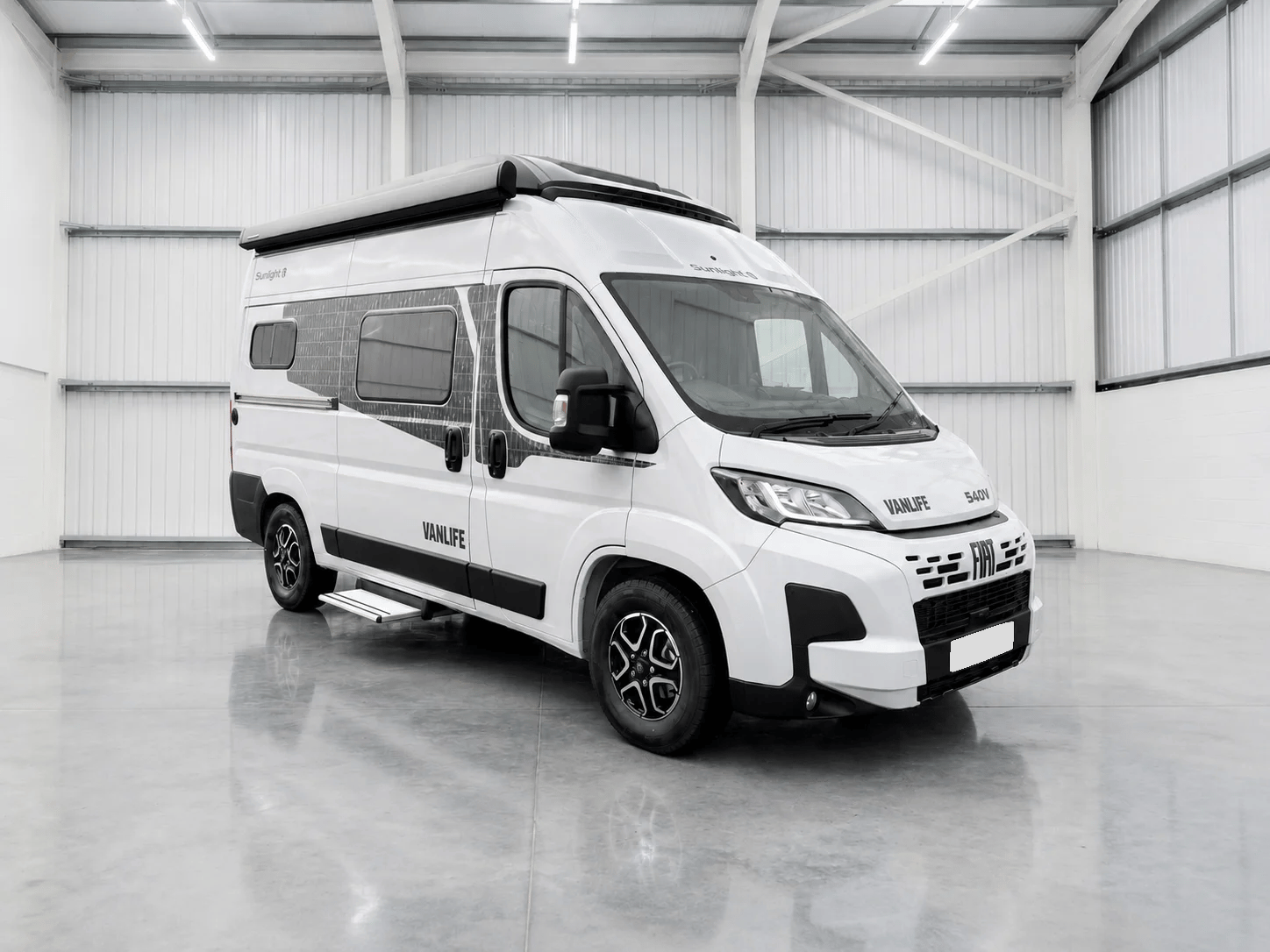
The camper you fall for is rarely the one you can afford. That gap is the whole reason Campervan.win exists. Right now we’re giving away the Sunlight Vanlife, worth around £65,000, and closing that gap is the point: capped entries so the odds stay honest, £10 a ticket, a maximum of five per person, £500 to a UK charity from every full draw, the winner picked by a public randomness beacon anyone can re-check, and one person driving away in the van itself.
Enjoyed this post?
Get more honest campervan guides like this one in your inbox.
You’re in!
Check your inbox. We’ve just sent you a welcome email.

About the author
Leo
Leo covers campervan technology, maintenance, kit, and ownership advice, with a clear, practical focus on how things work in real life.
Keep Reading
Related Reading
Thoughtful articles that build on what you’ve just read.
New & Noteworthy
12 min read
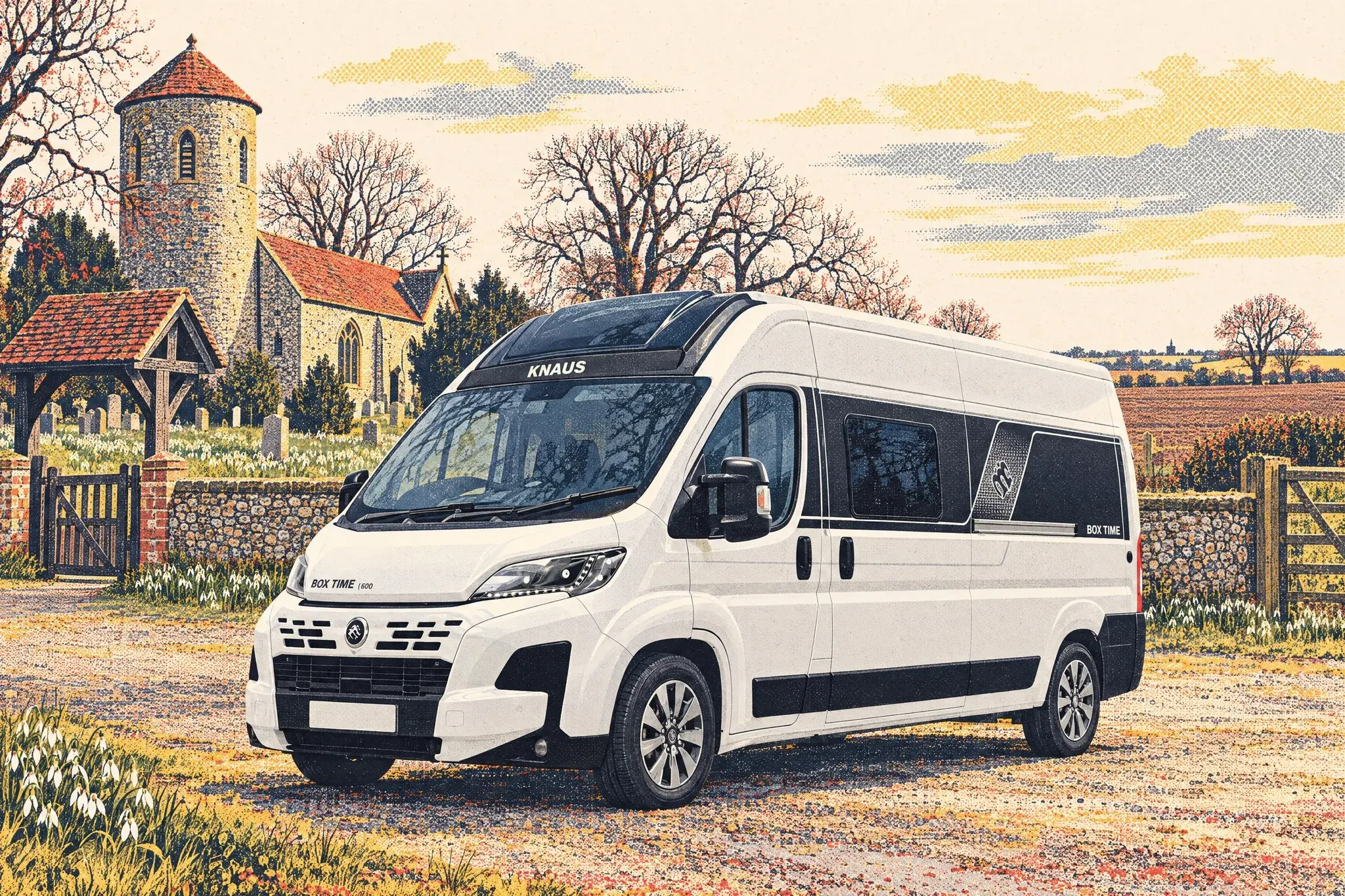
Knaus Boxtime 600 ME (2027): twin singles in 6 m, and the payload figure to question
Knaus's new Boxtime 600 ME squeezes two lengthways single beds into a 5.99 m van from £81,725. We lay out what that layout gives a couple, run the weight sums with Knaus's own figures, and explain why the 211 kg 'maximum payload' line needs a question before you sign.
New & Noteworthy
10 min read
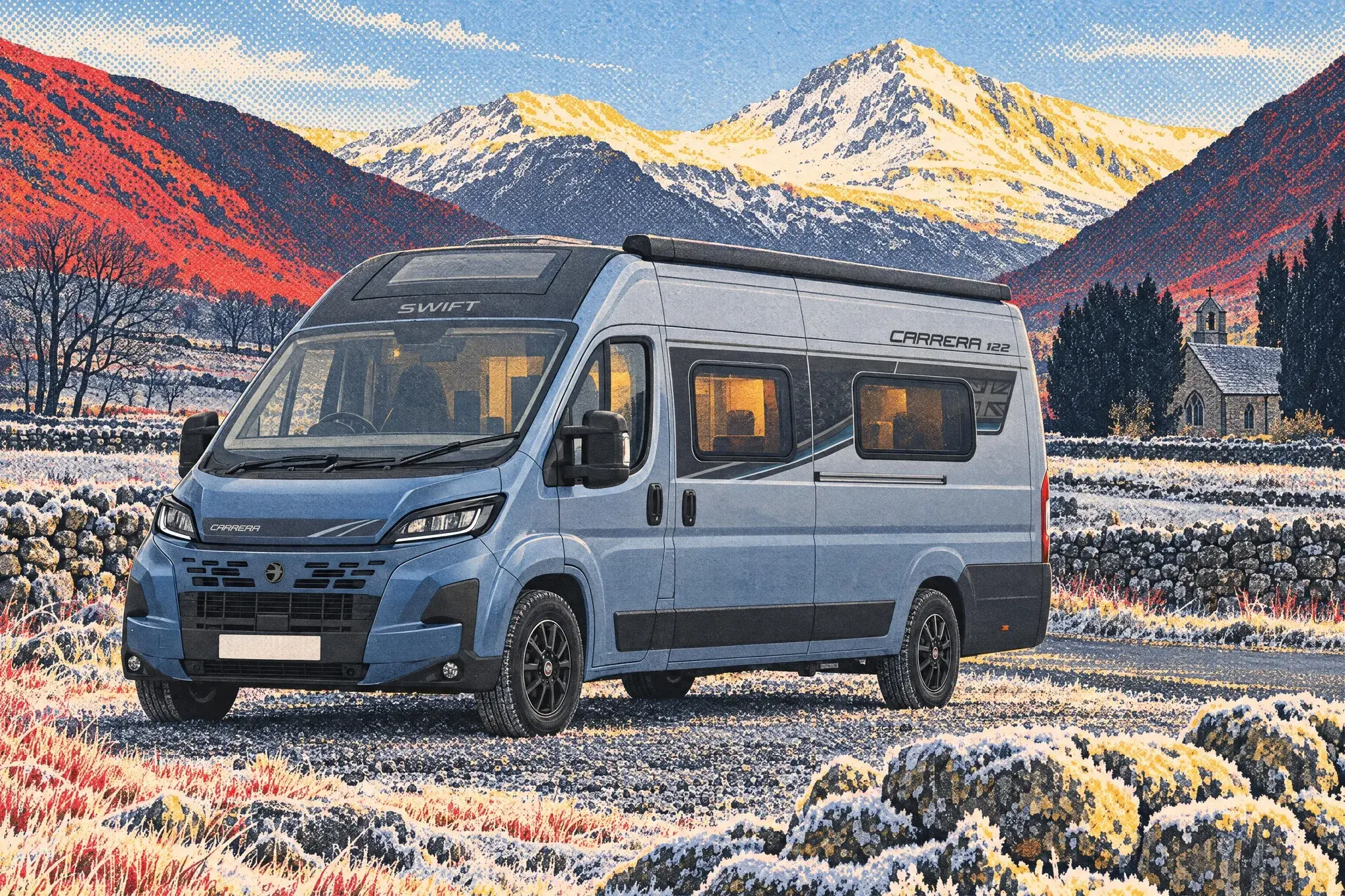
Swift Carrera goes gas-free for 2027: 340Ah lithium, diesel heat and induction cooking
Swift has taken the gas out of its Carrera campervan for 2027, swapping bottles for a 340Ah lithium battery, diesel heating and an induction hob. Here is what that means across a real UK year, how it compares with the cheaper Merlin, and the one question to ask at the NEC.
New & Noteworthy
10 min read
British campervan converters at the NEC 2026: who builds on what, and for how much
A stand-by-stand map of the British campervan converters at the Motorhome and Caravan Show 2026: the vans they build on, their from-prices, seats, roofs and lead times, plus the four questions to put to every one of them.
New & Noteworthy
9 min read
Plug-in hybrid campervans at the NEC: what a PHEV gives you and why full EVs are rare
Four UK converters have hybrid campers at or around the Motorhome and Caravan Show this October, while fully electric campers remain scarce. Here is what a plug-in hybrid camper does well, what the sellers rarely tell you, and the questions to ask on the stand.