
Sunlight Vanlife 540 vs the rivals: Adria Twin, Pössl, Knaus and more

Written by
Arthur
Arthur writes buying guides, comparisons, and in-depth explainers to help readers choose the right campervan or motorhome with confidence.
The short answer
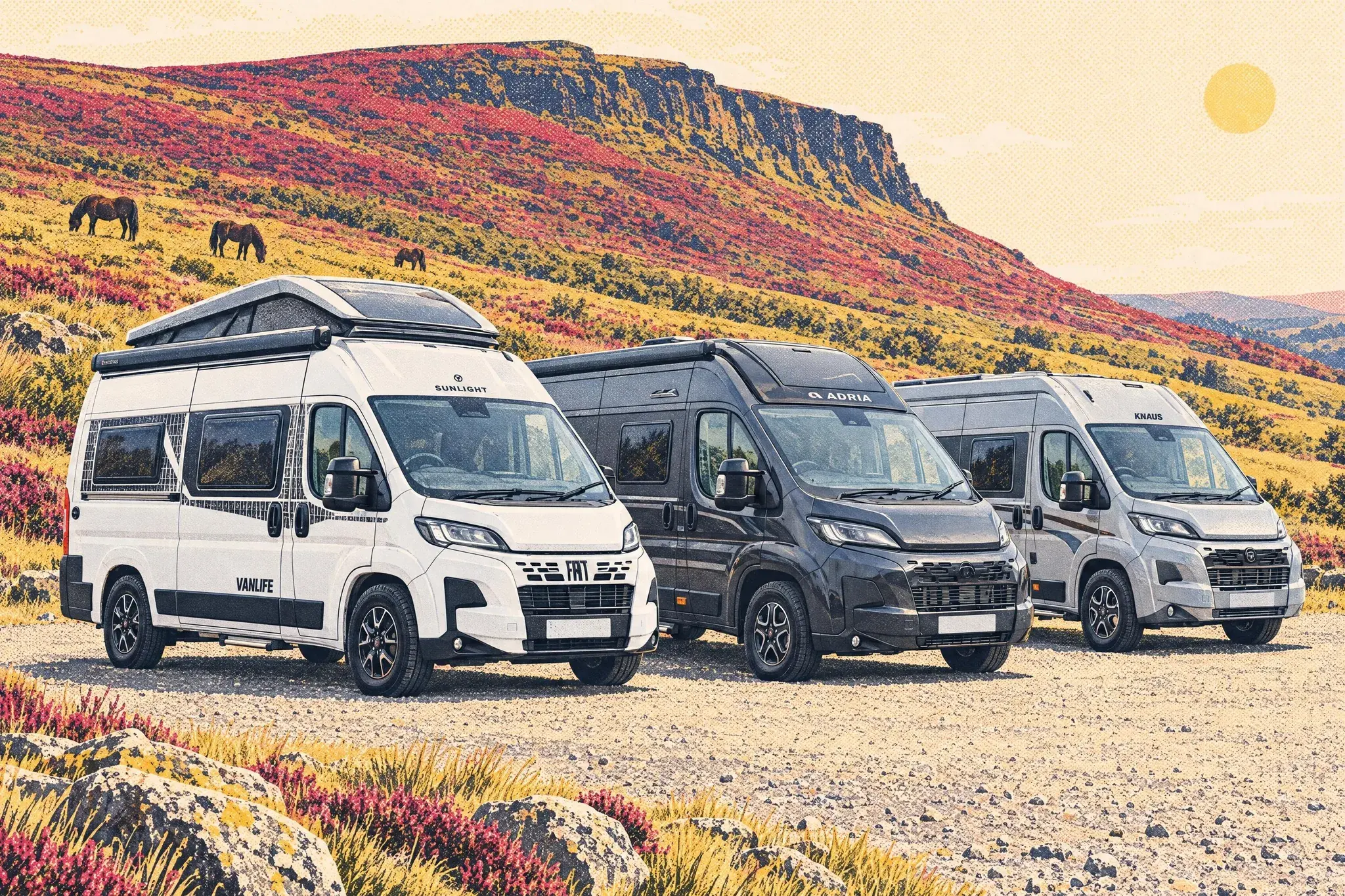
The Sunlight Vanlife 540 V competes in the crowded compact panel-van class against the Adria Twin, Pössl, Knaus Boxstar, Weinsberg CaraBus and its own Erwin Hymer Group siblings, and what sets it apart is its layout: a walled-off cab, a fixed staircase up to a large pop-top bed, and the rear given over to a sociable lounge rather than a bed, plus generous standard kit and solid EHG build. Its honest limits are that it carries only two, the payload is tight on a 3,500kg van, and at 2.81m it is tall. There is no single best in this class, only the one that matches your priorities, resale, value, polish or carrying four. Here is how the Vanlife stacks up against each rival, so you can pick with confidence.

The compact panel-van campervan, the sort built on a Fiat Ducato or its Stellantis cousins at around five and a half to six metres, is one of the most crowded and competitive corners of the whole market. It's where most people who want a usable, drive-anywhere camper end up looking, and the Sunlight Vanlife 540 V arrives into a field of genuinely good, well-established rivals: the Adria Twin, the Pössl and Globecar vans, the Knaus Boxstar, the Weinsberg CaraBus, and its own Erwin Hymer Group siblings. To know whether the Vanlife is the right one, you have to know what it's up against.
So this is an honest comparison. Not a list of who has the most cup-holders, but a clear-eyed look at how the Vanlife's pitch, its unusual staircase-and-lounge layout, its generous standard kit and its German build, stacks up against the rivals UK buyers actually cross-shop, and, just as importantly, where those rivals beat it. If you've read our full review and the vs Carado piece, this is the wider view: the Vanlife against the rest of the class.
The segment, and what the Vanlife brings to it
First, what defines this class. These are panel-van conversions, factory-built campers based on a working van body (overwhelmingly the Fiat Ducato, sometimes its Citroën, Peugeot or Vauxhall siblings), typically five and a half to six metres long, designed to be usable day to day while still containing a proper kitchen, washroom and beds. They're the sensible middle of the market: smaller and more drivable than a coachbuilt motorhome, more capable and weatherproof than a tiny day van. Most use one of a few well-worn layouts, a rear fixed bed (often twin singles or a transverse double), or a flexible front lounge with a rock-and-roll bed.
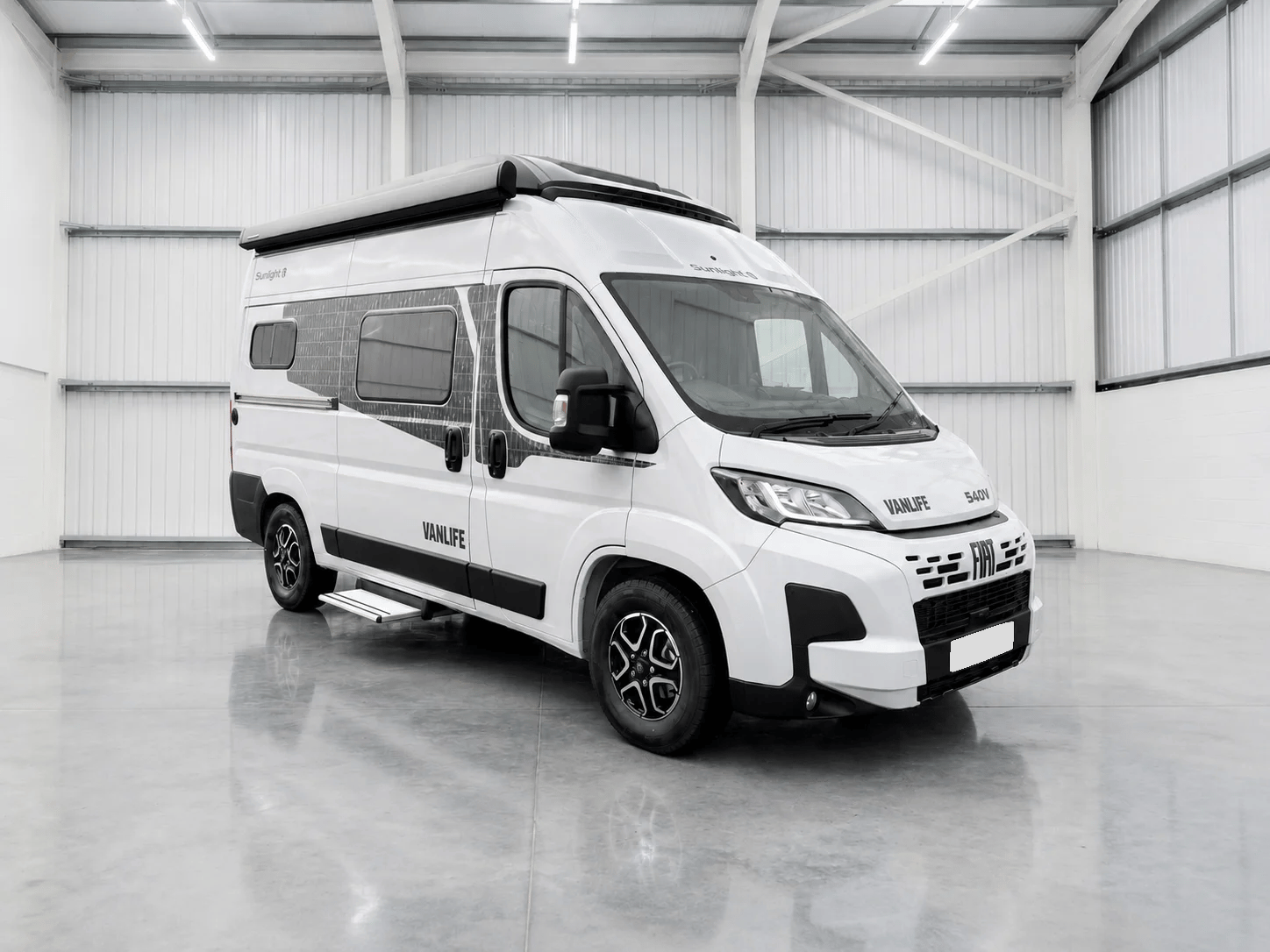
What the Vanlife 540 V brings is a layout most of its rivals don't: a walled-off cab, a fixed staircase up to a large pop-top roof bed, and the rear of the van given over to a sociable lounge rather than a bed. It makes the van feel less like the back of a van and more like a small flat, and it's genuinely distinctive in this class, which we explore in our look at the staircase layout. The Vanlife also leans on a generous standard specification (awning, alloys, painted bumpers and the pop-top all included) and the reassurance of Erwin Hymer Group build quality. Its weaknesses, which we'll keep in view throughout, are that it carries only two (the price of that lounge layout), the payload is tight as on any 3,500-kilogram van, and it's a tall vehicle at 2.81 metres. With that as the backdrop, here's how it measures up.
Versus the Adria Twin
The Adria Twin is the benchmark of this segment, the best-selling compact panel-van camper in the UK for years, and the van most people will cross-shop against anything else. Adria, a Slovenian maker with a strong reputation, has refined the Twin over many generations, and it sells in big numbers across a wide range of layouts and lengths. Its great strengths are that proven track record, a deservedly strong resale value, a huge dealer network, and a polished, well-thought-out interior.
Against it, the Vanlife's case is its layout and its standard kit. Most Twins are a little longer than the Vanlife (many are around six metres) and use more conventional bed arrangements, a rear fixed bed or twin singles, rather than the Vanlife's lounge-and-roof-bed concept. So the choice between them is partly philosophical: the Twin is the safe, popular, strong-resale choice with a traditional layout, while the Vanlife is the more distinctive, more sociable, arguably more interesting van for a couple who love its staircase concept. If resale value and the comfort of the segment's default choice matter most to you, the Twin is hard to argue with. If you want something that feels different to live in and you're a couple, the Vanlife makes a strong case.
Versus Pössl and Globecar
Pössl, and its sister brand Globecar, are the value-and-substance benchmark of the class: German-built, no-nonsense, keenly priced campers that have a loyal following precisely because they put the money into the things that matter and not into gloss. A Pössl tends to be the camper that quietly does everything well without a premium badge, and for buyers who prioritise sensible engineering and value over styling, it's often the connoisseur's pick.
The Vanlife competes here on layout and standard equipment rather than on bare value. A Pössl will often be the more straightforward, possibly keener-priced van with a conventional, efficient layout, while the Vanlife offers its more characterful staircase-and-lounge interior and a notably generous standard kit list. If you want maximum sensible van for your money and don't need a special layout, Pössl and Globecar are exactly the rivals that will test the Vanlife hardest on value. If the Vanlife's living space speaks to you, that's what you're paying the difference for.
Versus the Knaus Boxstar and Weinsberg CaraBus
The Knaus Tabbert group fields two relevant rivals. The Knaus Boxstar is a well-regarded, slightly more upmarket panel-van camper with a strong following and a range of clever layouts. The Weinsberg CaraBus is the value-led option, often one of the keenest-priced credible campers in the class, aimed squarely at buyers who want a lot of van for the money from an established maker.
Between them, these two bracket the Vanlife on price and positioning. The CaraBus challenges it from below on value, much as Pössl does, while the Boxstar competes more on equal terms for the buyer who wants a polished, well-equipped compact camper. Again, the Vanlife's differentiator is the layout: neither the Boxstar nor the CaraBus offers the fixed-staircase, rear-lounge concept, so if that's what's drawn you to the Vanlife, the rivals don't directly replicate it. If it isn't, the CaraBus in particular will tempt you with a lower price for a thoroughly capable van.
Versus its own EHG siblings: Bürstner and Hymer
It's worth remembering that the Vanlife competes within its own group, too. Bürstner (with its Lineo and Campeo vans) and Hymer (with the Free and Yosemite) are also Erwin Hymer Group brands, sitting above Sunlight in the hierarchy. They offer more premium interiors, more polish and, often, cleverer detailing, at correspondingly higher prices.
This is really a question of how far up the EHG ladder you want to climb. Sunlight is the value-and-design-led entry point; Bürstner and Hymer are the step or two up in refinement and price. If your budget stretches and you want a more premium feel, the Hymer Free or a Bürstner is the in-group upgrade. If you want EHG build and a genuinely interesting layout without the premium-badge cost, the Vanlife (or its near-identical Carado twin, the CV 541 Pro, which for this pair is priced almost the same) is the value play within the same family. And there are other credible names around the edges of all this, Roller Team, Auto-Trail, Chausson, Westfalia and more, each with its own following, which is simply to say that this is a rich, competitive class with no shortage of good vans.
A quick comparison
Because exact specs and prices shift by model year and trim, this is a positioning comparison rather than a spec table, which is the more useful way to choose between vans that are all, broadly, good:
| Van | Character | Best for |
|---|---|---|
| Sunlight Vanlife 540 V | Distinctive staircase + lounge layout, generous standard kit, EHG build | A couple who want a sociable, characterful van |
| Adria Twin | The popular benchmark, strong resale, conventional layouts | Buyers wanting the safe, proven, strong-resale choice |
| Pössl / Globecar | Value and sensible engineering, no premium gloss | Maximum sensible van for the money |
| Knaus Boxstar | Polished, slightly upmarket, clever layouts | A well-equipped compact camper on equal terms |
| Weinsberg CaraBus | Value-led, keenly priced, established maker | A lot of credible van for less money |
| Bürstner / Hymer | The premium EHG step up | Buyers wanting more polish, with the budget for it |
What they all have in common
For all their differences, these vans share more than the badges suggest, and it's worth knowing the common ground. Almost all of them sit on the same Fiat Ducato (or near-identical Stellantis) base, with similar engines and the same broad strengths and quirks, so the driving experience and the servicing network are much of a muchness across the class; you're rarely choosing one over another on the mechanicals. They're nearly all plated at 3,500 kilograms, which means they all share the same payload pressure: by the time the conversion is done, the usable allowance for water, kit and people is tighter than the headline suggests, so weighing whichever you choose, loaded, is wise across the board. And they vary in build quality less than the price differences imply, partly because several of them, the Vanlife, the Bürstner, the Hymer, even share a parent group.
The one number that genuinely separates them for many buyers is the one we keep returning to: travel seats. Some of these vans carry two, some carry four, and that depends entirely on the layout, not the badge. Whichever you're drawn to, count the belted travel seats before anything else, because it's the difference that decides whether the van fits your family at all, as we explain in our berths versus seatbelts piece.
How to choose between them
Faced with a class this good and this crowded, the way to choose isn't to hunt for the "best" van, because there isn't one; it's to rank your own priorities and let them point you. Start with the hard constraints. How many people must travel? If it's more than two, you need a four-belt layout, and that alone rules several of these vans out, the Vanlife included. What's your real budget, fully specced? That sorts the value choices (Weinsberg, Pössl) from the premium ones (Hymer, Bürstner).
Then weigh the softer priorities. If resale value and the reassurance of the popular default matter most, the Adria Twin is the natural pick. If you want maximum sensible van for the money, Pössl, Globecar and the Weinsberg CaraBus are the value choices. If you want a more premium feel and have the budget, the Hymer Free or a Bürstner is the step up. And if you want a genuinely distinctive way to live in a compact van, and you're a couple, the Vanlife's staircase-and-lounge layout is the one nothing else here quite replicates. Finally, weigh the dealer, because a good, close, trusted dealer of any of these brands is worth more over the years than a small saving on a distant one. Rank those factors honestly, in your own order, and the field narrows itself. The mistake is choosing on the photographs; the win is choosing on your priorities.
So where does the Sunlight Vanlife 540 sit?
Pulling it together, the Vanlife 540 V isn't trying to win this class on price, on resale value or on being the safe default; the Adria Twin, the Pössl and the Weinsberg CaraBus all have a clear answer to those buyers. What the Vanlife offers, and what none of its mainstream rivals directly match, is its layout: a fixed double up top reached by a proper staircase, and a sociable lounge below, in a compact, drivable, generously equipped, German-built van. For a couple who fall for that way of living in a van, it's genuinely distinctive and there's little like it.
The honest caveats hold it back from being a universal recommendation, and they're the same ones throughout: it carries only two, so it's no good to a family who need to travel together; the payload wants watching, as on any 3,500-kilogram van; and the height limits where you can park. Weigh those against the rivals' strengths, the Twin's resale, Pössl's value, the CaraBus's price, Hymer's polish, and the picture is clear. The Vanlife 540 V is the right answer for the couple who want its specific, special layout and value the standard kit, and the wrong answer for buyers whose priorities are resale, rock-bottom price or carrying four. Knowing which of those you are is the whole game. Our specs and payload guide will help you pin down whether the numbers fit your life.
Common questions
What makes the Sunlight Vanlife 540 different from its rivals?
Its layout. Where most rivals use a rear fixed bed or a front rock-and-roll bed, the Vanlife 540 V walls off the cab, puts the main bed up in a pop-top reached by a fixed staircase, and gives the rear over to a sociable lounge of facing sofas. That, plus generous standard kit and Erwin Hymer Group build, is its pitch; the trade-off is that it carries only two.
Is the Sunlight Vanlife 540 better than the Adria Twin?
Not outright; they suit different buyers. The Adria Twin is the popular, strong-resale benchmark of the class, while the Vanlife offers a more distinctive staircase-and-lounge layout and generous standard kit but carries only two and has weaker residuals. If resale value is your priority the Twin has the edge; if you fall for the Vanlife's specific layout, it is the more characterful choice.
What is the best compact panel-van campervan in the UK?
There is no single best; the class is full of good vans aimed at different buyers. The Adria Twin is the strong-resale benchmark, Possl, Globecar and the Weinsberg CaraBus are the value picks, the Knaus Boxstar and Hymer Free are more polished, and the Sunlight Vanlife 540 V stands out for its couple's staircase-and-lounge layout. The best one is whichever van's strengths match your priorities.
Are there cheaper vans that are basically the same as the Sunlight Vanlife 540?
The closest like-for-like is its near-identical Erwin Hymer Group twin, the Carado CV 541 Pro, essentially the same van from the same factory. Unusually for these twins, though, the Carado is priced almost level with the Sunlight rather than undercutting it, so on this particular pair the saving largely is not there. For outright value, look to Possl or the Weinsberg CaraBus instead.
Do all compact campervans carry four people?
No, and it is the most important thing to check. Travel capacity depends on the layout, not the badge: vans with a belted rear bench (often rear-fixed-bed or rock-and-roll-bed layouts) tend to carry four, while lounge-led layouts like the Sunlight Vanlife 540 V carry only two. Always count the belted travel seats on the specific van you are considering.
Should I buy the Sunlight Vanlife 540 or a rival?
Buy the Vanlife if you are a couple drawn to its distinctive staircase-and-lounge layout and you value the generous standard kit and EHG build. Buy a rival if your priority is resale value (Adria Twin), outright value (Possl, Weinsberg CaraBus), premium polish (Hymer, Burstner), or carrying four people, which none of these two-belt layouts can do.
The reachable bit
The camper you fall for is rarely the one you can afford. That gap is the whole reason Campervan.win exists. Right now we’re giving away the Sunlight Vanlife, worth around £65,000, and closing that gap is the point: capped entries so the odds stay honest, £10 a ticket, a maximum of five per person, £500 to a UK charity from every full draw, the winner picked by a public randomness beacon anyone can re-check, and one person driving away in the van itself.
Enjoyed this post?
Get more honest campervan guides like this one in your inbox.
You’re in!
Check your inbox. We’ve just sent you a welcome email.

About the author
Arthur
Arthur writes buying guides, comparisons, and in-depth explainers to help readers choose the right campervan or motorhome with confidence.
Keep Reading
Related Reading
Thoughtful articles that build on what you’ve just read.
Campervan Buying Guides
10 min read
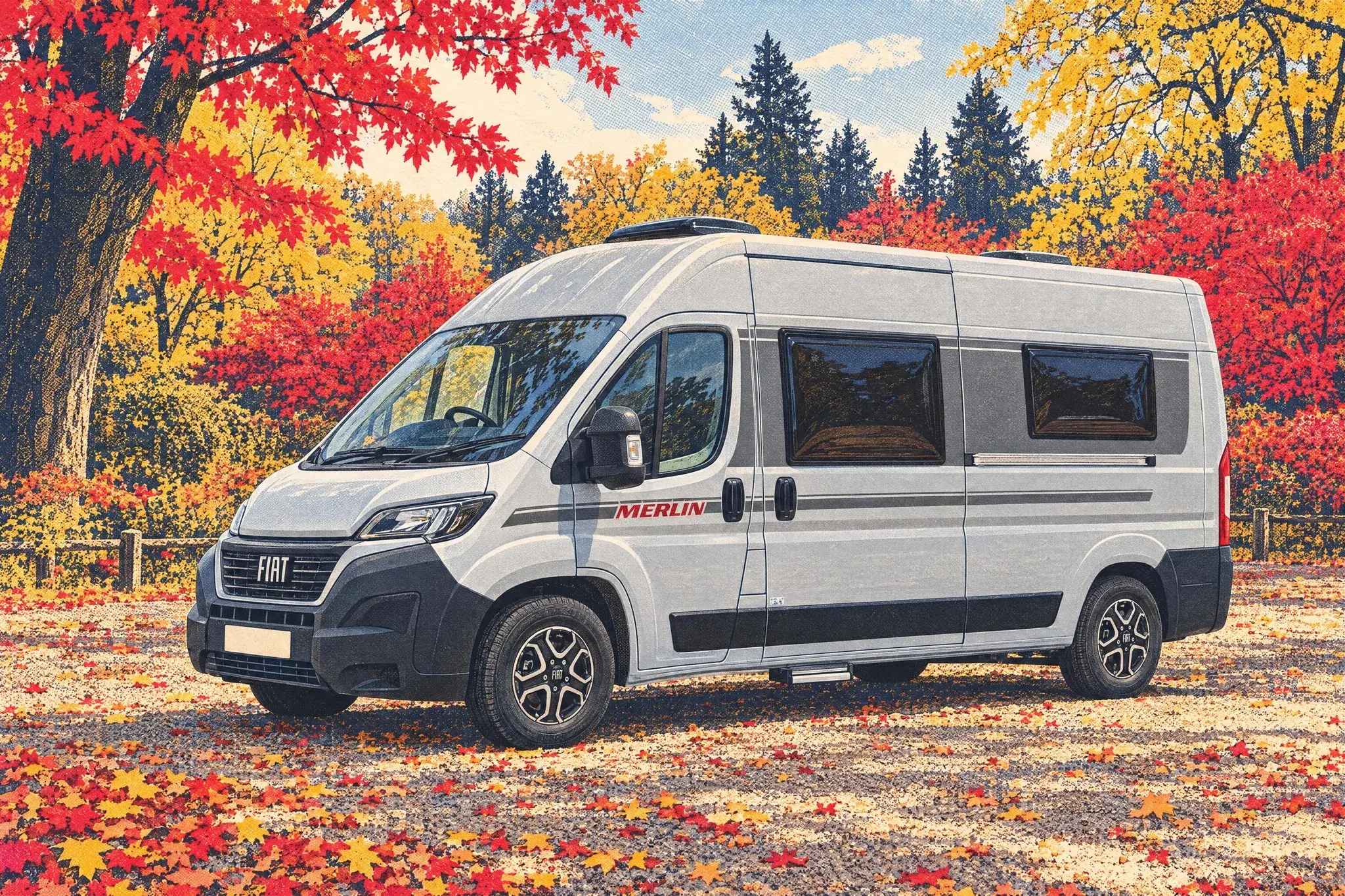
Swift Merlin 2027: nine layouts from £64,190 and how to pick the right one
Swift's all-new Merlin campervan arrives for 2027 with nine layouts on the Fiat Ducato panel van. We sort them into four families, work the payload sum on a four-seat version, and explain what the roof, the automatic and the prices mean for your choice.
Campervan Buying Guides
11 min read
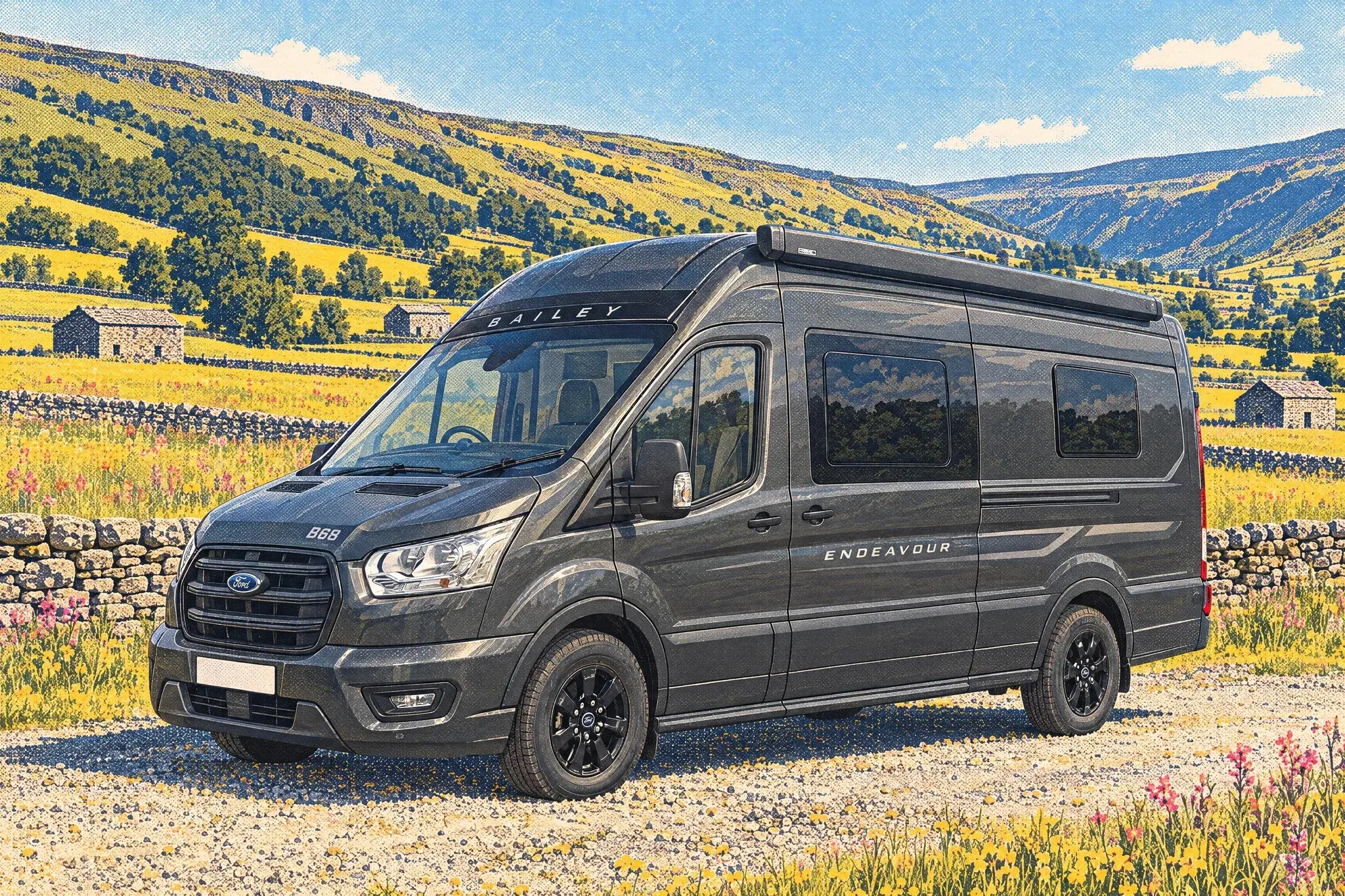
Bailey Endeavour B68: the end-lounge Transit campervan where the pop-top costs 143 kg
Bailey's new Endeavour B68 puts a rear lounge in a 5.98 m Ford Transit campervan. We compare it with the B65 and B62, check the 1.86 m bed, and do the payload sums if you add the £7,500 pop-top.
Campervan Buying Guides
12 min read
New campervans under £60,000 for 2027: what the NEC shows and what the price leaves out
A fair look at the new 2027 campervans listed under £60,000 ahead of the Motorhome and Caravan Show at the NEC, with each price given as its maker words it, and the differences between ex-works, delivered and German-retail-based figures explained so you can compare real on-the-road totals.
Campervan Buying Guides
14 min read
Eura Mobil Vancona 2027: a €57,400 campervan with just 84 to 118 kg left for options
Eura Mobil's new Vancona is a well-equipped Fiat Ducato campervan from €57,400, but its 84 to 118 kg options allowance means you need to order it with the weight sheet open. We explain what the figure means, what the 4.25 t uprate costs you in licence terms, and which options to prioritise.