
Will VW build a rugged, off-grid Transporter California? What it could be, and why it nearly already exists

Written by
Felix
Felix covers campervan technology, layouts, and modern conversions, with a focus on design-led thinking and practical performance
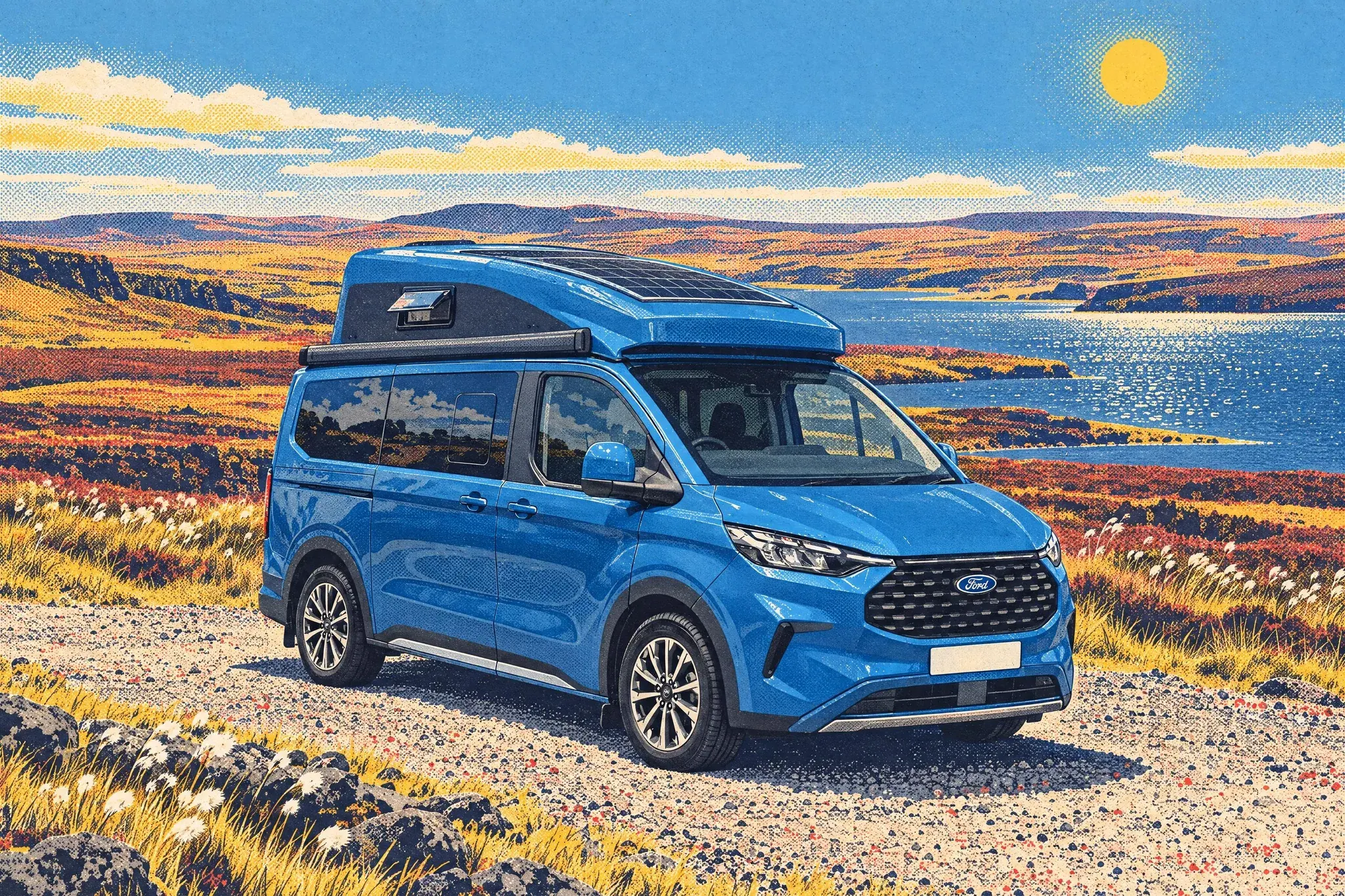
The short answer
VW does not build a rugged, lifted, off-grid Transporter California, but here is the intriguing part: it owns nearly every part it would need, and a version already exists wearing a Ford badge. The confusion is that there are two different T7-era VWs, the new California camper rides on the car-based Multivan platform (front-wheel drive, electric all-wheel drive only on the hybrid), while the new Transporter van is a rebadged Ford Transit Custom built by Ford. The previous T6 California even offered genuine mechanical 4Motion and Beach Tour diff-lock versions, so VW has done it before. The case for a rugged Transporter California is strong, and it would land the right side of £90,000; for now it is simply the best VW camper VW does not make. Here is what it could be, and why it nearly already exists.

Updated 6 October 2026: we have corrected the Grand California 4Motion price to Volkswagen UK's 30 September 2026 price list and noted that the Dune edition is now sold in the UK.
Picture the VW camper you actually daydream about. Not the neat, low, school-run-shaped one you see outside the good coffee places, but a taller, tougher version: a bit of lift in the suspension, chunky tyres, a roof rack, a proper off-grid electrical system, parked at the end of a rutted track somewhere with no phone signal and a very good view. A VW that looks like it could get there, and stay there. Does VW build that? No. Should it? Almost certainly. And here's the strange part: it owns nearly every component it would need, and a version of it already exists wearing a different badge.
This is a piece of informed speculation, so we'll be scrupulous about separating what's confirmed fact from what's our own reasoning, because the topic is a minefield of badge confusion and it's easy to talk nonsense if you're not careful. But once you untangle which VW is which, the case for a rugged, off-grid, Transporter-based California stops looking like a fantasy and starts looking like a gap VW has oddly left open. Let's build it, on paper.
First, untangle the badges (this bit is essential)
Almost every confused conversation about this topic comes from one fact that very few people have straight: there are two completely different vehicles wearing "T7"-era VW badges, built on two different platforms, in two different factories, by two different companies. Get this right and everything else falls into place.
The new VW California, the camper, launched in 2024, is built on the Multivan. The Multivan rides on VW's MQB platform, the same front-wheel-drive car architecture family as a Golf or an Audi A3. It's a passenger-car platform, designed to be low, refined and car-like to drive. That's the base of the California you can buy today, in Beach, Coast and Ocean trims.
The new VW Transporter, the panel van, launched for 2024 to 2025, is something else entirely: it's a rebadged Ford Transit Custom, built by Ford at its plant in Turkey as part of the Ford-VW alliance. VW restyles the nose, lights and bumpers, but underneath, the chassis, the components, the engineering, it is a Transit Custom. It's a proper commercial van platform: taller, more upright, more rugged in stance and intent than the car-based Multivan.
This came out of the 2019 global alliance between Ford and Volkswagen, under which the two share vans and pickups to spread the enormous cost of developing them. VW's old Hannover-built Transporter ended production in 2024, and its replacement now rolls down the same line as the Transit Custom at Ford's plant in Turkey. Viewed from the side, the VW and the Ford are all but identical; VW changes the bonnet, grille, headlights and bumpers and little else. That's not a criticism, the Transit Custom is an excellent, repeatedly class-leading van, and a lightly VW-flavoured version of it is no hardship. But it does mean that when we talk about a "Transporter-based" VW camper, we're really talking about a Transit Custom-based one, with everything that implies about its tougher, more upright, more commercial bones, and about the fact that its rugged camper sibling already exists in Ford's showroom.
Here's where the confusion peaks: VW markets the Multivan-based camper as the "T7 California", borrowing the generation label even though its underpinnings are the Multivan car platform, not the Transporter van. So when someone asks for a "Transporter T7 California", they're really asking for a camper on the other vehicle, the Ford-based commercial Transporter, not the one VW actually builds the California on.
The one-liner to keep in your head: the VW California is a camper on a car platform (the Multivan), low and refined; the VW Transporter is a van on Ford's Transit Custom platform, taller and more van-like. VW has not put the California camper onto the Transporter platform. And the reader's instinct, that the Transporter has the stance, height and presence the Multivan-based California lacks, is exactly right, because one is a van and the other is fundamentally a car. We dig into that platform split in detail in our VW Transporter T7 versus Ford Transit Custom comparison; for now, just hold onto the fact that they are not the same vehicle.
Why the Multivan-based California can't be the rugged one
Once you know the California sits on a car platform, its limitations as a rugged adventure base make sense. It was designed to drive like a car, sit low for easy access and good aerodynamics, and behave itself on the school run and the motorway. That's a deliberate, sensible choice for the buyer VW is chasing, and the new California is genuinely excellent at being that van. It is simply not designed to be a tough one.
A quick accuracy note, because this is where people overclaim: it's tempting to say the new California is "much lower" than the old one, but the published ground-clearance figures are actually fairly similar to the previous generation, so we won't pretend the new car is dramatically closer to the deck than its predecessor. The meaningful change isn't raw ride height; it's platform intent and what VW took away, which is the more important story.
Because here's the thing that really defines the new California's lack of rugged ability: its all-wheel drive. The current car offers 4MOTION only on the plug-in-hybrid eHybrid, and even then it's electric all-wheel drive, drive to the rear axle comes from an electric motor, not a mechanical propshaft. That's a clever traction aid for a slippery pitch, and we covered it in our look at VW's electrified campers, but it is not a genuine off-road system, and there is no mechanical 4MOTION on the new California at all. There's also no rugged trim level: the range is Beach, Coast and Ocean, all of them the same low, smart, road-focused shape. If you want a VW camper that looks and works like it belongs off the tarmac, the current California simply doesn't offer one. Which is odd, because VW used to.
VW used to build the rugged one, and then stopped
This is the part that turns "wouldn't it be nice" into "hang on, why did they stop". The previous-generation California, the T6 and T6.1, offered factory mechanical 4Motion all-wheel drive. In its final years you could option genuine, propshaft-driven all-wheel drive on the Ocean, and VW went further with "Beach Tour" versions that paired 4Motion with a rear differential lock and a camping-kit bundle, marketed squarely at people heading off the beaten track. Owners took those and built them into serious expedition vehicles; there's a whole subculture of 4Motion T6 Californias crossing places a normal camper wouldn't dare.
The Beach Tour in particular was a quietly brilliant thing: it took the simplest, lightest California, added 4Motion and a diff lock, and threw in the camping kit, creating an affordable, genuinely capable basecamp on wheels. Enthusiasts took those bases and added lifts, bigger tyres, roof tents and off-grid power, and turned them into proper expedition vehicles that crossed deserts and mountain passes. The point is that the demand was never theoretical: VW offered real capability, a community formed around it, and people pushed it further than VW ever did. When the new car arrived without mechanical all-wheel drive or a rugged trim, that community didn't vanish; it just lost its newest factory option and started looking harder at Fords, conversions and the used market. That's a customer base VW built and then walked away from, which is a strange thing for a brand to do, especially one whose whole identity is bound up with exactly this kind of adventure.
So VW didn't just have the idea of a capable, go-anywhere California, it sold one, and people loved it. Then, with the move to the new Multivan-based car, it replaced genuine mechanical all-wheel drive with electric all-wheel drive available only on the hybrid, and dropped the rugged trims entirely. Whatever the commercial logic, the practical result is that the new California is, on paper, a less capable adventure vehicle than the one it replaced. That retreat is the factual heart of "there's a gap here", and it's a gap of VW's own making.
The rugged Transporter camper already exists, with a Ford badge
Now the killer fact, the one that reframes this whole question. Because the new VW Transporter is mechanically a Ford Transit Custom, the closest thing in the world to a "rugged Transporter-based VW camper" already exists, and Ford and Westfalia build it. It's called the Nugget.
The current Ford Transit Custom Nugget, developed by Westfalia, is a camper on exactly the platform a Transporter California would use. And look at what it already offers: a plug-in-hybrid option, an "Active" rugged trim, all-wheel drive, and a long-wheelbase model, all added in its latest generation. It has a pull-out awning above the side door, a cubby for camping chairs in the tailgate, a 350-watt solar panel to keep the leisure battery topped up, a touchscreen controlling the heating, water, lighting and battery, and even a digital inclinometer for levelling up off-grid. It was also the first camper of its type to offer an onboard loo. Its PHEV uses a 2.5-litre petrol engine and an electric motor for around 230 horsepower. In Germany it starts around €76,500, roughly £65,000 in the UK.
The "Active" trim adds the rugged styling cues, and the long-wheelbase version adds the space that makes a camper genuinely liveable on longer trips. In use, it's exactly the kind of thoughtfully-integrated, do-it-all adventure camper the VW range is missing: the solar keeps you off hook-up, the touchscreen ties the systems together, the awning and chair storage make pitching up quick, and the optional all-wheel drive means a wet field or a forest track holds no fear. It isn't a hardcore overlander, no Nugget is going rock-crawling, but as a tough, self-sufficient, family-friendly adventure camper it nails the brief. The slightly surreal part, for a VW fan, is that you can walk into a Ford dealer and buy this today, on the very platform VW sells as the Transporter, while VW itself offers nothing equivalent. The alliance that gives VW its Transporter also hands its partner the rugged camper VW won't build. If ever there were proof that this gap is real and fillable, it's that the filled version is already on sale next door.
Read that list again and notice what it contains: all-wheel drive, a rugged trim, serious solar, integrated off-grid electrics, a pop-up roof. That is, more or less, the exact rugged off-grid camper we're daydreaming about, on the exact platform the VW Transporter shares, built by VW's own alliance partner. There's even a smaller Transit Custom-based Westfalia, the Club Joker Urban, with a pop-up roof, twin leisure batteries and a compact kitchen, at around €79,750.
And the rugged styling? Ford does that on this platform too, with the Transit Custom Trail, which gets matt-black cladding on the bumpers and arches, and black alloys the company cheerfully says are inspired by the Ranger Raptor. Here's the honest caveat, because it matters: the European Trail is a styling-and-traction package (it adds a mechanical limited-slip differential) but no suspension lift and no all-wheel drive. However, the North American version of the Transit Trail does get a genuine 3.5-inch suspension lift and a wider track, which proves the lift hardware exists for this platform family. So the ingredients, AWD, rugged looks, even a real lift, are all demonstrably available on the very platform a Transporter California would use. Nobody has yet combined a pop-top, California-grade camper with rugged AWD and a lift under a VW badge. But every single part is sitting on the shelf.
And VW already makes a rugged Transporter, just not a camper
If the Ford side proves the camper is possible, the VW side proves VW is already willing to make the Transporter look the part. When VW launched the new Transporter, it included a PanAmericana trim, its rugged styling line, with painted bumpers and fenders, 19-inch "Indianapolis" alloy wheels, illuminated side-step inlays and PanAmericana-branded seats. That's a confirmed, real product: a rugged-look VW Transporter, on exactly the platform we're discussing.
And the Transporter genuinely offers all-wheel drive: it's available on the larger TDI diesel variants (the electric version is rear-drive with AWD said to be planned). So VW already sells a rugged-styled, optionally all-wheel-drive Transporter. What it doesn't do is offer that Transporter as a California camper. The rugged stance exists. The AWD exists. The camper expertise exists, three doors down, on the same platform, with a Ford badge. The only thing missing is VW's decision to put them together.
VW's rugged DNA runs deep
None of this would be a stretch for VW, because the rugged-adventure idea is woven right through the brand. The current Multivan is offered as a PanAmericana, with the suspension raised by 20mm, chunkier wheels and available 4MOTION, explicitly pitched as "Multivan comfort plus a dose of off-road capability". Tellingly, VW will raise and toughen the Multivan, it just hasn't extended that treatment to the California camper built on the same platform.
Go back further and the lineage is everywhere: the Crafter-based Atacama 4WD off-road camper concept from VW's own design studio; the PanAmericana and Atacama styling themes that have run across the Caddy, Multivan, Crafter and Amarok for years; and the current Amarok PanAmericana, proof VW is actively investing in its "go-anywhere" sub-brand right now. The appetite, the design language and the engineering are all unmistakably part of VW's make-up. A rugged California wouldn't be VW doing something out of character. It would be VW finally pointing its oldest instinct, dressing a vehicle for the wild, at the one model where its fans most want it.
VW has already hinted at it, repeatedly
Here's a detail that makes the omission stranger still: VW keeps flirting with exactly this idea and then stopping short.
It showed a California Concept at the 2023 Caravan Salon, the industry's biggest stage, to preview where its camper was heading. It ran the Beach Tour name, with its explicit off-road and 4Motion associations, for years. It pours marketing budget into the California as a symbol of escape and the outdoors, all winding roads, mountain light, lakeside dawns and remote pitches, imagery that promises far more adventure than a low, front-wheel-drive, Multivan-based camper can actually deliver. And across the rest of the range it builds out the PanAmericana sub-brand with obvious enthusiasm, raising and toughening the Multivan, the Caddy, the Amarok and the Transporter van, and it has form with rugged concepts like the old Crafter Atacama 4WD.
In other words, the appetite isn't hidden; VW signals it constantly, in its concepts, its naming, its imagery and its other models. What it hasn't done is close the loop and let the California cash the cheque its own advertising keeps writing. Every brochure photo of a California parked dramatically at the end of a wild track is, in a quiet way, an advert for a vehicle VW doesn't sell: the rugged, capable version that could actually get there, ford the puddle, climb the rutted track and sit out there for days under its own power.
The brand has spent years, and a fortune, building that desire. It simply hasn't built the van to satisfy it. For a company this good at understanding what camper buyers dream about, that gap is either remarkable discipline or a genuine blind spot, and from where we're sitting it looks far more like the latter. The clues are all there in VW's own back catalogue; someone in the alliance's planning meetings just has to join them up. The most likely reason they haven't yet is simply that the electric ID. California has soaked up the camper-development attention, which is exactly why a combustion-powered rugged Transporter California is the obvious, lower-risk thing to build in the meantime, while the all-electric dream matures.
So what could a rugged, off-grid Transporter California feature?
Here's where we move firmly into speculation, so treat everything in this section as our informed wishlist rather than a leaked spec sheet. The discipline we've set ourselves is that every feature we suggest has to be tethered to something that already exists on this platform, so the daydream stays grounded.
A genuine all-wheel-drive system. Not the electric-only AWD of the current eHybrid, but mechanical drive of the kind the old T6 California had and the current Transporter still offers on its bigger diesels. This would be a return to real capability VW has already built and sold, not a new invention.
A raised ride height, or a proper lift. The Multivan PanAmericana already gains 20mm, and the North American Transit Trail proves a 3.5-inch lift is engineerable on this platform family. Even a modest factory lift would transform the approach angles and the attitude.
Off-road tyres, cladding and dark wheels. Straight from the Transit Custom Trail and the Transporter PanAmericana parts bin: matt cladding on the arches and bumpers, all-terrain rubber, and black or dark alloys. This is the cheapest, easiest part, and the part VW already does.
A serious off-grid electrical system. This is where it would really earn the "off-grid" name. The Ford Nugget already integrates a 350-watt solar panel and the California Ocean already runs twin leisure batteries; a rugged California should go further, with a big lithium leisure bank, generous solar, and the kind of integrated power management that lets you sit out in the wild for days. If you want to see how far genuine off-grid camper electrics can go, our Taylored Offtrax review is a good benchmark for the level a rugged VW would need to hit.
A pop-top, a roof rack and an awning. The pop-top tech already exists on the California; the Nugget already integrates a side awning and clever exterior storage. Add roof rails strong enough for a tent or a board and you've a basecamp.
Generous water and proper heating. Off-grid means self-sufficient, so bigger fresh and waste tanks than the road-focused California carries, and a diesel heater that runs independently of the engine for warm, four-season nights far from any hook-up.
Recovery and practicality kit. The unglamorous but essential stuff that turns a styling exercise into a real tool: proper underbody protection, decent recovery points, a 12-volt and USB setup that assumes you're living off the van, and exterior wash-down and storage for muddy, wet gear.
The right interior. Less about luxury, more about durability and self-sufficiency: wipe-clean surfaces, robust trim, proper insulation for four-season use, and storage designed for muddy, outdoorsy life rather than for looking pretty in a showroom. The Multivan-based California's interior is beautifully finished but quite precious; a rugged version would want to feel like it could take a sandy dog and a pair of ski boots without flinching.
None of that is fantasy. Every item is either already on the California, already on the Transporter, or already on the Ford twin. A rugged off-grid Transporter California is less an act of invention than an act of assembly.
What would it look like?
This part is pure opinion, but it's the reader's own instinct and we think it's a good one. A Transporter-based California would be taller and more upright than the current car, because the Transit Custom body simply is taller and more van-like than the low Multivan. That alone gives it the presence the current California lacks. Add PanAmericana-style cladding, 18 or 19-inch dark wheels, all-terrain tyres and even a modest lift, and you'd have a camper with genuine road presence: purposeful rather than cute, something that looks like it belongs at a trailhead rather than a farmers' market. It would, in short, look like the VW camper a lot of people have always wanted and never quite been offered, the stance and the attitude of an adventure vehicle, with the badge and the build quality of a VW.
And the details would matter as much as the stance. Picture a blacked-out, more purposeful nose than the friendly Multivan face; roof rails and a low rack that look ready for a tent or a board rather than bolted on as an afterthought; protective cladding low on the body where tracks throw up stones; recovery eyes that are visible rather than hidden away; and a colour palette that leans towards the muted, outdoorsy tones, deep greens, sand, slate and grey, that the adventure crowd actually buys, rather than the soft pastels of the school-run set. None of that is hard to do, and much of it already exists across the PanAmericana and Trail parts catalogues. It's the difference between a van that looks like it's pretending and one that looks like it's been somewhere, and VW, of all companies, knows exactly how to nail that look when it decides to.
What would it cost?
Speculating on price is a fool's game unless you anchor it to real numbers, so here are the anchors. The current California spans roughly £63,000 for a Beach up to around £79,000 for an Ocean, with the eHybrid 4Motion at about £78,500. The Ford Nugget, the closest existing analogue, is around £65,000. The old T6.1 Ocean with mechanical 4Motion started around £67,000 back in 2023. At the top, a 4Motion Grand California 680 costs £95,050 on Volkswagen UK's 30 September 2026 price list.
A rugged, all-wheel-drive, lifted, solar-equipped, VW-badged California would sit at the premium end of all that. Our reasoned estimate, and it is only that, is somewhere in the £80,000 to £95,000 zone, brushing Grand California money. That sounds steep, but it's exactly where a flagship, capability-led halo model would be expected to land, and, crucially, it's a price bracket VW's own rivals and conversions already occupy. People are clearly willing to spend it; they're just currently spending it elsewhere.
The platforms and the parts, at a glance
| Vehicle | Platform | AWD / 4x4 | Rugged trim | Camper? | Price anchor |
|---|---|---|---|---|---|
| New VW California (Beach/Coast/Ocean) | Multivan (car, MQB) | Electric AWD on eHybrid only | None | Yes (factory) | ~£63k to £79k |
| VW California eHybrid 4Motion | Multivan (car, MQB) | Electric AWD | None | Yes (factory) | ~£78,500 |
| Old VW California T6.1 Ocean 4Motion | T6 Transporter | Mechanical 4Motion | Beach Tour | Yes (factory) | from ~£67k (2023) |
| Ford Transit Custom Nugget | Transit Custom (= VW Transporter) | AWD available | Active | Yes (Westfalia) | ~£65k |
| VW Transporter PanAmericana | Transit Custom (= Ford) | AWD on bigger TDI | PanAmericana | No (van) | van, ~€36,780 ex-VAT |
| VW Grand California 680 4Motion | Crafter | Part-time 4Motion | Dune edition (now sold in the UK too) | Yes (coachbuilt) | £95,050 |
| A rugged Transporter California | Transit Custom (= VW Transporter) | Mechanical AWD (proposed) | PanAmericana-style | Doesn't exist yet | ~£80k to £95k (estimate) |
How it would stack up against the rivals
A rugged Transporter California wouldn't launch into empty space; it would land in a market that's already busy, which is itself the best evidence the demand is real.
At the premium-but-road-biased end sits the Mercedes V-Class Marco Polo, a plush, car-derived camper from around £53,000 that, like the Multivan-based California, prioritises refinement over ruggedness; its 4Matic all-wheel drive isn't even offered to UK buyers. A rugged VW would leapfrog it on attitude and capability while playing in a similar premium space, and arguably steal a good number of its more outdoorsy customers.
At the capable, factory end sits VW's own Grand California, the big Crafter-based coachbuilt, available with part-time 4Motion (on the 680 only in the UK) and with the adventure-styled Dune edition, which has now come to Britain. But the Grand California is a large, heavy, six-metre-plus motorhome that needs more room to park and, in its heavier form, a C1 licence. A Transporter California would be the smaller, more wieldy, more daily-usable rugged option the Grand California isn't, which is precisely the gap in VW's own line-up.
And then there's the whole thriving UK industry of bespoke 4x4 conversions: specialists turning Transporters, Transit Customs, Sprinters and Crafters into genuinely capable adventure campers, often with lifts, all-wheel drive, big solar arrays and serious off-grid electrics. These builds are frequently superb, but they're expensive, slow to order, and not a warrantied factory product. Their very existence is the market telling VW, in the clearest possible terms, that people will pay good money for a rugged, off-grid, VW-platform camper. VW is currently letting converters capture that demand on its own underpinnings.
Stack it all up and a factory rugged Transporter California would slot neatly into a real, proven, money-spending market: more capable and characterful than the Marco Polo and the standard California, smaller and more usable than the Grand California, and more affordable, warrantied and hassle-free than a bespoke conversion. It isn't a niche with no buyers. It's a busy niche VW is watching from the sidelines.
The business case VW keeps ignoring
Set aside the enthusiast's wishlist for a moment and look at it as VW's accountants would, because even on cold commercial terms the case is strong.
Start with cost to develop. A rugged Transporter California would not be a clean-sheet vehicle. The platform exists (it's the Transit Custom VW already sells as the Transporter), the all-wheel drive exists on that platform, the PanAmericana rugged styling exists on that platform, and the camper engineering exists within the same alliance that already builds the Ford Nugget. This is assembly, not invention, which is exactly the kind of low-development-cost, high-desirability product that earns its keep.
Then look at margin. Rugged and adventure trims are reliably high-margin: buyers pay handsomely for cladding, big wheels, raised suspension and off-grid kit that cost relatively little to add. A flagship rugged California at £80,000 to £95,000 would be a profit-rich halo, not a loss-leader.
Then the halo effect itself. The California badge does enormous brand work for VW, selling the outdoors, freedom and a certain kind of life. A genuinely capable, adventure-ready California would burnish that halo at the precise moment rivals and converters are chipping at it, and it would do so more cheaply and more credibly than any advertising campaign.
And finally, the alliance synergy. The Ford-VW tie-up was created to share exactly these costs. Ford already builds a rugged, AWD, solar-equipped camper on the shared platform. The economies of scale for VW to offer its own version are unusually favourable. When a product is this cheap to enable, this profitable to sell, this good for the brand, and this clearly demanded, "we haven't got round to it" starts to look less like prudence and more like a missed open goal.
A day in the life of the camper VW won't build
Indulge us in a short daydream, because it's the quickest way to explain why this van's absence is felt so keenly.
You leave the city on a Friday in a tall, purposeful VW that drives with the refinement you'd expect but sits higher and looks like it means it. The motorway is easy; the all-wheel drive is doing nothing yet, just waiting. You turn off the A-road onto a forestry track that a low Multivan-based California would balk at, and the raised suspension and all-terrain tyres simply shrug it off. You pitch up in a clearing miles from a hook-up, pop the roof, and the big lithium bank and the roof solar mean you don't give power a second thought all weekend: induction kettle, fridge, lights, charging, heating, no engine, no generator, no anxiety.
Saturday it rains, and the wet, churned-up ground that would strand an ordinary camper is a non-event; you drive out to a viewpoint, make lunch with the side open, and come back. Sunday you pack down in minutes because the awning and the kit are built in, and you drive home relaxed, having genuinely got away from it all rather than merely parked in a nice field with good access.
That weekend is entirely achievable with parts VW already owns. The only reason it currently requires a Ford Nugget, a bespoke conversion or an old 4Motion T6 is that VW hasn't chosen to offer it. The daydream isn't far-fetched. It's just badged wrong.
Diesel, hybrid or electric? The powertrain question
There's one more wrinkle worth airing, because it shapes everything: if VW did build a rugged Transporter California, what would power it?
The purist's answer is diesel with mechanical all-wheel drive, the setup the old T6 California offered and the current Transporter still supports on its bigger engines. For genuine off-grid, long-range, go-anywhere use, diesel remains the rational choice: long legs, easy refuelling in the middle of nowhere, and proven mechanical 4x4 rather than an electronic traction aid.
The available-now answer is a plug-in hybrid with electric all-wheel drive, like the current California eHybrid or the Ford Nugget PHEV. That gives you near-silent electric running around camp and emission-free local trips, plus AWD traction, but the electric range is modest and the system is a traction aid more than an off-road tool.
The future answer is electric, and here's the tension: VW's headline camper investment is the electric ID. California, but as we explored in our look at VW's electric campervan plans, range is the unsolved problem for any electric camper, and it's at its very worst for a heavy, tall, off-grid adventure van that wants to sit far from a charger for days. An electric rugged California is the dream on paper and the hardest thing to deliver in practice. Our honest reading is that the rugged Transporter California, if it ever comes, makes most sense first as a diesel or a plug-in hybrid, with a pure-electric version waiting until range and remote-area charging catch up. Which is yet another reason VW could build it now, on existing combustion underpinnings, rather than waiting for the electric future to arrive.
The counter-case: why VW might not build it
We've made the case enthusiastically, so in fairness here's why VW might leave this gap open, because the counter-arguments are real.
First, VW's "next California" energy is pointed at electric, not rugged. The big confirmed project is the ID. California, the electric camper on the ID. Buzz. VW has finite engineering and marketing attention, and right now it's spending it on electrification, not on a rugged diesel Transporter variant.
Second, this may be a deliberate positioning choice rather than an oversight. VW keeps the camper on the car-like Multivan and reserves rugged and 4Motion treatments for the Multivan PanAmericana, the Grand California and the Amarok. It's possible VW has decided, quite consciously, that the California buyer wants refinement and the rugged buyer should look at a different model. We'd argue that misreads how many people want both in one vehicle, but it's a coherent strategy, not a mistake.
Third, VW may feel it already has its adventure halo in the eHybrid 4Motion, with its electric all-wheel drive and headline tech. We'd counter that electric AWD on a low car platform isn't the same proposition as a tall, lifted, mechanically-driven van, but VW might judge it close enough.
Fourth, and most soberingly, even if VW does build a rugged Transporter California, the Transit Custom Trail precedent suggests it might be more about the look than the hardware. The European Trail gets the cladding and the wheels but no lift and no AWD. There's a real chance a "rugged" VW camper arrives as a styling pack on a front-drive van, all attitude and no extra ability. That would be a shame, and worth being wary of.
What VW would have to get right
Wanting VW to build this is easy; building it well is harder, and there are a few ways it could be fumbled.
The first is the cosmetic-versus-capable trap we keep flagging. The European Transit Custom Trail shows the alliance's instinct can be rugged looks without rugged hardware, cladding and black wheels but no lift and no all-wheel drive. A rugged California that's all stickers and no substance would be worse than nothing, because it would take the wind out of the idea while satisfying none of the people who actually want it. If VW does this, it has to mean it: real all-wheel drive, a genuine change in ride height or at least geometry, and proper off-grid electrics, not a styling pack with a brave name.
The second is weight and payload. Adding all-wheel drive, a lift, bigger batteries, solar and recovery kit all adds weight, and a camper still has to carry people, water and gear on top. Get it wrong and you either blow through the 3,500kg category-B licence limit (shrinking the market to C1 holders) or leave so little payload that the van can't carry what an adventure actually needs. The hard part isn't the capability; it's delivering the capability while keeping the thing legal to drive and useful to load.
The third is keeping it usable every day. The genius of the California has always been that it's a camper you can also live with as a normal vehicle: the school run, the supermarket, city streets. Lift it too far or fit tyres too aggressive and you lose that everyday usability, which is exactly what makes a VW camper a VW camper rather than a weekend-only toy. The sweet spot is a van that's visibly more capable and characterful without becoming impractical, and that balance is genuinely tricky to strike.
And the fourth is price discipline. At £80,000 to £95,000 it would already be a lot of money; pile on options and it could drift towards silly, at which point buyers rightly start asking whether a bespoke conversion or a different van does the job for less. Get those four things right, real capability, sensible weight, daily usability and honest pricing, and VW would have a hit. Get them wrong and it would be a cautionary tale. The opportunity is huge, but it isn't a gimme.
Frequently asked questions
Is the new VW California available with 4x4?
Only in a limited sense. The current California offers all-wheel drive solely on the plug-in-hybrid eHybrid, and that's electric all-wheel drive (an electric motor drives the rear axle), not a mechanical off-road system. There is no mechanical 4Motion on the new California, and no rugged or off-road trim.
Is the new VW Transporter really a Ford?
Yes. The current VW Transporter is a rebadged Ford Transit Custom, built by Ford in Turkey as part of the Ford-VW alliance. VW restyles the front end, but the chassis and engineering are shared with the Transit Custom. It is a separate vehicle from the Multivan-based California.
So what's the difference between the VW California and the VW Transporter?
The California is a factory camper built on the Multivan, a car platform: low, refined, road-focused. The Transporter is a panel van built on Ford's Transit Custom platform: taller and more van-like. Despite both wearing "T7"-era branding, they are different vehicles on different platforms.
Does a rugged, off-grid VW camper exist at all right now?
Not under a VW badge. But the Ford Transit Custom Nugget, built on the same platform as the VW Transporter, comes very close: it offers all-wheel drive, an "Active" rugged trim, 350-watt solar, integrated off-grid electrics and a pop-top. It's the nearest thing to the camper this article imagines.
Will VW actually build a rugged Transporter California?
Unknown, and unconfirmed. VW has all the parts (the platform, the AWD, the PanAmericana rugged styling, the camper expertise via its Ford alliance) but no such model has been announced. Its current development focus is the electric ID. California, so a rugged Transporter version remains, for now, speculation.
What could I buy instead today?
The closest factory options are the Ford Transit Custom Nugget (rugged trim, AWD, solar), the VW California eHybrid 4Motion (electric AWD, refined but not rugged), or, for more capability, a bespoke 4x4 conversion or a rival adventure camper such as the Burstner Habiton 4x4. None is quite the rugged Transporter California, which is rather the point.
Would it be expensive?
Almost certainly. Anchored to the current California (up to ~£79k), the Nugget (~£65k) and the 4Motion Grand California (£95,050), a rugged, lifted, AWD, solar-equipped VW-badged camper would likely land somewhere around £80,000 to £95,000, a flagship price for a flagship idea.
Why did VW stop offering 4Motion on the California?
When VW moved the California to the new Multivan car platform, it replaced the old mechanical 4Motion with electric all-wheel drive available only on the eHybrid, and dropped the rugged trims. VW hasn't spelled out exactly why, but the likely drivers are platform choice (a front-drive car base), product positioning (keeping the California refined and road-focused) and cost, rather than any lack of demand for capability.
Is the Multivan PanAmericana a camper?
No. The PanAmericana is a rugged-styled version of the Multivan MPV, with raised suspension and available 4MOTION, but it isn't a California camper. It's useful evidence, though: it shows VW will happily toughen up the Multivan, it just hasn't applied that thinking to the camper.
Could a converter build me a rugged Transporter camper now?
Yes, and many will. Because the VW Transporter shares the Transit Custom platform, UK specialists can and do build rugged, off-grid campers on it, with lifts, AWD, solar and the rest. The catch is that you're paying for a bespoke conversion rather than a warrantied factory product, which is precisely the gap a factory rugged California would fill.
Does VW sell the Transporter as a camper itself?
Not as a California-style factory camper. VW sells the Transporter as a van, and offers the Multivan-based California as its factory camper. Transit Custom-based campers (on the same platform as the Transporter) come from Ford and Westfalia, as the Nugget and Club Joker Urban, or from independent UK converters.
Would a rugged California need a C1 licence?
It depends on weight. If VW kept it under 3,500kg it would be drivable on an ordinary category-B car licence. But adding all-wheel drive, a lift, bigger batteries and gear all pushes the weight up, so staying under that limit, while leaving enough payload to be useful, would be one of the central engineering challenges, as we cover in "what VW would have to get right" above.
The verdict
So, will VW build a rugged, off-grid Transporter California? It hasn't, it hasn't said it will, and its energy is visibly pointed at electric instead. But the more honest framing isn't "could VW invent this?" It's "why hasn't VW combined parts it already owns?" The platform is there, in the Transit Custom-based Transporter. The all-wheel drive is there. The rugged PanAmericana styling is there. The camper itself is there, three doors down, wearing a Ford badge as the Nugget. VW even used to sell a properly capable 4Motion California and chose to stop.
Our view is that this is one of the clearest open goals in the camper world: a vehicle a lot of people plainly want, made almost entirely of parts VW already has, in a price bracket buyers are already paying, currently being handed to Ford, to converters and to rivals. We'd love to be writing the review rather than the wishlist. Until then, the rugged Transporter California remains the best VW camper that VW doesn't make, and if you've read this far nodding along, you're exactly the customer it's leaving on the table.
If VW is listening, the brief almost writes itself: take the Transporter, give it real all-wheel drive and a modest lift, dress it in PanAmericana clothes, fit a proper off-grid power system and a pop-top, keep it under three and a half tonnes and the right side of £90,000, and put a California badge on the back. It would sell, it would shore up the brand's adventure credentials at exactly the moment they're under pressure, and it would finally give the people who've loved VW campers for decades the one they keep asking for. The parts are on the shelf. The customers are in the showroom, looking at Fords. All that's missing is the decision.
Common questions
Is the new VW California available with 4x4?
Not with genuine mechanical all-wheel drive. The current California, launched in 2024 on the car-based Multivan platform, offers 4MOTION only on the plug-in-hybrid eHybrid, and even then it is electric all-wheel drive (an electric motor drives the rear axle, not a propshaft). That is a useful traction aid for a slippery pitch but not a real off-road system, and there is no mechanical 4MOTION on the new California.
Is the new VW Transporter really a Ford?
Yes. The new VW Transporter panel van, launched for 2024 to 2025, is a rebadged Ford Transit Custom, built by Ford in Turkey under the Ford-VW alliance. VW's old Hannover-built Transporter ended in 2024. This is different from the VW California camper, which is built on the Multivan, so the two share only a generation label, not a platform.
Does a rugged, off-grid VW camper exist right now?
Not from VW under its own badge, but effectively yes via Ford: a rugged Transporter-based camper exists wearing a Ford badge, and the previous T6 and T6.1 California offered factory mechanical 4Motion, including Beach Tour versions with a rear diff lock that owners built into serious expedition vehicles. So the rugged VW camper is real in spirit, just not currently in VW's own line-up.
Will VW actually build a rugged Transporter California?
It has not announced one, but the case is strong: it is a vehicle many people clearly want, made almost entirely of parts VW already has, in a price bracket buyers already pay, currently being left to Ford, converters and rivals. VW has hinted at rugged camper ideas repeatedly. Whether it commits is a business decision, but for now the rugged Transporter California remains the best VW camper VW does not make.
Why did VW stop offering 4Motion on the California?
Because the California moved platforms. The previous T6 and T6.1 California, built on the Transporter, could be optioned with genuine propshaft-driven 4Motion. The new 2024 California is built on the car-based Multivan, which does not offer mechanical all-wheel drive at all, only the electric all-wheel drive on the plug-in hybrid, so the genuine off-road option was lost in the switch.
What rugged VW-style camper can I buy instead today?
A few routes exist: a Ford Transit Custom-based camper like the Westfalia editions, a used T6 or T6.1 California 4Motion (especially a Beach Tour), a converter-built rugged Transporter, or a rival adventure camper. A rugged, off-grid VW-style camper lands around 80,000 to 95,000 pounds, which is why so many buyers end up looking at the Ford-badged alternatives.
The reachable bit
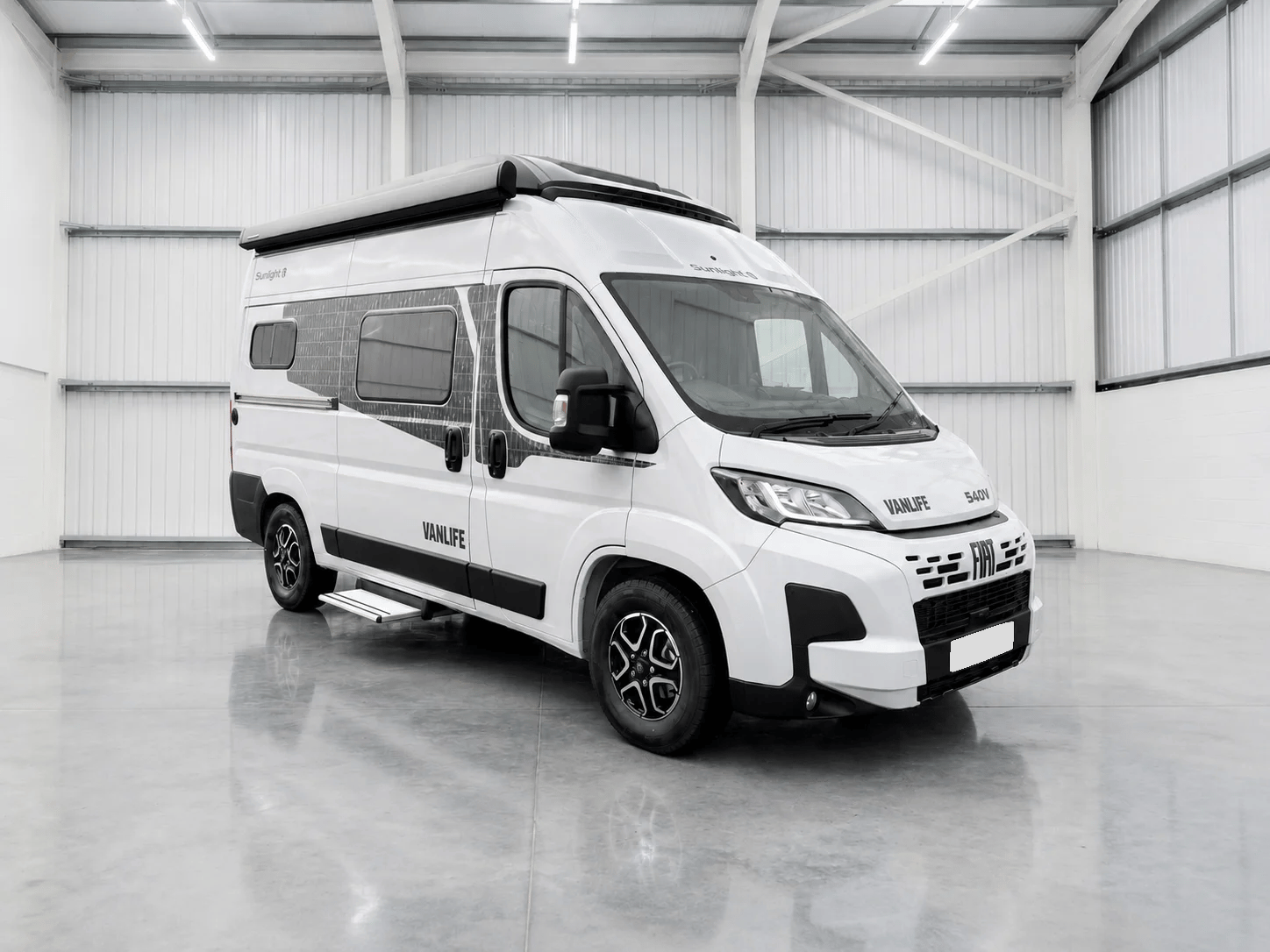
The camper you fall for is rarely the one you can afford. That gap is the whole reason Campervan.win exists. Right now we’re giving away the Sunlight Vanlife, worth around £65,000, and closing that gap is the point: capped entries so the odds stay honest, £10 a ticket, a maximum of five per person, £500 to a UK charity from every full draw, the winner picked by a public randomness beacon anyone can re-check, and one person driving away in the van itself.
Enjoyed this post?
Get more honest campervan guides like this one in your inbox.
You’re in!
Check your inbox. We’ve just sent you a welcome email.

About the author
Felix
Felix covers campervan technology, layouts, and modern conversions, with a focus on design-led thinking and practical performance
Keep Reading
Related Reading
Thoughtful articles that build on what you’ve just read.
New & Noteworthy
12 min read
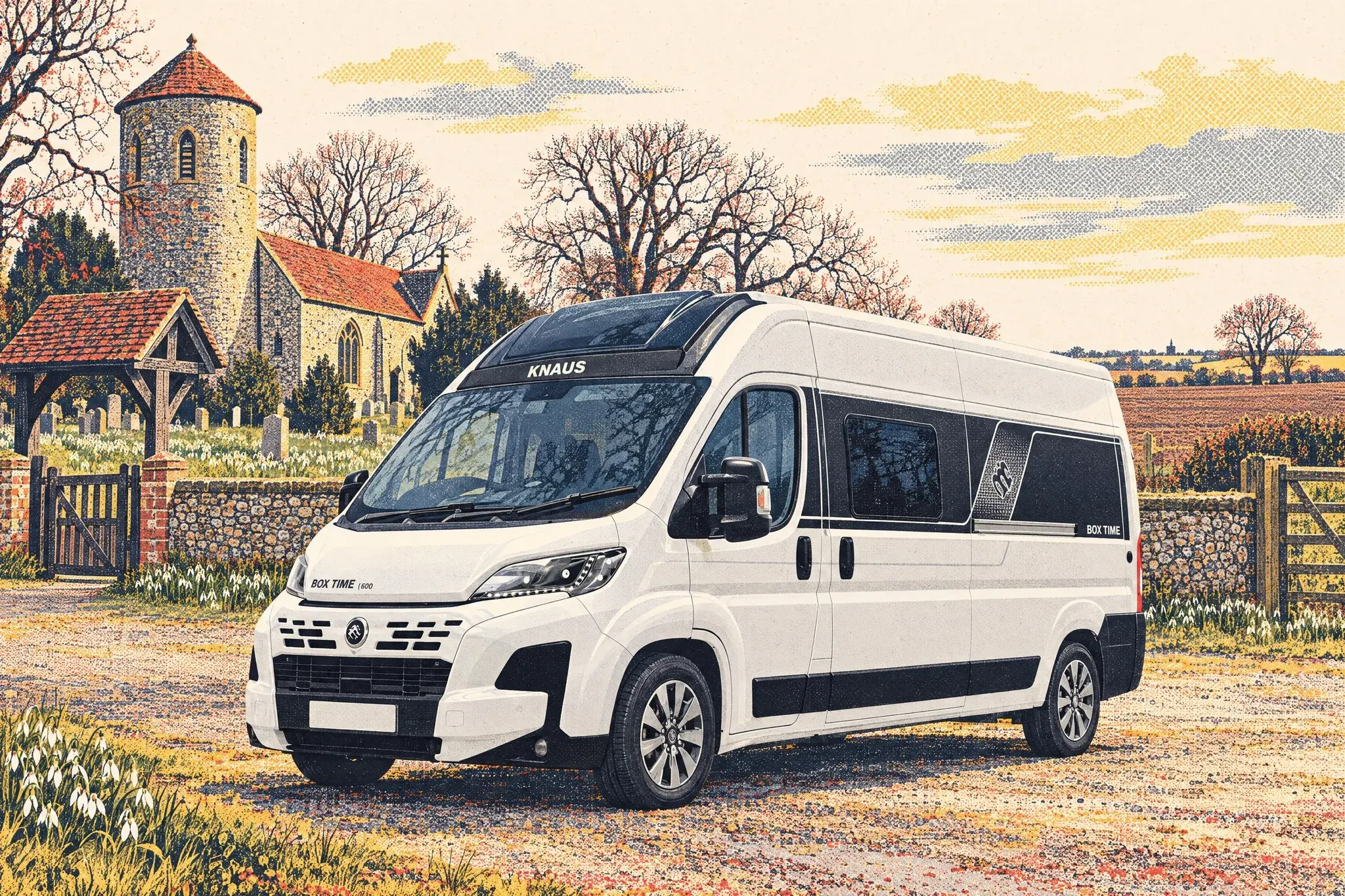
Knaus Boxtime 600 ME (2027): twin singles in 6 m, and the payload figure to question
Knaus's new Boxtime 600 ME squeezes two lengthways single beds into a 5.99 m van from £81,725. We lay out what that layout gives a couple, run the weight sums with Knaus's own figures, and explain why the 211 kg 'maximum payload' line needs a question before you sign.
New & Noteworthy
10 min read
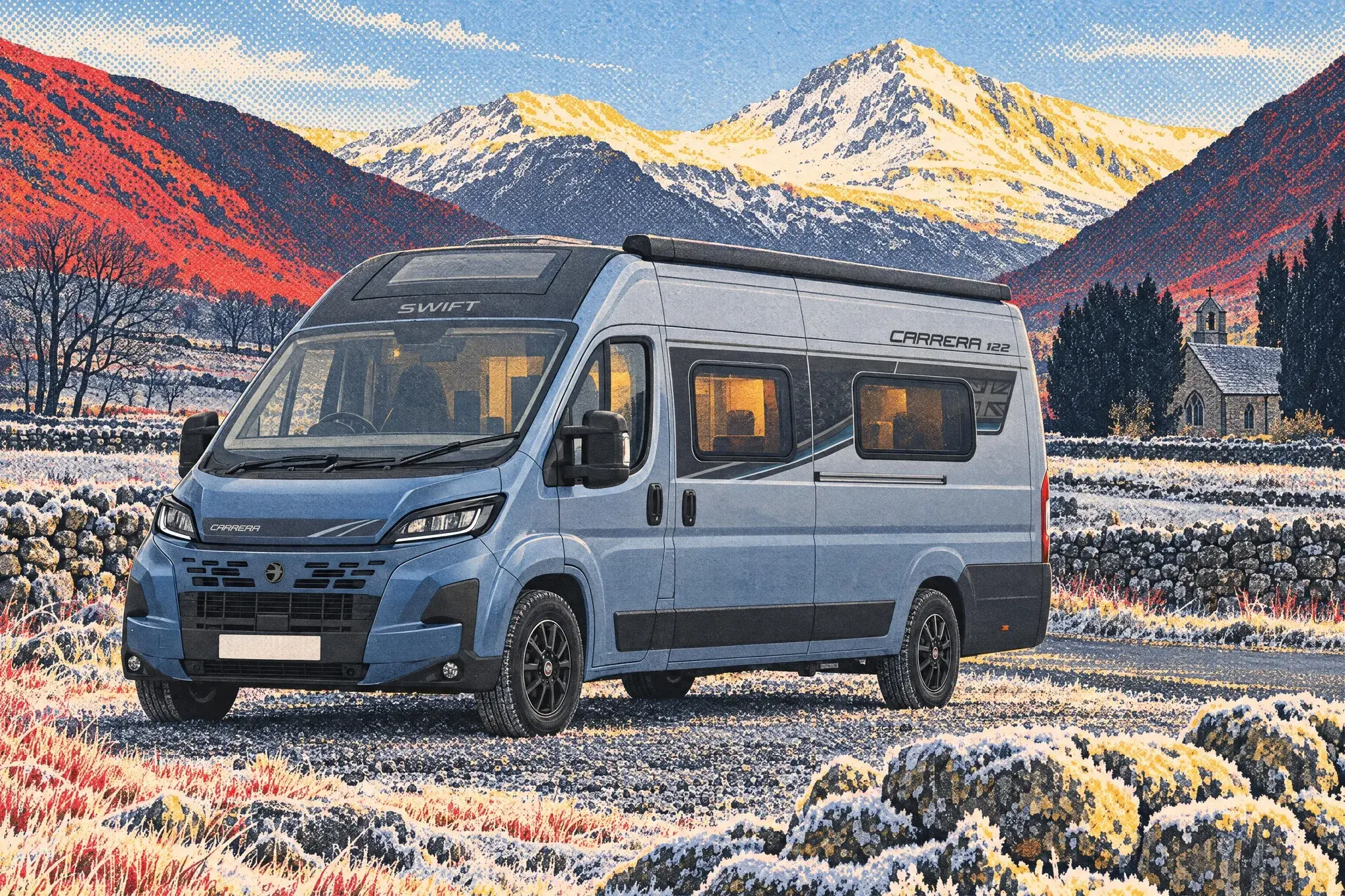
Swift Carrera goes gas-free for 2027: 340Ah lithium, diesel heat and induction cooking
Swift has taken the gas out of its Carrera campervan for 2027, swapping bottles for a 340Ah lithium battery, diesel heating and an induction hob. Here is what that means across a real UK year, how it compares with the cheaper Merlin, and the one question to ask at the NEC.
New & Noteworthy
10 min read
British campervan converters at the NEC 2026: who builds on what, and for how much
A stand-by-stand map of the British campervan converters at the Motorhome and Caravan Show 2026: the vans they build on, their from-prices, seats, roofs and lead times, plus the four questions to put to every one of them.
New & Noteworthy
9 min read
Plug-in hybrid campervans at the NEC: what a PHEV gives you and why full EVs are rare
Four UK converters have hybrid campers at or around the Motorhome and Caravan Show this October, while fully electric campers remain scarce. Here is what a plug-in hybrid camper does well, what the sellers rarely tell you, and the questions to ask on the stand.